
The Legend of Zelda: Breath of the Wild
GameBy Nintendo EPD Production Group No. 3 · Released Mar 3, 2017
- How much revenue has The Legend of Zelda: Breath of the Wild made?
- How many players does The Legend of Zelda: Breath of the Wild have, and how is that changing?
- What do industry reports say about The Legend of Zelda: Breath of the Wild's performance?
- Which games compete with The Legend of Zelda: Breath of the Wild, and how do they compare?
Documents about The Legend of Zelda: Breath of the Wild
Making Beautiful 3D Games Is Easier Than You Think
Creating a high-quality, stylized 3D adventure game—modeled after the aesthetic of titles like The Legend of Zelda: Breath of the Wild—is achievable for independent developers using free assets and a disciplined approach to visual design.
- Achieving a stylized, Breath of the Wild-inspired aesthetic relies on a limited terrain palette of three to four textures, using hue shifting and saturation adjustments to ensure all environmental elements, such as grass, dirt, and stone, remain color-coordinated.
- To avoid visual repetition in terrain, use noise spreads for grass billboards and maintain a consistent tiling scale across all terrain layers to create a unified look.
- High-fidelity assets should be placed strategically to anchor the scene, as the human brain interprets the presence of a few high-resolution objects as an indicator of overall high-quality visual fidelity.
How To Make "Zelda: Breath Of The Wild" Workshop: Day 2 (Part 2)
Creating a high-fidelity, open-world environment reminiscent of The Legend of Zelda: Breath of the Wild requires a disciplined approach to asset integration, terrain sculpting, and atmospheric post-processing.
- Effective terrain sculpting relies on using specialized brushes for large-scale mountain creation rather than manual, single-brush detailing.
- Fog is a critical tool for managing visual depth and environmental cohesion, helping to blend distant terrain and improve the overall aesthetic of the game world.
- Manual painting of environmental details like snow and grass requires balancing artistic intuition with logical placement based on mountain topography to avoid a 'mappy' or unnatural appearance.
How To Make "Zelda: Breath Of The Wild" Workshop: Day 1
Replicating the distinct visual aesthetic of The Legend of Zelda: Breath of the Wild within the Unity engine requires a disciplined approach to asset management and color theory.
- Establish a consistent color scheme for environments and biomes early in the development process to create a cohesive visual foundation, even if deviations occur later.
- Implement Level of Detail (LOD) groups for all exterior assets to manage poly counts and texture sizes, preventing performance issues when rendering large-scale environments.
- Maintain strict folder organization for all imported assets to ensure project scalability and prevent workflow bottlenecks during development.
World Building with Architecture
Architecture functions as a foundational narrative and navigational instrument in game design, operating beneath the level of conscious player awareness to establish tone, strategy, and emotional context.
- Architecture serves as a primary narrative and navigational tool, using materiality, scale, and spatial hierarchy to guide player behavior subconsciously without relying on HUDs or dialogue.
- Games like The Legend of Zelda: Breath of the Wild, Fallout 3, and Inside demonstrate that silhouette-based wayfinding and cultural material expression are essential for creating immersive, legible worlds.
- Developers can leverage the absence of real-world financial and socio-political constraints to employ non-Euclidean geometry and forced perspective, creating structures impossible in traditional construction.
GDC Live Stream
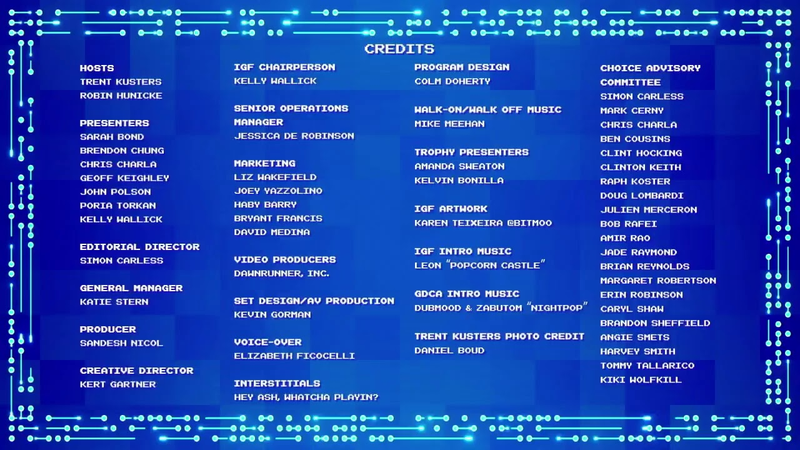
The 20th Independent Games Festival and the 18th Game Developers Choice Awards serve as a comprehensive celebration of the global gaming industry’s evolution, emphasizing a shift toward diverse storytelling, technical innovation, and inclusive design.
- The 20th Independent Games Festival and 18th Game Developers Choice Awards recognized nearly 600 applicants, reflecting an independent sector that now matches major publishers in production standards.
- The Legend of Zelda: Breath of the Wild won Game of the Year, while Night in the Woods received the Seamus McNally Grand Prize, highlighting an industry trend toward deep, narrative-driven storytelling.
- Technical and artistic excellence was formally recognized in titles including Horizon Zero Dawn, Cuphead, and What Remains of Edith Finch, emphasizing the importance of sound, visual design, and mechanics.