Tactical Breach Wizards
Game
5 documents in the library are about Tactical Breach Wizards, from writers such as Thomas Brush, DiGRA and GameDiscoverCo. Each has a summary and key insights with the page they come from.
Connections
Each row is a game or company named alongside Tactical Breach Wizards, each column a document, oldest first. A mark means that document names it. Select a row to see those documents.
Documents about Tactical Breach Wizards
The Playful Pleasures of the Videogame Detective Board
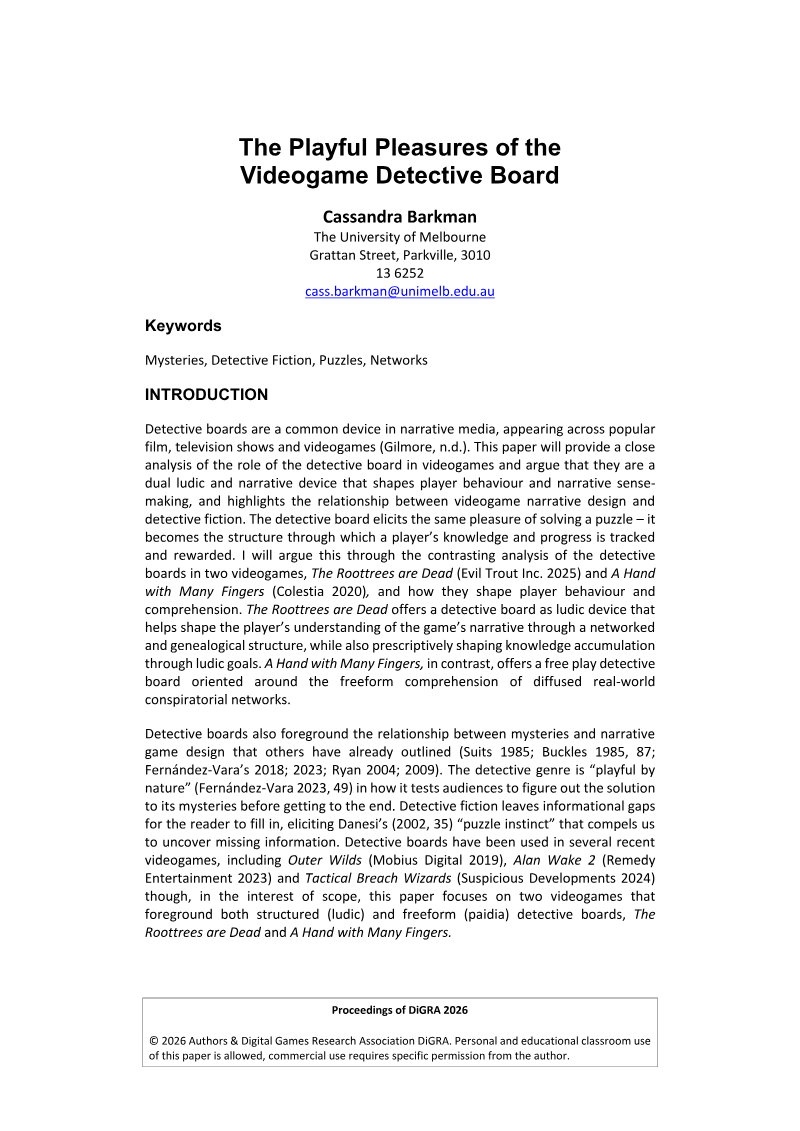
This paper, by Cassandra Barkman of the University of Melbourne, examines the detective board as a dual ludic and narrative device in videogames.
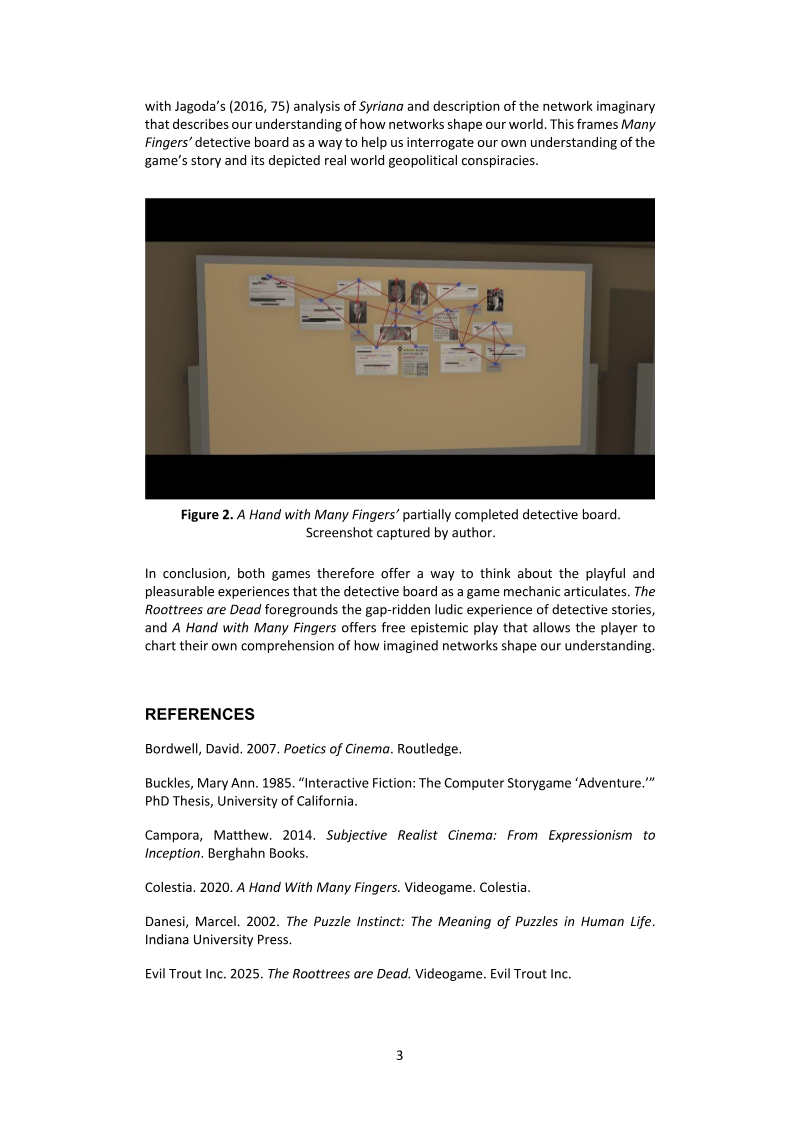
- The paper argues that the detective board is both a ludic and narrative device, shaping player behaviour and narrative sensemaking, and reveals a close relationship between videogame narrative design and detective fiction.
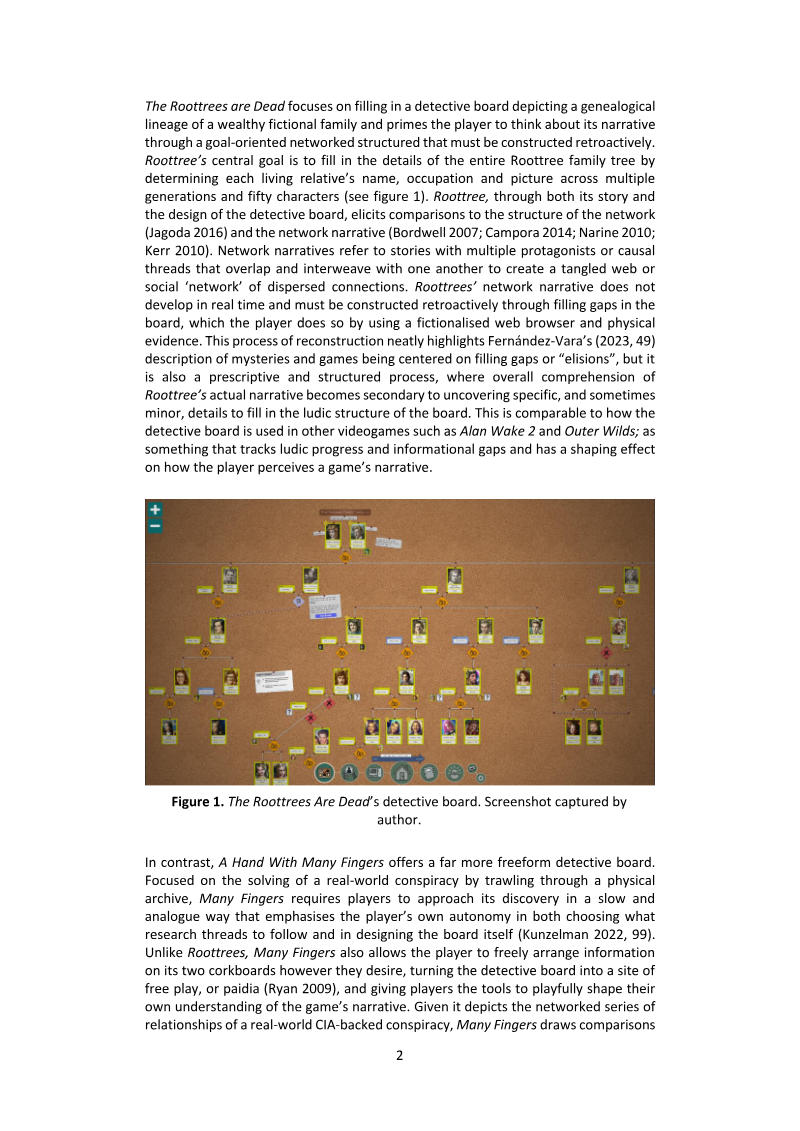
- The Roottrees are Dead uses a structured, goal-driven board: a genealogical network of roughly fifty relatives across several generations that players must reconstruct retroactively by identifying names, occupations, and images.
- The paper contends that the Roottrees board's prescriptive structure can make overall narrative comprehension secondary to uncovering minor details needed to complete the board.
What A $1,000,000 Game Looks Like In Unity (w/ Tom Francis)
The development of the indie title Tactical Breach Wizards serves as a case study for managing complex, long-form game projects within the Unity engine.
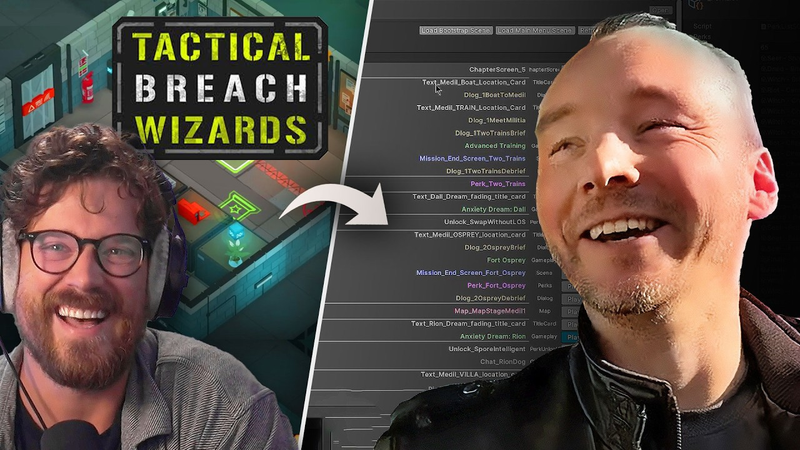
- Tactical Breach Wizards utilizes a custom-built, data-driven architecture where game stages are managed via ScriptableObjects that pair gameplay data with specific Unity scenes.
- The development team built a custom level editor that allows for rapid iteration, enabling designers to modify level geometry and enemy placement without needing to manually adjust art assets or scene-specific clutter.
- The project avoids procedural generation in favor of hand-designed levels to ensure that gameplay mechanics align with specific narrative beats and character progression requirements.
Tom Francis: How He Sold 1,000,000 Copies Of His Games | Ep. #052
Successful game development relies on an iterative, experimental process that prioritizes human-led design over rigid planning or data-driven optimization.
- Achieve financial and operational stability by utilizing self-funded business models and small, agile teams rather than chasing speculative market trends.
- Prioritize an iterative, experimental design process that establishes a solid core structure early to facilitate effective testing.
- Utilize large-scale public beta testing with thousands of participants to gather reliable quantitative and qualitative data, avoiding the risks associated with small, anomalous sample sizes.
Want To Make Games? Listen To Advice From A 10 Year Veteran...
The primary objective for aspiring game developers in 2025 is to prioritize the completion of small, tangible projects to validate their skills and market interest.
- Aspiring developers should prioritize finishing a small, complete project to prove their capability, as studios and collaborators value the practical experience of navigating a game from start to finish.
- Testing a game concept with friends or a local circle is a vital validation step; if the idea fails to generate genuine enthusiasm, it is often better to pivot rather than continue development.
- While a clear, high-concept pitch is helpful, execution, atmosphere, and 'vibes' can be more important for commercial success than a unique mechanical loop, as seen in games like Inscription and Gone Home.
Tactical Breach Wizards: How This Tiny Team Sold >100k in Weeks
This analysis examines the successful launch of "Tactical Breach Wizards," a game developed by a three-person team, which sold over 100,000 copies within weeks of its August 22, 2024 release.
- Tactical Breach Wizards sold over 100,000 units within weeks of its August 2024 release, driven by a high-concept 'SWAT wizards' premise and five years of iterative, handcrafted development.
- The game entered its launch window with 284,002 wishlists, supported by strategic visibility at Steam Next Fest and the June 2024 PC Gaming Show.
- Conversion metrics were strong, achieving a 9.6% one-day conversion rate and a 16% seven-day conversion rate post-launch.
Companies behind it

As the documents state it.