1 free read left. Create a free account for unlimited reading + AI research.
Create free accountWhitepaper DiGRA
1 free read left. Create a free account for unlimited reading + AI research.
Create free accountWhitepaperDiGRA
This paper, by Cassandra Barkman of the University of Melbourne, examines the detective board as a dual ludic and narrative device in videogames. Its central thesis is that detective boards shape player behaviour and narrative sensemaking, and that they reveal a close relationship between videogame narrative design and detective fiction. The argument rests on a contrasting analysis of two games: The Roottrees are Dead, which uses a structured, goal-driven board, and A Hand with Many Fingers, which offers a freeform board. The paper is situated within the DiGRA 2026 proceedings and draws on existing scholarship in game studies, narratology, and film theory, including work on network narratives and the concept of paidia.
The analysis finds that The Roottrees are Dead constructs its board as a genealogical network that players must reconstruct retroactively. Its central goal is to identify the names, occupations, and images of roughly fifty relatives across several generations, using a fictionalised web browser and physical evidence. The paper argues that this prescriptive structure can make overall narrative comprehension secondary to uncovering minor details that complete the board. By contrast, A Hand with Many Fingers, which concerns a real-world CIA-backed conspiracy investigated through a physical archive, provides two corkboards that players can arrange freely. This transforms the board into a site of free play, allowing players to shape their own understanding of the story and of the geopolitical networks it depicts.
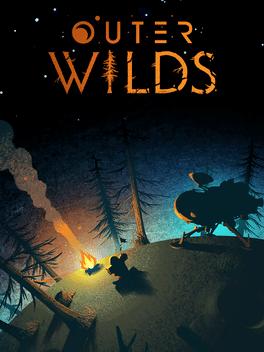
The paper's broader conclusion is that the detective board articulates both gap-driven puzzle pleasure and open-ended epistemic play. Its scope is limited to these two titles, chosen in the interest of focus, though it briefly acknowledges other games that use detective boards, such as Outer Wilds, Alan Wake 2, and Tactical Breach Wizards. The work is primarily a qualitative close reading supported by the author's own screenshots, and it does not rely on survey or empirical data.
Each row is a game or company this document names, each column a document, oldest first. A mark means that document names it. Select a row to see those documents.

DiGRA · 2026

DiGRA · 2026



DiGRA · 2026
DiGRA · 2025