University of Melbourne
3 reports, presentations and talks by University of Melbourne in the Game Industry Library, the newest “The Playful Pleasures of the Videogame Detective Board” (2026).
Documents
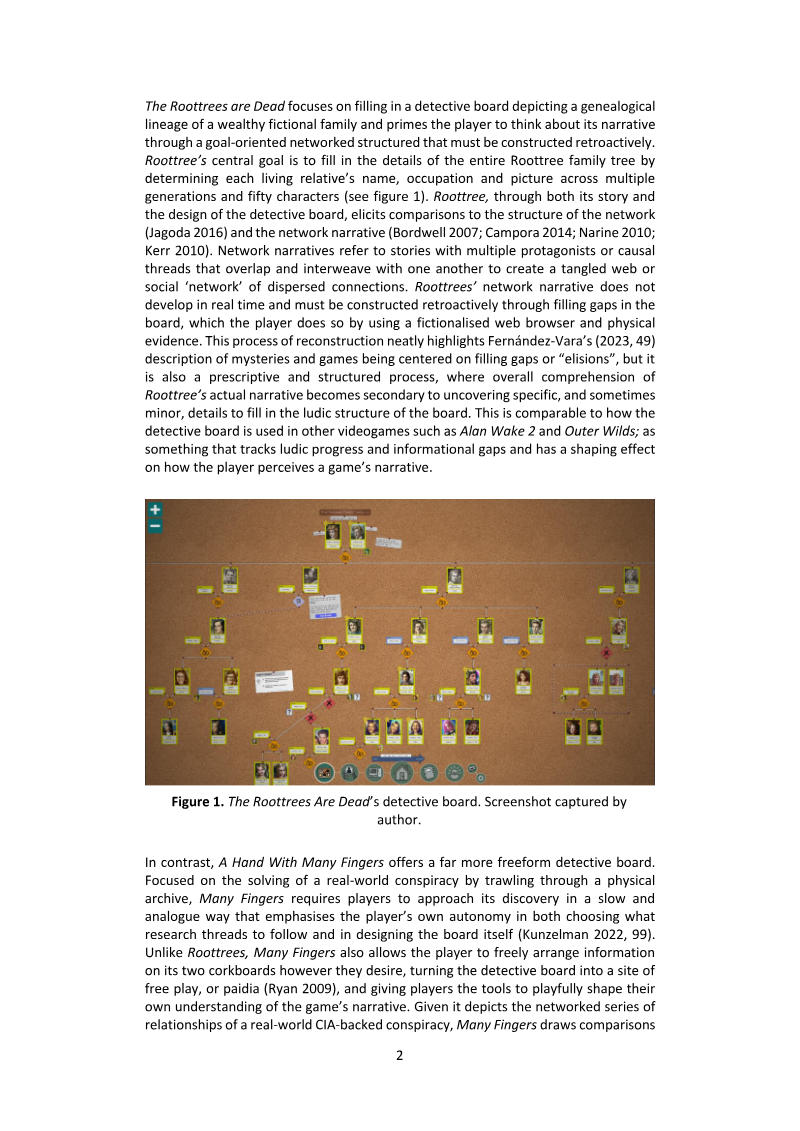
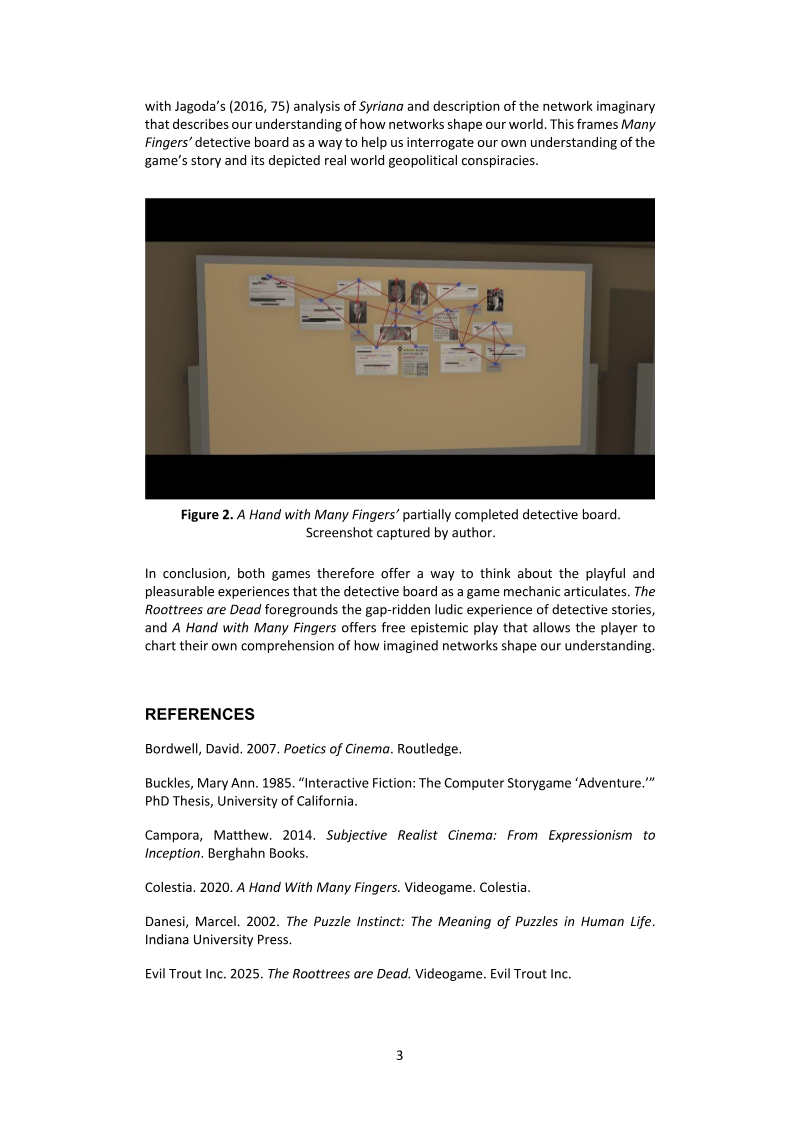
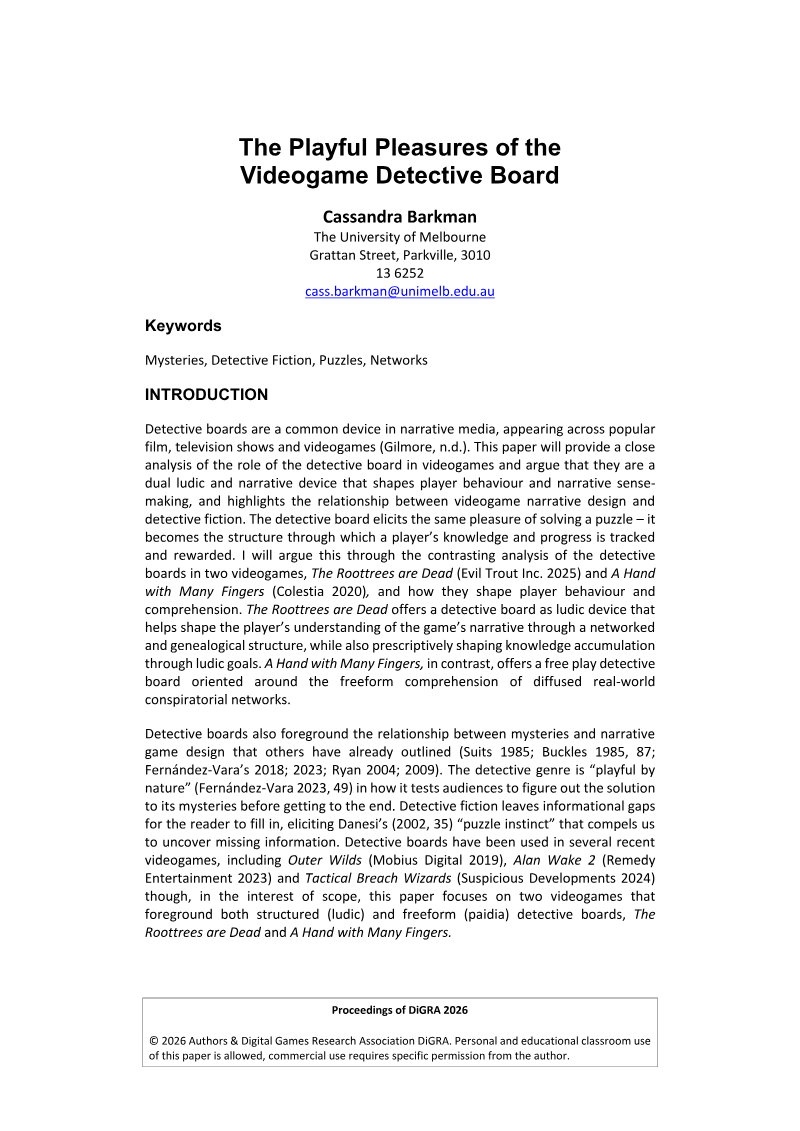
The Playful Pleasures of the Videogame Detective Board
This paper, by Cassandra Barkman of the University of Melbourne, examines the detective board as a dual ludic and narrative device in videogames.
- The paper argues that the detective board is both a ludic and narrative device, shaping player behaviour and narrative sensemaking, and reveals a close relationship between videogame narrative design and detective fiction.
- The Roottrees are Dead uses a structured, goal-driven board: a genealogical network of roughly fifty relatives across several generations that players must reconstruct retroactively by identifying names, occupations, and images.
- The paper contends that the Roottrees board's prescriptive structure can make overall narrative comprehension secondary to uncovering minor details needed to complete the board.
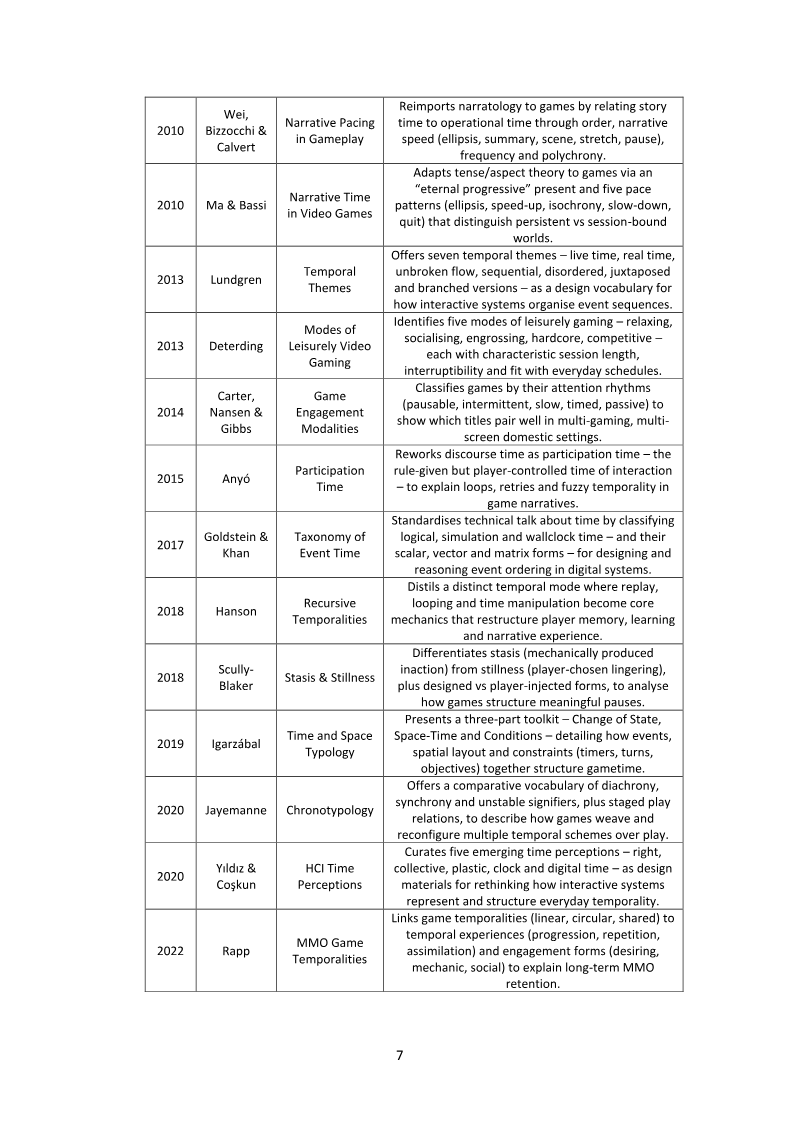
Time in Digital Games: A Comparative Map of Temporal Constructs
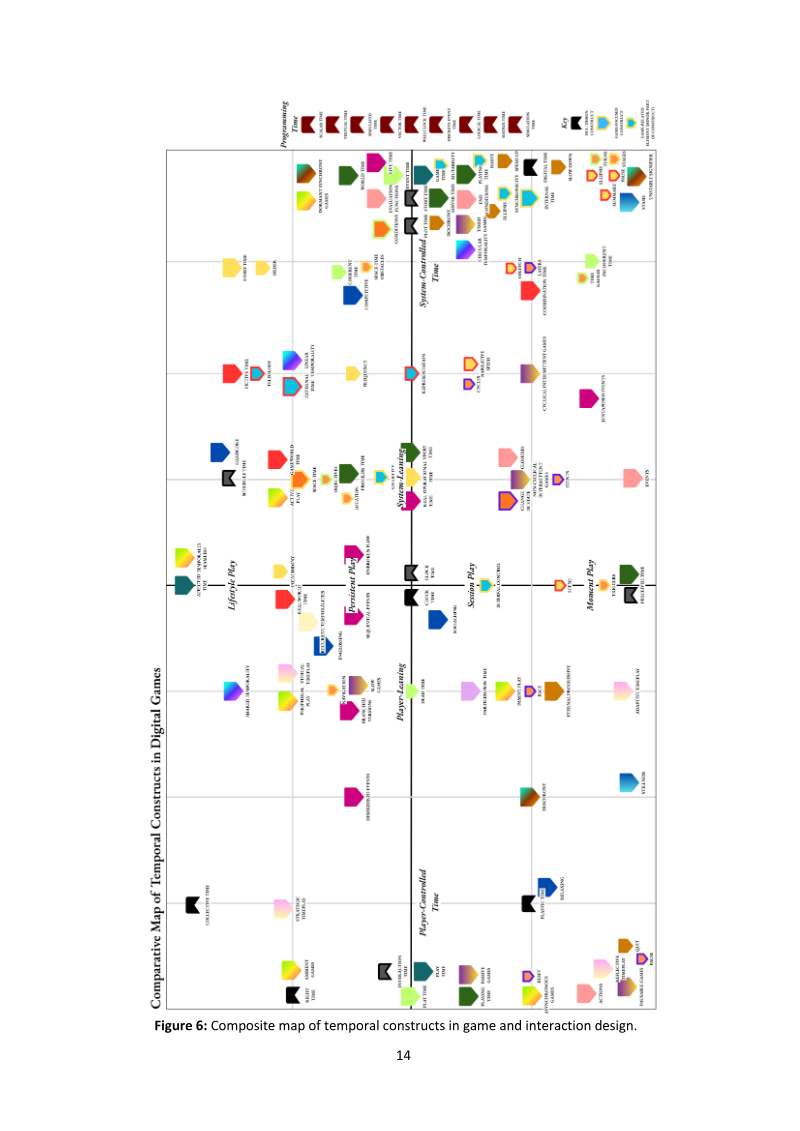
"Time in Digital Games: A Comparative Map of Temporal Constructs" presents a cartographic synthesis of 22 named temporal constructs from digital game studies, spanning 2003 to 2025, rather than a new master theory of game time.
- The report maps 22 named temporal constructs in digital game studies, spanning 2003 to 2025, as a cartographic synthesis rather than a new master theory of game time.
- Constructs are arranged along two axes: temporal control (player-controlled to system-controlled) and temporal scale (moment-level, session, persistent, and lifestyle play), with clock time as a neutral origin point.
- The conceptual landscape is imbalanced: system-controlled constructs, such as the many engineered "X time" labels, are densely represented, while player-organised and affective temporal concepts are sparsely populated.

Social Acceptability of Location-Based Games in Cemeteries
A survey of 1,053 Australian adults, stratified by age, gender, and state or territory, examined how socially acceptable digital technologies are in cemeteries, with particular attention to two location-based game concepts: a historical mystery game and a ghost-hunting game played on-site among graves and monuments.
- Respondents were broadly negative toward location-based games in cemeteries, with the two game concepts drawing the highest negative responses among the thirteen cemtech concepts tested: 60% for the historical mystery game and 74% for the ghost-hunting game.
- The main concerns were that play in a place of mourning is disrespectful and disrupts its peaceful atmosphere, and respondents anticipated hostile disapproval from bystanders, with one comment raising the possibility of aggression toward players.
- Positive views existed but were a minority, expressed by 22% of respondents for the historical game and 12% for the ghost game.