
Suikoden
GameBy Konami Computer Entertainment Tokyo · Released Dec 15, 1995
Suikoden is a Japanese-style role-playing game with several unusual additions. There are three kinds of combat in the game, the most common one being the traditional turn-based party combat (players can have up to six people in their active party).
Connections
Each row is a game or company named alongside Suikoden, each column a document, oldest first. A mark means that document names it. Select a row to see those documents.
About the game
- Released
- Dec 15, 1995
- Developer
- Konami Computer Entertainment Tokyo
- Publishers
- Konami, Sony Computer Entertainment
- Genres
- Role-playing (RPG), Turn-based strategy (TBS), Adventure
- Platforms
- PlayStation 3, PC (Microsoft Windows), Sega Saturn, PlayStation, PlayStation Portable
- Links
- Wikipedia
Game data from IGDB.com
Documents about Suikoden

Konami Group FY2026 Financial Results
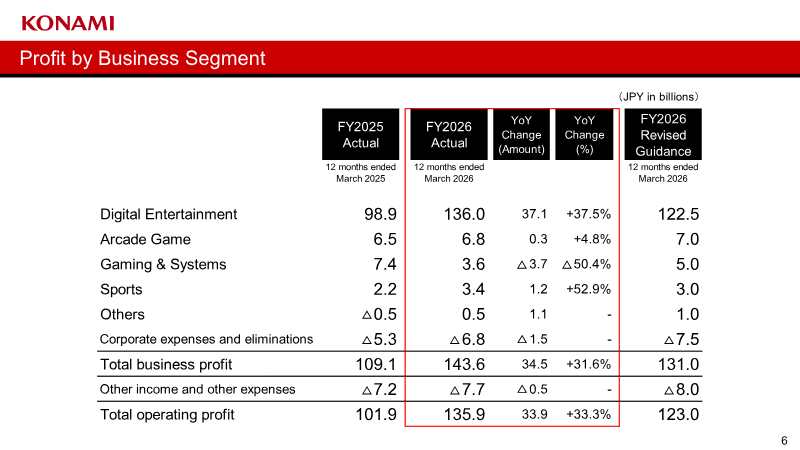
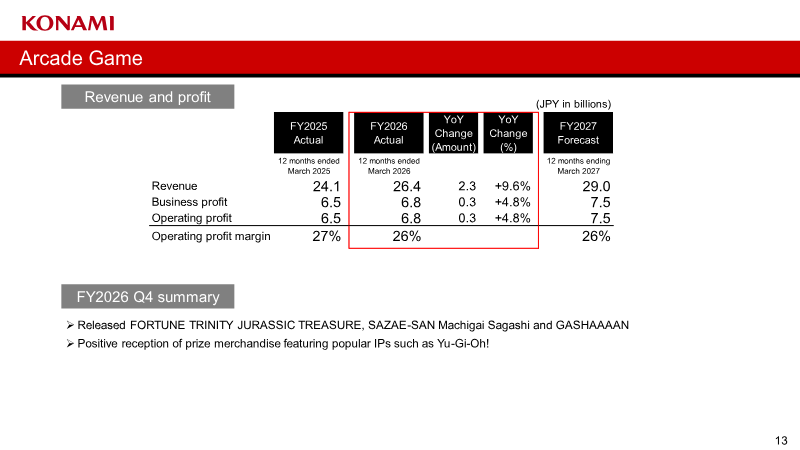
Konami Group’s financial results for the fiscal year ending March 2026 demonstrate robust growth across its diversified business segments.
- Konami Group achieved strong FY2026 financial growth, with revenue increasing 17.1% year-over-year to 493.7 billion JPY and operating profit rising 33.3% to 135.9 billion JPY.
- The Digital Entertainment segment remains the primary driver of profitability, contributing 136.0 billion JPY in business profit, a 37.5% increase over the previous year.
- The company declared an annual dividend of 221.50 JPY per share for FY2026, reflecting a 56.00 JPY increase and adherence to a payout ratio policy of at least 30%.

Games You Might Not Have Tried: 16-bit - Find New Games - Extra Credits
The 16-bit era of gaming contains numerous high-quality titles that remain under-appreciated by modern audiences.
- The 16-bit era on the SNES and Sega Genesis contains sophisticated design elements, such as branching narratives and complex character progression, that remain foundational to modern game development.
- Starflight serves as a critical historical precursor to modern space-faring RPGs like Mass Effect by establishing early exploration-based mechanics.
- E.V.O.: Search for Eden introduced unique biological evolution systems, while Warsong functioned as a key evolutionary step for the tactical strategy genre.
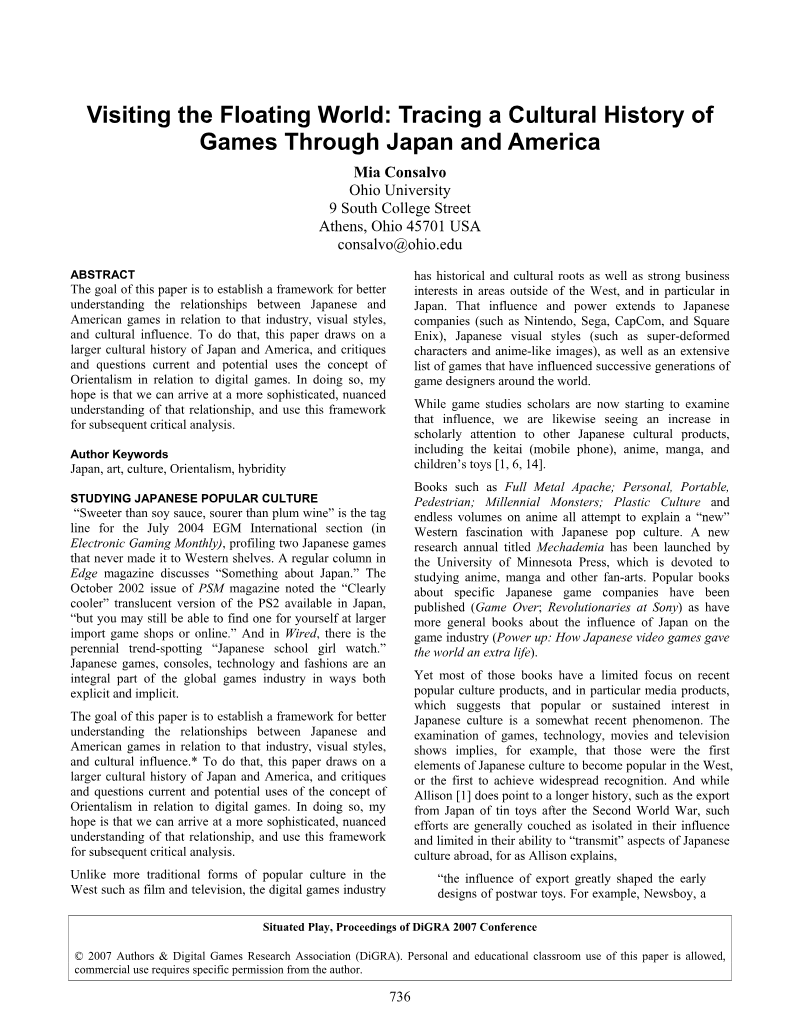
Visiting the Floating World: Tracing a Cultural History of Games Through Japan and America
Mia Consalvo's paper proposes a framework for understanding the relationships among Japanese and American games, visual styles, and cultural influence, drawing on a broader cultural history of Japan and America and critically examining the application of Orientalism to digital games.
- Consalvo argues Japanese cultural influence on the West has a longer history than recent media scholarship acknowledges, and that digital games' transnational flows and Japanese corporate power cannot be understood through simple East-West binaries.
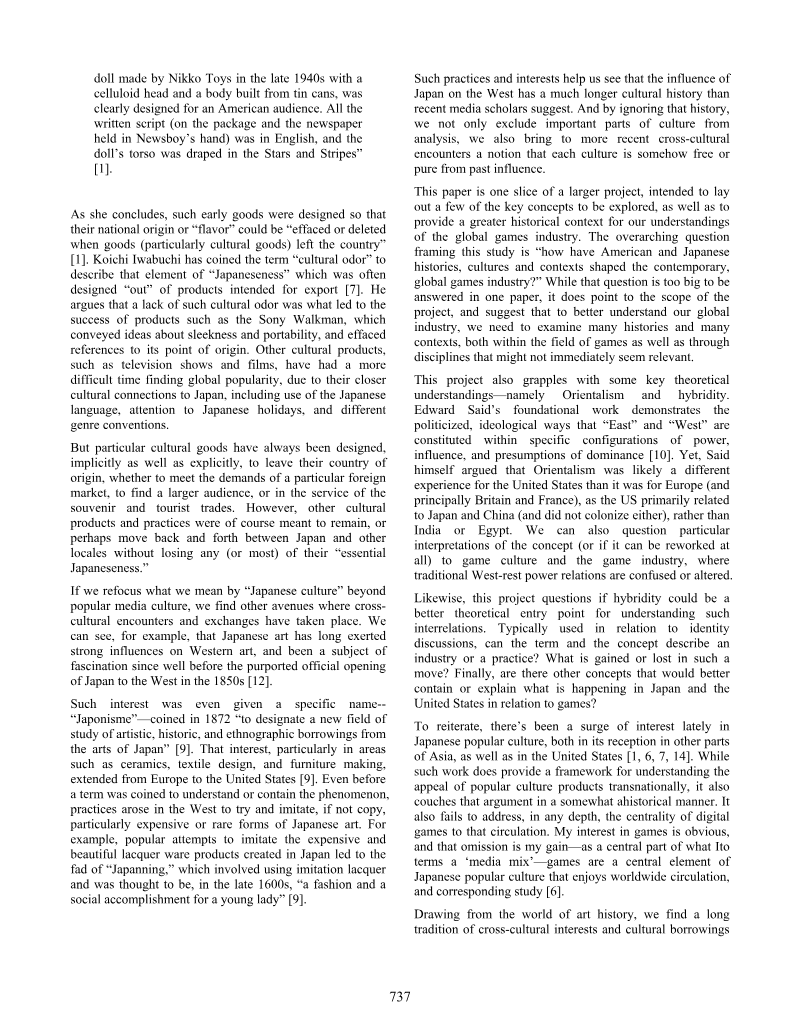
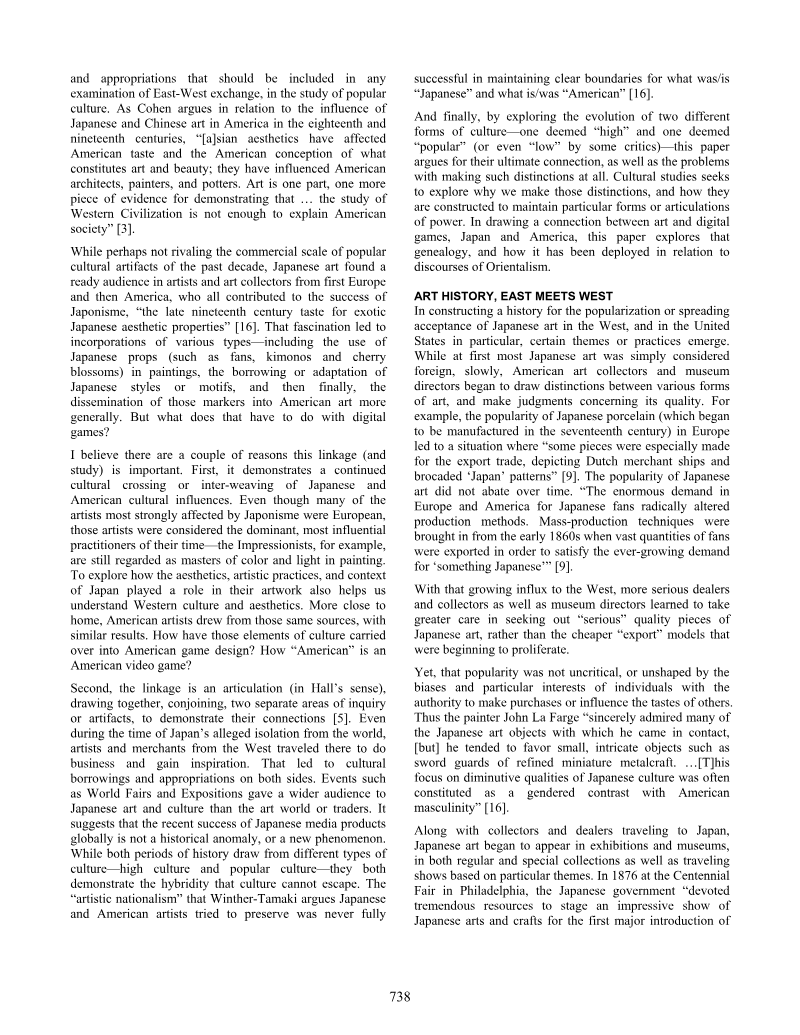
- The paper draws parallels between art history and games, showing how Japanese art, porcelain, and fans became popular in Europe and America through mass production, dealer and collector influence, World Fairs such as the 1876 Centennial Exposition, and borrowing by Western painters like the Impressionists and John La Farge.
- Nintendo's cautious localization strategy after the 1983 crash is presented as having shaped what Western audiences came to see as acceptable games.
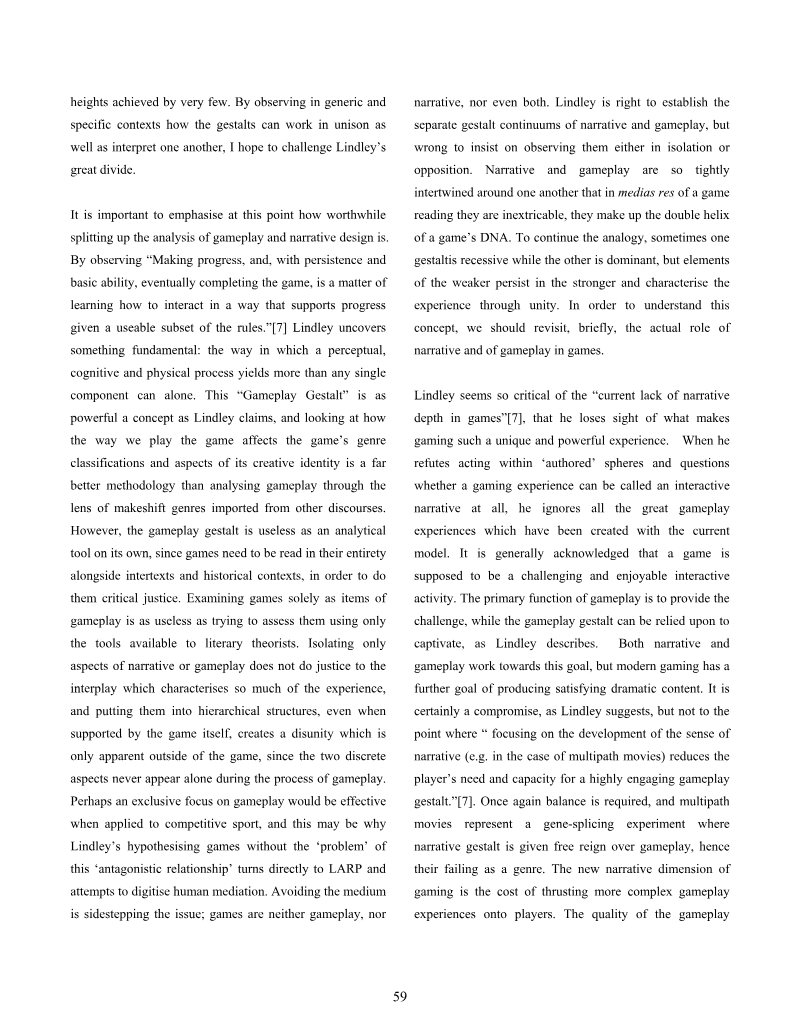

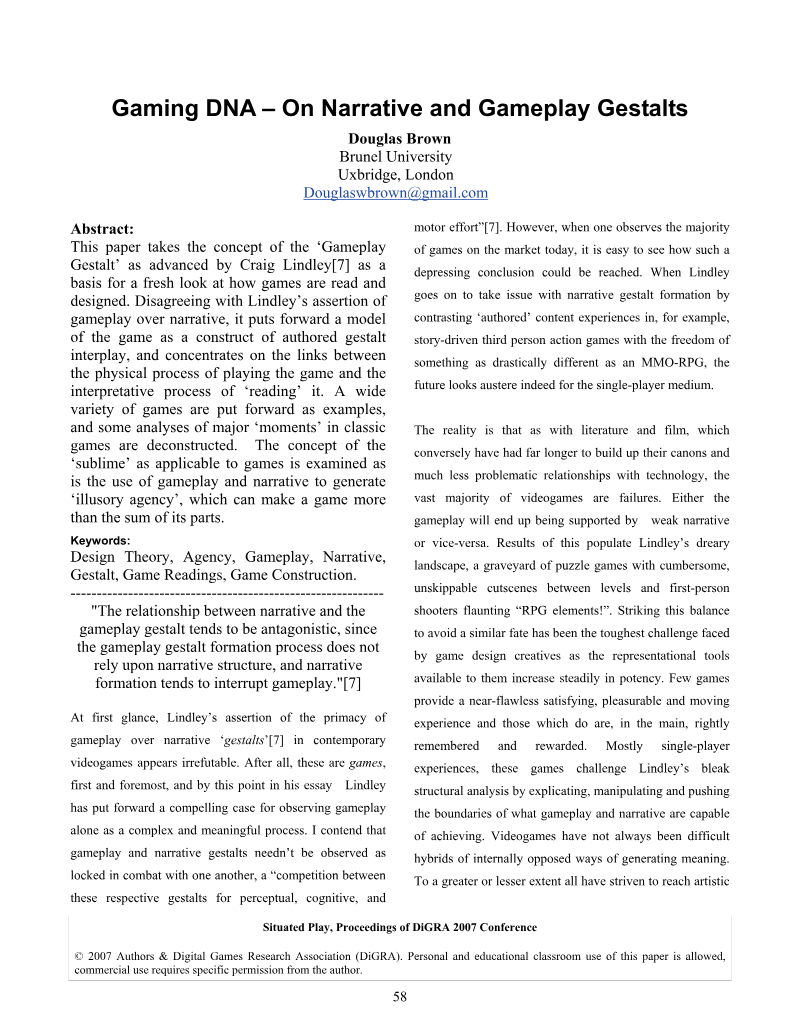
Gaming DNA: On Narrative and Gameplay Gestalts
Douglas Brown's paper, presented at the DiGRA 2007 conference, challenges Craig Lindley's claim that gameplay gestalts inherently conflict with narrative gestalts in videogames.
- Douglas Brown argues, against Craig Lindley's view, that narrative and gameplay gestalts are not inherently in conflict but form an interwoven "double helix" that can catalyse, reinforce, or sometimes undermine each other.
- Brown concludes that the most successful games are those in which narrative and gameplay gestalts unify, and that the field suffers from a notable shortage of narrative depth.
- The paper contends that Hollywood's three-act structure is often a poor fit for games, and that over-reliance on it creates friction in game design.


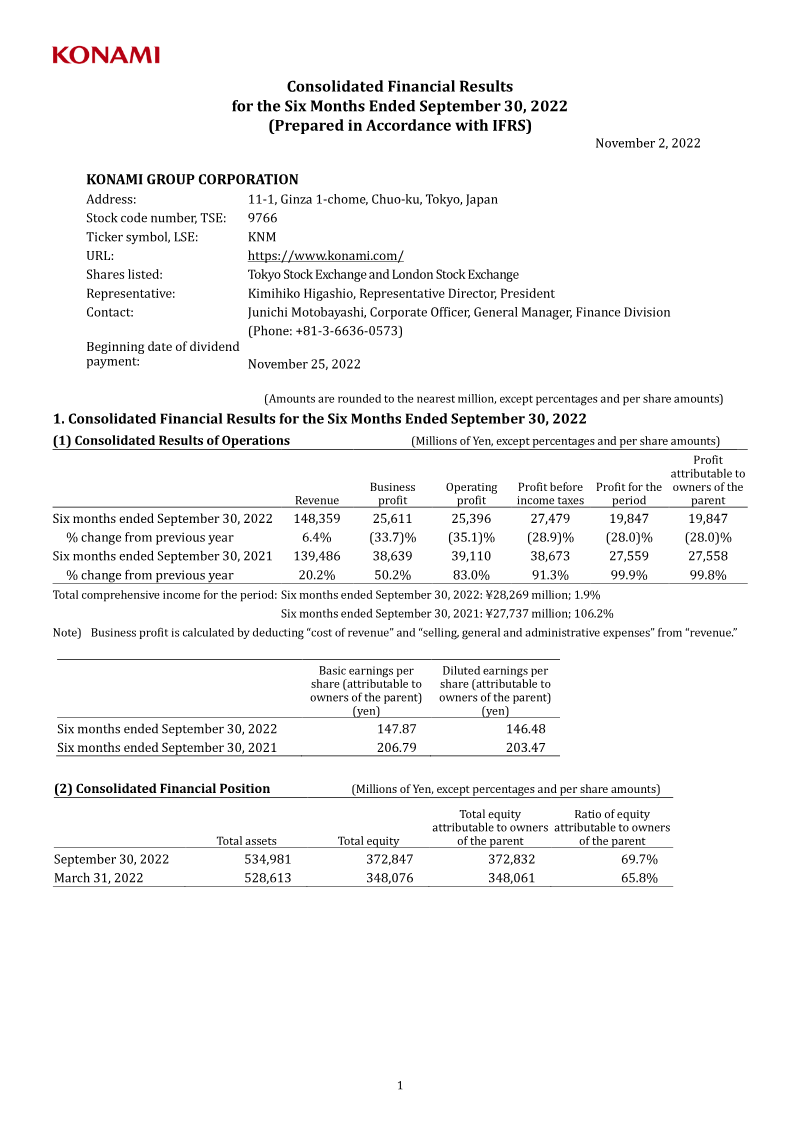
Consolidated Financial Results: Six Months Ended September 30, 2022
Konami Group achieved record-high revenue of ¥148,359 million for the six-month period ending September 30, 2022, representing a 6.4% year-on-year increase.
- Konami Group achieved record-high revenue of ¥148,359 million for the six months ending September 30, 2022, a 6.4% year-on-year increase driven by new titles, the Gaming & Systems segment, and the U.S. market.
- Consolidated business profit dropped 33.7% to ¥25,611 million, while net profit declined to ¥19,847 million due to rising development, marketing, and global energy costs.
- Despite margin contraction, the company maintained its full-year fiscal forecast of ¥320,000 million in revenue and ¥76,500 million in operating profit.