1 free read left. Create a free account for unlimited reading + AI research.
Create free accountWhitepaper DiGRA
1 free read left. Create a free account for unlimited reading + AI research.
Create free accountWhitepaperDiGRA
Douglas Brown's paper, presented at DiGRA 2007, challenges this claim directly.
Douglas Brown's paper, presented at the DiGRA 2007 conference, challenges Craig Lindley's claim that gameplay gestalts inherently conflict with narrative gestalts in videogames. Brown argues instead that narrative and gameplay form a tightly interwoven "double helix" in which each can catalyse, reinforce, or occasionally undermine the other. The paper proposes a model that contrasts authored content with the freedom of interplay, linking the physical act of playing with the interpretive act of reading a game. It concludes that the most successful games are those where the two gestalts unify, and that the field suffers from a notable shortage of narrative depth.
The analysis draws on a broad range of examples spanning single-player action and role-playing titles, adventure games, puzzle games, and massively multiplayer online role-playing games such as World of Warcraft. Brown examines specific moments in works including Valkyrie Profile, Deus Ex, Final Fantasy VII, Metal Gear Solid 3, and Suikoden 3, using them to illustrate how narrative can reshape gameplay rules, how gameplay decisions can feed back into story, and how "illusory agency" can heighten immersion. The paper draws on theoretical concepts including Csikszentmihalyi's flow state, Chris Crawford's notion of the verb, and Justin Parsler's illusory agency framework.
The paper's method is qualitative and interpretive rather than statistical; it offers no survey data or sample sizes, relying instead on close readings of selected titles and the author's critical judgment. Its time frame centres on games released between the late 1990s and the mid-2000s, and its scope is largely Anglophone and console-oriented. Brown concludes that Hollywood's three-act structure is often a poor fit for games and that over-reliance on it creates friction, while authored gestalt interplay offers a more productive route to meaningful, unified game experiences.
 World of WarcraftGame · Blizzard Entertainment · 2004 · 190 documents
 Final Fantasy VIIGame · Square Product Development Division 1 · 1997 · 67 documents
 Metal GearGame · Konami · 1987 · 38 documents
 Metal Gear SolidGame · Konami Computer Entertainment Japan · 1998 · 33 documents
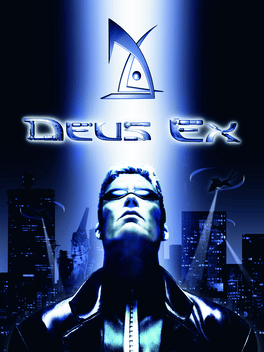 Deus ExGame · Ion Storm · 2000 · 31 documents
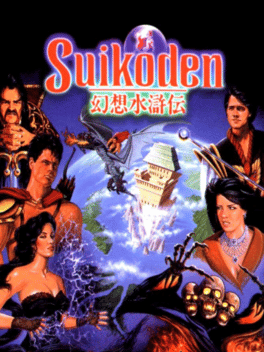 SuikodenGame · Konami Computer Entertainment Tokyo · 1995 · 5 documents
Each row is a game or company this document names, each column a document, oldest first. A mark means that document names it. Select a row to see those documents.
DiGRA · 2018
PocketGamer.biz · 2025