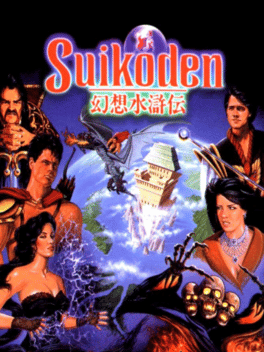
Suikoden
GameBy Konami Computer Entertainment Tokyo · Released Dec 15, 1995
Documents about Suikoden
Whitepaper6 pages
Visiting the Floating World: Tracing a Cultural History of Games Through Japan and America
Mia Consalvo's paper proposes a framework for understanding the relationships among Japanese and American games, visual styles, and cultural influence, drawing on a broader cultural history of Japan and America and critically examining the application of Orientalism to digital games.
- Consalvo argues Japanese cultural influence on the West has a longer history than recent media scholarship acknowledges, and that digital games' transnational flows and Japanese corporate power cannot be understood through simple East-West binaries.
- The paper draws parallels between art history and games, showing how Japanese art, porcelain, and fans became popular in Europe and America through mass production, dealer and collector influence, World Fairs such as the 1876 Centennial Exposition, and borrowing by Western painters like the Impressionists and John La Farge.
- Nintendo's cautious localization strategy after the 1983 crash is presented as having shaped what Western audiences came to see as acceptable games.
DiGRAJan 2007
Whitepaper8 pages
Gaming DNA: On Narrative and Gameplay Gestalts
Douglas Brown's paper, presented at the DiGRA 2007 conference, challenges Craig Lindley's claim that gameplay gestalts inherently conflict with narrative gestalts in videogames.
- Douglas Brown argues, against Craig Lindley's view, that narrative and gameplay gestalts are not inherently in conflict but form an interwoven "double helix" that can catalyse, reinforce, or sometimes undermine each other.
- Brown concludes that the most successful games are those in which narrative and gameplay gestalts unify, and that the field suffers from a notable shortage of narrative depth.
- The paper contends that Hollywood's three-act structure is often a poor fit for games, and that over-reliance on it creates friction in game design.
DiGRAJan 2007