Stranger Things
Game
Documents about Stranger Things
The Unintended Consequences of MTG's Universes Beyond | Extra Credits Gaming
The expansion of Magic: The Gathering through the Universes Beyond initiative represents a significant strategic shift for Wizards of the Coast, characterized by the integration of external intellectual properties into the game’s established multiverse.
- Wizards of the Coast's 'Universes Beyond' strategy has driven significant financial growth, with Magic: The Gathering becoming Hasbro's first brand to exceed $1 billion in annual revenue in 2022.
- The 2025 Final Fantasy set generated $200 million in revenue in a single day, a milestone that took the Lord of the Rings set six months to achieve, contributing to a 23% revenue growth for the tabletop division.
- Organized play for Magic: The Gathering saw a 40% increase in unique players during the first half of 2025, signaling strong engagement with the crossover-heavy release schedule.

Who REALLY won The Game Awards? Plus, we review 2025
The 2025 gaming landscape reflects a period of robust recovery and structural evolution, marked by a 7.5% revenue increase to $190.9 billion, finally eclipsing the previous peak established during the 2021 pandemic era.
- The global gaming industry reached $190.9 billion in revenue in 2025, a 7.5% increase that finally surpassed the previous 2021 pandemic-era peak.
- The Game Awards achieved a 12.5% increase in peak viewership to 4.5 million, with winners like Clair Obscure: Expedition 33 seeing a 60% surge in sales following the event.
- Strategic consolidation is accelerating through potential high-profile deals, including a Netflix-Warner Bros. alignment and ongoing acquisition discussions involving EA.
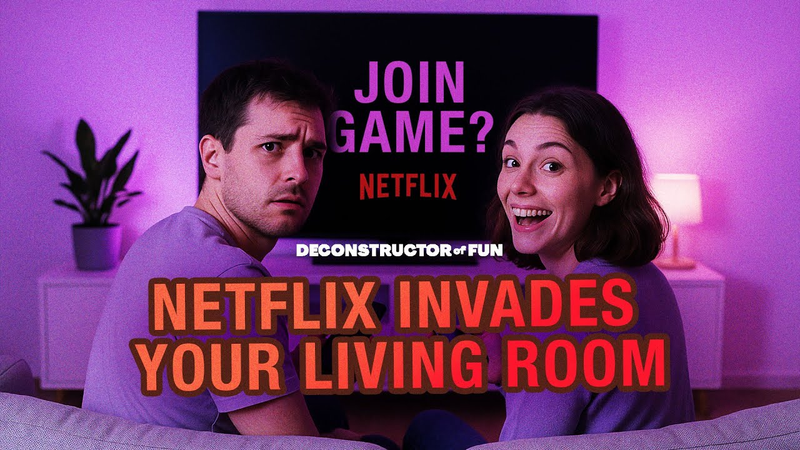
Netflix Games 2.0: The Living Room Invasion Begins
Netflix is pivoting its gaming strategy toward a living room-centric model, moving away from a mobile-first approach to focus on interactive party games played on smart TVs.
- Netflix is pivoting from a mobile-first gaming strategy to a living room-centric model that utilizes smart TVs as the primary hub and smartphones as controllers.
- The company’s previous strategy of licensing and porting mobile titles resulted in high capital expenditure but failed to generate significant user engagement.
- Netflix’s primary obstacle is a lack of product-market fit and a missing 'killer app' rather than the user awareness issues cited by the company.
Week in Mobile Games E68 - The Top 50 Mobile Game Makers, and crisis in the EU's games industry
The mobile gaming industry is currently defined by a stark dichotomy between the commercial success of established live-service titles and an increasingly hostile regulatory environment.
- Supercell CEO Ilkka Paananen has warned that the European Commission's proposed 'Digital Fairness Act' could severely damage the regional games industry by imposing restrictive regulations on free-to-play mechanics.
- The SEC is investigating AppLovin over allegations that the company breached platform partner agreements regarding data collection practices, specifically concerning the use of children's data.
- PocketGamer.biz released its 'Top 50 Mobile Game Makers 2025' list, which ranks Tencent at number one, followed by Take-Two Interactive and DeNA in the top three.
TWIG 142: Netflix Hires Facebook Gaming Executive Mike Verdu
Netflix’s recent appointment of former Facebook Gaming executive Mike Verdu to lead its gaming division signals a strategic pivot toward interactive entertainment.
- Netflix has hired former Facebook Gaming executive Mike Verdu to lead a new gaming division, signaling a strategic shift to capture consumer time share against broader entertainment platforms like Fortnite.
- The company plans to integrate gaming as an ad-free, value-added component for its existing base of approximately 200 million subscribers.
- Netflix intends to avoid the console-market approach that contributed to Google Stadia's failure, focusing instead on interactive experiences tailored to its own platform.