VideoThe Game Business
Interview: Edmund McMillen and Tyler Glaiel on the remarkable success of Mewgenics
3 Mar 202648 min video
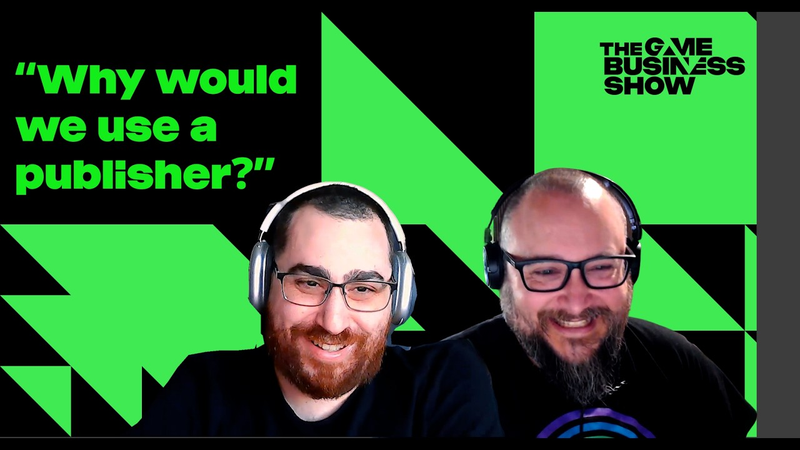
After working on that prototype for like a few months, we're like, "Okay, this is actually pretty awesome." And then after like a year, we're like, "We're making something very cool here." And after 2 years, it's like, "We're making the best tactical strategy game of all time." I mean, imagine pitching this to a publisher. Imagine what we would have to remove from the game if we were under the control of like a publisher. Hello and welcome to the game business show with me, Christopher Ding. I have a bumper interview for you right now. It's about the game Mugenics, which has been one of the smash hit indie games to come out this year. It is a bizarre roglike strategy game, and it sold 1 million copies in just one week. It's been developed by Edmund McMillan and Tyler Glale and was somewhat inspired by Edmund's children. It's around the idea of having to adapt yourself to the world around you. players get breed cats, deal with mutations, and take them into turn-based strategic fights. It's a really deep, excellent indie game. But
these guys are no strangers to success. McMillan, in particular, has had multi-million selling smash hit indie games before. He's behind Super Meat Boy and The Biding of Isaac. I was interested to find out what it takes to have repeated successes like this, and also to discover how they approach the business of video games. This is a self-published title. They did it mostly themselves. So, enough from me. Here is my interview with the Mugenics team, Edmund and Tyler.
Hello, Edmund. Hello, Tyler. Welcome to the show.
Hello.
Hello. It's a very energetic start. Well, congratulations.
He get we get going here.
There it goes.
Drinking coffee right now.
I'm here and I'm ready to talk.
Well, congratulations on Eugenics. You've had hits in the past, but this obviously has been even faster than normal. And I mean, you're seasoned veterans at this point. How much of it is it a surprise when you deliver a sort of success on this level?
I think we were both very surprised.
Yeah. Yeah. Um,
I mean, we knew it would do decent based on how well it was reviewing, how much people liked it, and what the wish list numbers were
before launch. like pre-launch we were up to like 600,000 wish lists or something. Um before the reviews came out it was at like 400,000. Usually you sell like a fraction of that which would have been great. Like if we sold 250,000 copies that that would have been I'd be like all right cool we did it.
Yeah.
That would have been the the like bar where it's like cool. The game was worth the time that it was spent that was spent working on it.
Yeah.
Um Yeah. And then we had that in a few hours and then a million in a week.
When something like this blows up, what do you find yourself having to do? Is it just a case of stepping back and watching it all unfold or suddenly are you inundated with bug reports and requests and things you have to deal with? For me, like the initial thing was
um I woke up thinking, "Oh my god, I've got to I've got to what I usually do when I launch anything is I'll go through my Discord list and ping ping ping ping every every single person that I've ever talked to. I'll start emailing press. I'll do a blog post, Twitter, Tik Tok, etc." Like hitting all the beats, right, to push this thing. And I woke up and I saw that there were I don't know how many 30,000 people playing or something like within an hour of waking up and being like, "What the [ __ ] is going on?" And then just freezing.
Yeah.
And doing nothing. Like I never even like updated anything. I never even did did a blog post. I never even because I mean the the go-to where the numbers were was I was going to do a blog post um tied into Binding of Isaac. So the people who played Binding Isaac would then jump on over here. I never did that. I never did anything because it was moving so fast that all I could do is just kind of
stare with my mouth a gape and just be like, "Look, Tyler."
Yeah.
I mean, we still have people playing right now. There's 87,000 people in game and it's like more than a week after launch. To put that into perspective, the record the record peak that after um 10 years of The Binding of Isaac being out and having multiple expansions, gathering all those people all the way carrying up to this peak was 70,000 active users. That's the highest The Binding of Isaac ever got. And that just be constantly being broken daily for the past couple weeks.
Yeah. On launch day, we peaked at 65,000, which was close to Isaac. Uh that was that's so far is our lowest day for concurrent users in the last two weeks.
Oh wow.
Um and it's been very consistent. Um I guess tomorrow it'll be two weeks and
we're still hovering like between 80 and
100,000 depending on if it's the weekend or not.
Well, look, your games have been hits before. I know this is on another level.
Edv,
what do you Well, what are you up to? What what do you what is it about these games that you think resonate so well?
Most games, especially indie games that kind of come out of nowhere and blow up usually are fitting into this spot of I didn't know I wanted that. I didn't know it existed. Um and I I'd like to think that that's one of the reasons why too. It's that it's just kind of
Yeah,
it there was a spot left open for us there and that spot was not being filled and we knew that for the past six years that no one was making this game.
Um, and I think we knew at probably at the four-year mark that no one was going to because we were making a game that required that many years in order to be created. And when it launched, we launched at a a really great time where no one was really launching anything, especially comparable. And um it kind of stuck out like a sore thumb in every way
possible.
Yep.
It's well worth recapping the story a little bit for those that don't know it. I know it might have read the story out there if you paid attention to this game, but this game started off a long time ago, right? I mean, after you you were on Super Meat Boy Edmmond and
Yeah.
And tell us what happened there.
Um yeah, after Super Meat Boy, we were trying to figure out me me and Tommy Team Meet um were trying to figure out what was the going to be the next thing that we were going to do. And the one thing I didn't want to do was another Meat Boy. I wanted to do something unique. And I was really, really, really into Spalunky. And I had been for a few years. This was before it came out on Xbox, but it was when it was very indie. It was in Game Maker. And um I really wanted to make a rogike because the formula that Dererick used seemed like untouched. It was just just Spelunky was the only game that mixed liveaction um a liveaction game mixed with a rogike formula. And I wanted to kind of do the same thing. And um I did a did a little quick prototype because I knew that I'd
hoped that me and Tommy would make a rogike game for for our for our second game. And I wanted to kind of get my feet in the water. So, I prototyped The Binding of Isaac uh with Florian um and uh just made a little flash game in 3 months and put it out. And that was to try to get wrap my brain around what a rogike was, what worked, what didn't, etc., etc. And I I wanted to make a bigger game. This was a The Binding of Isaac was I thought it was a small game when I were starting. It was a three-month little project. Um, and I thought, okay, well, we'll start this new thing. And, um, to try to find out what that thing was, we did this game jam called 100 something of something or 10,000 of something. I can't remember what the actual number was. And, uh, ours was 10,000 cats. That was the theme that we were going to go with, which was this breeding house simulation where you breed cats and they share DNA and the cats have personalities, maybe some disorders and some weirdness. Um, and
you take them on uh these little mini games like you, there was like a Pokemon fighting and there was like a beauty pageant and a race and all this other stuff. So, it was just like this house hub where you breed cats in this world with all these weird characters that you interact with. Um, and then you use them in mini games. And that was the basic idea of it. And, um, we worked on that for about 18 months. And, um, I I was the only person that was excited by the idea. I think I think that Tommy kind of saw it as a dead end and he didn't see what it could be and didn't want to work on it. So, um he's he would felt more comfortable working on something like Meat Boy that could be like a more guaranteed thing. And uh I said, "Okay, we'll put it. We'll work on this Meat Boy game." And um and I and then I heard from Steam that it was canceled. That he had gone and told everybody it was canceled. So, I was like, "Oh, great. Okay." But in my mind, it was just kind
of this thing that haunted me for so many years. And I I did not have the option to work on it for quite a few years until the company split. Um and then I left and and to kind of took a few IPs with me and um once I had my plate mostly cleared, I said, "Hey, Dyler," because we were working on a bunch of other games. We have the option to do mugenics, you want to help me figure out what this could be?
Yeah.
And then we
then we jumped into that. What I remember is that while the IP was in limbo and you couldn't work on it, you just kept pitching ideas to me that were basically the the same thing but without the cats.
Yes.
I humored him and I prototyped like one of the one of the ones that was like like aliens or whatever with like multiple arms and stuff and like oh you're supposed to breed them and something like yeah like this is this is mugics. It's just without the cats and that's a much less interesting theme. M what made you want to jump in, Tyler? What was the thing that made you go actually this is something here?
Yeah, this so it's a it's a weird uh like long journey cuz I I mean I've known them for a while and I'm pretty sure that when they showed me the original concept for Mugenics that had like the one v one Pokemon battles and stuff, I'm pretty sure I'd asked like why not you ever thought about doing like a Final Fantasy Tactics kind of thing? like that's like a like a a dimension higher from like the the one v one Pokemon battles, like a little little more advanced. I think the answer was just like, oh, that's that's uh it's a lot more difficult.
Yeah, I think I knew that Ed wanted to work on on Mugenics because it was in his head for so long and he had a lot of ideas. I think I thought, uh, we just got to we got to make this. We got to spend like a year and a half, finish this project, tie it up, and then get it out of the way so we can work on something cooler. Um, So, so I was like pitching I was pitching stuff on like okay after the end is nigh and you're like finishing up whatever you're working on. I can get the engine ready for that. Uh we can get it into a in ready where all we have to
do is like make content for it and then do that for like a year and then release it. Um which didn't it didn't work out in quite that way. Well, he went through a few different like base ideas for what the game could be from like a beat them up to like a weird Diablo realtime strategy-esque thing before just deciding to do the hard thing and try a tactical strategy game. And that was um like immediately obvious that that was the correct decision to go like that that was the correct direction to take um cuz it was just obvious that there was a ton of potential there. Um, and then after working on that prototype for like a few months, we're like, okay, this is actually pretty awesome. And then after like a year, we're like, we're making something very cool here. And after two years, it's like, are we making the best tactical strategy game of all time? Like, is that what the potential for this game is? Like, this is so much like more.
Like, there's there's so much potential
here. like it just feels like we found like a like a new path in that genre. Like three years it was like we we are making something special and we got to make sure that we're that we that we do this justice and that's why it took so long just because it just felt like everything we were adding to the game was making it better and we didn't want to stop doing that.
You obviously chose to self-publish the game which I guess might have helped with the ability to suddenly go from a one-year dev plan to six years or whatever but I know this isn't a new area for you. You you you often self-publish, but I'm interested why why do why do you do that?
So, we have the freedom to do whatever we want.
Yeah.
I I mean, imagine pitching this to a publisher.
Imagine imagine what we would have to remove from the game if it was uh if we were under the control of like a publisher. Yeah. A traditional publisher would not let us do the game like at all. And like an indie publisher would be like, "We'll let you do your weird ideas, but like maybe maybe a little less poop.
Maybe the cats don't need you don't need to see the cats humping each other, you know?"
Yeah. I I absolutely do not want to work in an environment where somebody is going to like I didn't work for 20 years to have somebody else tell me what to do when it comes to what I can and can't say and do in a game. And that is for me the most important aspect of being independent. Simply not having to, you know, run something by like I know I know there are maybe a handful of times where I said, "Tyler, am I taking it too far?" And Tyler's like, "Nah." Basically it
there's like one or two times where it's like, "I this is we don't need this." Um,
I need that freedom in order to feel um I don't know, man. I'm the type of guy that when um boxed in will self-sabotage. Like if I don't have the freedom to do whatever I want and somebody's standing in my way and saying maybe you should do this, I'm going to go I'm going to turn
around and do the opposite of what they're, you know, saying I shouldn't do and do it harder and, you know, just because it's just built into me. So, I need to have that kind of independence and not worry about that sort of stuff, too. But it's also, you know, obviously like if if we don't need a publisher, why use a publisher? They're just going to take our money.
Yeah.
They'll take a portion of the profits and like um
yeah, I don't know. I got a lot of thoughts about that stuff as well. But I do I do think that there are a lot of um a lot of publishers want you to be successful enough that you're happy with the publisher, but like not not successful enough that you don't also still need to use the publisher on the next project.
Yeah. You know, like I see I see a lot of companies a lot of like indie companies get in that sort of limbo where their games are successful but because a publisher is also taking half of the money that they are they still need to use the publisher for the next project and then they're in this like
eternal
pitch and pitch cycle that is like
inherently tied to the economy.
Yeah. because when the when the money stops and they're like, "Oh, we can't make games anymore because we need the the money from the publisher to make the games, which, you know, it's a it's a risk."
I was at an event the other week and there was a there was a CEO of an indie publisher on stage and there was a question about indie publishing and his answer was if you don't need a publisher, don't have one. That was his advice. If you don't need one,
don't. You know, and it was and it was from the person who's who's trying to argue for his case.
Yeah. I mean, there's there's some honesty there.
Yeah,
it's true.
Um, I guess some people do, but how much of your time is spent then on the business side? Because you clearly spend all this time creating and and crafting. That's what you do. That's what you specialize in. But how much do your time do you spend on thinking about all the other bits?
It's part of the, you know, it's it's this is part of my job in this company. You know, I'm I need to do the business stuff. I don't like to do the business
stuff. Um, but I know that I will be good at it and I know what I'm doing for the most part. So, I have to learn I have to learn the business enough which which is another reason why we're not working with publishers cuz I know I know how it works.
I also like
all the same effort that you have to do doing the business stuff that we have to do anyway.
Yeah, we have to do
we still have to do the same effort just talking to the publisher instead. You know, our whole marketing strategy was also just uh you know, very personable. Like us doing a thousand interviews before release and stuff. We'd still have to do that if it was a if there was a publisher.
Yeah.
Yeah.
Like I feel like that was that worked like our marketing strategy was the correct thing to do. So
that's definitely what it would have been. They would be like, "Well, you sell the game." I mean that's like that's the reality. Like we sold the game like
and how how else better could you like what was somebody from a company going to sell the game? No. like it. Me and Tyler know the game and are more excited
about the game than anybody who existed on Earth, right? So why wouldn't we be the people that sell the game and show you how the game is played?
And you know, I think it's kind of important to
especially in business when I think most people, even though people are stupid, I think most people have an innate sense of when they're being lied to, even if they don't know it. There's there's an idea of like I can tell this person is genuinely excited about this and enjoys it versus not. And I saw a lot of comments, a overwhelming amount of comments. Almost every interview that I did, people would always say, "Edmond seems really excited about the game and that makes me excited." And I never even thought about like just that aspect of it. It's like when you genuinely love something and you're excited about it and you can't help but talk about it in a positive way, it's going to make other people excited about it, too. Because as a human being, you glom onto that emotion and you're like, "Oh, well, if that person is excited, then I can feel that excitement, too." And I feel like that went a long way. And that's simp
something something that simply can't be achieved unless the people involved are invested in the same way or understand the product in the same way that the creator or creators of the product do. Um, which is another reason we didn't use a publisher.
You got to be excited about your own project as well. I'll tell I'll tell you a little story of why I don't want to ever use publishers when it comes to this sort of stuff. I use publishers for porting
uh stuff that we don't want to do. Tyler doesn't want to port something, then we'll hire somebody else and we'll let them deal with it. But my first game that I was published, Super Meat Boy, um I had to deal with the good and the bad of business. So, we had our our producer who his name is Kevin and he was amazing and he believed in us so much and encouraged us so much and he was very honest and we asked questions and we asked him to be honest because we wanted to know and what they would do is they would be like here's the current version of the game. They'd shop it to the biz people and the biz people would come
back and they would make numbers up. Just make [ __ ] up. There was they were not it's not tied to anything. They would come back and say 2D is out. People don't like difficult games. we project this game to sell this much lower than this game. And then that game would come out and it would fail and we would just constantly be getting shown these numbers that they were just making up uh that our game would fail, game would fail, game would fail. And Kevin was like, "No." And this is the guy who also did Braay and Castle Crashers. So the dude knew his [ __ ] He's like, "I believe in this, but just so you know, this is what I'm up against. This is a bunch of pe a bunch of suits who are trying to project the future of what they're banking on and what they're not. And basically they did this huge promotion. It was called the game feast and all these things were going to go in. And the first game came out and it failed and we were the last one. Second game came out and it failed. Third came out and it failed and the whole time we're getting projected lower than all these games. They got so scared by it that they cut the feast. Cut the promotion. It just disappeared and then
we launched with no promotion at all. Right. And the whole time the head dude there is just like, I know what I'm doing. I I've got in an argument with this person. I won't say who they are, but I yelled.
They're probably not there anymore.
No, they're not. That's the conclusion.
Microsoft has just Don't spoil the ending. Don't spoil the ending. This faceless person that I screamed at on the phone um and said, "Listen, this is my [ __ ] life here. Don't just let us have the promotion." I got we got nothing. The game came out, did [ __ ] amazing. The reviews were great. It sold well. It sold 10 times what all these other games sells. And then that guy. So that's because I did it. That's because I'm the one.
Oh no.
Because I had the vision that this game was going to sell so well. And then he put it in his portfolio and then said I'm the one who who, you know, spear he haded Super Meat Boy in in in when it was on Xbox. And then he went to another studio with that in his portfolio and he never believed in the title.
Yep. Microsoft's replacing everyone with AI right now anyway.
Yeah. And you know, it's whatever. But the thing is is that's business.
Yeah.
And business is based off of a lot of scams and lies and manipulation. And that's just the way business is. And they would people would like to make it seem like it's not and say no. Because whenever I say this online, a any publisher will be like no, but we care. And it's like and that's why you'll fail because in this business in order to succeed of the with these business people they have to be cunning and and not care like it's you're instructed in business school to sacrifice basically sacrifice people in order to succeed.
It's business.
It's business. Um
we've seen we've seen it happen to like a some of these companies some of these like smaller indie publishers even that are like we care though. We've seen people, we've seen friends of ours go with them for uh publishing stuff and then uh just like get buried by other
games or whatever cuz you know their job is not to sell all of their games. Their job is to sell the most of whatever they can which usually means putting all the eggs in one basket.
Yeah. Um,
yeah, they they love you and they'll do whatever you want when you're when you're making money and then the moment you're
adop your game stops earning money, they'll be like, "We should move our marketing funds to the game that's earning money."
I heard incredible story I heard about free radical design. This is obviously a bigger company back in the days and they had Times Splits 3 and they decided to go with EA for Time Splits 3. They've gone with Idos for Time Splits one and two and decided to go with EA for Time Splits 3 and EA had a James Bond game coming out at the same time. Golden Eye Rogue Agent. So, ironically, they had a Golden Eye sequel and Time Splits obviously was made by the Golden Eye people as well. But anyway, um and Time Splits 3 was was sort of doing quite well on their reviews. So, EA moved the marketing budget off Time Splits 3 cuz the game was reviewing well and put it on the Golden Eye game because it wasn't
reviewing well cuz the Golden Eye game needed it. And it's the poor developer was just like just um so we don't get the marketing because our game is good is the and it was the I guess and those are the business decisions you have to make, right? sitting there going, you know, you need we need to do this. And it's I guess those Yeah.
business people are usually not creative people. They're not it's it's the opposite brain than our brain,
you know, and it could be this it's this there's a ying and yang to it at times because you need to make in order to make money, you need to have some business sense.
Um in order to be creative, you need to push away from business and you need to think abstractly and feel. There's a lot of feeling going on with this and the other one's a lot of thinking
and it's it's it's um a necessary evil at times,
but I like I like to play it as safe as possible and use them. You know, when you're making the deal with the devil, you just want to make the littlest sacrifice.
You know, the pound of flesh is fine, you know, but you don't want to unload everything because then what do you have? Like you're just this skeletal husk. Um,
you do you do do obviously you've as when it comes to sort of marketing the game, you don't just do interviews. You do a lot with your community, don't you? And and lots of streams and
we do everything we can. And I think we did that with this. It was like um the last game that me and Tyler did was called The End is Nigh. It's a very good game. Um it's a platformer. Uh but at the time I wasn't feeling like I wanted to talk about it and I did not want to do the leg work and I just wanted the game to come out and it to be done. And it hurt the release of that game because it kind of came out of nowhere. No one expected it and it came out around the time Celeste was was was announced and stuff too. So it was kind of buried.
Um
I think it was a year before Celeste ended up coming out because I think that game got delayed but but yeah.
But yeah, but
that game was also a slow was also a
slow burn. But um with this game, it was like I I will not do that again. I will do what I can. I will do everything in my power to make sure that this game people see this game because not only do I believe in it, but I also don't want to do it a disservice again with a game that I'm working on with Tyler. Like I don't want to do this again. So, I did everything as strategic as I possibly could without making any kind of sacrifices when it came to um uh integrity. Um I never lied about anything. So, I feel good about that. I was always genuinely excited about everything. And um at the tail end of development, we got approached by um a company called Guillotine, a PR agency. And dude, we get I don't know how many PR agencies emailed us at the end of development promising the world and me just being like, I'm not going to pay anyone to stream this game. Period. Not going to happen. Not like I'm not going
to and I don't care. Like I if all you're going to do is put ads up on Reddit, I can do that if I can do them myself. Like why why does it matter? But these guys approached and said, "Hey, we just really want to be involved in this project." yada yada yada. I skimmed the email. I didn't really read it. And I just said I I recognized one name. I recognized um Eduardo who I worked with um um on Humble Bundle stuff and I'm like, "Huh?" So he gave me pause and then I responded with this is what I need. I have no I have the reach in the United States and a little bit in the UK. I have no reach outside of this at all. And from what I see numbers wise with Binding of Isaac, there's a great deal of people overseas that don't speak English that really like my games. Can you help with this? And they said, "Of course we can." And they did. And they did. And they got us like reviewed in all these, you know, non-English-speaking countries that gave us great reviews. Um, and a lot of non English-speaking streamers that they
just sent codes to. Never paid anyone to play the game. They just sent the codes. And since the word on the street was that this game was cool, a lot of people all around the world played it. And that helped immensely. And that's not something that I'd ever done before. I never worked with a PR agency. I was very against the idea of working with PR agency.
But something about me just shooting straight and saying, "Listen,
I'm not going to do this, this, this, this, this, and this. I don't feel comfortable with this. This is what I need. Can you help with this?" And then they said yes. And then they did it.
That was a great a great interaction. They handled all like the like the the nonsense around distributing keys to reviewers and streamers and stuff around launch, which is uh yeah, that was a little bit overwhelming because like um we've done that in the past um for like the end is nigh and stuff. Um
but when you have a game that actually has like hype and excitement behind it, you get like thousands of requests for that [ __ ] and that's not something you can like sort through yourself. Um
especially when most of them are like scams.
Yeah.
Yeah. Do what happened? I mean, you must have had this on previous games when someone comes knocking on your door saying, "Hey, do you want we want to do your merchandise?" Or, "Hey, would you be interested in license this out to a movie or a TV show or whatever?" Do is that something that you you ever have to deal with?
Someone tried to invite me on to Shark Tank.
They're like, "Hey, I'm a producer for Shark Tank. Do you want to pitch your your business or whatever?" I'm like, "I make video games." Like that's not a
really
I'm like I'm not interested in going shark.
Uh yeah, that was a funny one.
No, we get thousands of those types of emails and we still like
it's it's I've I've like I've pursued one in the past and it's it's always bad. It's always like they scam me.
It's worse now. It's worse now with chat GPT.
Yeah. It's head It's head hunters that are like, "Hey, I love your game, The Binding of Isaac, and I think it could
be made into a cartoon here. Check this out." And then I'll I'll be like, "Huh." And I like once I looked up and I could see that the pedigree of this person was legit and they they actually published stuff that was kind of in the vein of my sense of humor. So, I entertained it once and then the conclusion was the person had no [ __ ] clue what The Binding of Isaac was. And he called it the Blinding of Isaac in our last conversation. And like it was just like, "Oh my god." And this guy was just pitching his own ideas and I'm like, "What the [ __ ] How did I how did I not see this?" I like entertained this for for two months and even like almost started a pilot and this person had no idea what the IP was about and started giving his own ideas on what he thinks should be in the
Yeah.
Yeah. Yeah. Well, I I think I think some of the stuff though could do really well as a space. It's not it's not off the table like quite quite honestly. Um uh there you know I would love to talk to
Netflix. I I would love to do the show. Uh I would love to do a Mugenics or even Binding of Isaac type show um with puppets with I I'm close I'm close friends with um the Jamie Shannon who made a show called Mr. Meaty which was a Nickelodeon puppet based show in the in the um in the early 2000s. Um and uh I would love to do something like that. It's not off the table at all. Um, but we have to be It's hard to weed. Like Tyler said, it's it's so many emails. It's like, how do we know which ones are legit?
You almost have to do it. You almost have to go out there and find the people yourself, right? You'd always have to do it rather than
back in the day, you could kind of tell like a form email where they just slot your game name in there like, "Hey, I love blah blah blah. Are you interested in taking your company to the next level?" is like, "All right, goodbye." Now, it's like because because we have like Wikipedia articles and chatbt can just uh write something that's roughly sounds human. Um the
emails just sound I mean you can still tell them they're written by chat shebt, but like it's harder to immediately see an email and be like this was a form email because they rewrite it with uh with the AI and then it's like they're just it's impossible. you know,
you just have to you have to go on like if you recognize like the name of the person, ask
like that.
How many people worked on this game?
You just need to
No, no, no. This is the biggest the biggest um team that I've ever entertained by far. Um let's see. Some shifted out um over over the course of many years and some of them came in temporarily and stuff like that. But um we over over the whole course of development of six years we've had me and Tyler uh we've had Riculon which handled all the music. We'd have Joey which handled all the sound effects. Um we've had three major animators and two minor animators. Uh, we've had three artists
and two backup programmers and an editor and another editor.
Another editor and another backup another backup programmer who was there for like a week.
Yeah, we've had a lot of people phase in and phase out, but I think at for the most part there was always 10 people that were actively working on the project that were that were it's part mostly part-time. I I I think everybody worked pretty comfortably and pretty loose. it. Yeah, I was never strict with anything. Um, I had to crack the whip a few times when it barely crack the whip when it came to just like, oh, it would be nice to get this done by the end of the month. Is this possible? And everyone always everyone always got [ __ ] in. There was never, this is the crazy thing. Out of these people, six years, right? Never had a problem. Never had to like talk to anyone and say, "You're not you're not pulling your weight or hey, I I think those hours are are a bit fishy." You know what I mean? It was just it was always legit. And I think a lot of that came from the fact that a
lot of these people were either fans or independent or some combination of of both of those things. And they were kind of just given the reigns to do what they do because I trusted in their ability to do that and have fun doing it. And I think that's really important and to to kind of be like, well, this is this is what I want. Do that in your way. You do that in your way. I'm not going to be super specific about what is needed as long as you just give me the gist of this. And that lets them feel creative and feel inspired. And I think that that worked really well for this team because I think everyone was kind of independently minded and uh motivated.
Well, I was going to ask so about the fact that a lot of these people were fans. How does that come about? Is it because you just meet them in the community and
Yeah, I Yeah, I' I'd say everybody that I worked with um outside of Marty um who was referred to us but then knew my stuff um is was a fan that I've worked
with previously. Um and honestly, the the selfish reason why I hire them is because they can draw better than me and they draw like me. So, it's a similar style um but better. And so, it makes my life a lot easier. uh uh they're they're they're familiar with the source material, right? So, I don't have to explain a bunch of stuff. They kind of just get it. Um and um I don't know. I guess I just trust I I had worked I had started working with fans um during the first Kickstarter that I did for Four Souls, which was a physical card game. And um it worked really, really well. And I like being able to kind of pull these people out of it's like a lot of these people were these kids who were just doing like I I'll I'll draw your your OC for $10 on Tumblr and that's what they were doing. Like they're just it's like come on. Like you should be charging $100 plus for these drawings. You know, you could
you are really good. like I I just could see the potential in all these people and I pull them in and be like, "Hey, you want to I'll I'll commission you to do a card." And then if they are really good and their work ethic is great, then I'm like, "How about you work on some t-shirt designs?" And if then that works, then they're like, "Okay, well, how about you join the team? Do you want us you want to work on something for six years?" Um,
yeah, that was exactly the pitch.
Yeah, this is you work on this for six years. Yeah, I will say that we never said that.
I don't think we we didn't tell we didn't say that to ourselves either.
How old are your little ones that I don't know if you have any time?
10 and 10 and five.
10 and five.
Yeah.
Um
I got nieces and nephews that are similar ages, but yeah.
Well, one of the thing I because I've this isn't my business. I've just launched my business and one of the things I found very difficult. I really struggle I actually I actually didn't do
it initially was because I found the idea of I found it hard the thought of doing something for myself and being a present parent like that was the thing that I I really wrestled with. I mean how have how have you found being a mega successful um indie developer and and and a dad at the same time? It's it's um you feel like a piece of [ __ ] a lot of the time.
I mean, I think that I think that it's I think it's a pretty common thing with creative people who go on tour or
you know that sort of stuff. I I I feel in a lot of ways it feels worse especially cuz people are like, "Oh, well you work at home, right? Like you have a home office so that's nice." And it's like, no, it's kind of like really shitty because my kids know that I'm here.
So, it's like I'm literally ignore. Yes. It's like literally I'm just here being a piece of [ __ ]
Like, it's it's it's rough. And um
and a long dev cycle like this, the the eb and flow of um edging towards divorce and then back again is is is always a reminder of what's going on here. And it it's it's been impossible to avoid the fact that my work is the other woman and has been since I've met my wife.
Mhm.
And it's very hard to balance those sort of things and not feel like, you know, my my all my wife wants to do is be with me and all I want to do is be with her. But I'm not I'm not a good person unless I'm also creative. I kind of get it gets dark and I get self-destructive and I need I need to be creative. I need this and I think she knows that. And kind of going in it was there was an unspoken agreement that this is just going to be how it is. But when you have two kids and you put them into the picture too, then it's like a whole other whole other story and it becomes hard. Um,
but I'm trying I'm I'm trying I'm trying to balance things as best as I can and I know that my wife understands that there'll be a little bit of a break and then it'll go back to kind of part-time work and then eventually when we get crunchy again it'll be full-time and we'll have to re-evaluate. But I'm going to try and I'm saying this to also say this to myself. I'm going to try my best to be more present in my children's lives as well as my wives and go out and do stuff and live in the moment and not lock be locked in my brain. But it's a hard thing to do when you're doing this because even if you're there sometimes the project's still going.
Yeah. Yeah.
It is the broken thing in our male animal brain that feels like it we need to keep hunting and gathering for the future. And I I hate it because I know the what the important things are and I know that life is
fleeting and but my what that part of my brain it just can't stop and it's it's the war
the war with the animal inside that says
oh must keep must keep providing. Yeah.
And woolly mammoth.
Yes.
Must kill a large thing. Must challenge self.
I've taken up.
I can kill Woolly Mammoth myself.
I'm starting to think a new I think your next game's coming out of this convers. The um the uh
I mean this part of this is mugenics.
Yeah.
I'm conscious of how much time I've taken. I mean, even in the six years it's been between, you know, it's taken you to do this game, Steam has become so noisy. It's become so competitive. There's so many rogues now. Um, uh,
you're obviously fortunate you've got a built-in audience of fans that, you know, wait on your word, listen to everything you say.
But when you meet, and you must get the other developers come up to you and go, "Okay, how, you know, what can you give us any advice?" What do you say to them? Um, usually we just play their games and be like, "Yeah, I like this. I don't like that."
Any established developer will stand out because they figured out what their language is and how to speak it. It's kind of like um I can see Derek Yu and Bennett in all their games. I can see Dan Paladin and Tom Fulp. Like I know these people personally and I can be like, "Oh, I can see their work as an extension of themselves." And whether they like it or not or intend it or not, that's part of the appeal for a lot of people because what they're being what they're offering is a unique perspective. Um, like Bennett, I'm quite positive that uh, and after talking to him too, he's got a very fun sense of humor and he's a fun
guy and he's jokey and that comes through in his games and um, Derek is kind of like elegant and analytical and it comes through. I don't know, there's just so much that comes through and in in the uniqueness of all these really well envisioned projects. My advice to kids starting out or people starting out is understand who you are and and and and understand your voice and your language that you're speaking. That's the of the utmost importance because you'd be surprised even if you think you're a boring person. What people really don't want is something that's just every like everybody else. this watered down voice of a thousand, you know, collective game. You know, they they they want
to feel like they're talking to another person or or a couple people. Um, and it's very hard to quantify. It's hard to even word this and explain how this works, but it's it's part of making art
is being able to put yourself personally into your work and say, "This is kind of who I am, and this is what I'm interested in." If you're obsessed with trains, it's all [ __ ] love trains. Like, and that's the thing that you've loved your whole life.
Yeah. And you know, make a [ __ ] crazy ass [ __ ] obsessed train game, right?
Don't care about what other people are going to think and want.
Chances are, whatever the thing that you're personally obsessed with, like super obsessed with, um, it's going to resonate with a lot of people. There's a lot of people in the world. Um, but it's like just finding that that eccentric piece of who you are that makes you who you are and being able to turn that into uh an ex art piece I think is more important than people understand. I would much rather play a game that was unique and felt like I was seeing who
the artist was through the work than a quality game that did it. like I I would just gravitate towards that more because you're selling me one of a kind, you know. Um, and I I and I think that that is missing from a lot of indie games. That's when you see when you see like 30 games come out every day on Steam or whatever else. I could show you all those games and I could probably say, "Oh, those games are pretty good." Like, a lot of them look nice. A lot of them play well, but they're all the same type of game. And I'm not seeing any kind of uniqueness in that aspect at all. And that's and the opposite is I can see the person I can see the I can see local funk personality in Bellatro and it's [ __ ] cards like it's just
so much personality in that game and it's insane actually.
Yeah, it's
I mean people recognize that like everybody recognizes that.
Yeah, you might not consciously recognize it but
but you do notice it.
I I encourage people to to approach
from an artistic perspective. That's that's basically what I think I'm trying to say
for like new for newer devs. My like big advice there is like you got to like find what your voice is and you do that by making a ton of things. Like everybody everybody were talking about um
I'm not sure what the deal at local was before Bellatro, but like you know Derek and Bennett both have made tons of smaller games back in the day and that's how you sort of hone in on the things you find interesting and like what your actual unique perspective and voice is. Like you don't you don't do that by being like I want to get into game development. I'm going to go and make this crazy three-year long like RPG that is the best game ever made and I'm just I'm just going to skip all the parts where I where I make a bunch of [ __ ] and just sit down and put the work in and drive and make my big giant like dream project. Doesn't work that way. You're not going to you can't just do that. You have to like you have to explore a bit.
Yeah. Um,
yeah, it's good advice. Um, I've taken up too much of your time. I was going to ask though one final question. What's next then? What's next for for you both?
Me, make a hero shooter.
Yeah, I think I think there's I think there's some good uh uh Dows and Mows and uh and Kaggers in that field.
Uh whatever whatever those words.
Yeah, I I'd like to work on this. I'd like to work on muggenics for a while. Yeah. Yeah. There's going to be some DLC. We got weird [ __ ] that we're going to do. What? After the end came out, I went and made an idol game or not an idol game, but like a clicker idol game just in like two weeks just to just to play around with it.
I mean, I like doing little little random pieces of [ __ ]
Yeah. I think I think both of us need to like stretch a little bit after this, but I know for a fact that
there's just so much that we want to do with this project that we
we we made a DLC tab in the design doc two years ago at this point.
Yeah, we got at least two DLCs in us.
We're making potentially the best tactical strategy game of all time during development. Like you want to you want to fulfill that that potential and there's still there's still a lot of space left to to explore there. Yeah, I want to make the game a little more infinite.
Yeah. Um there there's there's ideas.
Well, um Tyler Edmond, I've taken up loads of your time. This is far longer than I was expecting to be talking to you, but I'm grateful for your time. Um I'm glad the game's doing well. I hope it continues to do very well. Um it's been delightful talking to you. Thank you for joining us.
Thank you.
Thank you.
That's it for today's episode of the Game Business Show. We'll be back with more news, analysis, interviews, and insight in the days ahead. And if you're worried you might miss an episode or miss a newsletter, head to the gamebus.com. You can sign up and you won't ever miss a thing. Until next time, thank you for tuning in.
What is the greatest indie game of all time?
Spalunky.
Yeah, I think it's Spalunky.
If you could work on an IP that wasn't your own, what would it be?
Mega Man.
I lean towards Zelda or Metroid. I could do a very good Metroid game. put in charge.
Put him in charge of it. Nintendo,
put him in. Yeah, Nintendo, get me make Let me do the next Metroid game. Metroid Prime 4 wasn't very good. You better
Don't say that. Don't say that. Don't say it. Cut that part out.
I've ruined my chances of ever working on it now.
Nintendo, PlayStation, or Xbox?
Nintendo.
Nintendo.
Can I guess that greatest album of all time?
Same Dream.
I don't I don't have an answer for this one.
I grew up in the 2000s. We didn't like half albums. If you didn't get a career in video games, what would you have been instead?
Animal control officer.
I'm a homeless.
Auto-generated captions from YouTube — names and numbers may be misheard.
Mewgenics, a tactical roguelike strategy game, achieved significant commercial success by selling one million copies within its first week of release. This performance validates a development philosophy centered on long-gestating, unconventional concepts and the benefits of self-publishing. By bypassing traditional publishing structures, the development team maintained complete creative control, avoiding the misaligned incentives and manipulative business practices often associated with external corporate partners. This autonomy allowed the project to evolve from a simple cat-breeding simulation into a deep, turn-based strategy title that has sustained high concurrent player counts since its launch.
The creators argue that indie developers are the most effective advocates for their own work, as genuine passion and direct community engagement outperform corporate-led marketing strategies. While they remain skeptical of traditional publishing, they successfully utilized a specialized PR agency for logistical tasks such as key distribution and international outreach. This approach demonstrates that developers can secure targeted, non-predatory support without sacrificing their creative integrity. Business operations are viewed as a necessary evil that must be managed with extreme caution to protect the core vision of the product.
Development of the title relied on a flexible, part-time team of approximately ten collaborators, many of whom were long-time fans. For emerging developers, the primary challenge remains the discovery of a unique creative voice, which is best achieved through the iteration of smaller projects rather than the immediate pursuit of a massive dream game. Looking ahead, the team plans to support the game with at least two major DLC expansions to deepen its tactical complexity. While both creators express interest in future experimental projects, they remain committed to the long-term potential of their current success.

The Game Business · 2026

The Game Business · 2026

The Game Business · 2026

The Game Business · 2026

The Game Business · 2026

The Game Business · 2026

The Game Business · 2026

The Game Business · 2026

The Game Business · 2026

The Game Business · 2026

The Game Business · 2026

The Game Business · 2026

The Game Business · 2026

Deconstructor of Fun · 2026

The Game Business · 2026

The Game Business · 2026
Paradox Interactive · 2026

The Game Business · 2026

The Game Business · 2026
Deconstructor of Fun · 2026

The Game Business · 2026
The Game Business · 2026

The Game Business · 2026

The Game Business · 2026
Comments