Rez
Game
Documents about Rez
Sonic Lead: A Survey of Sound-First Games
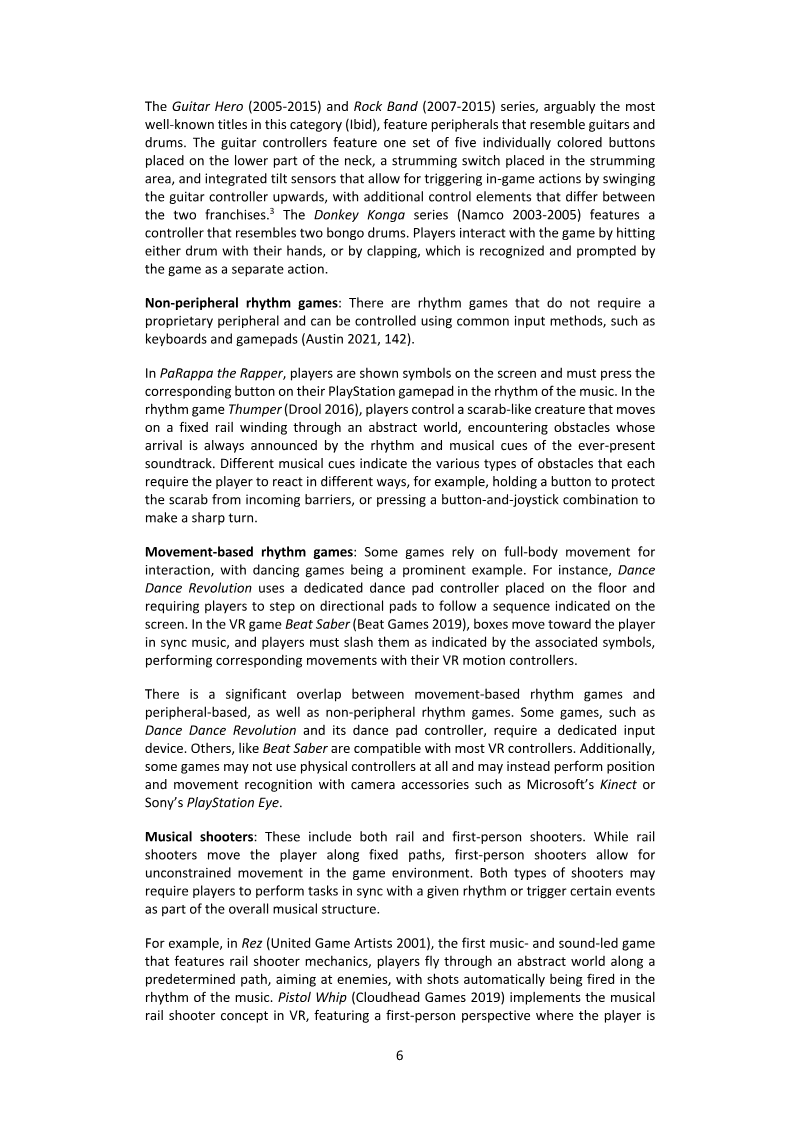
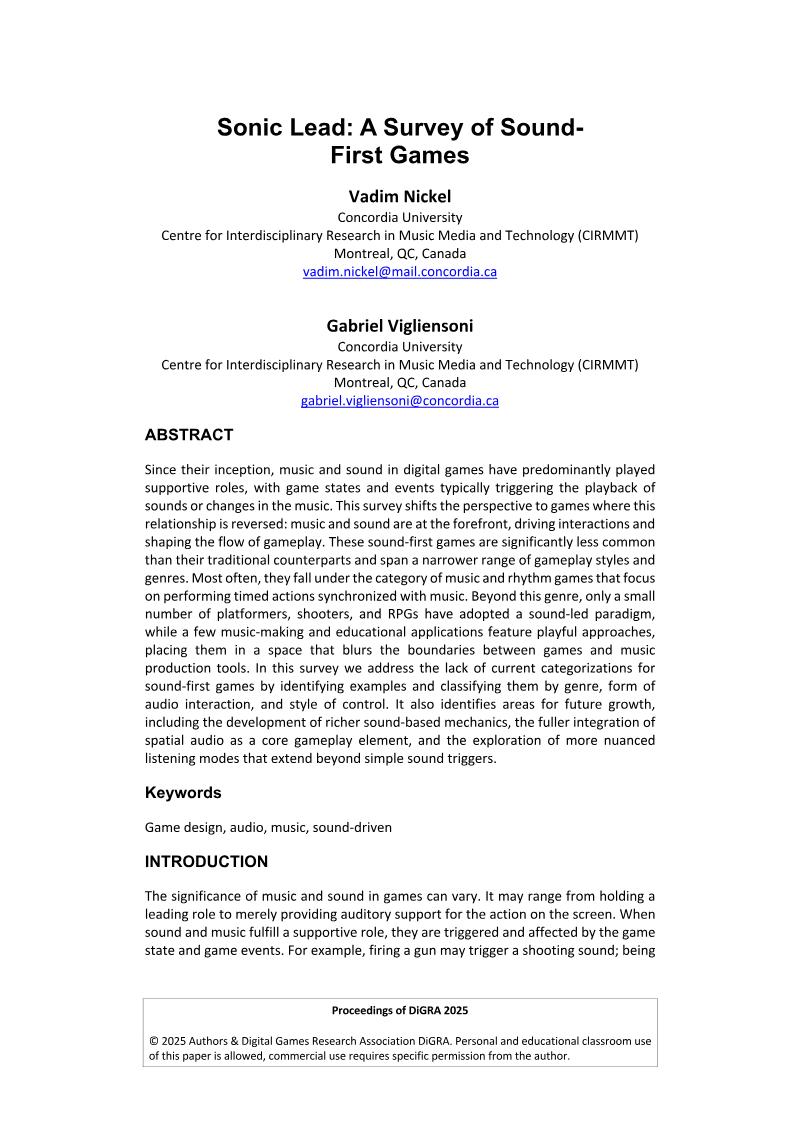
"Sonic Lead: A Survey of Sound-First Games" argues that games in which music and sound drive interaction, rather than merely accompanying it, are rare and lack an established classification.
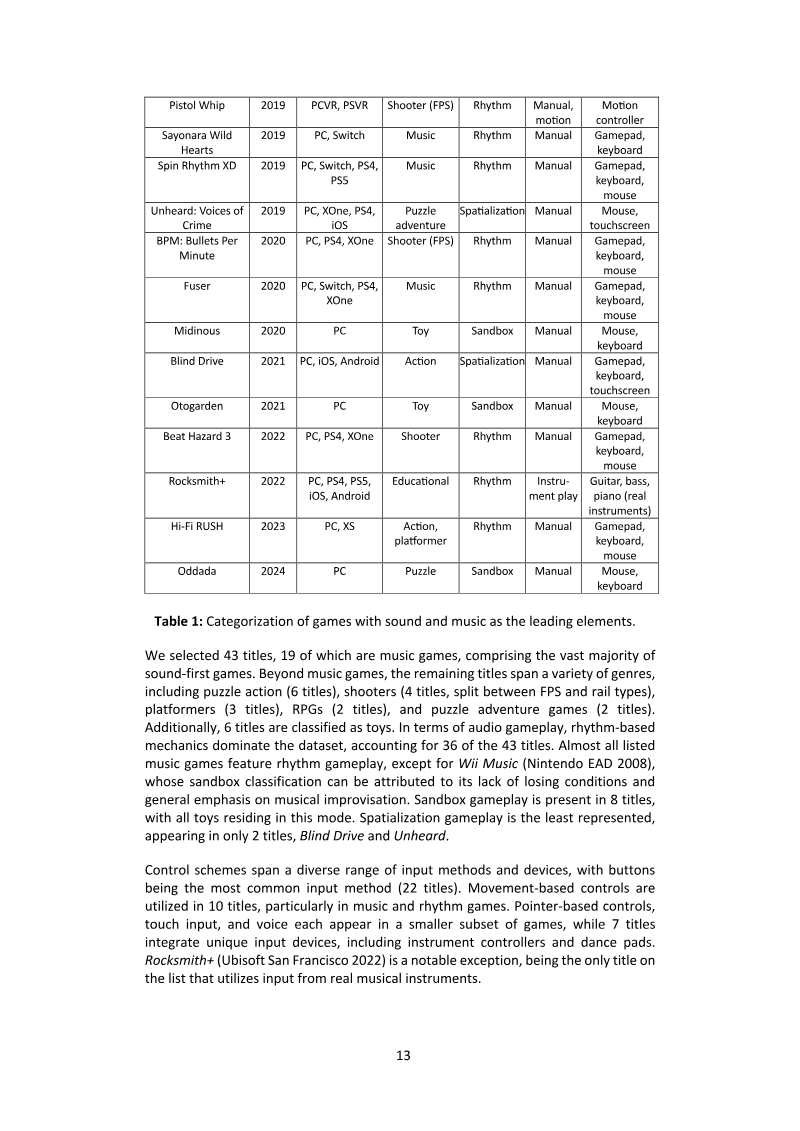
- Rhythm mechanics dominate sound-first games, appearing in 36 of the 43 surveyed titles, while pitch- and timbre-based gameplay is rare.
- Spatialization, a potentially rich sound mechanic, appears in only two titles in the catalog: Blind Drive and Unheard.
- Button-based controls are the most common input method, found in 22 titles, with motion, touch, voice, and specialized peripherals appearing less often.
Game Jockey as an Intermediary Between DJ Practice and Video Games
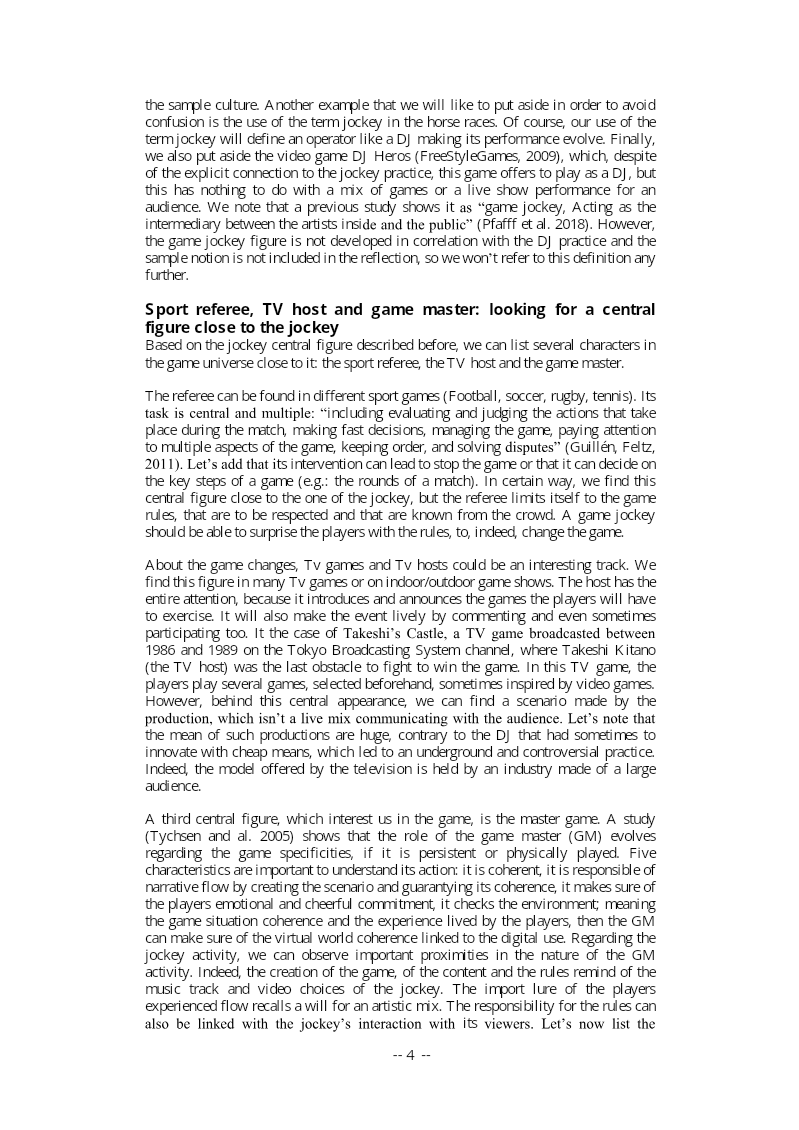
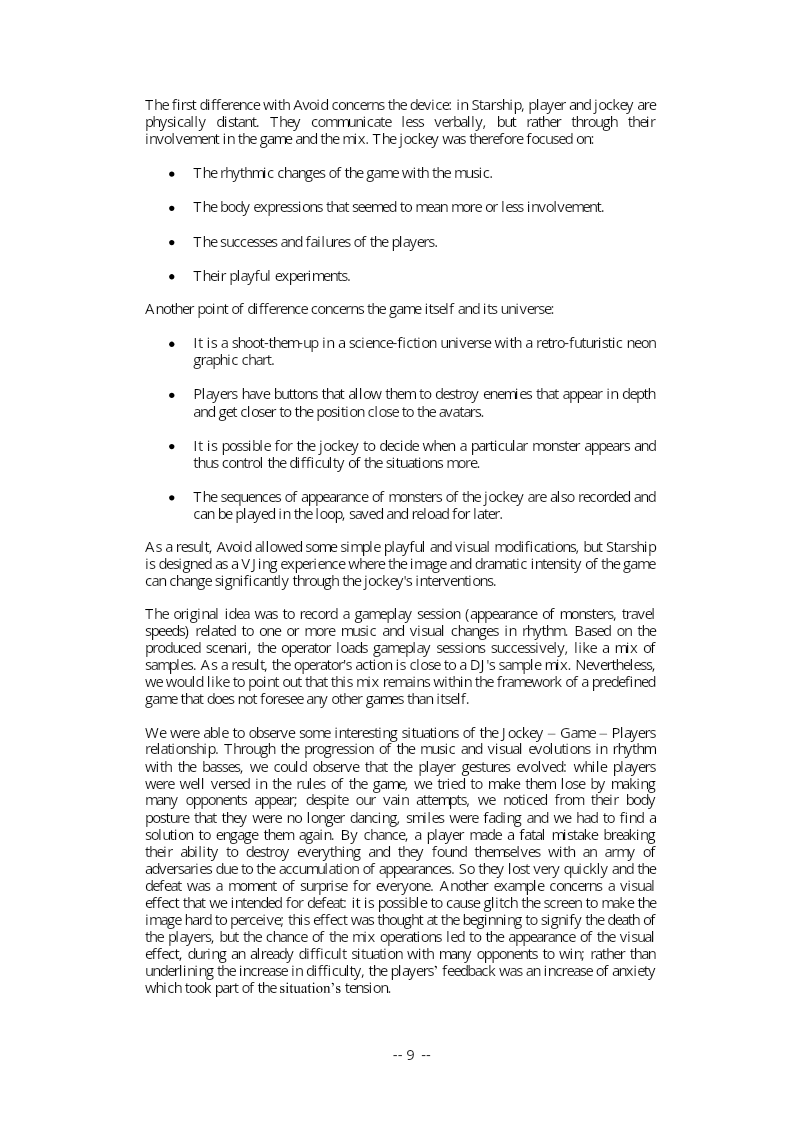
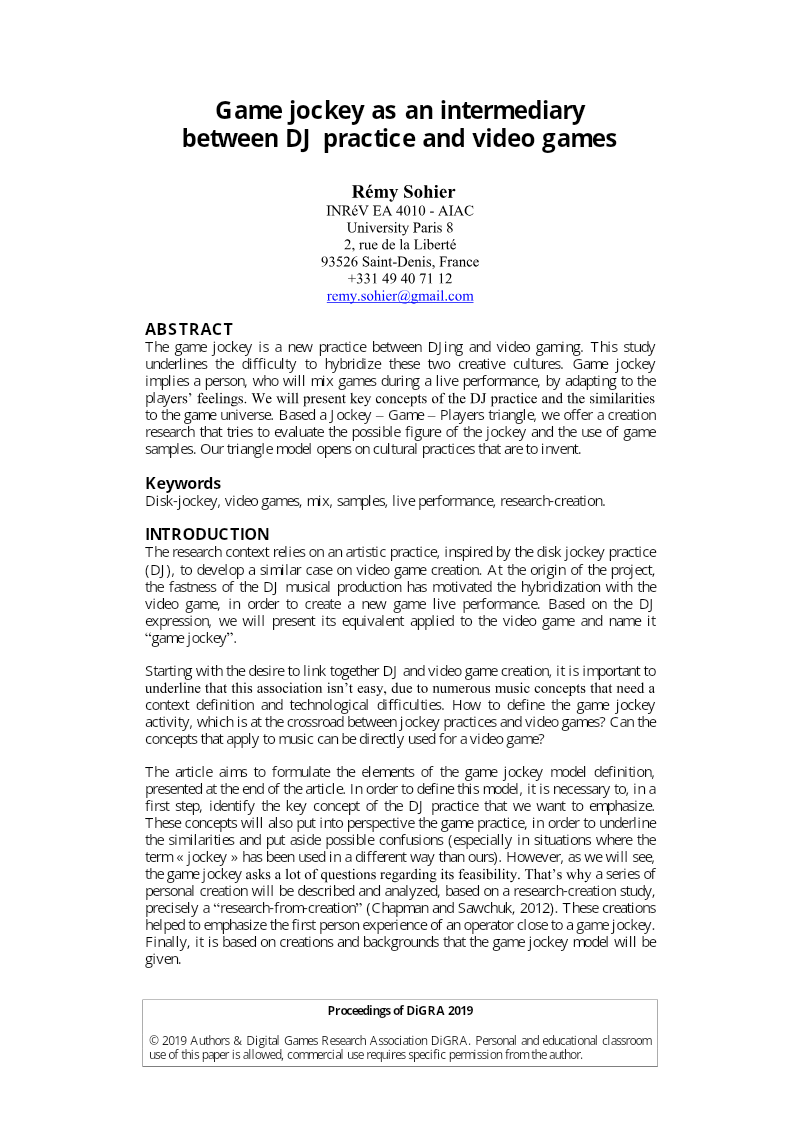
The document proposes the "game jockey," a hybrid figure who performs live mixes of games for players in the way a DJ mixes recorded music, adapting in real time to audience reactions.
- The report proposes the "game jockey," a hybrid performer who live-mixes games for players the way a DJ mixes recorded music, adapting in real time to audience reactions.
- Its central claim is that core DJ concepts (live performance, sample culture, mixing, and remixing) can be productively mapped onto video games, supported by analogies to sports referees, TV hosts, game masters, and VJs.
- The author's Jockey–Game–Player triangular model frames the performer as an intermediary between a game system and its audience.
Thought-Provoking Play: Political Philosophies in Science Fictional Videogame Spaces from Japan
Martin Roth's study examines whether Japanese science-fictional videogames can serve as spaces for political philosophy, specifically by stimulating the political imagination that Roth argues is threatened by neoliberal capitalism's narrowing of perceived alternatives.
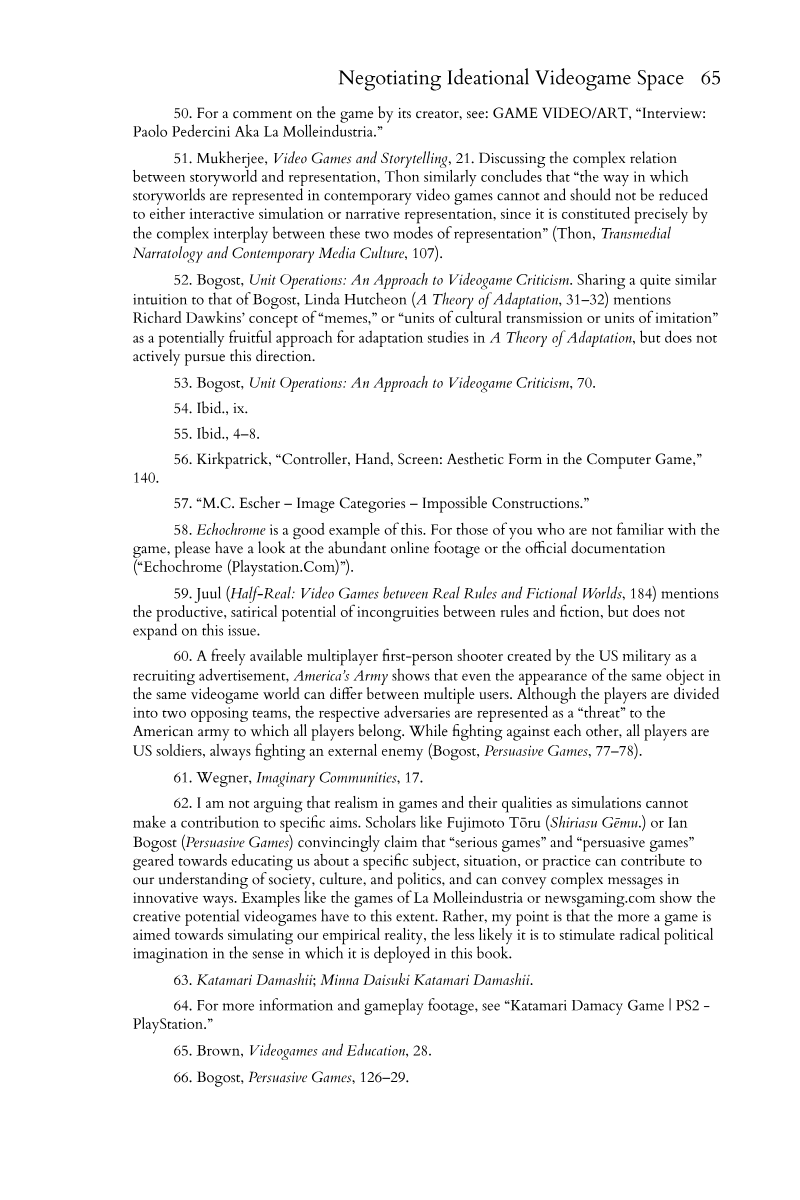
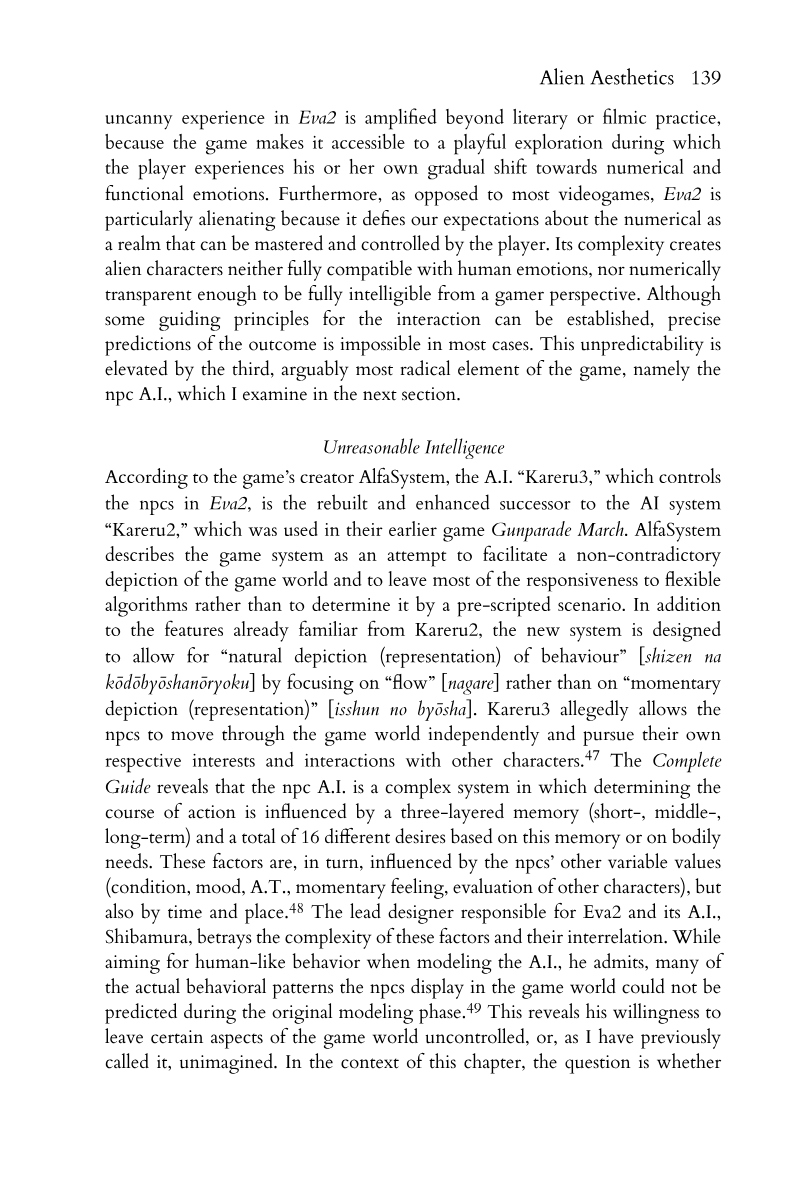
- Roth argues that videogames function as an 'ideational' or 'enacted' space co-produced by designers, the computer, and players, where rule systems, narrative, representation, and randomness generate conflicts that resist full simulation; he frames this as a hypothesis tested through close analysis rather than a demonstrated finding.
- The study is motivated by the claim that neoliberal capitalism narrows perceived alternatives and threatens the political imagination, and it proposes Japanese science-fictional games as spaces that can stimulate that imagination.
- Science-fiction titles accounted for only seven of 204 million-selling Japanese games, yet held a steady 10 to 15 percent of annual top-100 sales between 2000 and 2011, with the market dominated by Gundam franchises.
Levels of Sound: On the Principles of Interactivity in Music Video Games
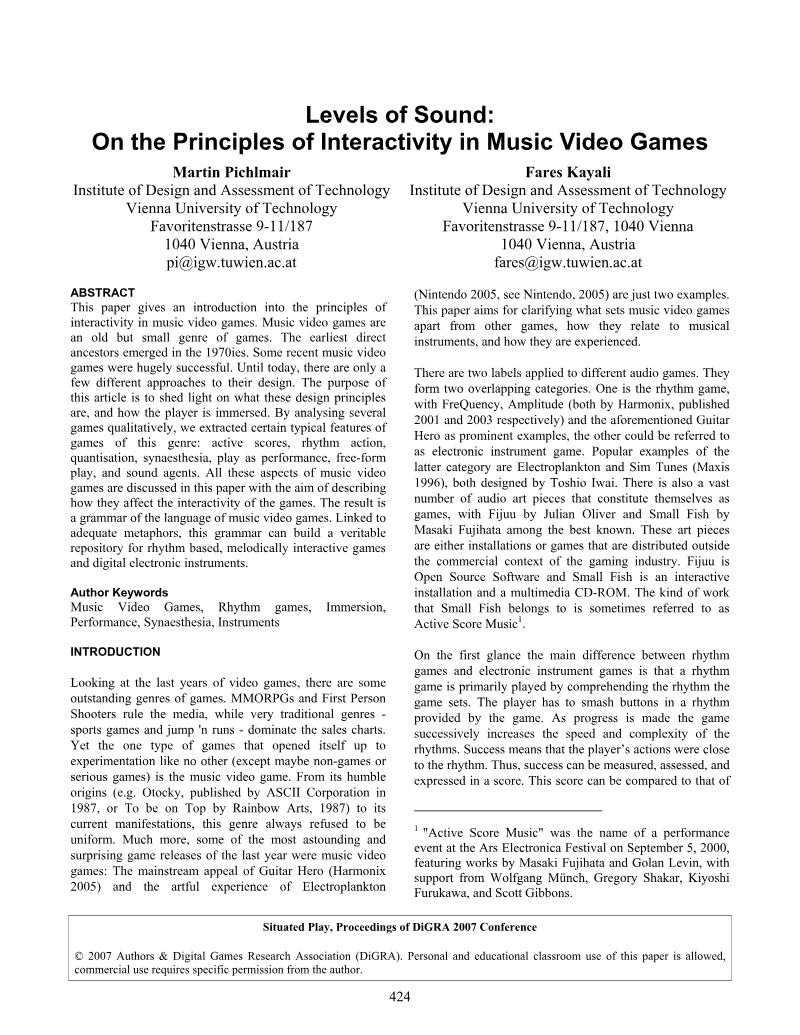
This paper examines the principles of interactivity in music video games, a small but distinctive genre whose roots extend to the 1970s and whose recent releases, such as Guitar Hero and Electroplankton, have achieved both mainstream success and artistic recognition.
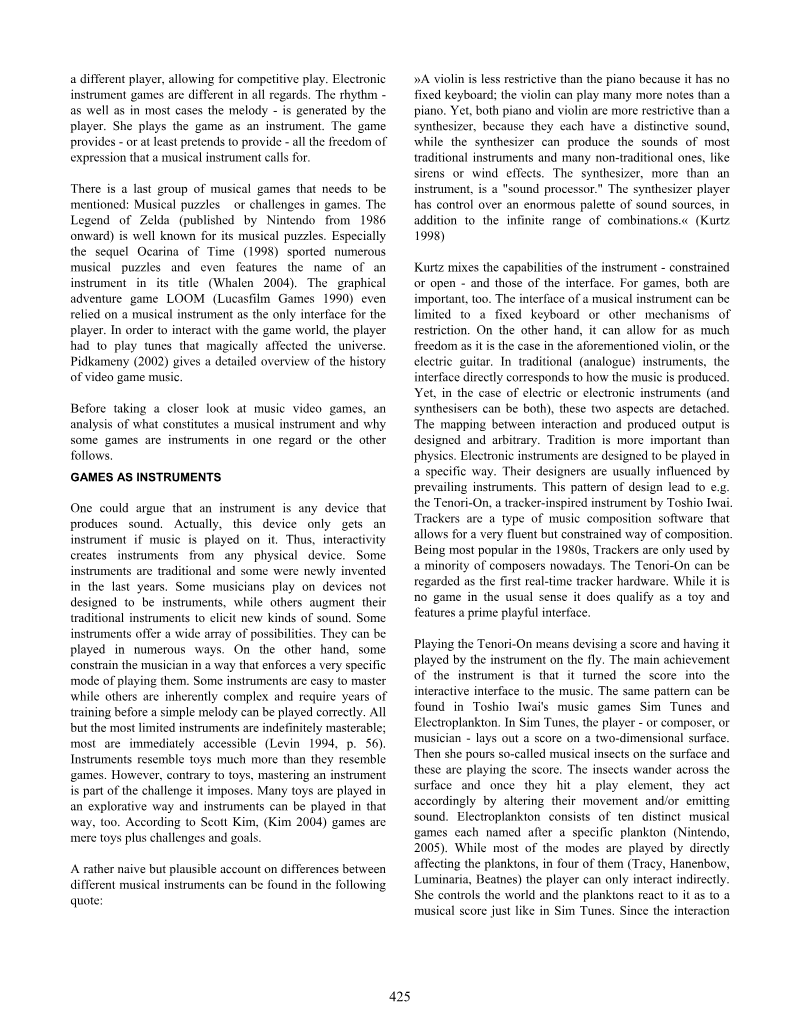
- The paper divides music video games into two overlapping categories, rhythm games and electronic instrument games, and argues their interactive properties can be organized into a grammar of design.
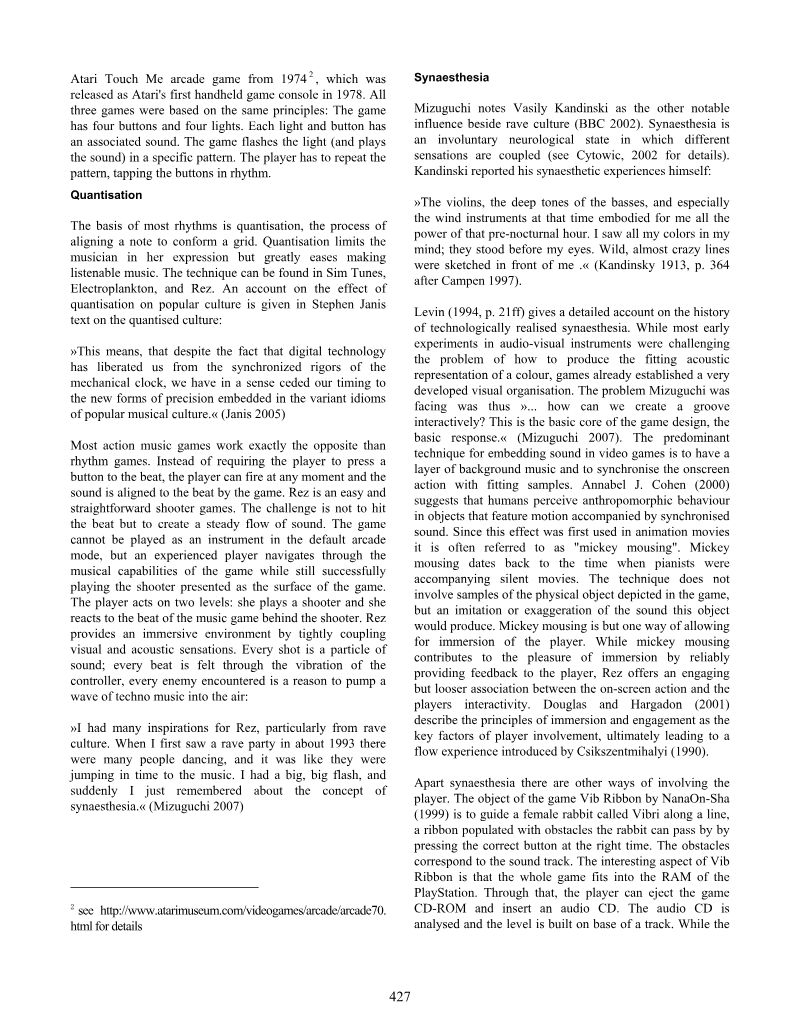
- The framework identifies seven recurring qualities: active scores, rhythm action, quantisation, synaesthesia, play as performance, free-form play, and sound agents.
- Rhythm games centre on repetition and matching a tempo, with success measured as a score, whereas instrument games emphasize quantised, open-ended composition where the input-to-sound mapping is governed by convention rather than physics.
Feel It, Don't Think: The Significance of Affect in the Study of Digital Games
Eugénie Shinkle's paper argues that game studies methodologies focused on visual, narrative, and semiotic content overlook the embodied, physiological dimensions that give digital games their meaning.
- Shinkle argues that game studies focused on visual, narrative, and semiotic content overlook the embodied, physiological 'feel' of gameplay, which she calls affect: a multisensory, temporally delocalized experience that operates partly outside linear time and conscious choice.
- The paper distinguishes affect from emotion and presents itself as a preliminary theoretical examination rather than an empirical study, drawing on Massumi, Grodal, Aarseth, and Poole.
- Sega's rave-inspired Rez is cited as an example whose appeal lies in a trance-like synchronicity between player and environment rather than in level completion.
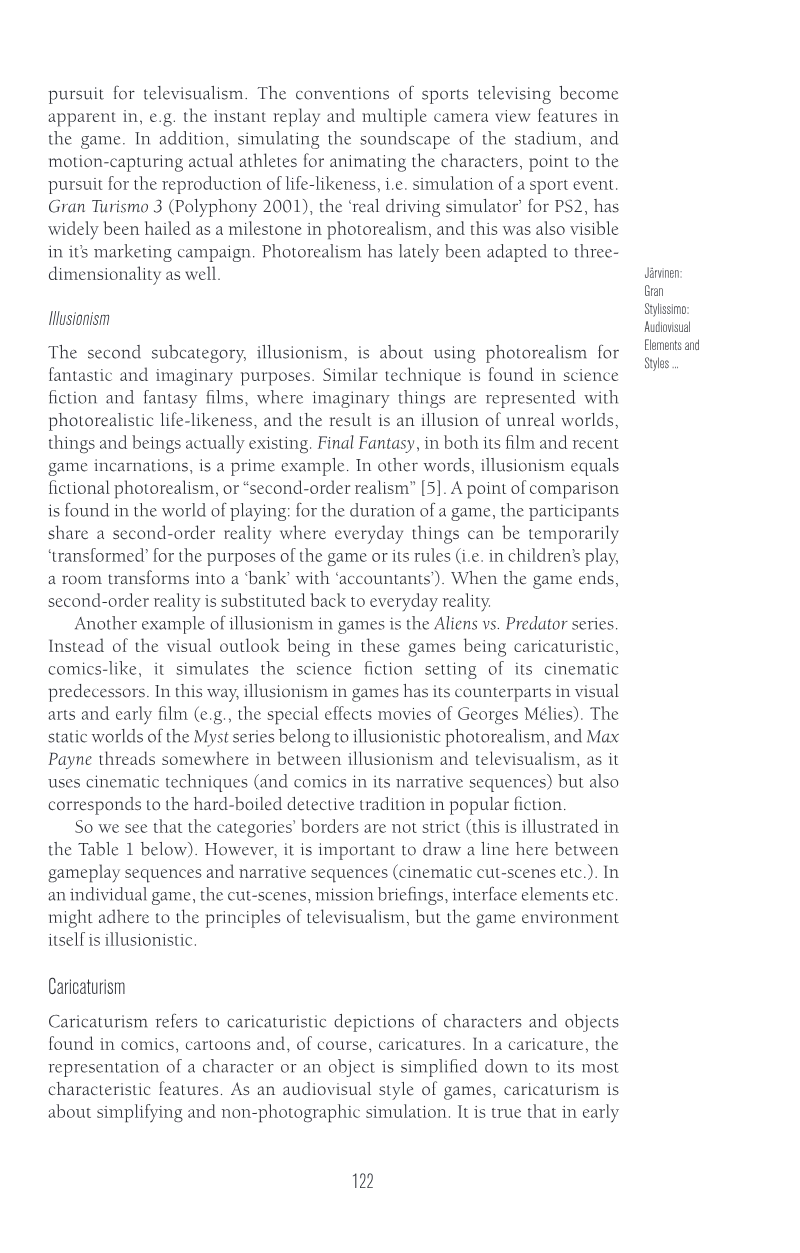
Gran Stylissimo: The Audiovisual Elements and Styles in Computer and Video Games
Aki Järvinen's "Gran Stylissimo" offers a framework for analyzing the audiovisual appearance of computer and video games, proposing that their styles can be classified into three categories: photorealism, caricaturism, and abstractionism.
- Järvinen's framework classifies game audiovisual style into three categories (photorealism, caricaturism, and abstractionism) and defines its elements as dimensionality, point of perception, visual outlook, and soundscape, arguing these matter more for understanding games than conventional genre labels alone.
- Games differ from film because players manipulate and simulate environments, which gives sound a functional role: diegetic sound grounds the player in the space and gives feedback on actions, while nondiegetic sound can be anchored to locations to build mood.
- Game aesthetics circulate constantly with film, as shown by Max Payne borrowing the 'bullet time' effect from The Matrix, so game styles cannot be analysed in isolation.