1 free read left. Create a free account for unlimited reading + AI research.
Create free accountWhitepaper DiGRA
1 free read left. Create a free account for unlimited reading + AI research.
Create free accountWhitepaperDiGRA
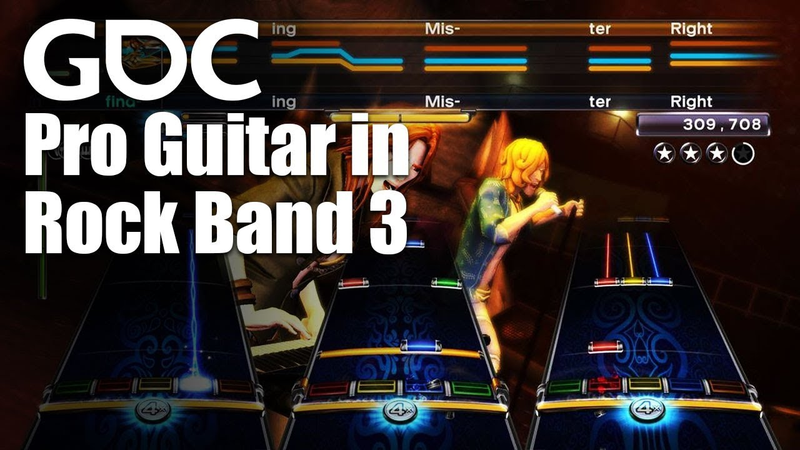
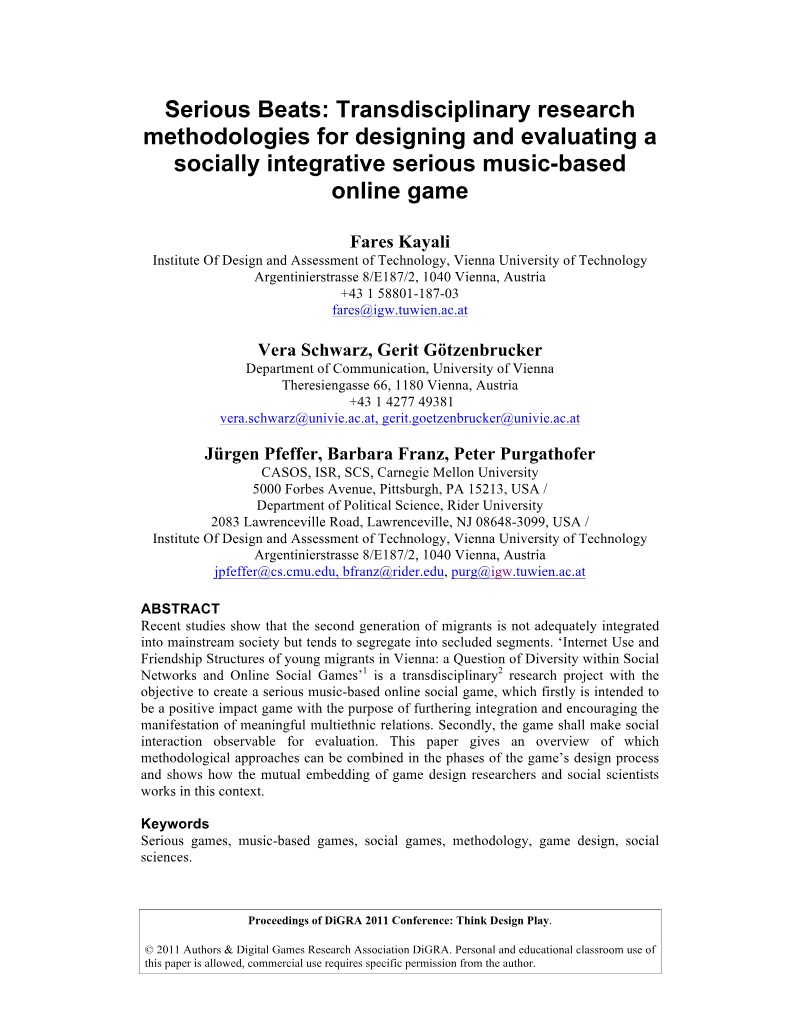
The paper describes music video games as a small but distinctive genre whose roots extend to the 1970s. It names Guitar Hero and Electroplankton among recent releases with mainstream success and artistic recognition.
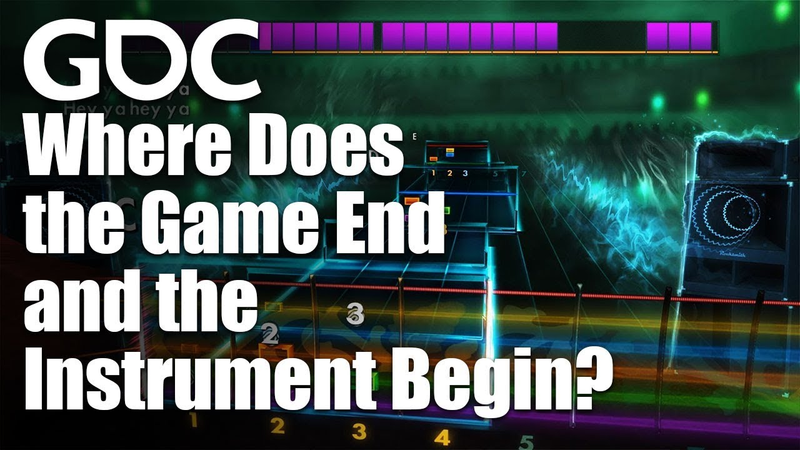
This paper examines the principles of interactivity in music video games, a small but distinctive genre whose roots extend to the 1970s and whose recent releases, such as Guitar Hero and Electroplankton, have achieved both mainstream success and artistic recognition. The authors aim to clarify what distinguishes these games from other titles, how they relate to traditional and electronic musical instruments, and how they immerse players. Rather than relying on quantitative data, the analysis proceeds qualitatively, examining a set of representative games and art works to extract recurring design features. The central claim is that music video games divide into two overlapping categories, rhythm games and electronic instrument games, and that their interactive properties can be organized into a grammar of design.
The analysis identifies seven recurring qualities: active scores, rhythm action, quantisation, synaesthesia, play as performance, free-form play, and sound agents. Rhythm games centre on repetition and the player's ability to match a tempo, with success measurable as a score, while instrument games emphasize quantised, open-ended composition in which the mapping between input and sound is arbitrary and governed by convention rather than physics. The authors draw historical lineages from Mozart's dice-based waltz game and Stockhausen's adaptive scores to Simon, Rez, and Vib Ribbon, arguing that games such as Rez and Vib Ribbon create immersion through tightly coupled audio-visual feedback. A comparative table maps each analysed title against these seven qualities, showing that Electroplankton and Sim Tunes exhibit the broadest range of instrument-oriented traits.
The authors conclude that the constraints inherent in many music video games, though limiting expressive freedom, are what make them accessible and playful, and that the illusion of control often masks a system that governs most outcomes. The paper presents its framework as a basis for future research rather than a definitive taxonomy, acknowledging that the set of games examined is selective.
Each row is a game or company this document names, each column a document, oldest first. A mark means that document names it. Select a row to see those documents.
DiGRA · 2022

DiGRA · 2022
DiGRA · 2022
DiGRA · 2022
DiGRA · 2022
DiGRA · 2022
DiGRA · 2022
DiGRA · 2022
DiGRA · 2022
DiGRA · 2022
DiGRA · 2022
DiGRA · 2022
DiGRA · 2019