No Man's Sky
13 documents in the library are about No Man's Sky, from writers such as Game Developers Conference, Extra Credits and Alinea Analytics, the newest from 2026. Each has a summary and key insights with the page they come from.
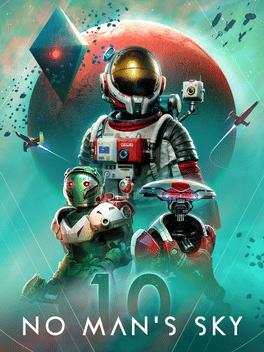
No Man's Sky is an action-adventure survival game set in a procedurally generated universe containing over 18 quintillion planets. Players explore star systems, gather resources, trade with alien species, and upgrade their equipment while following an overarching narrative involving a mysterious entity called the Atlas. The game is built around four pillars: exploration, survival, combat, and trading. Since its 2016 launch, it has received numerous free updates adding multiplayer, base building, fleet management, and virtual reality support.
- Released
- Aug 9, 2016
- Developer
- Hello Games
- Publishers
- 505 Games, Sony Interactive Entertainment
- Genres
- Shooter, Simulator, Adventure, Indie, Arcade
- Platforms
- Xbox Series X|S, PlayStation VR2, PlayStation 4, Nintendo Switch 2, PlayStation VR, PC (Microsoft Windows), SteamVR, PlayStation 5
- Links
- Wikipedia
Game data from IGDB.com
Documents about No Man's Sky
Games For Breakfast Feat. TierZoo | Ep.73 | Gaming News
The modern gaming landscape is defined by a tension between player-driven innovation and the volatility of platform-level control.
- Old School RuneScape is introducing a 'BronzeMan' mode, an official implementation of a previously unofficial community challenge similar to the 'Iron Man' mode.
- The game 'Aliens: Fireteam Elite' on Nintendo Switch has become inaccessible to users because it relied on cloud streaming, and the servers hosting the game have been shut down.
- Hello Games is using the development of 'No Man's Sky' as a technical testing ground for mechanics that will be implemented in their upcoming title, 'Light No Fire'.
Destiny 2's Sunset, Pay-Per Click Game Journalism & Star Citizen's Billion $$$ | Games For Breakfast
The gaming industry is currently navigating a period of significant structural instability, characterized by the sunsetting of long-term live-service titles and the erosion of traditional labor standards.
- Star Citizen has officially surpassed $1 billion in total crowdfunding revenue, despite the game remaining in an alpha state and featuring high-cost digital assets like a $5,000 ship designed for large crews.
- Bungie is sunsetting Destiny 2, meaning the game will cease receiving new content updates after June 6, though the servers will remain online for existing players.
- Sony’s acquisition of Bungie for $3.6 billion has faced financial scrutiny, with reports indicating the studio has incurred approximately $766 million in losses since 2022.
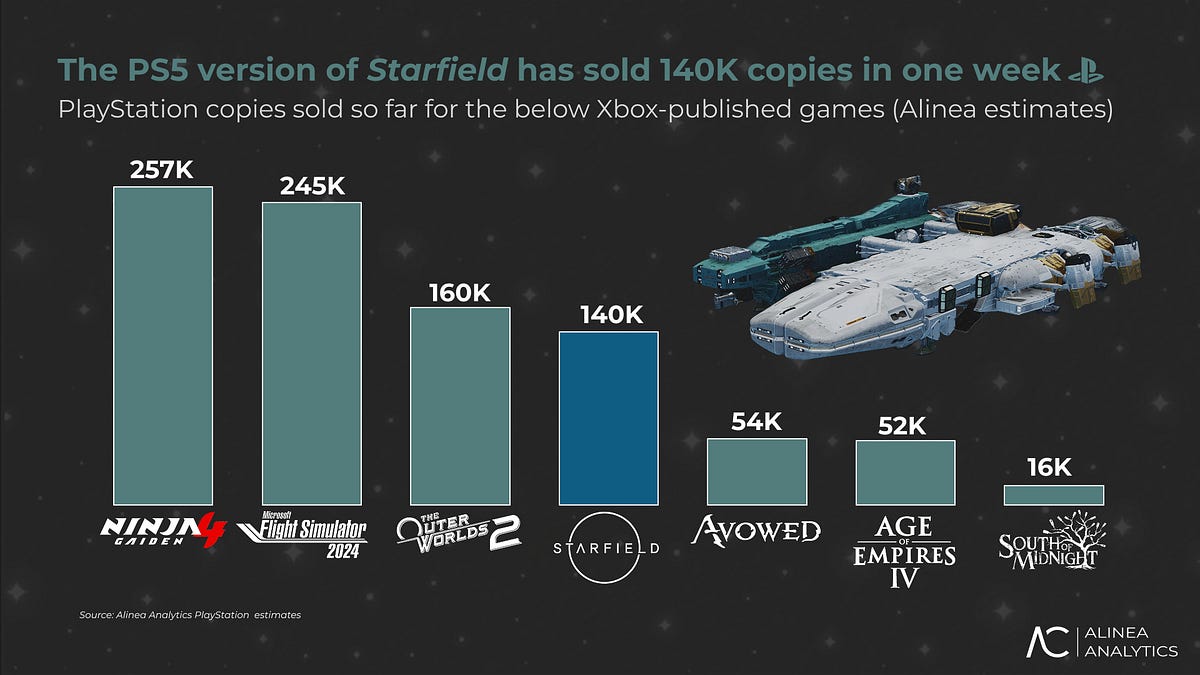
Starfield Has Sold 140K Copies on PS5
The release of Starfield on PlayStation 5 has yielded 140,000 copies sold within its first week, generating $7.7 million in gross revenue.
- Starfield sold 140,000 units on PS5 in its first week, generating $7.7 million in gross revenue.
- The 2.5-year delay between the Xbox/PC launch and the PS5 release significantly limited sales potential compared to a simultaneous multiplatform launch.
- Despite the middling PS5 start, Starfield has outperformed other recent Xbox-to-PlayStation ports in launch-aligned sales, including The Outer Worlds 2 and Microsoft Flight Simulator 2024.

On Pile-Ons and Haters: A Theory
The phenomenon of the online pile-on represents a complex intersection of collective outrage and narrative persistence within the modern gaming industry.
- Online pile-ons often frame standard development challenges as moral grievances, using emotionally charged narratives like 'malicious deception' to drive collective outrage.
- Social media feedback loops prioritize viral outrage over the technical and production realities of game development, making initial backlash difficult to counter with facts.
- While consistent, high-quality post-launch updates—as seen with Hello Games and No Man’s Sky—can successfully rehabilitate a title’s commercial and critical standing, they do not necessarily eliminate a core base of detractors.
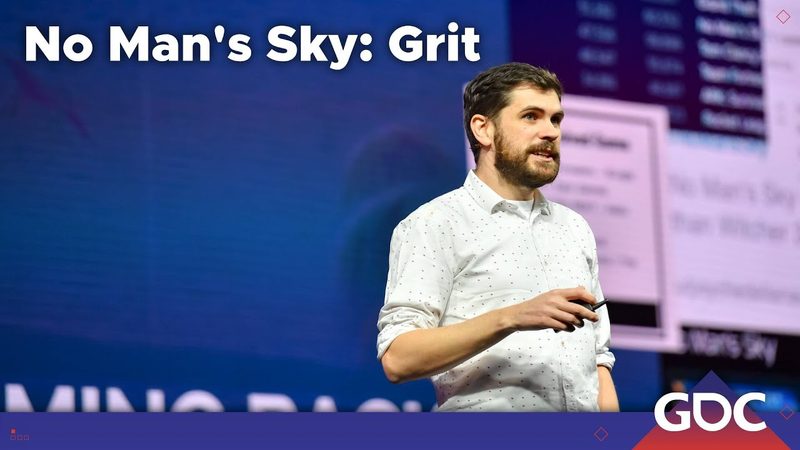
No Man's Sky: Grit
The development and launch of No Man’s Sky serves as a case study for navigating extreme industry adversity and managing the transition from a polarizing release to long-term success.
- Focus on actions over words by communicating with players exclusively through patch notes and game updates rather than blog posts or press releases.
- Filter feedback by treating it as raw data; analysis revealed that 80-90% of toxic commentary originated from individuals not invested in the game, allowing the team to ignore noise and focus on actionable player needs.
- Define a clear metric for success—such as player concurrency or critical reception—and optimize every team decision toward that specific goal to simplify complex development choices.
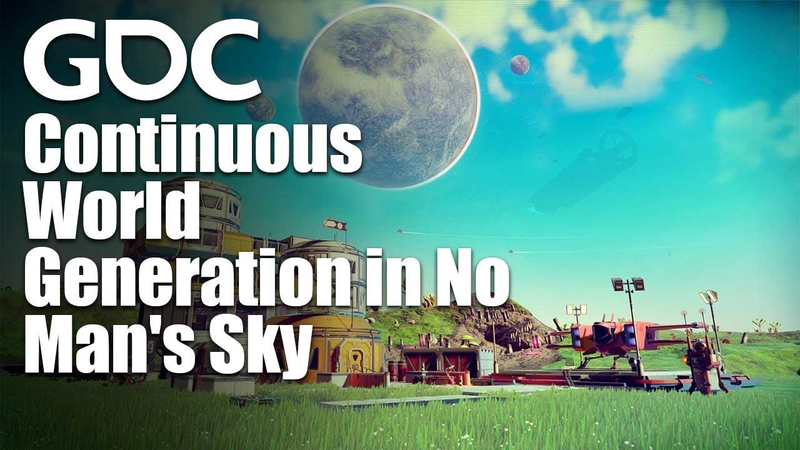
Continuous World Generation in No Man's Sky
No Man’s Sky achieves a seamless, galaxy-wide exploration experience through a custom C++ engine designed to handle real-time, procedural world generation.
- No Man’s Sky utilizes a custom C++ engine that balances procedural generation with artistic control by prioritizing developer-facing tools over purely autonomous algorithms.
- The engine simulates terrain on a sphere using an octree structure projected onto a cube, which eliminates flat-plane wrapping artifacts and manages complex gravity and coordinate systems.
- To optimize performance and memory, the system employs dynamic levels of detail and a multi-threaded job system that offloads generation tasks across diverse hardware.
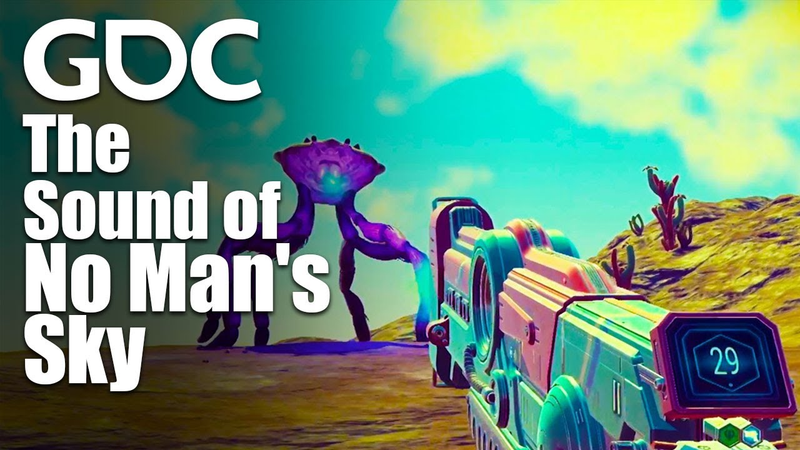
The Sound of No Man's Sky
The audio architecture of No Man’s Sky represents a fundamental shift from traditional event-driven sound design toward a highly flexible, state-driven system capable of supporting an infinite, procedurally generated universe.
- No Man’s Sky utilizes real-time ray casting to dynamically adjust audio layers and filters based on environmental variables, replacing the need for manual sound emitter placement in a procedurally generated universe.
- The 'Pulse' music engine deconstructs original compositions into 16,000 individual elements, remixing them in real-time based on player movement and location to create a non-linear, evolving soundtrack.
- The 'Rock Alien' synthesizer employs feedback-based pipe modeling and phoneme filtering to generate creature vocalizations that scale biologically according to specific in-game traits like size and behavior.
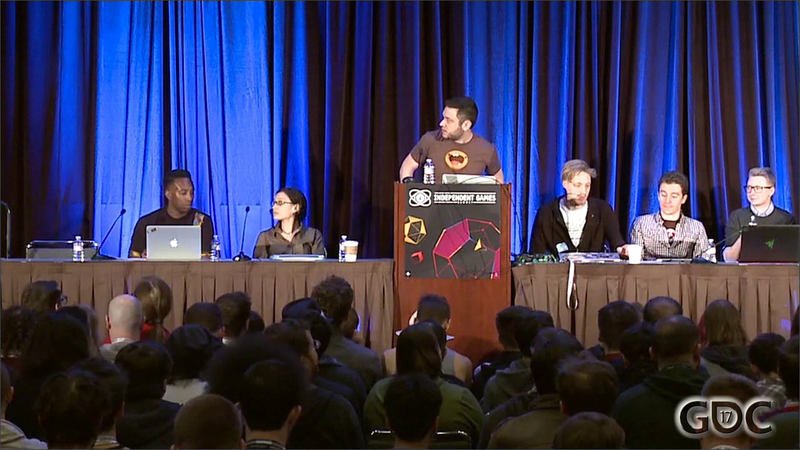
The 2017 GDC Tech Toolbox
Custom tool development serves as a critical catalyst for modern game production, enabling studios to overcome technical constraints while fostering creative iteration.
- Custom internal tool development is essential for overcoming technical constraints and enabling small teams to achieve high-fidelity results that off-the-shelf software cannot support.
- Procedural pipelines, as seen in titles like No Man's Sky, utilize modular texture layers, XML metadata, and shader-based processing to increase visual variety while maintaining memory efficiency.
- Development productivity is significantly improved by tools like Dark Config, which allow for the hotloading of configuration files to accelerate the design iteration cycle.
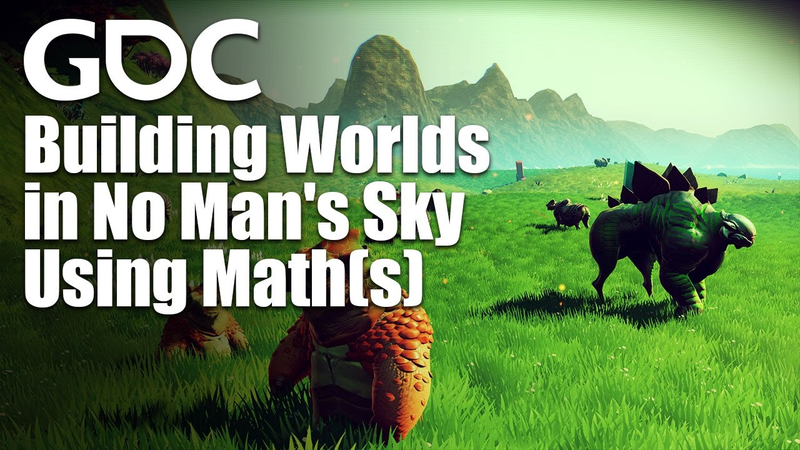
Building Worlds in No Man's Sky Using Math(s)
Procedural generation serves as the foundational architecture for No Man’s Sky, enabling the creation of a vast, diverse universe within a remarkably compact 300MB footprint.
- No Man’s Sky achieves a vast, diverse universe within a 300MB footprint by utilizing a custom engine driven by mathematical functions rather than pre-baked assets.
- The engine employs 'Uber noise'—a synthesis of layered 2D and 3D noise—to generate organic, non-repeating terrain features like erosion and overhangs without needing context from neighboring voxels.
- The procedural framework successfully handled a launch load of 500,000 concurrent players while maintaining a stable 1% crash rate.
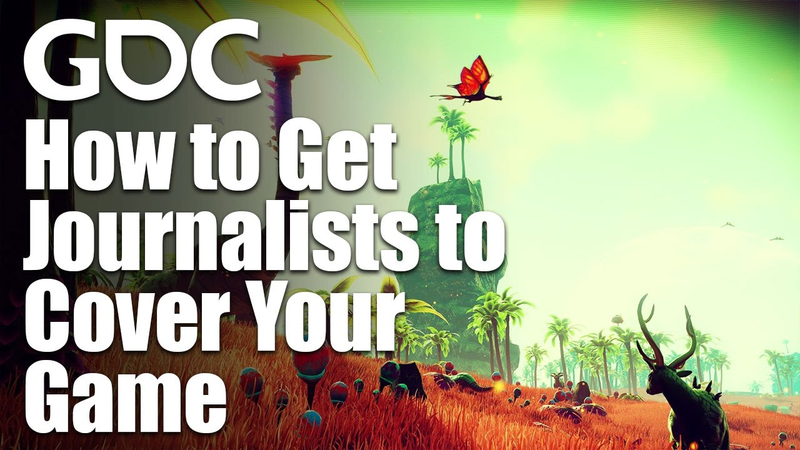
Get Journalists to Cover Your Game: Lessons from Online Dating, Praying and No Man's Sky
The modern gaming landscape is defined by extreme saturation, with over 4,000 titles launching annually on Steam alone.
- With over 4,000 titles launching annually on Steam, the extreme market saturation necessitates a shift from broad outreach to highly targeted, high-impact communication.
- Developers must treat pitches like dating profiles, ensuring the core value proposition is conveyed within ten seconds using concise messaging.
- High-quality GIFs demonstrating immediate, watchable fun are essential assets for capturing journalist attention in a crowded media landscape.
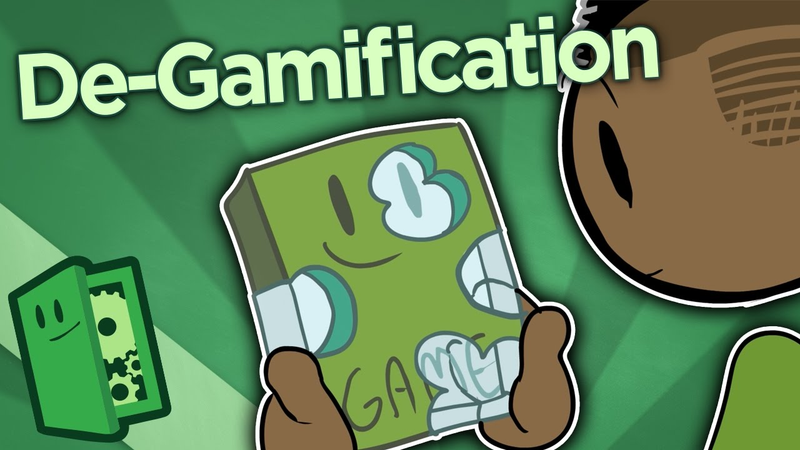
De-Gamification - Flexibility to Play Your Way - Extra Credits
De-gamification serves as a critical design methodology that involves the intentional removal or relaxation of extrinsic motivators—such as scores, timers, leaderboards, and resource limitations—to evaluate the core, intrinsic appeal of a game.
- De-gamification is a design methodology that removes extrinsic motivators like scores, timers, and leaderboards to isolate and evaluate the core intrinsic appeal of a game's mechanics.
- Developers use de-gamification as a testing tool to determine if movement, exploration, and interaction are inherently engaging without relying on external validation or performance pressure.
- Removing systemic constraints during development often reveals new creative possibilities, as testers frequently invent their own challenges when freed from rigid objectives.
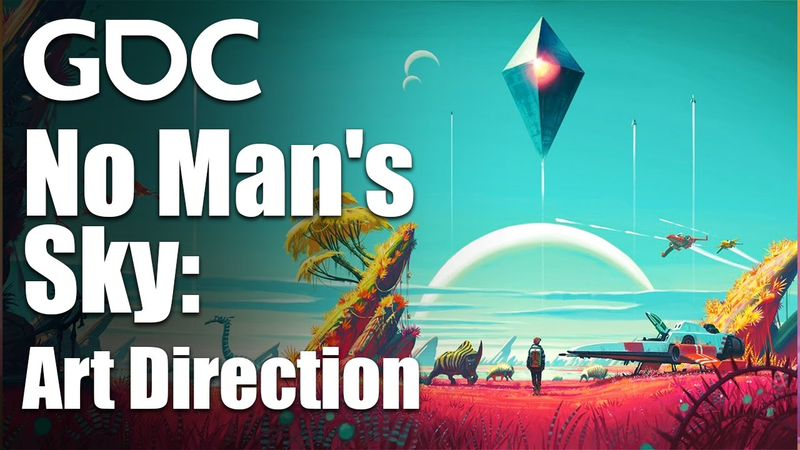
The Art Direction of No Man's Sky
The visual identity of No Man’s Sky draws primary inspiration from the optimistic, vibrant aesthetic of 1970s science fiction book covers, specifically the works of artists like Chris Foss and Moebius.
- The visual identity of No Man's Sky is based on the 1970s science fiction aesthetic of artists like Chris Foss and Moebius, intentionally prioritizing vibrant wonder over industry-standard post-apocalyptic grit.
- The game utilizes a flexible super-biome system that dictates landscape formation based on environmental variables, such as a planet's proximity to its sun, rather than relying on rigid, predictable biome presets.
- Artistic control is maintained through a blueprint system that applies structural constraints to procedural assets, ensuring visual consistency and readability across ships, flora, and fauna.