Never Alone: Kisima Ingitchuna
Game
- How much revenue has Never Alone: Kisima Ingitchuna made?
- How many players does Never Alone: Kisima Ingitchuna have, and how is that changing?
- What do industry reports say about Never Alone: Kisima Ingitchuna's performance?
- Which games compete with Never Alone: Kisima Ingitchuna, and how do they compare?
Documents about Never Alone: Kisima Ingitchuna
Harnessing the Soft Power of Videogames in Digital Diplomacy
Amanda Rodríguez Espínola's article, published in the 2026 special issue "Beyond Play" of Gamevironments, argues that video games are well suited to digital diplomacy because their participatory, rule-based design allows players to perform and internalize the values of other cultures.
- Video games are argued to be well suited to digital diplomacy because their participatory, rule-based design lets players perform and internalize other cultures' values, which the author claims conveys worldviews more deeply than passive media.
- The central claim is that games generate soft power through both narrative and procedural rhetoric, with the indigenous-developed Never Alone (2014) as the principal case study.
- State-sponsored games such as the U.S. Army's America's Army and the World Bank's Urgent: EVOKE are shown to struggle with credibility abroad, while organically successful titles like Nintendo-driven Japan's Cool Japan strategy and Poland's The Witcher achieve broader resonance.
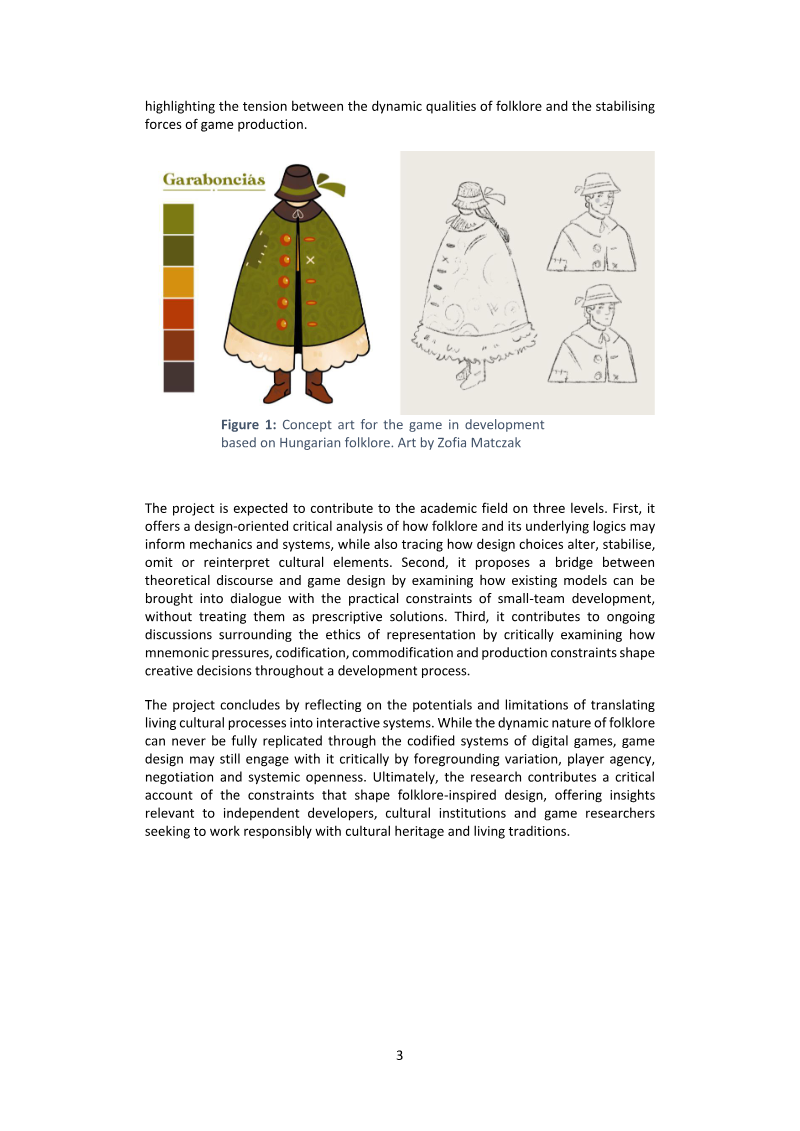
Playable Folklore: Digital Games and the Representation of Folklore and Cultural Heritage
This paper examines how digital games represent folklore and cultural heritage, arguing that the translation of living, variable cultural processes into codified, rule-based systems introduces structural and ethical tensions.
- Translating living, variable folklore into codified, rule-based game systems creates structural and ethical tensions, chiefly that tradition becomes stabilised as 'heritage' when it is managed or staged for external consumption.
- The paper proposes 'playable folklore' as a lens that treats games not as display cases for heritage but as cultural systems in which traditions are selected, stabilised, transformed, and contested.
- Its theoretical framework rests on four concepts: cultural presence, folk mechanics, digital folklore, and mnemonic hegemony.
Press Play to Start: The Challenges of Exhibiting Video Games at the Museum
Museums are increasingly grappling with how to exhibit video games as art, a shift that has accelerated since MoMA's 2012 acquisition of fourteen games for its Architecture and Design collection and the Smithsonian's The Art of Video Games that same year.
- Games resist conventional art presentation because their interactivity, dependence on evolving technology, and commercial origins do not fit the neutral 'white cube' gallery model, a tension framed through theorists Brian O'Doherty and Lev Manovich.
- Institutional recognition of games as art accelerated with MoMA's 2012 acquisition of fourteen games for its Architecture and Design collection and the Smithsonian's 2012 exhibition The Art of Video Games.
- Curators must 'translate' games' digital culture, community-based contexts, and interactive logic for diverse audiences, a framework associated with Domenico Quaranta, while funding pressures and audience appeal shape which titles are selected.
Designing Anthrogames: Theory, Methods, and AI Integration in Cultural Gaming
This study introduces "anthrogames" as a distinct category of games designed to integrate anthropological knowledge with interactive design, differentiating them from general educational games or traditional ethnographic media.
- Anthrogames are framed as a distinct category from educational or documentary games because they are grounded in ethnographic methodology, with the field tracing a progression from virtual ethnography (2000–2008) through game production studies (2009–2015) to recognized practice (2016–2024).
- The central argument is that large language models and participatory design could substantially reshape how anthrogames are developed, but the work is primarily conceptual and literature-based, offering no quantitative findings.
- Never Alone (developed with the Cook Inlet Tribal Council and Iñupiaq community input) is presented as a model of cultural insight integrated into cooperative mechanics, while The Long Day of Young Peng translates Andrea Pia's fieldwork on rural-urban labor migration in China into playable experience.
Companies behind it

As the documents state it.