
Into the Breach
GameBy Subset Games · Released Feb 27, 2018
The remnants of human civilization are threatened by gigantic creatures breeding beneath the earth. You must control powerful mechs from the future to hold off this alien threat. Each attempt to save the world presents a new randomly generated challenge in this turn-based strategy game from the makers of FTL.
Connections
Each row is a game or company named alongside Into the Breach, each column a document, oldest first. A mark means that document names it. Select a row to see those documents.
About the game
- Released
- Feb 27, 2018
- Developer
- Subset Games
- Genres
- Puzzle, Role-playing (RPG), Simulator, Strategy, Turn-based strategy (TBS), Indie
- Platforms
- Google Stadia, Linux, Android, PC (Microsoft Windows), iOS, Mac, Nintendo Switch
- Links
- Wikipedia
Game data from IGDB.com
Documents about Into the Breach
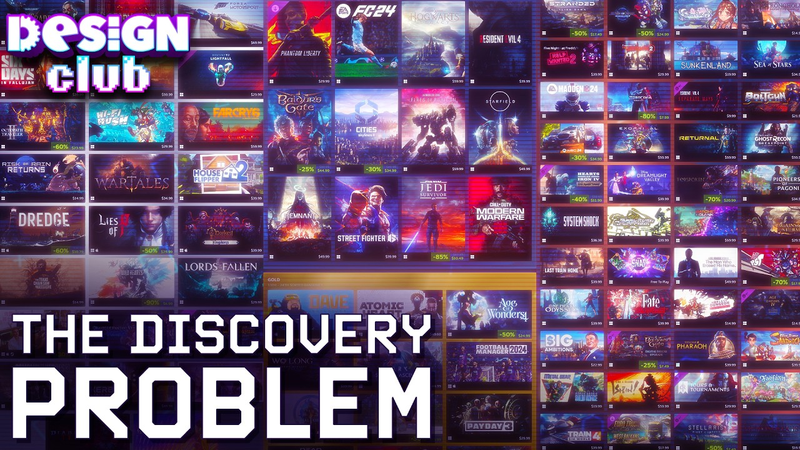
The Discovery Problem | Design Club
The primary challenge for independent game developers in the current digital landscape is navigating the discovery problem, which remains a manageable hurdle for those targeting the dedicated Steam audience.
- The primary driver of game discovery is the ability for players to immediately identify a game's genre and hook from its store page, as shoppers make rapid decisions based on visual clarity.
- Steam's algorithm prioritizes games based on opportunity cost, meaning even highly-rated games may struggle for visibility if they fail to convert impressions into sales compared to other available titles.
- Steam's discovery queue is effective because it targets 'tastemakers'—highly engaged players who act as gatekeepers; if these users engage with a title, they often drive organic growth through word-of-mouth recommendations.
Managing the 'Tail' on Hit Games
The management of a game’s long-tail revenue—the ongoing sales performance of titles after their initial launch window—is an increasingly vital yet complex aspect of the video game industry.
- Outsourcing long-tail management to specialized firms can drive significant revenue growth, as evidenced by Subset Games, which saw a 46% year-over-year revenue increase for titles like FTL and Into The Breach after partnering with Rekoup.
- Effective catalog management requires moving beyond simple price cuts to a strategy of dynamic discount scheduling and curated visibility events.
- Proactive relationship management with digital storefront operators is a critical, specialized operational task that often yields better performance than passive discounting.
How Much Game Can You Fit in 2.7 Inches?
The Playdate handheld console serves as a case study for the creative potential of hardware limitations in an industry otherwise dominated by trends toward larger budgets and expansive scale.
- The Playdate ecosystem has reached over 70,000 units sold with more than 250 software releases, resulting in over $1 million in total payouts to developers.
- Hardware constraints, specifically the 2.7-inch 400x240 black-and-white screen and unique crank input, force developers to prioritize design focus and technical optimization over expansive scale.
- Developers from studios like Subset Games and Scenic Route Software report that the platform's niche user base simplifies testing and enables a more intimate, efficient development process compared to multi-platform projects.
Deployment Mechanics in Analog and Digital Strategic Games: A Historical and Theoretical Framework
Deployment, the phase in which players place forces on a board or digital battlefield, is examined here as a revealing mechanic for understanding military-themed strategy games.
- Deployment, the phase where players place forces on the board, is used as a lens for understanding military-themed strategy games and their relationship to military interests and the liminal status of play.
- The study limits its scope to wargames, which simulate real battle conditions, rather than stylized strategy games such as Chess, and distinguishes strategically meaningful deployment from non-strategic set-up.
- Analog wargames such as Third Reich and Squad Leader use full information and reactivity, making deployment a consequential decision, whereas digital adaptations often black-box or simplify the phase and introduce fog of war, making deployment speculative.
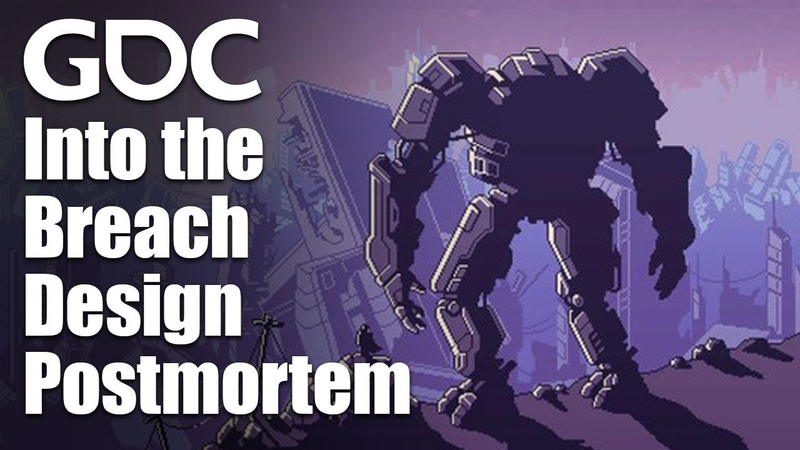
Into the Breach Design Postmortem
The development of Into the Breach demonstrates the efficacy of a minimalist design philosophy, where the prioritization of core gameplay mechanics over technical or narrative complexity leads to a more cohesive experience.
- The core design philosophy of Into the Breach centered on 'telegraphed attacks,' where all enemy intentions are visible to the player, removing hit/miss chance to create a deterministic, puzzle-like combat experience.
- Subset Games prioritized 'collateral damage' as a central theme, shifting the player's focus from unit survival to defending immovable buildings, which serve as the primary fail-state condition.
- To maintain player hope in a deterministic system, the developers included a 'grid defense' mechanic—a low-percentage chance for buildings to resist damage—which acts as a necessary 'ugly pillar' to prevent the game from feeling unsolvable.