Final Fantasy XV
11 documents in the library are about Final Fantasy XV, from writers such as Game Developers Conference, Square Enix Holdings and Square Enix, the newest from 2020. Each has a summary and key insights with the page they come from.

Play as Noctis, the Crown Prince of the Kingdom of Lucis, as you seek to reclaim your homeland from the imperial army. With your closest friends along for the ride, you’ll travel through the breath-taking world of Eos, encountering larger-than-life beasts and unforgiving enemies. Face thrilling combat as you learn to master your weaponry and magic skills by channeling the power of your ancestors.
- Released
- Nov 29, 2016
- Developers
- Luminous Productions, Square Enix Business Division 2
- Publisher
- Square Enix
- Genres
- Role-playing (RPG), Hack and slash/Beat 'em up, Adventure
- Platforms
- Google Stadia, PlayStation 4, PC (Microsoft Windows), Xbox One, Nintendo Switch
Game data from IGDB.com
Documents about Final Fantasy XV

Eos is Alive: The AI Systems of Final Fantasy XV
Final Fantasy XV utilizes a sophisticated, multi-layered artificial intelligence architecture designed to create a cohesive, autonomous, and reactive open-world experience.
- Final Fantasy XV utilizes a three-tiered AI architecture consisting of a Meta AI (director), Character AI (individual intelligence), and Navigation AI (spatial positioning) to manage game progress and NPC behavior.
- The Character AI system employs a hierarchical 'AI Graph' that nests state machines within behavior trees, allowing game designers to create complex, scalable decision-making structures without deep programming knowledge.
- To maximize efficiency and reuse, the system uses an 'overriding' function that allows designers to customize specific common logic states for individual monsters or characters without rebuilding entire AI graphs.

Bringing Fantasy to Life in Final Fantasy XV
The development of Final Fantasy XV centered on the ambitious premise of creating a "fantasy based on reality."
- To maintain narrative cohesion across multi-media projects, the development team established strict character-specific rules, such as speech ticks and nickname conventions, to ensure consistency among multiple writers.
- The team utilized a 'fantasy based on reality' design philosophy by incorporating real-world linguistic influences, such as Italian for the Venice-inspired city of Altissia, to create a 'familiarly foreign' aesthetic.
- To make complex lore accessible, the team replaced esoteric terminology with common, layman-friendly concepts, such as referring to summoned characters as 'Astrals' and using familiar archetypes like gods and oracles.
Game of War Revenue Has Surpassed $2.8 Billion in Five Years
The mobile strategy title Game of War has established itself as a significant commercial success, generating over $2.8 billion in worldwide player spending during its first five years of operation.
- MZ's mobile strategy title Game of War generated over $2.8 billion in worldwide player spending during its first five years of operation.
- Revenue distribution by platform shows $1.6 billion from iOS (57%) and $1.2 billion from Google Play (43%).
- The United States is the primary market for the game, accounting for 60% of total lifetime revenue, or approximately $1.7 billion.

The Secrets of Machine Zone's Success: The History of 4X Games
The mobile gaming industry has frequently criticized Machine Zone for its perceived dated aesthetics and complex user interfaces, yet the company has maintained a consistent presence at the top of grossing charts with titles like Game of War, Mobile Strike, and Final Fantasy XV: New Empire.
- Machine Zone achieved sustained top-5 grossing status with Game of War and Mobile Strike by prioritizing social infrastructure, including a proprietary messaging system and real-time language translation to facilitate global alliance play.
- The mobile 4X genre—defined by Explore, Expand, Exploit, and Exterminate mechanics—evolved from early 2011 titles like Kabam’s Kingdoms of Camelot, which successfully ported Chinese web-based strategy models to mobile.
- Machine Zone’s transition from social widgets and early mobile titles like iMob to 4X games was driven by a strategic decision to build a massive user base to support a high-value, game-centric social network.

Epic and Interactive Music in Final Fantasy XV
The development of Final Fantasy XV required a sophisticated approach to interactive audio, necessitating the creation of the proprietary Magni system to bridge the gap between traditional, melody-driven orchestral scores and dynamic gameplay.
- Square Enix developed a proprietary tool called Maggie (Music API Gate for Gaming Interaction) to maintain the melodic integrity of Final Fantasy XV's orchestral score while enabling seamless, interactive transitions.
- The system utilizes 'vertical remixing' through mode transitions, which control layer volumes, pitch, and low-pass filters to adjust music based on player actions and environmental triggers.
- To ensure musical transitions feel natural rather than like simple cross-fades, the system synchronizes changes with musical accents, sometimes requiring a wait of up to two bars to maintain rhythmic coherence.
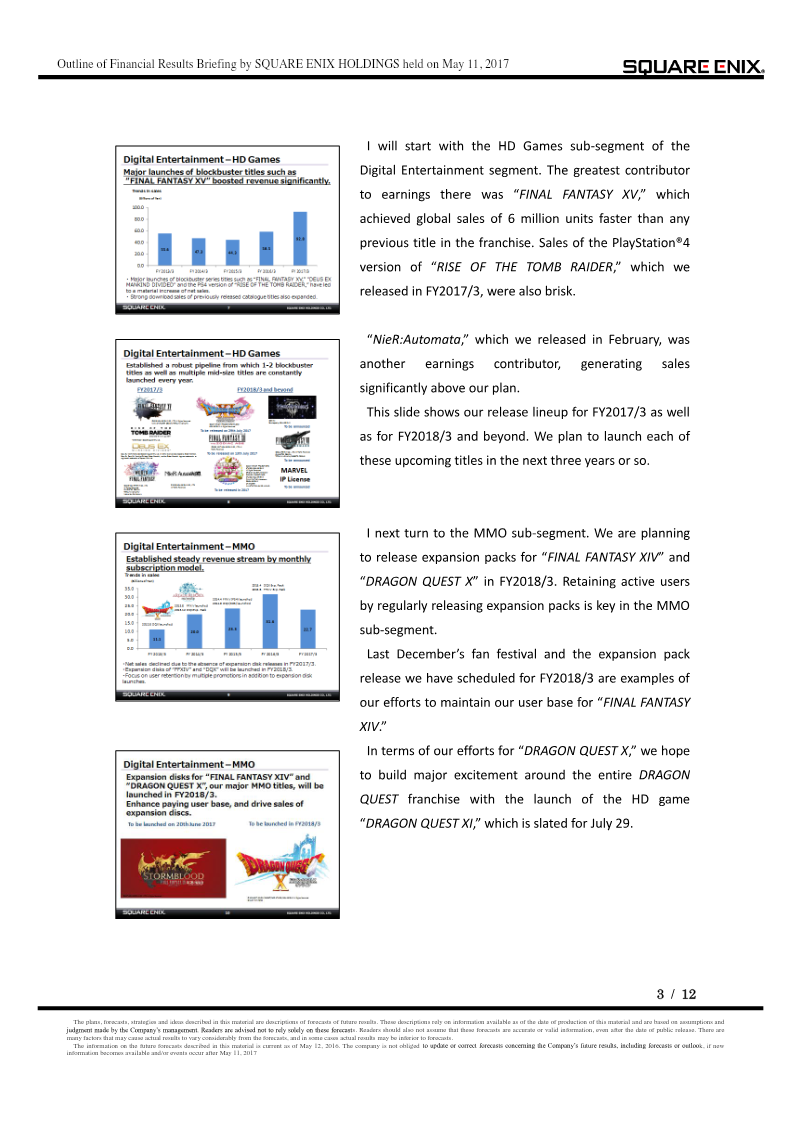
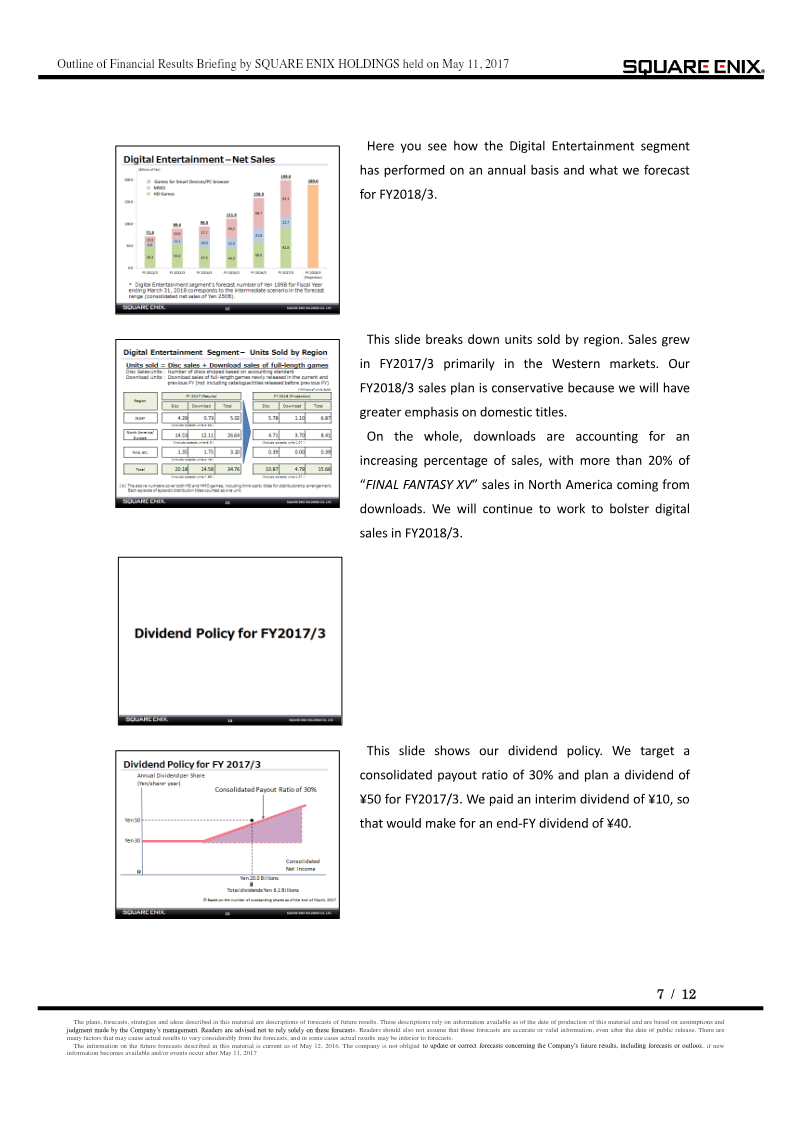
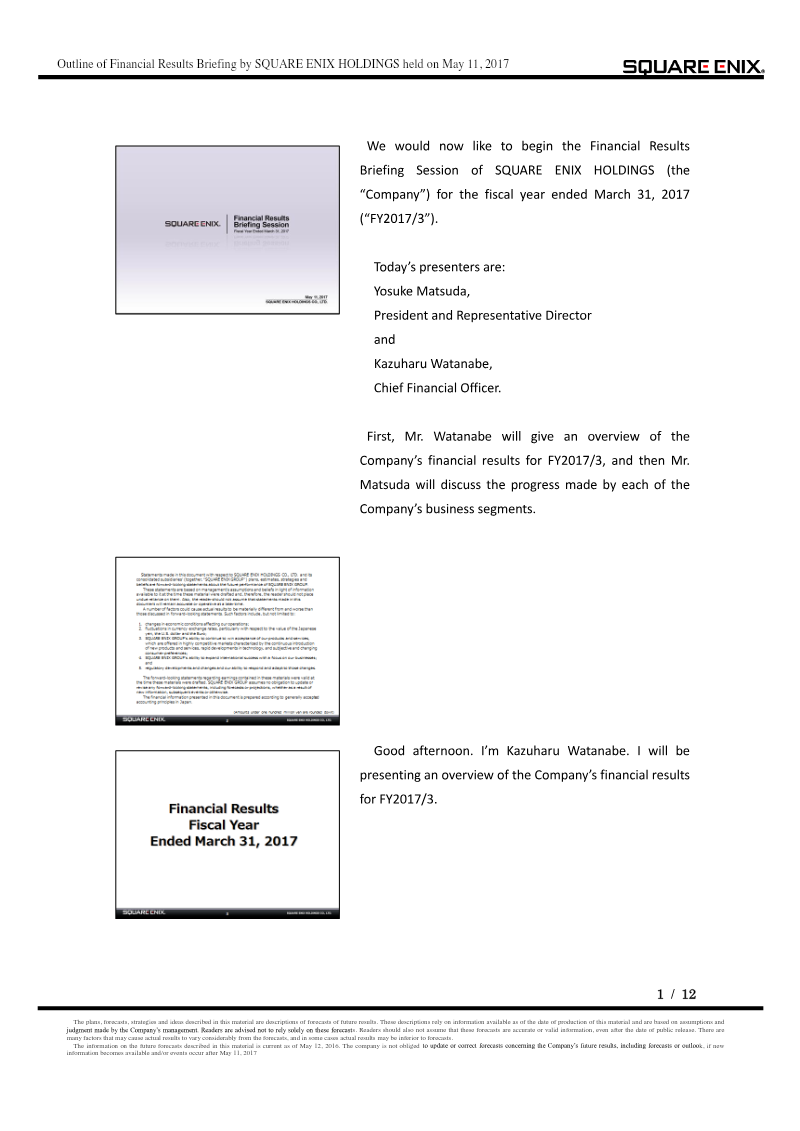
Financial Results Briefing: Square Enix Holdings FY2017/3
Square Enix Holdings achieved record-breaking financial performance for the fiscal year ended March 31, 2017, reporting net sales of ¥256.8 billion and operating income of ¥31.2 billion.
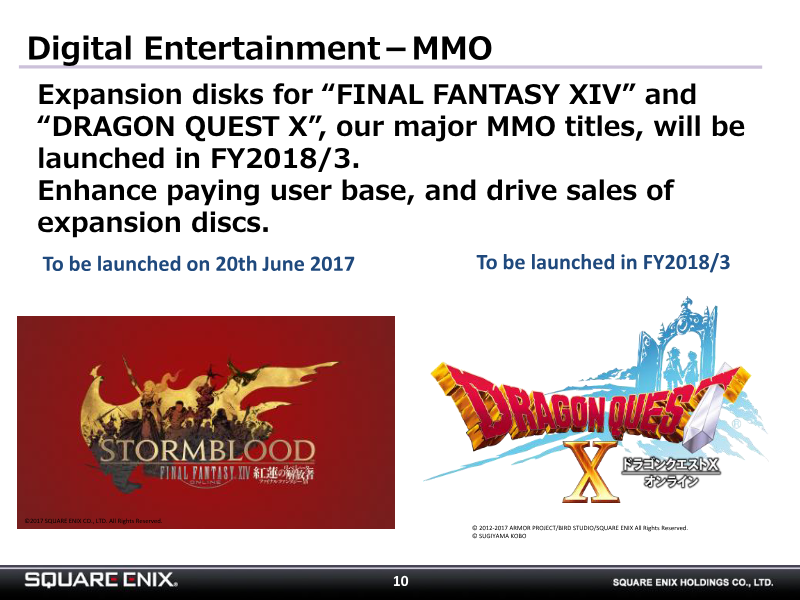
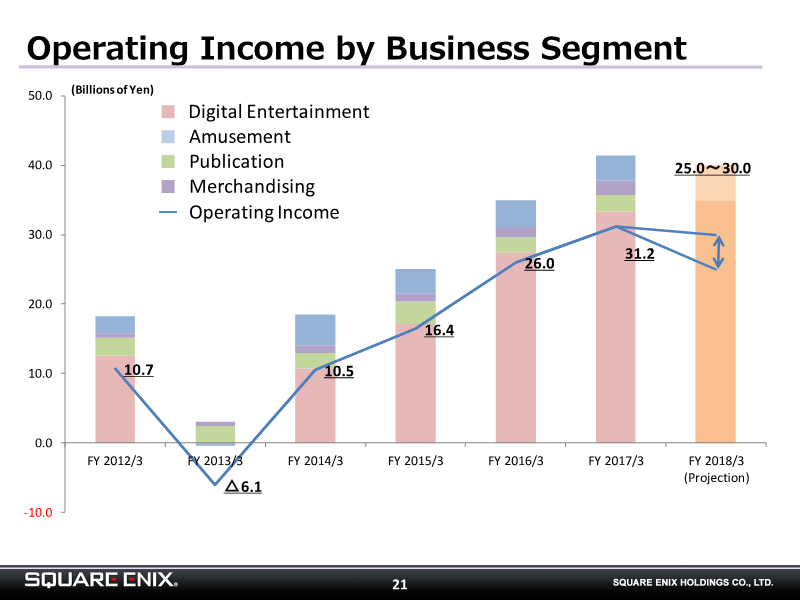

Square Enix Holdings Financial Results: Fiscal Year Ended March 31, 2017
Square Enix Holdings reported strong financial growth for the fiscal year ended March 31, 2017, driven primarily by the successful launch of major blockbuster titles.
- Square Enix reported consolidated net sales of 256.8 billion yen and operating income of 31.2 billion yen for the fiscal year ended March 31, 2017, representing a year-over-year increase of 42.7 billion yen in sales and 5.2 billion yen in operating income.
- The Digital Entertainment segment remains the primary revenue driver, contributing 199.0 billion yen in net sales and 33.3 billion yen in operating income for FY2017/3.
- Revenue from games for smart devices and PC browsers saw significant growth, reaching 83.3 billion yen in FY2017/3 compared to 44.2 billion yen in FY2015/3.

Prompto's Facebook: How a Buddy-AI Auto-Snapshots Your Adventure in FFXV
The development of the photo system in Final Fantasy XV serves as a case study in integrating emotional artificial intelligence into open-world game design.
- The 'Prompto Snapshot' system in Final Fantasy XV was designed to serve as a core storytelling tool, documenting the player's journey to reinforce the narrative of brotherhood and emotional loss within an open-world environment.
- The system operates on three primary design policies: photos must serve as achievements, they must spark player imagination, and they must facilitate gameplay sharing by automating the process to overcome the friction of manual screenshotting.
- To manage the volume of content, the system captures over 20 photos per day but automatically curates and limits the final selection to 8–12 images to ensure the player is not overwhelmed during the daily review process.
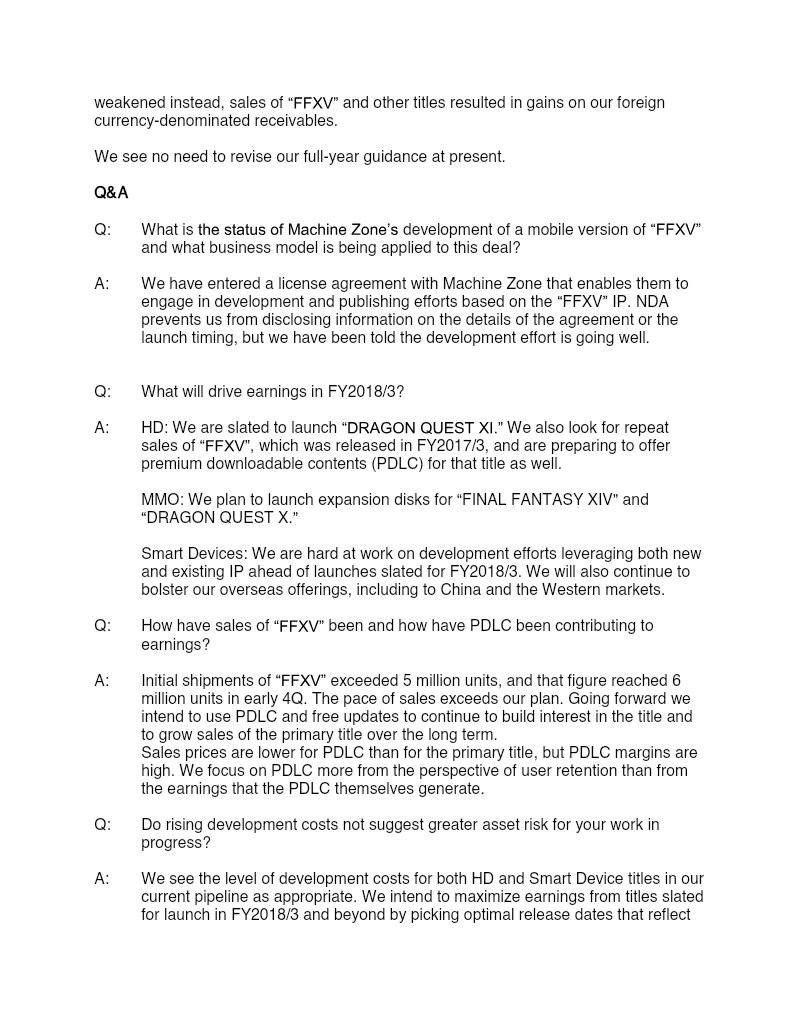
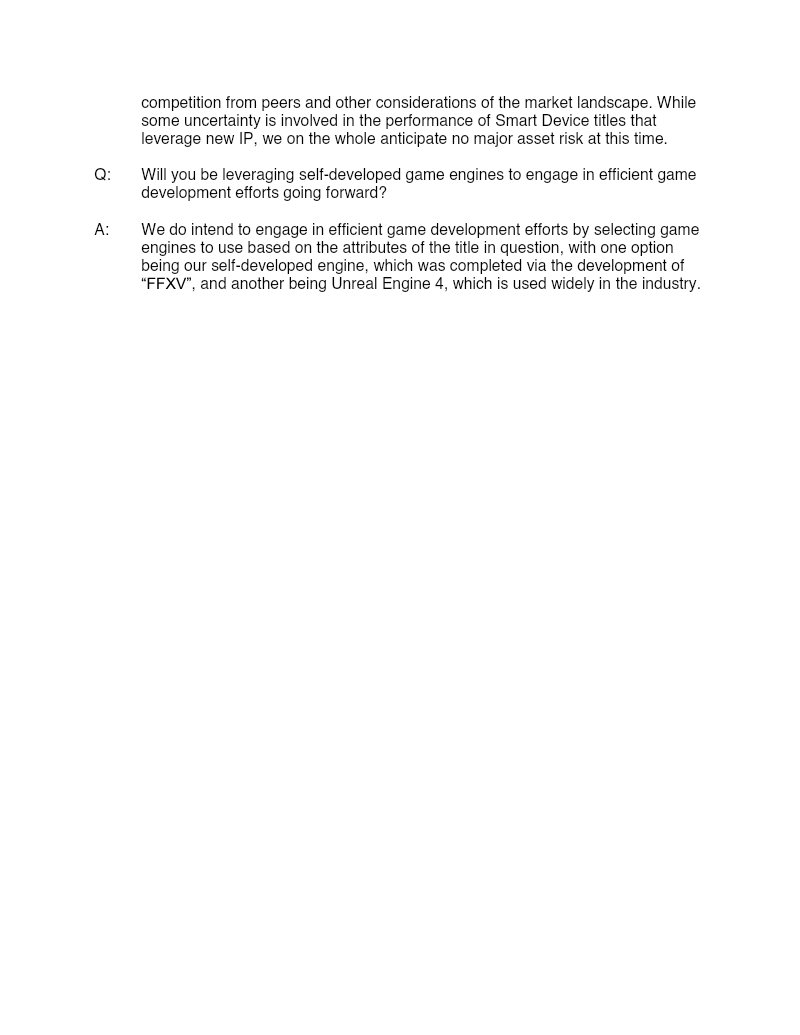
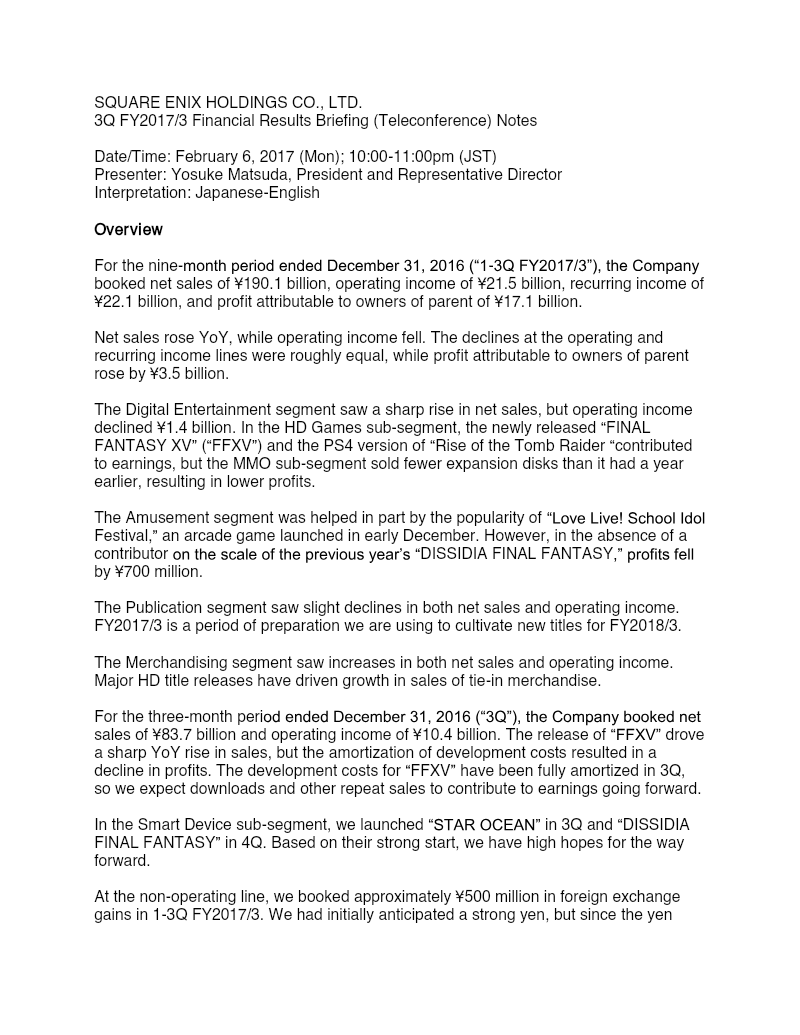
Square Enix Holdings 3Q FY2017/3 Financial Results Briefing
Square Enix Holdings reported financial results for the nine-month period ending December 31, 2016, reflecting a period of high-profile releases balanced by significant development cost amortization.
- Square Enix reported 1-3Q FY2017/3 net sales of ¥190.1 billion and operating income of ¥21.5 billion, with operating income declining year-over-year despite a sharp rise in Digital Entertainment sales.
- Final Fantasy XV reached 6 million units in shipments by early 4Q, with development costs fully amortized in 3Q, allowing future downloads and repeat sales to contribute directly to earnings.
- The Digital Entertainment segment experienced a ¥1.4 billion decline in operating income due to lower MMO expansion disk sales compared to the previous year and the heavy amortization of FFXV development costs.
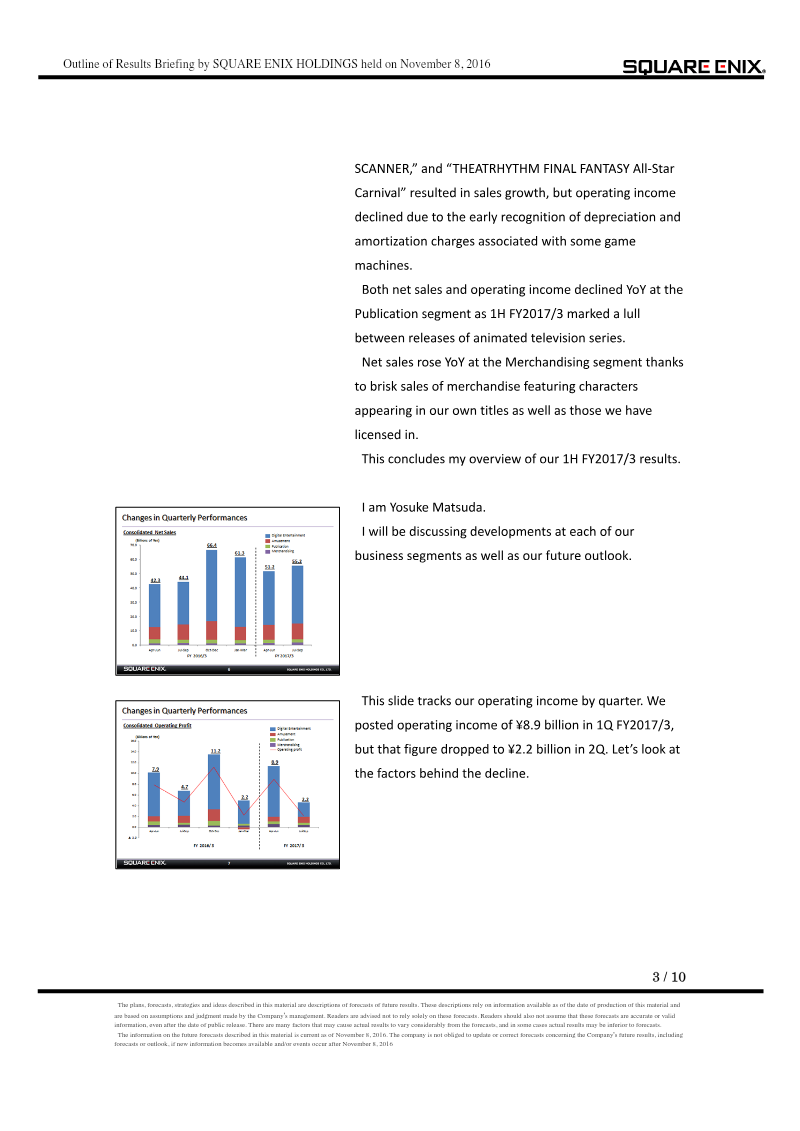
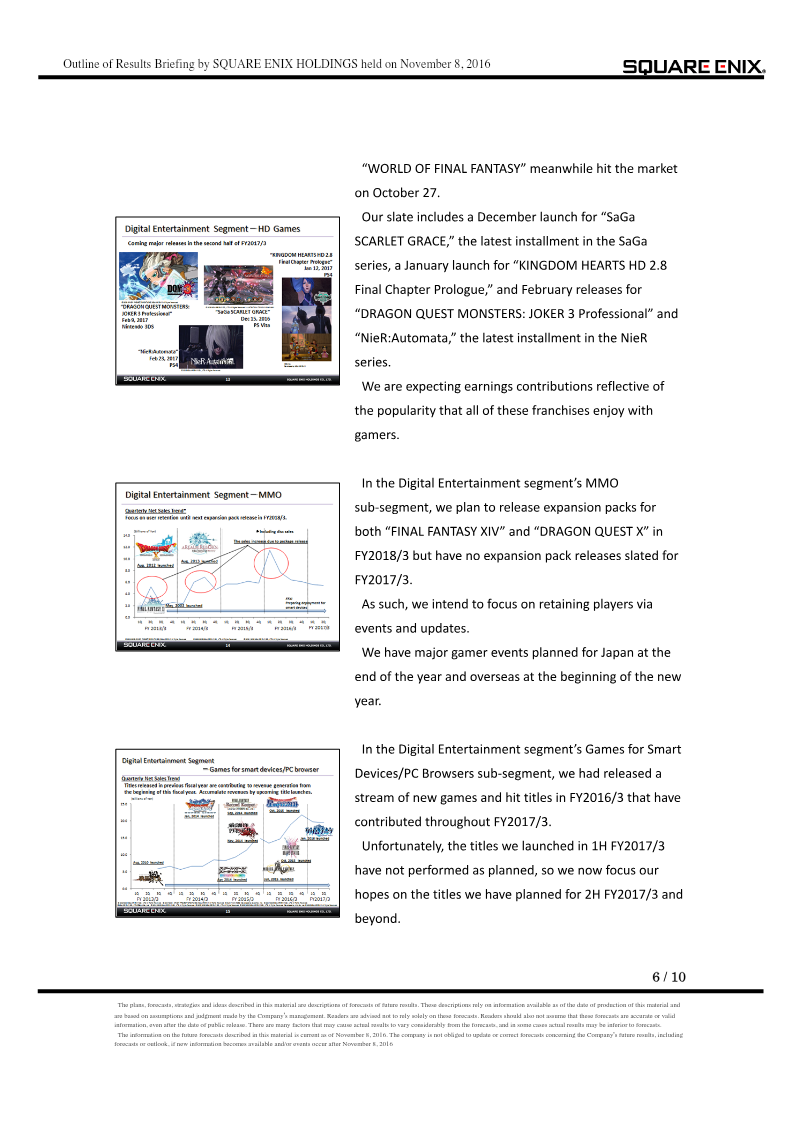
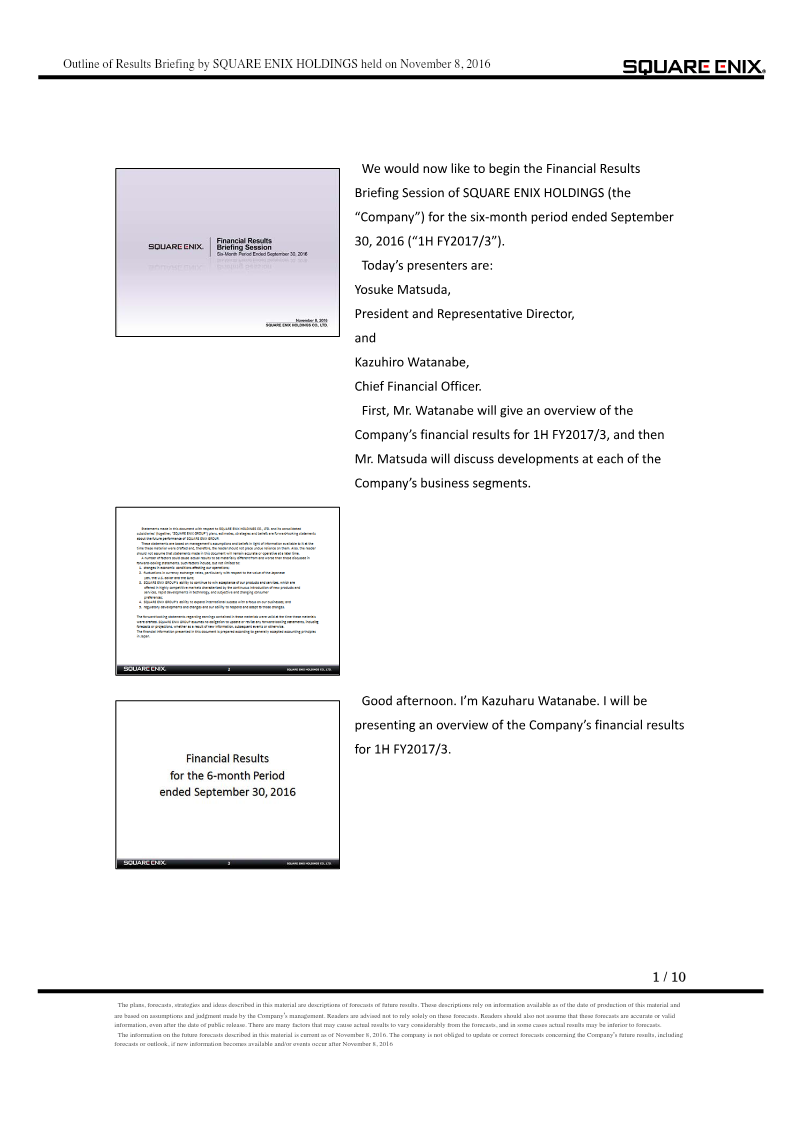
Square Enix Holdings Financial Results Briefing: 1H FY2017/3
Square Enix Holdings reported financial results for the first half of fiscal year 2017, ending September 30, 2016. The company achieved net sales of ¥106.3 billion, representing a year-over-year increase of ¥20 billion.
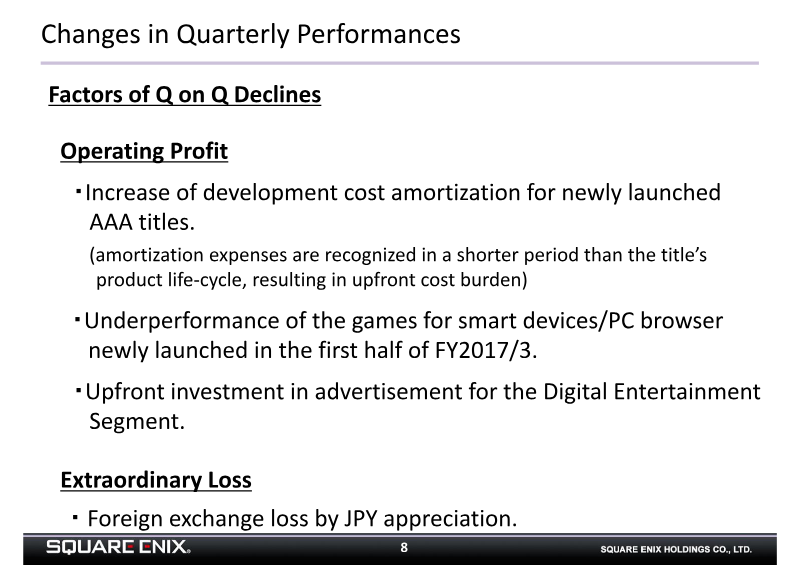
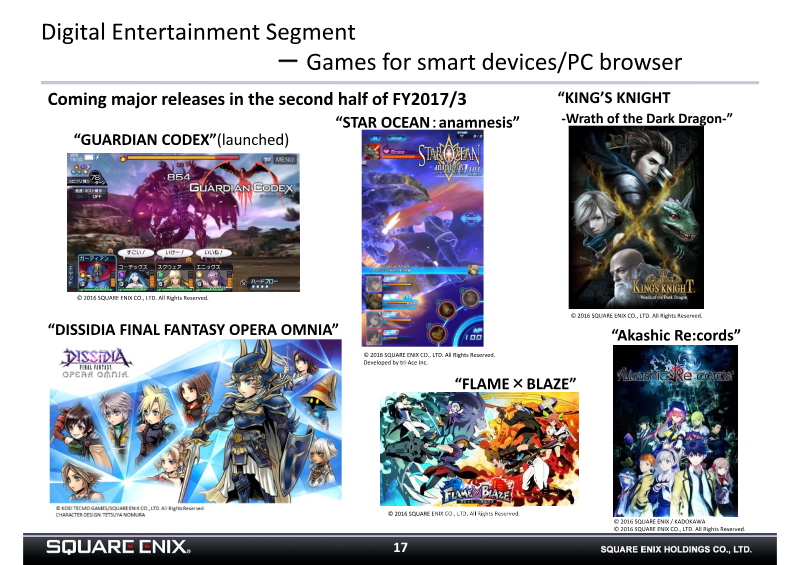

Square Enix Holdings Financial Results: Six-Month Period Ended September 30, 2016
Square Enix Holdings reported financial results for the six-month period ending September 30, 2016, highlighting a period of significant top-line growth alongside a contraction in operating profitability.
- Square Enix reported net sales of 106.3 billion yen for the six-month period ended September 30, 2016, a significant increase from 86.4 billion yen in the same period of the previous year.
- Operating income for the first half of FY2017/3 was 11.1 billion yen, a decrease from 12.6 billion yen in the prior year, driven by higher amortization costs for new AAA titles and underperformance of new smart device and PC browser games.
- The Digital Entertainment segment remains the primary revenue driver, contributing 78.3 billion yen in net sales, though its operating margin compressed from 21.5% to 15.5% year-over-year.