Fallout 4
Documents about Fallout 4
Fallout Series Boosts Microsoft Player Count
The successful launch of the Fallout television series on Amazon Prime serves as a primary case study for the ongoing transition of video games into broader narrative platforms.
- The Fallout television series triggered a 3.3x increase in activity across the five most popular franchise titles, reaching over 160,000 concurrent players.
- Fallout 4: Game of the Year Edition saw its daily concurrent player count increase nearly fivefold following the show's debut on Amazon Prime.
- Venture capital investment in gaming showed signs of recovery in Q1 2024 with $594 million deployed, supported by new funds from Bitkraft ($275 million) and Andreessen Horowitz ($600 million).
Transmedia Opportunity in Games: How the Fallout TV Series Made Bethesda 80 Million USD
The Fallout television series serves as a primary case study for the financial viability of transmedia strategies within the gaming industry.
- The Fallout TV series generated an estimated $80 million in game-related revenue and license fees for Bethesda from its first season, primarily through increased game sales, higher in-game spending, and licensing fees.
- The Fallout TV series boosted sales of Fallout 4 by an estimated 2 million units and Fallout 76 by 1-1.5 million units, totaling approximately $35-40 million in revenue for Bethesda.
- Increased engagement in Fallout 76, with daily active users peaking at 1 million during the show's launch window (up from 100-200k pre-show), contributed an estimated $10-15 million in incremental in-game revenue for Bethesda.
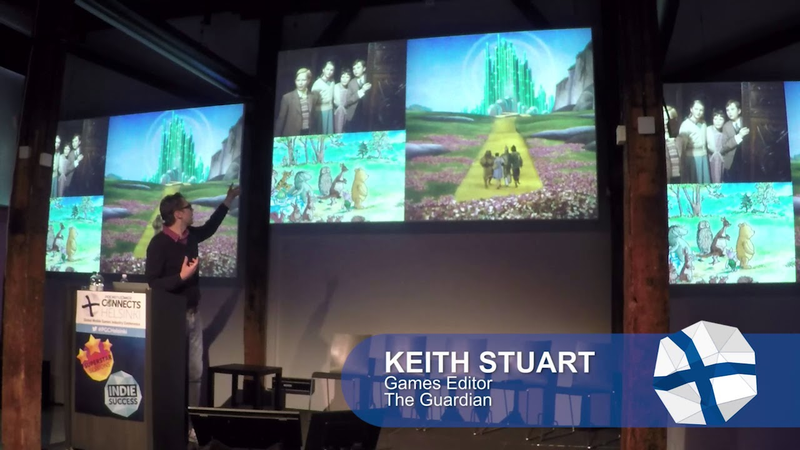
It's not a place, it's a script - Making worlds that mean something
Game industry journalist and author Keith Stuart argues that successful game world-building relies on treating environments as narrative scripts rather than mere backdrops.
- Game environments should be treated as narrative scripts rather than static backdrops, functioning as active characters that reflect the core emotions of the story.
- Developers can deepen player engagement by applying the 'pathetic fallacy,' which involves imbuing landscapes with human emotion to mirror the narrative tone.
- Successful world-building often draws from non-gaming disciplines, such as 18th-century landscape gardening, 1960s urban planning, and the structured exploration paths used in IKEA retail psychology.
The Surprising Profile of Idle Clicker Gamers
Idle clicker games, often perceived as simplistic experiences for casual audiences, actually attract a demographic profile that mirrors the broader core gaming population.
- Idle clicker games attract a core gamer audience, with titles like Clicker Heroes ranking in the top 2% of most-played games on Steam, often outperforming major titles like Counter-Strike.
- The primary psychological drivers for idle clicker players are Completion and Power, while they score lowest on motivations related to Excitement and Fantasy.
- Idle clickers succeed by isolating and distilling the core progression and accumulation mechanics found in AAA RPGs and MMOs, stripping away secondary elements like narrative and complex combat.

Fallout 4's Modular Level Design
Bethesda Game Studios achieves massive, high-quality open-world environments through a systematic, modular approach to level design.
- Bethesda Game Studios utilizes a modular level design workflow where 'footprint' grid systems and standardized snap points allow level designers to assemble complex environments from granular art kits rather than custom-built assets.
- Modular kits require significant upfront investment in overhead, including establishing piece logic, documentation, and ongoing maintenance, but they enable rapid iteration; for example, new architectural variations can be brought online in as little as two weeks.
- The shift toward granular, modular pieces increases object counts significantly—moving from 20 objects in a traditional 'clamshell' kit to 123 objects for the same space—necessitating the use of prefabs (or 'pack-ins') to maintain efficient editor workflows.

Fallout Shelter: Is Its Success Sustainable?
This analysis evaluates the long-term commercial viability of the mobile game Fallout Shelter following its rapid ascent to the top of the iOS US grossing charts in June 2015.
- Fallout Shelter has a Game Power Score of 81, which is above the average of 74 for the top 200 grossing games, but insufficient to reliably sustain a top 10 position.
- Only 8% of mobile games with a Game Power Score similar to Fallout Shelter have successfully maintained a position in the top 10 grossing charts.
- Sustaining a top 10 grossing position typically requires a Game Power Score of 90 or higher, as evidenced by benchmarks like Clash of Clans (94), Candy Crush Saga (91), and Game of War (90).

E3 2015 and lessons from Fallout Shelter's success
The release of Fallout Shelter during Bethesda’s E3 2015 press conference serves as a case study for the evolving relationship between traditional console gaming and the mobile market.
- Bethesda's 2015 E3 strategy demonstrated that leveraging established console IP can effectively disrupt Western mobile top-grossing charts.
- The simultaneous announcement of Fallout Shelter alongside Fallout 4 successfully utilized brand equity to drive immediate, high-volume user acquisition on iOS.
- Fallout Shelter achieved top-ten chart performance despite conventional gameplay mechanics, bolstered by strategic promotional support from Apple.