1 free read left. Create a free account for unlimited reading + AI research.
Create free account
It's not a place, it's a script - Making worlds that mean something
Key insights
6 takeaways- 01Visual techniques from other media, such as John Ford-inspired Western lighting in Fallout 4 or BBC nature documentary-style lighting in Horizon Zero Dawn, can effectively communicate complex themes like ruin or rebirth.
- 02Developers can deepen player engagement by applying the 'pathetic fallacy,' which involves imbuing landscapes with human emotion to mirror the narrative tone.
- 03Game environments should be treated as narrative scripts rather than static backdrops, functioning as active characters that reflect the core emotions of the story.
- 04Successful world-building often draws from non-gaming disciplines, such as 18th-century landscape gardening, 1960s urban planning, and the structured exploration paths used in IKEA retail psychology.
- 05Studios like Naughty Dog, Arkane, and Thatgamecompany successfully engineer specific social and emotional player behaviors through deliberate environmental storytelling.
- 06Worlds feel more authentic and lived-in when developers incorporate idiosyncratic, personal details, such as using specific family heirlooms to influence character design.
Ask AI about this video
Transcript
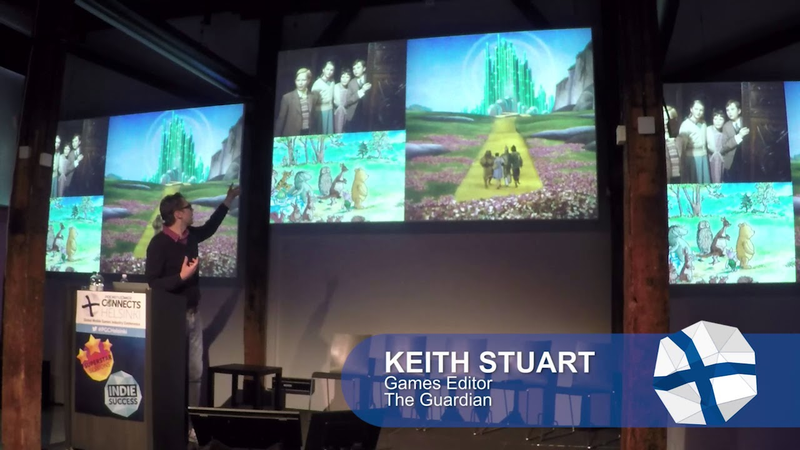
[Music] [Music] okay hi oh there we go yikes and it works playing okay so yes hi hi everyone my name is Keith Stewart I am a gate will I have in a games journalist for about 20 years before that I was a game developer for a couple of years so I've been thinking about a games critically and creatively for about 23 years but I've been playing them for 35 years I started writing for video game magazines in the mid 90s I wrote for edge that was the write on edge I helped launch the Dreamcast magazine DC UK and I've written about games for lots of people but now I'm the video games editor at the Guardian so I
commission and write all of the guardians games coverage on our website which hopefully you've read and so so yeah so I'm a video game journalist which is a very serious job as you can see but last year I did something very different I wrote a book I wrote a novel called a boy made of blocks and it's a novel if a father call it's about a father called Alex and his son who's eight years old called Sam and he's on the autism spectrum and the novel is about how Alex learns to communicate and share his life with his son through the video game Minecraft and the novel is semi autobiographical because my own son is on the autism spectrum and we did indeed learn a lot about each other through minecraft minecraft' was the first thing that he really became enthusiastic about and expressed himself through and to see that happening was was wonderful to me and profoundly changed my life and my understanding of
games and game worlds so I wrote a novel about it and the novel is done reasonably well it's available now in 26 countries and is sold actually it's a hundred and seventy-five thousand copies so far in the UK I saw an and the great thing about it is it seems to obstruct people's people have-have have told me of emailed me and written reviews online to say it's kind of told them about autism it's told him a lot about it which is incredible to hear parents of children who say they've read my book and has helped them to understand things about their kid and that's amazing to understand but when I set out to write the novel I had a kind of a problem and my problem was how do I get people to care about Minecraft who don't who don't play video games the people that buy novels don't tend to be gamers that it's a very different demographic and in my book are there's lots of occasions where Sam and Alex go into Minecraft and play Minecraft together there's lots of
descriptions of Minecraft so I had to make the world of Minecraft a video game world relatable and meaningful to people that don't play video games and it was a real kind of task for me a real problem something Kyle really worried about and during this time when I was writing the book I started to interview video game studios about the way that they make worlds about the way the way they make worlds that people will care about their players will care about partly this was just interesting to me as a journalist but partly I wanted to steal all their ideas for myself so really this is a kind of a talk about creative inspiration and about creating interesting imaginative places that people want to share with you as creators I the first thing I learned from our great game developers was the important of the importance of establishing a specific consistent tone in your world Tony's a really ambiguous and complicated concept but it really
means like the emotional psychological feel of your world and it's kind of established we see in cinema established through lighting through the use of shadow through the use of sound but it's the way that your world feels and it's got to be it's got to be kind consistent it's got to look like something employee made of blocks when I was describing the Minecraft landscape I tried to use loads of like soft pleasant adjectives I wrote a lot about the Sun and the light because I wanted to suggest to readers that it was a safe and comfortable place I also mentioned the music of Minecraft a lot when I was writing about Minecraft in my book because Daniel Rosenfeld soundtrack for mine after so beautiful and peaceful and it creates a kind of permissive mood it makes you feel relaxed and I brought that into my novel to try and make people feel the same way so tone is really really important there were lots of developers who are amazing at using landscapes to create strong specific tones that game company in JIT with
journey and with flow play dead with their games with their game limbo and their game inside and Monument Valley Valley by us to a games that really establish a strong visual audio tone they make you feel a certain way when you just look at the landscape one of my favorites one of the best Studios I think for creating Tony's Bethesda the creators of Elder Scrolls and Fallout and fallout 4 specifically the development team creates a really kind of incredibly consistent and intriguing tone to their world they used lighting and shadow and panoramic scenery in a really interesting fascinating way when you look around the world of Fallout it communicates the emotion to you of a wasted and ruined world when I asked the director Todd Howard about his visual influences he immediately brought up John Ford the famous American director of western movies like stagecoach and the man who shot Liberty valance and he told me something about the way he
watched John Ford and I think it's really interesting and I've kind of written down his crow oh what Todd Howard told me and he says we look at old John Ford movies a lot we study how cinema can capture a space his shots put you in a certain mood there is a tone as a designer you must look for tone how do you want the player to feel look for things outside of games that have a tone and just stare at them and find this really interesting they all sit around in the studio and watch these movies and they're not really watching them to learn about the stories or the characters they're watching them to understand the mood so if you look for example it's a screen shot from fallout 4 and a screen shot from The Searchers there's lots of differences between them but you can tell the tone is really similar in there you look at the searchers and you understand the world but these men are living in it communicates something the same with fallout this kind of use of this weird degraded color this use of shadow and light really expresses to you
what fallout 4 is about and it's so consistent throughout the entire world it's so clever our television is also an interesting place to learn about tone watching television is really important because tone is communicated really beautifully by television photographers guerrilla software the the creators of horizon zero dawn had a really interesting influence when they were creating their kind of beautiful golden look of their game horizon zero dawn is a game which kind of communicates this idea of rebirth and the dawn of civilization through kind of really beautiful natural but hyper realistic colors and they got this they took this from BBC wildlife documentaries they were really inspired by the tone of the documentaries that David Attenborough and his team make and his great quote from John Bart van beek their art director of horizon zero dawn and he says in horizon we wanted to give players a sense of being in a 24/7 version of BBC's nature programs where
lighting is always at its most epic and most impressive and I think less than the best look we would simply remove so to some degree we indeed make it unnatural so when you play horizon zero dawn you'll notice that all the sky scapes are either at dusk or dawn because those are the most dramatic times of the day so it cycles for a day night cycle where you only ever see the most dramatic moments in that cycle and it creates this feeling of rebirth of rediscovery of a natural world it's incredible and there are other really intriguing examples that I researched while I was writing boy made of blocks of the ways in which great game developers use and study an observed tone Monument Valley is a great example it's a really visually simple game but they've taken the ideas and the the use of color and shape and form from really interesting places Monument Valley Valley was heavily inspired by the film the fall by directed by Tarsem Singh I don't think it's a great film but
visually it's fascinating and it proves that you know great ideas don't have to come from really obvious places I think one of the problems with the video game industry is lots of its ideas tend to come from the same sources Star Wars lore of rings aliens where as this you know incredible a rich history of cinema that you can go to to look for tone so I also I think that games share a really rich visual language with the theater the great lighting designer Adolph apphia used lighting shadow and three-dimensional sets to create a sense of depth and unity between the actor in the environment and video games used light in a very similar instructive way to the way Apia used light you use it for navigation and for narrative and I really look to happier sets when I was writing boy made of blocks so I wanted to try and communicate the world of Minecraft
I studied the way the appia are used lighting to create mood and I think I don't know if shadow of Colossus I doubt very much for the shadow of the colossus the great game by Team Ico was inspired by Adolf appear but you can see the way that they use light and tone and objects in a very very similar way it's very effective and grand and beautiful so yeah look to theater for inspiration is very it's massively overlooked I think by video game designers but there are so many similarities in the way that theater and video games work the way they communicate your video game world has to reflect and communicate the emotions of the stories that they contain video game worlds are emotional spaces when you think about the great writers and directors of the world we're often told that wow they made that place feel like a person so if you think about Charles Dickens for example the way that Charles Dickens writes about London in great expectations and Oliver Twist he
brings a real sense of character to the place there's this kind of grime and darkness and fog about the world that makes it film and Evelyn think about the way that Ridley Scott portrays Los Angeles in Blade Runner that that world that universe that he makes kind of breathes emotion it tells you about the space that Harrison Ford is living in the world is the story in Blade Runner it's the same thing as well with watering Heights the great Bronte novel again when you read about the Moors in that book it's as though the Moors are alive they're a character in the novel manipulating the other people when I was writing boy made of blocks I realized that I had to make people care about Minecraft I had to stop thinking about it almost as a video game environment and I started to look at the way that other authors had created imaginary magical spaces so I read CS Lewis's books and looked at Narnia I read Winnie the Pooh and looks at how a
a Milnes about the Hundred Acre Wood I looked at a Wizard of Oz and tried to understand how the world of Oz is depicted because I wanted to make people understand Minecraft is a magical place not a video game but a place that things can happen where things are possible and what I learned from these worlds was there in all these places what's really important about all these magical worlds these kind of fictional landscapes is that the magic is about love and friendship Narnia the Hundred Acre Wood and Oz are all about self-discovery and redemption and friendship and that's the real magic of them and I think that's the magic of video game worlds you've got to think about the emotions of your story and if your characters and think about how the world can reflect them in romantic art and literature the natural world is highly symbolic and fraught with emotion and feeling there's a great term pathetic fallacy which means refers to kind of a poetic convention of
investing the landscape with human emotions so pathetic fallacy was used a lot by the Romantic poets Byron Keats Shelley Wordsworth to make people kind of to make the worlds that they conjured feel emotional so obviously there's a great first line of William Wordsworth poem I wandered lonely as a cloud obviously clouds aren't lonely but he created this image of a landscape which reflected his emotions I think that's what we've always got to do when we create imaginary worlds make sure they reflect the emotions of the action that's going on on-screen a really great example of this I think was their gears of war I pick games described its visual style as destroy beauty and its worlds are packed with luscious ruins that reflects the kind of galactic catastrophe of the plot but it also recalls the obsession with ancient ruins that kind of characterized our in the Enlightenment and the Romantic periods I think all game developers all narrative game developers or romantics I
think you have to think about the world in that way and I think for this reason it's really valuable to go to art galleries and museums as much as you possibly can and soak in the atmosphere of them again I'm not sure if Gears of War was cut was kind of directly influenced by romantic art but you can see the similarities between Gears of War and the Enlightenment or a Mantic artists and the way they use ruined landscapes to sort of suggest something about society another great example while I'm here and which is again it's kind of like a great kind of example of pathetic fallacy was that Robin Hunicke the producer of journey talks about how that game company were heavily inspired by dreams by Akira Kurosawa the the great weird symbolic movie there's one section of Dreams where it's it's about a group of explorers who are lost in an icy wilderness and very gradually they are tempted by a goddess the
personification of the wind and cold who tries to get them to fall asleep and Robin Hunicke was really the the producer of journey was really influenced by this sort of feel of the world encroaching on the lives of the characters and she and she basically got her developers of journey to think about dreams by Akira Kurosawa and that sense of the world trying to to kind of destroy and and seduce the characters and I think the ending of journey is so beautiful and it's so worth playing again if you watch dreams watch this section of Dreams then play journey again you get that kind of connection how I missed that one so finally I think it's really really important for your plate for the world to have meaning your video game world has to mean something it has to have something to say what I learned when I was rude when I was talking to game developers was that the world kind of carries within itself a message the message of what
your game is about in Bali made of blocks I really carefully tried to match the narrative events with certain types of landscape and I kind of do it in a really obvious way but you sort of have to be quite obvious with when you're writing popular fiction but the more the father in my book Alex found out about his son Sam and the more they communicated the more they were able to explore the deeper they were able to explore in the Minecraft world so as they found out more about each other they actually explored deeper and deeper caverns so it's kind of like a very obvious visual metaphor but I feel like it worked I feel like I married the kind of emotional depths of their relationship with the geographic depth of their adventure and I think that's really important I think landscape geography is a part of storytelling and a very kind of softer way I'm that scenery and location the environment or a story - in videogames environmental story still telling is kind of a fascinating evolving art form and we see lots of games which which use
of things like environmental artifacts like emails or post-it notes in their world to communicate a story with you but you don't have to be that obvious I think you can be much more subtle about what your story Terk what your world tells your your audience your gamers so when I was writing boy made of blocks I visited a lot of landscape gardens from the 18th and 19th centuries and if you studied the theories and techniques of the great landscape gardens throughout Europe especially like the theories of capability Brown who was one of the great landscape designers of the 18th century you see how they created dramatic emotional moments through their work so if you go to a landscape garden this is stour head in Somerset which is really near where I live and I love walking around it's this beautiful walk around the lake and it's designed so that you see lots of things are occluded from you by trees so you turn around a corner and there's a hole in my Pierre
a ruined building or there might be some beautiful shrubbery or but it's everything he's everything it's designed so that you've kind of surprised and you realize things as you go and when I was walking around stared I realized that it's really similar to video game world design in the it's an it's an artificial landscape and it's designed to tell you a story and amuse and surprise and delight you so I think video game designers should be interested in landscape gardens because they're doing the same sorts of things landscape gardens for the video games of the 18th and 19th century so go and explore them and I think also it's really really worth looking at the great environmental storytelling studios so Naughty Dog I think are one of the great Studios for telling stories through their environments filling them with little details full of little gifts Legend of Zelda breath of the wild it's really a present from the game's designers to
x-22 gamers everywhere you go in that world there's something to find there's a little gift for you there's something that you find that you think was only put there for you your video game world should do that your world should be full of surprises and delights for the player that they wouldn't have thought they would find until they explore I'm also became really fascinated by post-war urban planning when I was writing boy made of blocks and again there's loads and loads and loads of really interesting lessons that game designers could learn for the 1960s when you had really radical architects and town planners throughout Europe trying to find new ways to house these kind of incredibly exploding populations that we had in the sixties and seventies and they develop really fascinating theories about space and structure and experience the architects Peter and Alison Smithson for example are designed a number of residential tower blocks around Britain and they had this concept of streets in the sky and they had this idea that they wanted to recreate a traditional city a
traditional Street a neighborhood but vertically and they created that their own building Robin Hood gardens this is in East London they created it to facilitate social activity so they have these really ride walkways so they're lots of people could gather together kids could ride bikes down them and they also if you notice here the doors to the flats face towards each other so that if people left their flats at the same time they were almost forced to talk to each other and what these designers were doing was for pizza and Alison Smith's and we're trying to do was engineer social play but in a in an urban space and that's what game designers are doing when you design a world you're trying to engineer certain behaviors you're trying to make people see the world and certain do certain things in certain ways so I think there's lots to learn from 60s architecture and urban planning I'm running out of time but I just wanted to say here's and here's an aerial illustration of Robin Hood Gardens and if you look at the way it's structured it's two big buildings around a kind of
a circular garden and you'll notice that's actually really really similar to great online shooter design so the best Call of Duty Maps actually looked like 60s British housing estates I find that really interesting so yeah finally make your world feel lived in make it feel as though boom ins have lived there have been there have left their mark on the world dishonored and pray by Arcana really great examples of this their worlds feel as though people have lived there and touched them finally so yeah it's a really great idea to visit public buildings stately homes art galleries and museums but not to look at the objects within them but look at the way that they've been arranged look at the way creators have designed the spaces to turn them into stories to make them feel as though there's places that you want to explore and if you can't be bothered to go to art galleries or museums go shopping IKEA is a narrative experience
I'm not joking if you go to that IKEA the retail psychology or IKEA is fascinating it's a sub space designed to make you want to explore it gives you examples of the worlds it won't you might want to create in terms of like living rooms or bedrooms and then it shows you gradually how to build them it's really really fascinating space IKEA is the fallout 4 of shopping so yeah the most important thing is your world you create has to be unmistakably yours it needs to be idiosyncratic and a little weird you should fill it with personal details and that's what makes it come alive when they are when the team at arcane were we're designing Dishonored 2 they needed a new look for corvo's master lead character and the art director sebastian mitten he brought in a ring that had been passed down through the women in his family and it was a bit battered and worn and old and they used this ring to design to influence corvo's mask for Dishonored - so that's a really great example of personal design the world that you build is the story that you tell and in the
end every story you tell is about you thank you [Applause] [Music] you [Music]
Summary
Game industry journalist and author Keith Stuart argues that successful game world-building relies on treating environments as narrative scripts rather than mere backdrops. By drawing parallels between game design and disciplines such as cinema, theater, literature, and urban planning, Stuart posits that developers can create immersive, meaningful spaces that resonate emotionally with players. The central thesis emphasizes that a world must possess a consistent, idiosyncratic tone that reflects the core emotions of the story, effectively utilizing the environment as a character in its own right.
Key findings highlight the importance of "pathetic fallacy"—the practice of imbuing landscapes with human emotion—to deepen player engagement. Stuart points to examples like Fallout 4, which utilizes lighting and shadow techniques inspired by John Ford’s Westerns to convey a sense of ruin, and Horizon Zero Dawn, which adopts the hyper-realistic, dramatic lighting of BBC nature documentaries to evoke themes of rebirth. Furthermore, the analysis suggests that developers should look beyond traditional gaming tropes, drawing inspiration from 18th-century landscape gardens, 1960s urban planning, and even retail psychology, such as the structured exploration paths found in IKEA showrooms.
The scope of this perspective covers the intersection of creative writing and interactive design, specifically focusing on how narrative-driven studios like Naughty Dog, Arkane, and Thatgamecompany successfully engineer social and emotional behaviors through environmental storytelling. Stuart concludes that the most compelling worlds are those that feel lived-in and personal, often incorporating specific, idiosyncratic details—such as family heirlooms influencing character design—to ensure the final product is unmistakably unique. Ultimately, the document serves as a call for developers to view their environments as deliberate, symbolic, and emotional tools for storytelling.