Dead Rising
Game
20 documents in the library are about Dead Rising, from writers such as Capcom and DiGRA. Each has a summary and key insights with the page they come from.
Connections
Each row is a game or company named alongside Dead Rising, each column a document, oldest first. A mark means that document names it. Select a row to see those documents.
Dead Rising sales and key figures
The Digital Contents segment, the company's core business, saw a 21.2% decline in net sales and an 84.9% drop in operating income despite the release of titles like Dead Rising 4.
Capcom, 2017 · Capcom Consolidated Financial Results: 9 Months Ended March 31, 2017, p. 4
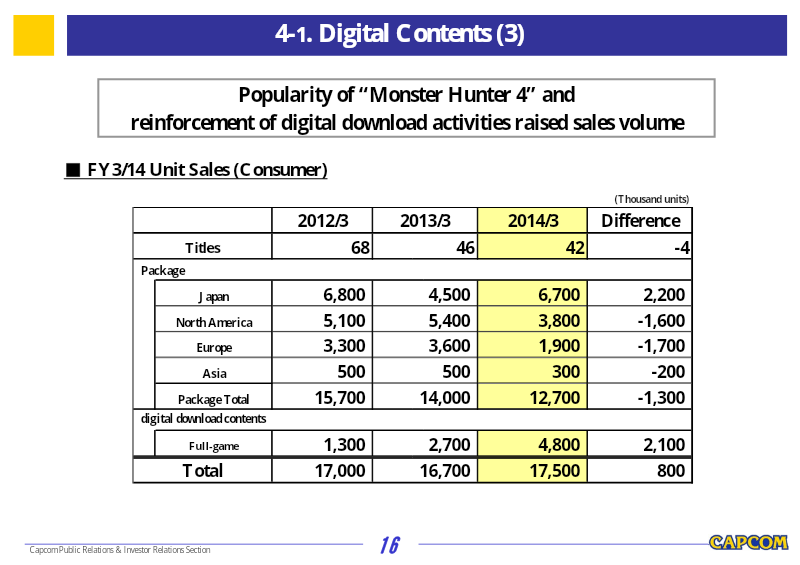
Flagship titles Monster Hunter 4 and Dead Rising 3 performed strongly, shipping 4.1 million and 1.2 million units respectively, helping the consumer division exceed its internal sales targets.
Capcom, 2014 · Capcom Financial Highlights: Fiscal Year Ended March 31, 2014, p. 16
The Digital Contents segment was driven by the strong performance of Monster Hunter 4, which shipped over 4 million units, and Dead Rising 3, which exceeded 1 million units.
Capcom, 2014 · Capcom 3rd Quarter Financial Results: Fiscal Year Ending March 31, 2014, p. 14
The Consumer Online Games segment, driven by titles like Dead Rising 2 and Lost Planet 2, saw its operating margin narrow to 14.7% due to rising costs and currency volatility.
Capcom, 2010 · Capcom Results of Operations and Strategies: First Half of Fiscal Year Ending March 31, 2011, p. 13
The consumer online games segment, which generated 30,773 million yen, was negatively impacted by the underperformance of Lost Planet 2 and the delayed release of Dead Rising 2.
Capcom, 2010 · Capcom Consolidated Financial Results for the 6 Months Ended September 30, 2010, p. 5
Documents about Dead Rising
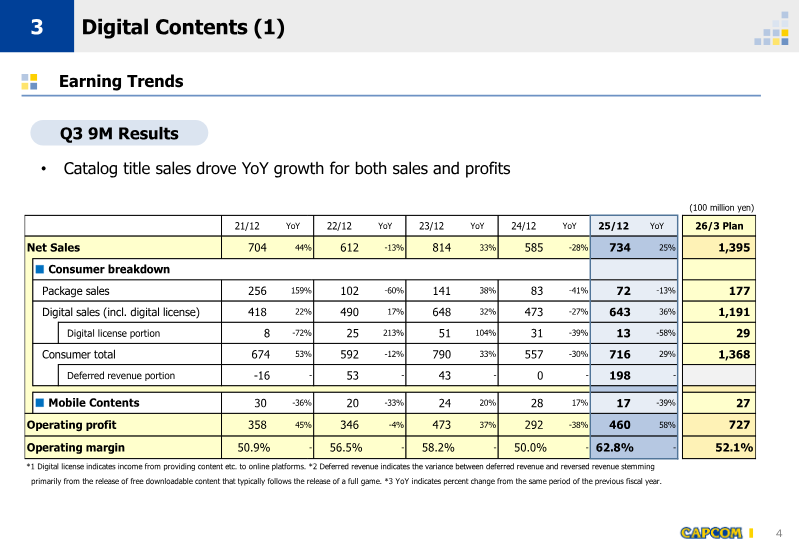

3rd Quarter Report: Fiscal Year Ending March 31, 2026
This financial report details Capcom’s consolidated performance for the third quarter of the fiscal year ending March 31, 2026.
- Capcom reported strong Q3 growth with net sales rising 30% to 115.3 billion yen and operating profit increasing 75% to 54.3 billion yen.
- The Digital Contents segment achieved a record 34.6 million unit sales, with catalog titles accounting for 96.4% of that volume.
- Digital distribution now comprises 94.1% of total unit sales, with PC platforms serving as the primary driver, accounting for over 55% of the volume.
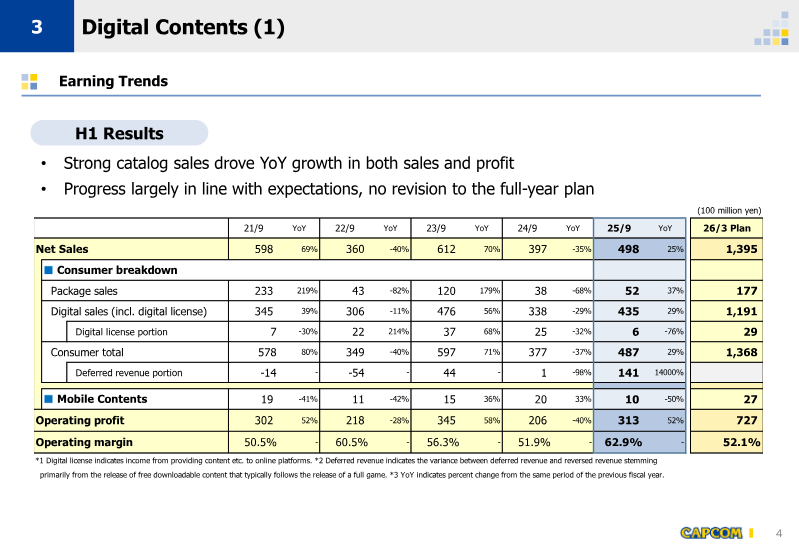


Capcom First Half Report: Fiscal Year Ending March 31, 2026
Capcom’s first-half report for the fiscal year ending March 31, 2026, details a period of robust financial growth across all business segments.
- Capcom achieved record-high total and catalog unit sales for a first-half period, driving year-on-year revenue and profit growth across all business segments.
- The company maintains its full-year fiscal plan, targeting 190 billion yen in net sales and 73 billion yen in operating profit, representing 12% and 11% growth respectively.
- Digital contents remain the primary revenue driver, with digital sales reaching 43.5 billion yen in H1, a 29% increase compared to the previous year.
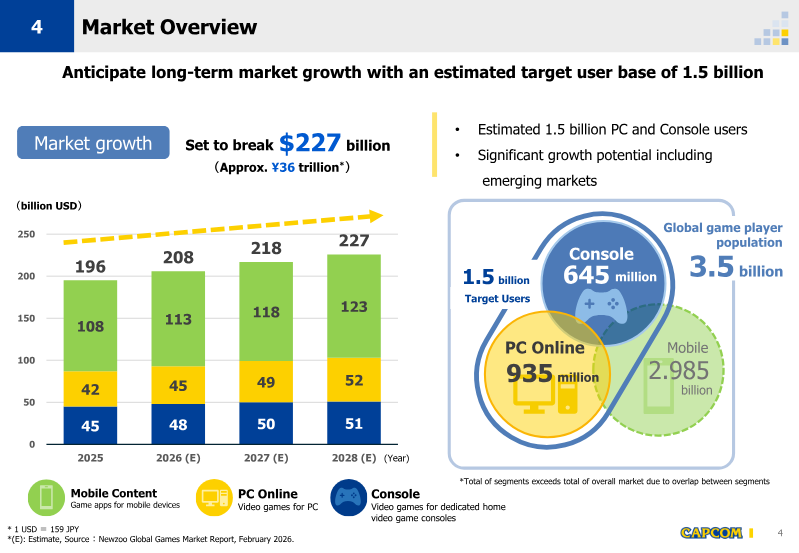

Capcom FY26/3 Earnings Summary: Mid- to Long-Term Growth Strategies
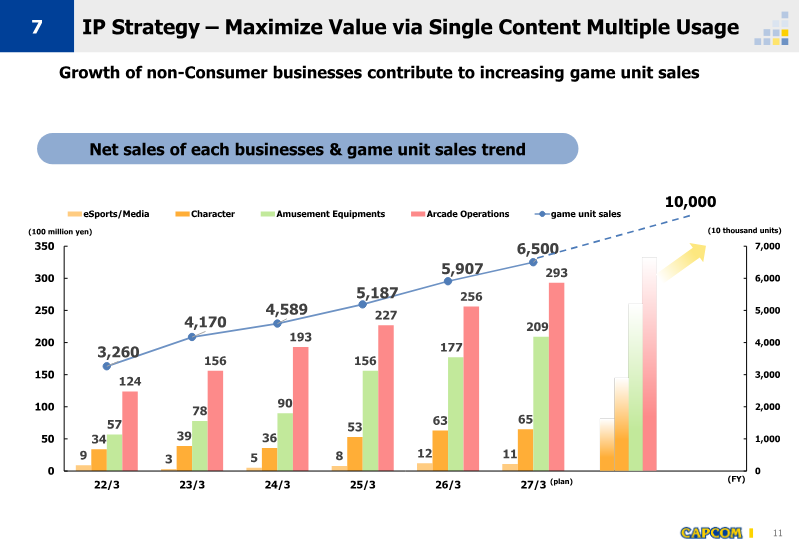
Capcom’s mid- to long-term growth strategy centers on a flywheel-driven business model designed to maximize the value of its intellectual property (IP) through a combination of stable new title releases and sustained catalog sales.
- Capcom projects consistent growth with an operating profit target of 83 billion yen for FY27/3, maintaining a 10% annual growth trajectory.
- The company aims for a long-term annual sales volume of 10 million units, supported by a digital sales ratio that reached 83.7% in FY26/3.
- Capcom is leveraging a 'flywheel' business model that combines new title releases with catalog sales and multi-faceted IP usage, such as eSports and licensing, to expand its global fan base.
Capcom Consolidated Financial Results: 9 Months Ended March 31, 2017
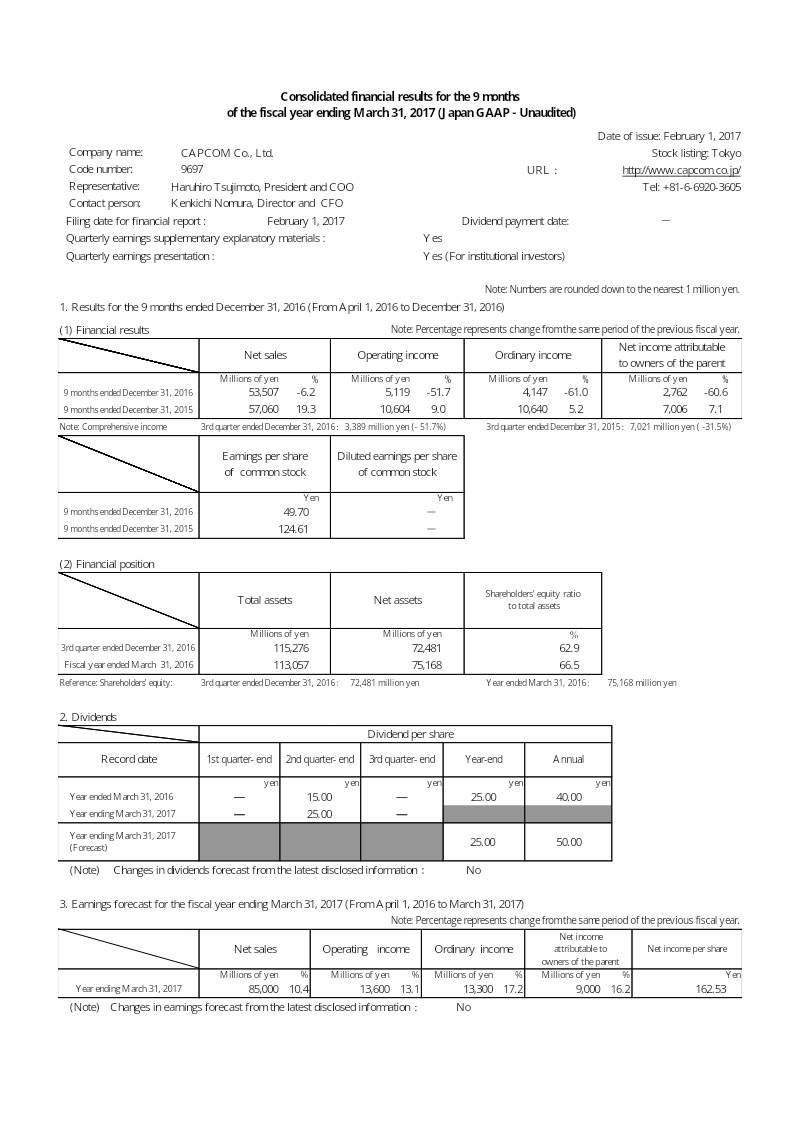
The consolidated financial results for Capcom Co., Ltd. for the nine-month period ending December 31, 2016, reflect a period of transition and reorganization.
- Capcom experienced a significant financial downturn for the nine-month period ending December 31, 2016, with net sales falling 6.2% to 53,507 million yen and net income dropping 60.6% to 2,762 million yen.
- Operating income plummeted 51.7% to 5,119 million yen, largely due to a difficult year-over-year comparison against the high-performing release of Monster Hunter X in the previous period.
- The Digital Contents segment, the company's core business, saw a 21.2% decline in net sales and an 84.9% drop in operating income despite the release of titles like Dead Rising 4.

Capcom Financial Highlights: Fiscal Year Ended March 31, 2014
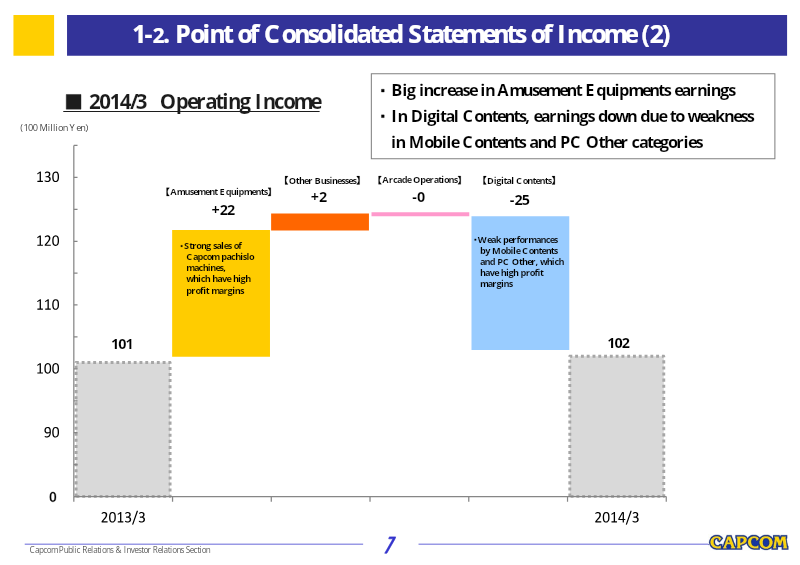
Capcom’s financial results for the fiscal year ended March 31, 2014, reflect a period of growth in net sales and net income, driven primarily by strong performance in the Amusement Equipments segment and robust consumer software sales.
- Capcom achieved net sales of 102.2 billion yen for the fiscal year ended March 31, 2014, up from 94.07 billion yen the previous year, though operating income remained flat at 10.29 billion yen.
- The Amusement Equipments segment became a primary growth driver, generating 23.1 billion yen in net sales and 7.1 billion yen in operating income, largely due to the success of Monster Hunter Gekka Raimei and Devil May Cry 4 pachislo machines.
- Total consumer software sales reached 17.5 million units, with digital downloads and add-on content offsetting a decline in packaged software sales to 12.7 million units.


Capcom 3rd Quarter Financial Results: Fiscal Year Ending March 31, 2014
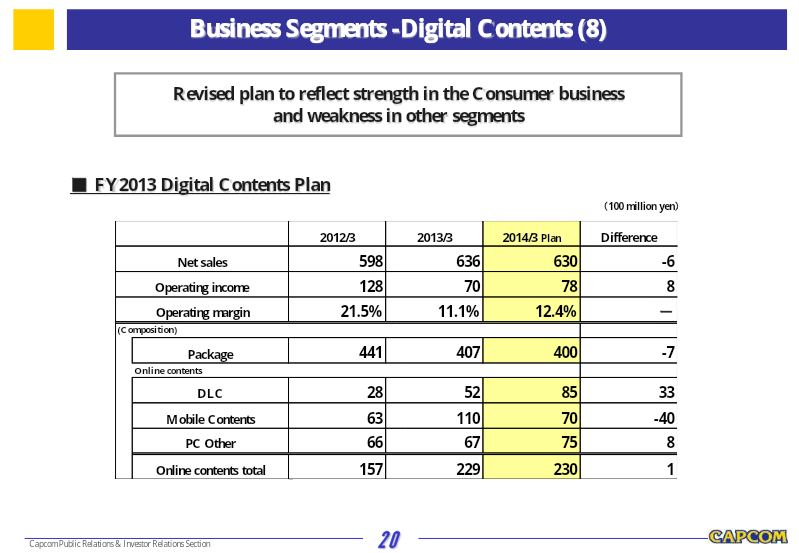
Capcom’s financial results for the third quarter of the fiscal year ending March 31, 2014, reflect a period of growth in net sales alongside a decline in operating income.
- Capcom reported net sales of 75.2 billion yen for the third quarter of the fiscal year ending March 31, 2014, while operating income declined to 8.5 billion yen.
- The Digital Contents segment was driven by the strong performance of Monster Hunter 4, which shipped over 4 million units, and Dead Rising 3, which exceeded 1 million units.
- Digital distribution saw significant growth with 3.6 million full-game downloads, even as packaged software sales remained stable.
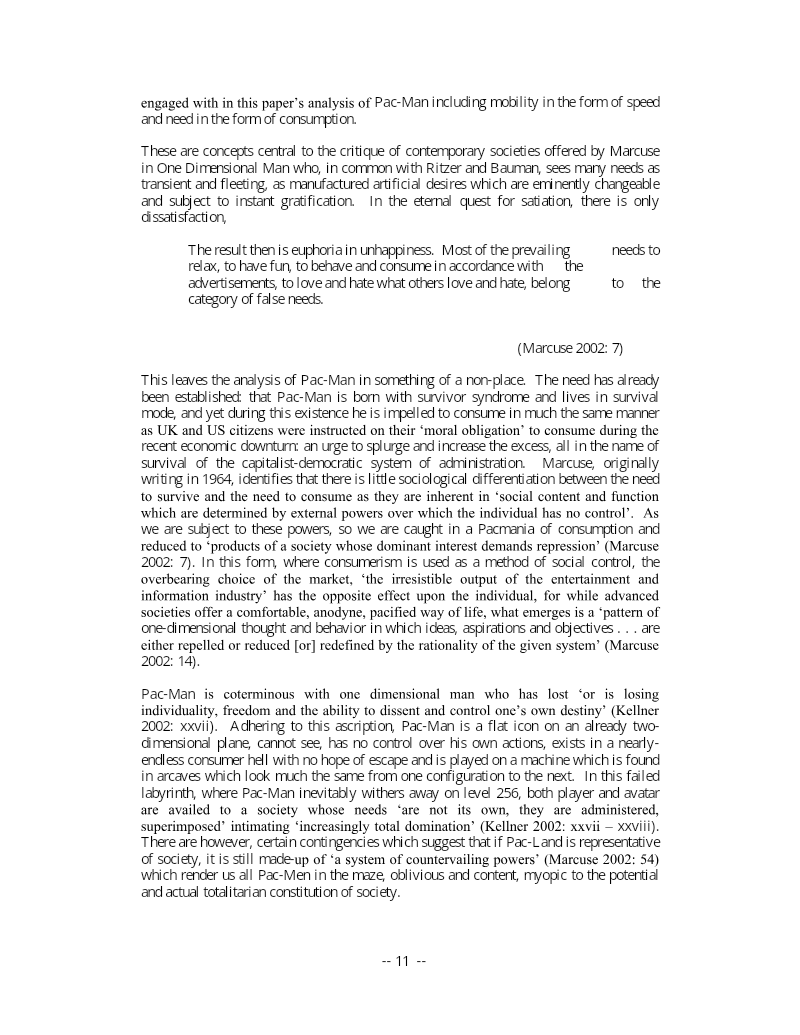
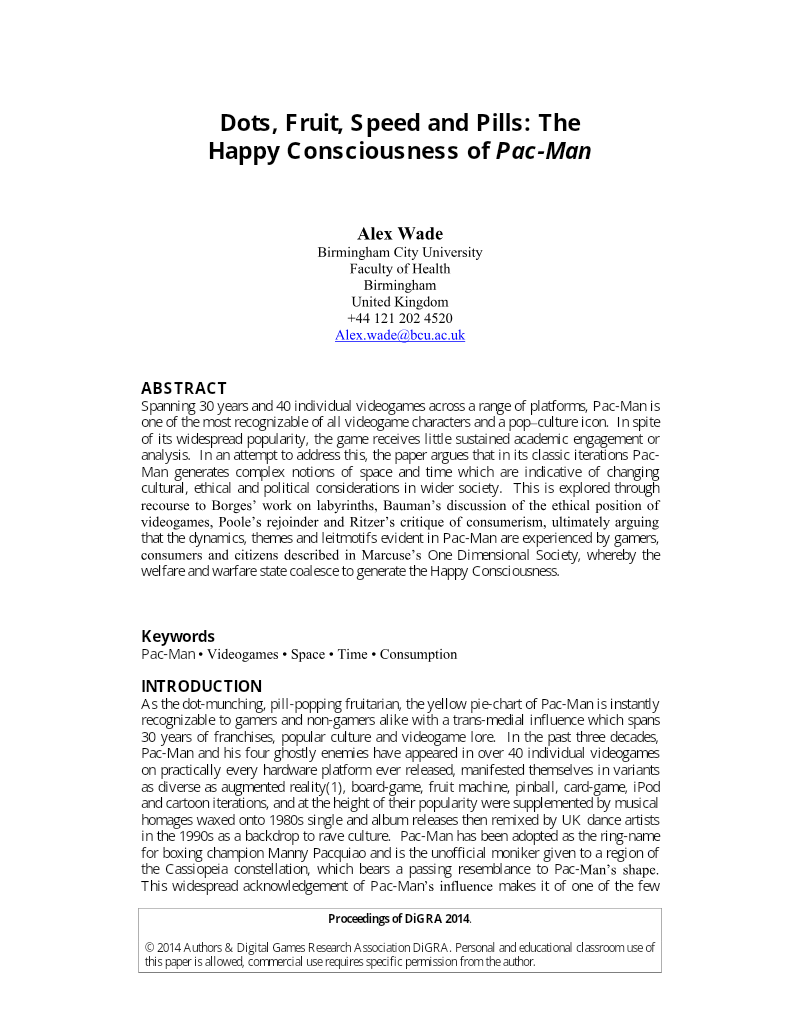
Dots, Fruit, Speed and Pills: The Happy Consciousness of Pac-Man
Alex Wade's DiGRA 2014 essay, "Dots, Fruit, Speed and Pills: The Happy Consciousness of Pac-Man," argues that Namco's deceptively simple grid maze encodes a sophisticated set of ideas about space, time, and consumer society.
- The essay reads Pac-Man's endless levels, culminating in the unplayable level 256, as a Borgesian maze with no exit, using Herbert Marcuse's concept of 'Happy Consciousness' and Jorge Luis Borges' labyrinths as its interpretive frame.
- Pac-Man is positioned within a transmedial reach spanning more than forty games and multiple media, and its design is highlighted for a nonviolent theme, broad accessibility across genders, and an emphasis on speed and consumption.
- The author links Pac-Man's sound and aesthetics to late-1980s acid house and rave culture, along with the psychological and drug-culture associations of that scene.

Capcom Financial Highlights: Fiscal Year Ended March 31, 2011
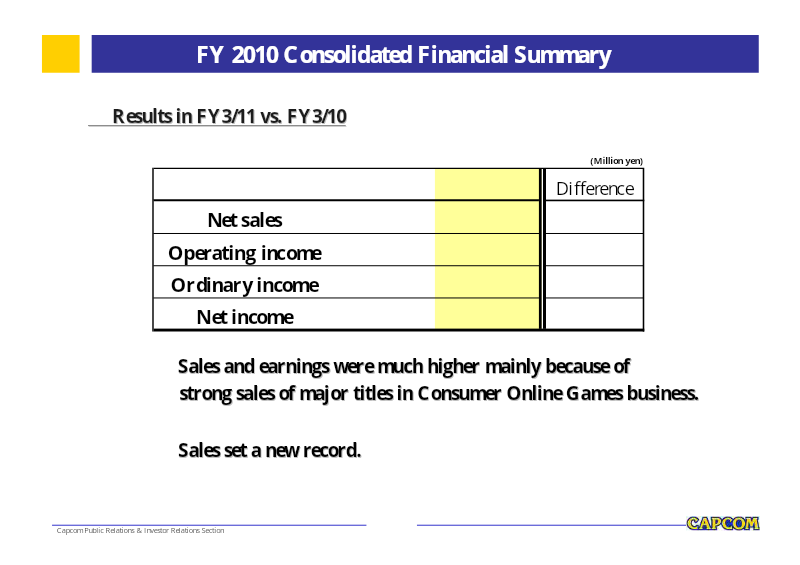
Capcom’s financial performance for the fiscal year ended March 31, 2011, reflects a period of record-breaking growth driven primarily by the success of its consumer online games segment.
- Capcom achieved record-breaking growth for the fiscal year ending March 31, 2011, with net sales rising to 97,716 million yen from 66,837 million yen the previous year.
- Operating income reached 14,295 million yen and net income totaled 7,750 million yen, exceeding the company's revised financial forecasts.
- Strong performance was driven by the success of major titles including Monster Hunter Freedom 3, Dead Rising 2, and Marvel vs. Capcom 3: Fate of Two Worlds.
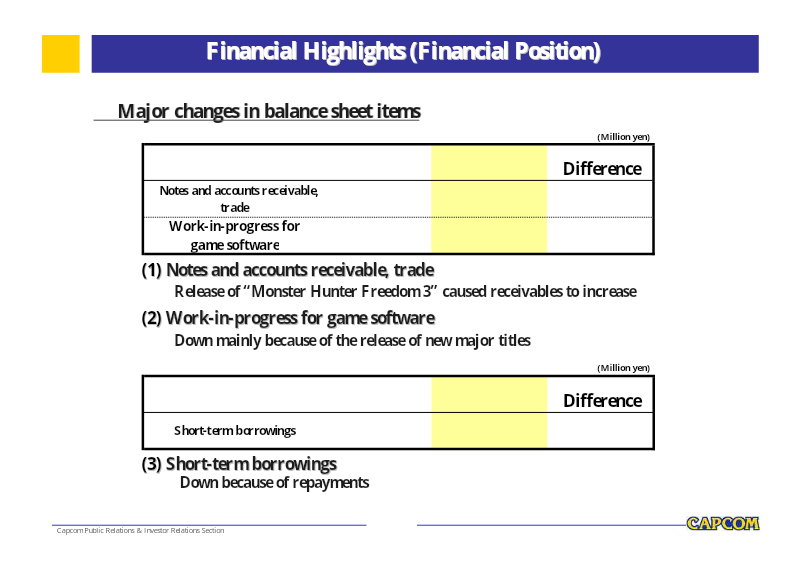
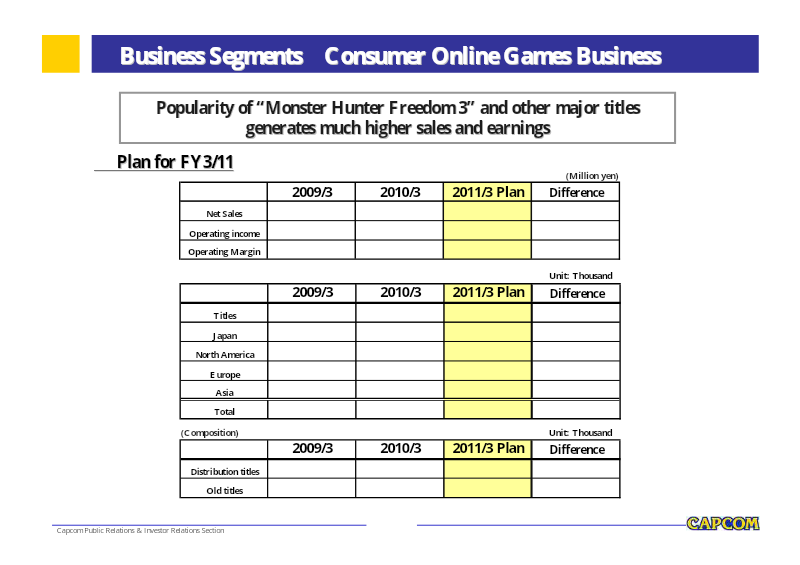

Capcom 3rd Quarter Financial Results: Fiscal Year Ending March 31, 2011
Capcom’s third-quarter financial results for the fiscal year ending March 31, 2011, demonstrate significant growth in both revenue and profitability compared to the previous year.
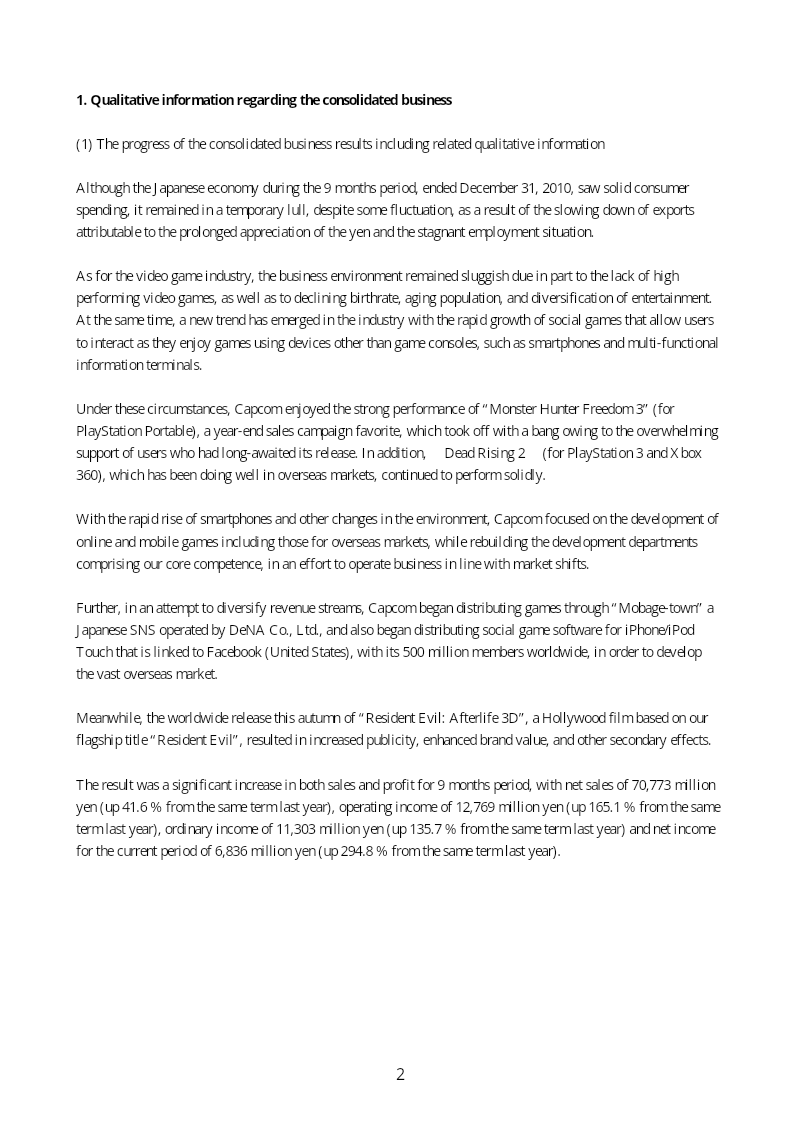
- Capcom reported net sales of 70,773 million yen and an operating income of 12,769 million yen for the nine-month period ending in the third quarter of the fiscal year 2011.
- The consumer online games segment drove growth, highlighted by the release of Monster Hunter Freedom 3, which achieved over 4 million units sold in Japan, and Dead Rising 2.
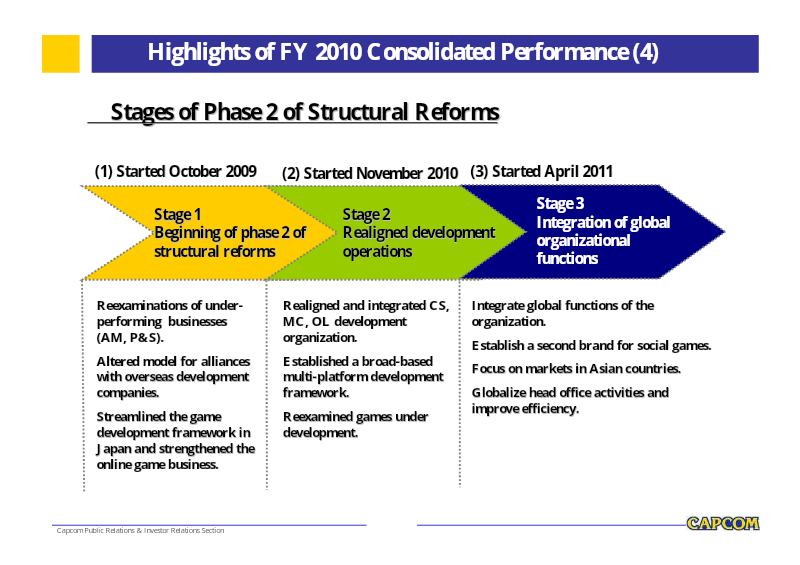
- The company successfully implemented the second stage of its structural reforms, which included integrating development divisions and expanding into the smartphone and social networking markets.
Consolidated Financial Results: 9 Months Ended December 31, 2010
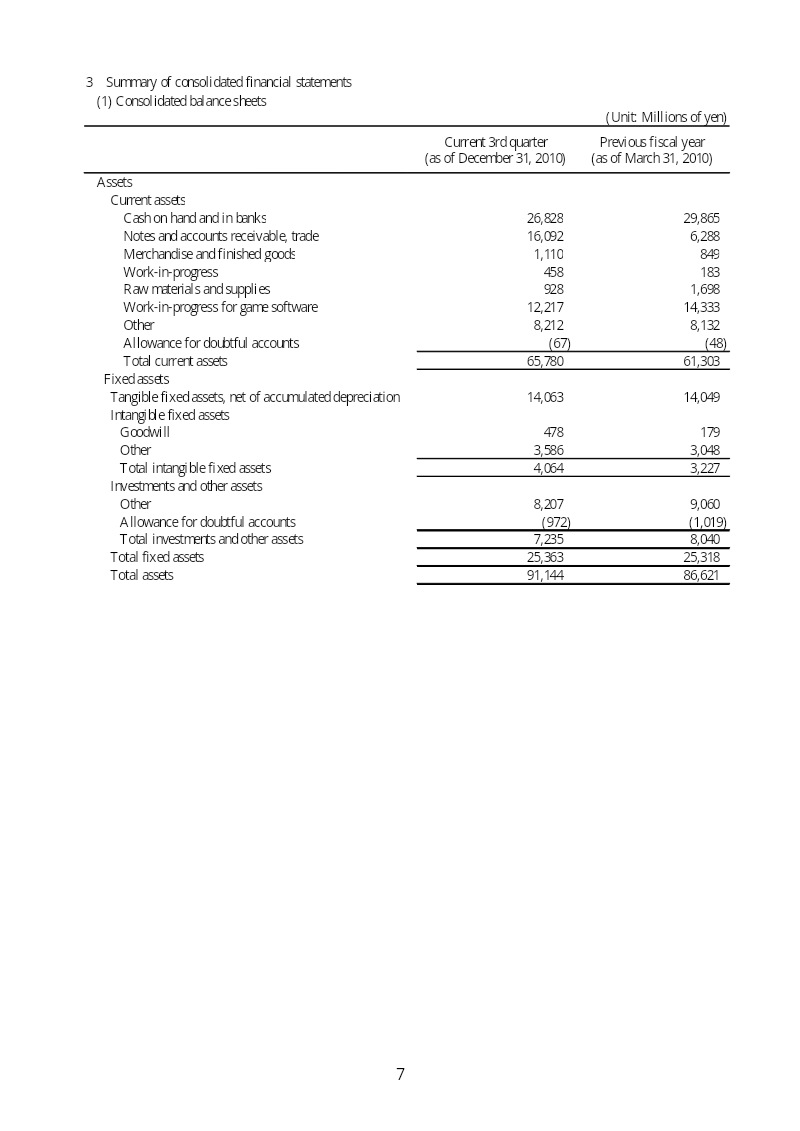
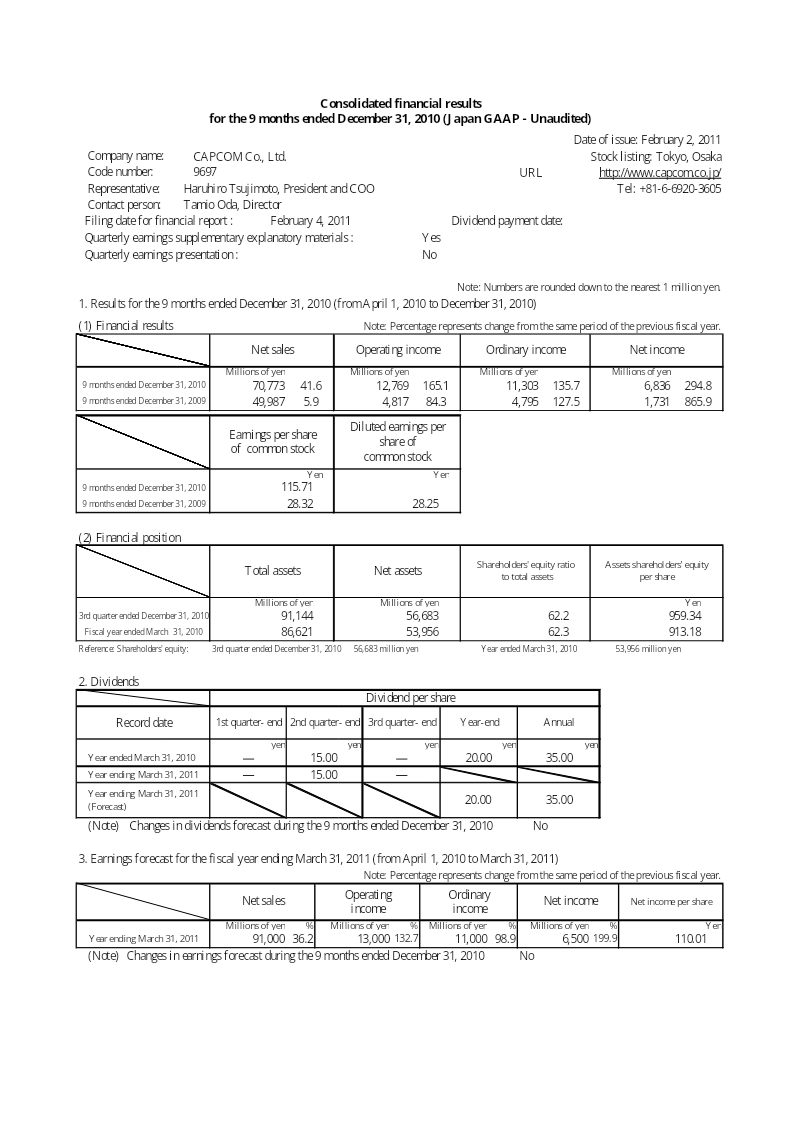
Capcom’s consolidated financial results for the nine-month period ending December 31, 2010, demonstrate significant growth in both sales and profitability compared to the same period in the previous fiscal year.
- Capcom achieved significant growth for the nine-month period ending December 31, 2010, with net sales rising 41.6% to 70,773 million yen and net income surging 294.8% to 6,836 million yen.
- Operating income increased by 165.1% to 12,769 million yen, largely fueled by the release of Monster Hunter Freedom 3, which shipped over 4 million units, and the international performance of Dead Rising 2.
- The Consumer Online Games segment served as the primary revenue driver, contributing 54,057 million yen in sales and 12,941 million yen in operating income.

Capcom Forecast Revisions for Year Ending March 31, 2011
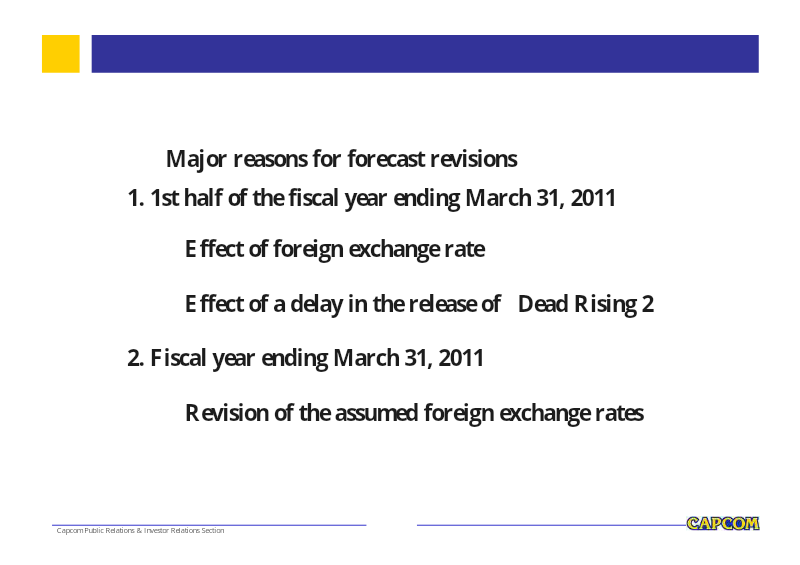
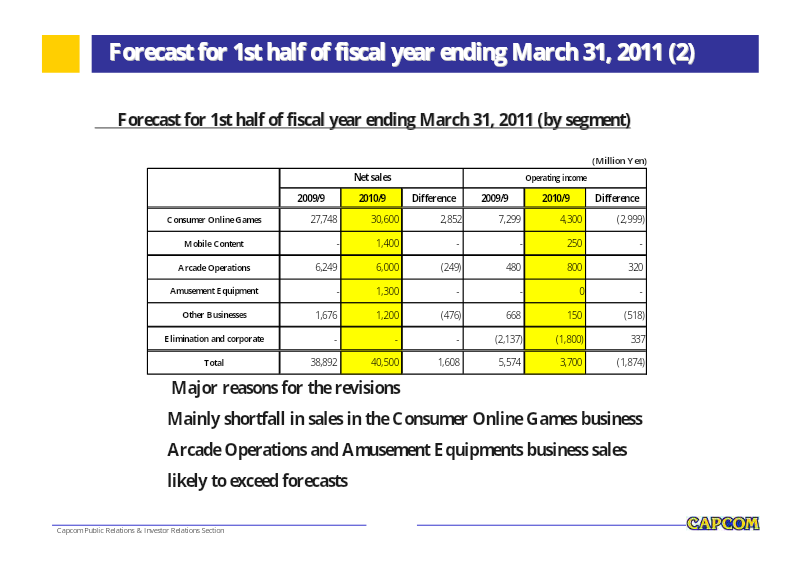
Capcom issued a downward revision of its financial forecasts for the fiscal year ending March 31, 2011, citing significant headwinds in the global economic environment and specific product release timing.
- Capcom lowered its full-year net sales forecast to 91 billion yen and net income to 6.5 billion yen due to unfavorable foreign exchange rates.
- First-half net income was revised downward by 41.4% to 1.7 billion yen, while net sales fell 10.6% to 40.5 billion yen.
- The delay of the major title Dead Rising 2 shifted shipments out of the first half, contributing to the initial financial shortfall.
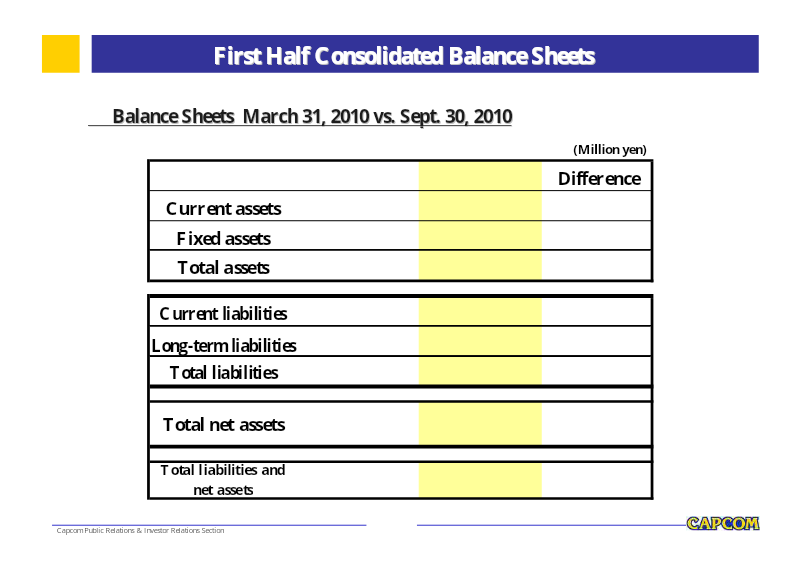
Capcom Financial Highlights: First Half of Fiscal Year Ending March 31, 2011
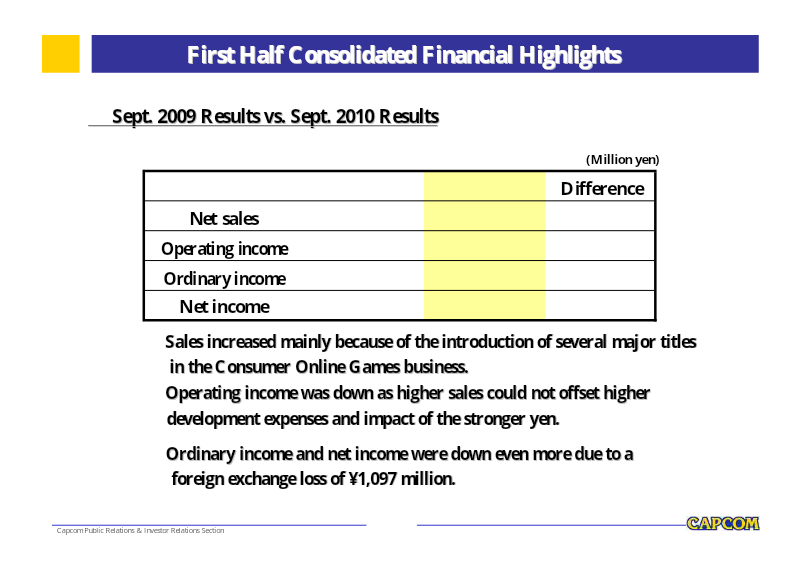
The financial results for Capcom for the first half of the fiscal year ending March 31, 2011, reflect a period of growth in net sales alongside a contraction in profitability.
- Capcom reported net sales of 40,706 million yen for the first half of the fiscal year ending March 31, 2011, an increase of 1,814 million yen year-over-year driven by Consumer Online Games.
- Profitability contracted as operating income fell to 3,942 million yen and net income dropped to 1,784 million yen due to rising development costs and a strengthening yen.
- Currency fluctuations significantly impacted earnings, with every one-yen appreciation against the U.S. dollar and Euro reducing operating income by 150 million yen and 50 million yen, respectively.
Companies behind it

As the documents state it.