Darkest Dungeon
11 documents in the library are about Darkest Dungeon, from writers such as Game Developers Conference, GameDiscoverCo and Extra Credits, the newest from 2025. Each has a summary and key insights with the page they come from.

Darkest Dungeon is a challenging gothic roguelike turn-based RPG about the psychological stresses of adventuring. Recruit, train, and lead a team of flawed heroes against unimaginable horrors, stress, disease, and the ever-encroaching dark. Can you keep your heroes together when all hope is lost?
- Released
- Jan 19, 2016
- Developer
- Red Hook Studios
- Genres
- Role-playing (RPG), Strategy, Turn-based strategy (TBS), Tactical, Adventure, Indie
- Platforms
- PlayStation 4, Linux, PC (Microsoft Windows), iOS, Mac, PlayStation Vita, Xbox One, Nintendo Switch
- Links
- Wikipedia
Game data from IGDB.com
Documents about Darkest Dungeon

Chaos Zero Nightmare Review: 20 Systems in 7 Minutes & players love It
Chaos Zero Nightmare has established itself as a significant contender in the mobile gaming landscape, generating approximately $8 million in revenue during its initial two-week launch window.
- Chaos Zero Nightmare generated approximately $8 million in revenue during its initial two-week launch window.
- The game maintains high engagement with approximately 800,000 daily active users by blending roguelike deck-building mechanics with gacha meta-progression.
- Localized dominance in specific regions, particularly Japan, is the primary driver of monetization efficiency and superior revenue-per-download metrics compared to global averages.
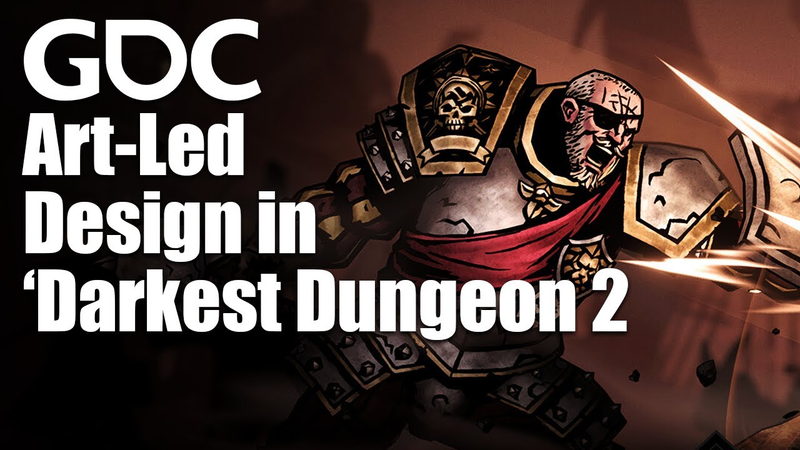
Evolving Worlds from Chaos: The Art-Led Approach of 'Darkest Dungeon 2's' Procedural Generation
The development of Darkest Dungeon 2 centers on a deliberate shift toward an art-led procedural generation system, prioritizing the game’s distinct, painterly aesthetic over traditional, programmer-centric automation.
- Red Hook Studios shifted from a programmer-led procedural generation system to an art-led approach for Darkest Dungeon 2 to ensure the game’s distinct, painterly 3D aesthetic remained consistent across generated environments.
- The team abandoned an initial 'sequential plate' system because it created an unsustainable workload for the art team and failed to support the desired game design direction.
- The final solution utilized a grid-based system where environment artists defined a minimal set of road tiles, allowing Unity to generate complex, seamless biomes without requiring constant developer intervention.

Plus: How Pre-orders Affect Your Launch Splash
This analysis explores the relationship between pre-order volume and launch day performance metrics on Steam, specifically focusing on how high pre-release engagement can skew traditional sales estimation models.
- High pre-order volume front-loads player activity, causing launch day concurrent user (CCU) counts to disproportionately inflate relative to total sales.
- For games with significant pre-order incentives and hardcore fanbases, the multiplier for estimating week-one sales from peak CCU should be adjusted downward to 7x–10x.
- Standard game launches without heavy pre-order bias typically follow a 20x–40x multiplier when estimating week-one sales from peak CCU.
Plus: Who's Dominating Steam Debuts in May?
This analysis examines the performance of video game debuts on Steam and other major platforms during May 2023.
- The Outlast Trials led May 2023 Steam debuts with 500,000 units sold in its first week, while Starship Troopers: Extermination, Darkest Dungeon II, and Age of Wonders 4 each reached approximately 250,000 players.
- High-profile release The Lord of the Rings: Gollum failed to gain market traction, peaking at only 800 concurrent users due to poor critical reception.
- Highly engaging titles like Starship Troopers: Extermination can defy standard sales-to-review multipliers because players are more likely to evangelize surprising gameplay.
E3 2023 and the 'Ocean Liner' Problem
The cancellation of E3 2023 serves as a primary case study for the "ocean liner" problem in the games industry, where large-scale events possess significant momentum that makes them difficult to steer or stop once they begin drifting toward obsolescence.
- The cancellation of E3 2023 marks a structural shift in industry marketing, as major publishers abandon centralized trade shows in favor of proprietary livestreams and decentralized digital showcases.
- High-effort, playable content for community engagement outperforms traditional social media marketing, evidenced by Sega’s 'The Murder of Sonic the Hedgehog' reaching 15,000 concurrent users.
- Darkest Dungeon II achieved over 300,000 unit sales during its exclusive launch period on the Epic Games Store.
Plus: Age of Wonders 4 Goes Huge on Steam
This analysis examines the commercial performance and market trends of video game releases for the first half of May 2023, focusing primarily on Steam while providing secondary coverage of PlayStation, Xbox, Nintendo Switch, and Epic Games Store (EGS).
- Age of Wonders 4 emerged as a top performer in early May 2023, peaking at 38,000 concurrent users on Steam with over 2,800 positive reviews.
- Redfall underperformed significantly, recording a maximum of 6,100 concurrent users and a 31% positive review rating, indicating poor long-term commercial viability.
- Darkest Dungeon II transitioned to a full Steam release following a successful exclusivity period on the Epic Games Store, where it sold 300,000 units.
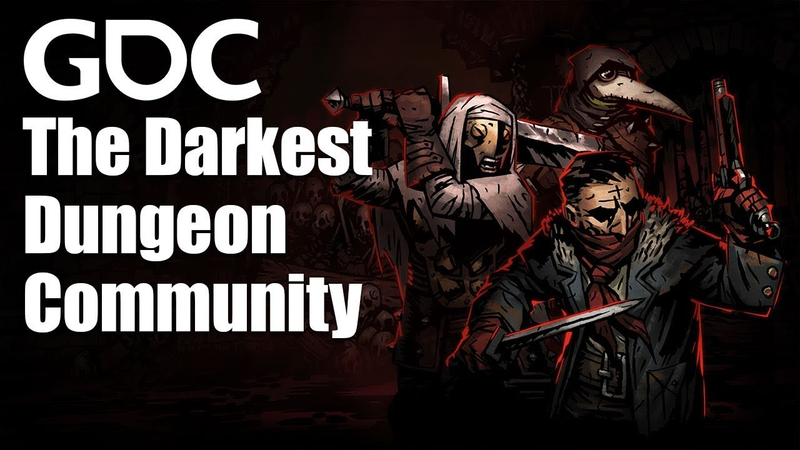
Circle in the Dark: The Darkest Dungeon Community
The community management strategy for the single-player game Darkest Dungeon centers on a "camp counselor" philosophy, which rejects the traditional, hierarchical "manager" role in favor of a horizontal, collaborative dialogue between developers and players.
- Red Hook Studios employs a 'camp counselor' community management philosophy that prioritizes horizontal, collaborative dialogue over hierarchical developer-player relationships.
- To mitigate unproductive feedback, the studio uses a tier-based survey system that forces players to evaluate character utility holistically, creating a shared vernacular for more nuanced design discussions.
- The studio manages the 'endowment effect'—where players value a game based on its state at purchase—by utilizing a public beta system to separate iterative development for long-term fans from stable experiences for new players.
Partnership on Darkest Dungeon: The Double-Edged Sword
The 50/50 co-presidency model in game development functions as a high-stakes balancing act that requires constant navigation of competing egos and divergent decision-making styles.
- Establish a zero-tolerance policy for unresolved tension: if a disagreement or negative feeling persists for more than 24 hours, the affected partner is obligated to raise and discuss the issue immediately.
- Implement a mutual veto power system to ensure both partners have final say, which helps reduce the pressure to micromanage and provides security that the project will not move in an unwanted direction.
- Use 'devil's advocacy' as a formal decision-making tool by intentionally arguing for positions you do not believe in to stress-test ideas and uncover potential flaws.
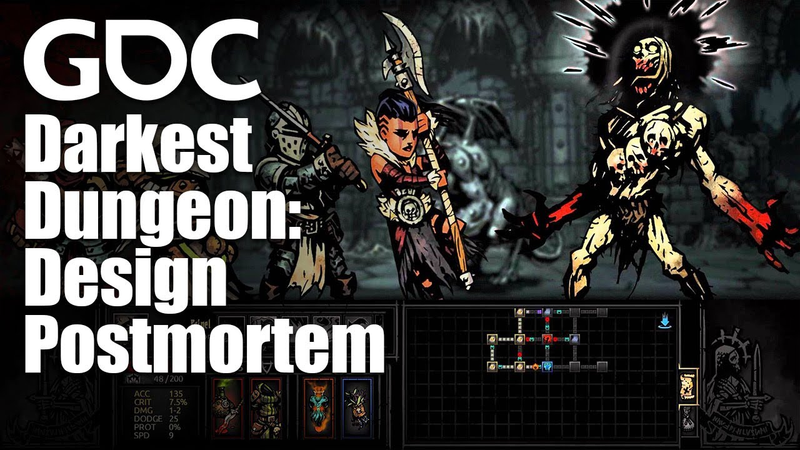
Darkest Dungeon: A Design Postmortem
Darkest Dungeon centers on the philosophy that the human experience of adventuring is defined by psychological trauma and permanent consequences rather than traditional power fantasies.
- Darkest Dungeon features approximately 70,000 words of text to support its Affliction system, which includes 15 character classes, seven distinct afflictions, and four virtues to simulate human emotional responses.
- The developers intentionally designed the game to prioritize the 'sword arm' over the 'sword,' focusing on the psychological state of heroes rather than traditional RPG power fantasies to create moments of triumph through the possibility of failure.
- The 'corpse' mechanic, introduced during Early Access to eliminate dominant combat strategies, caused significant player backlash because it was implemented as a major gameplay change that altered the experience for existing customers.
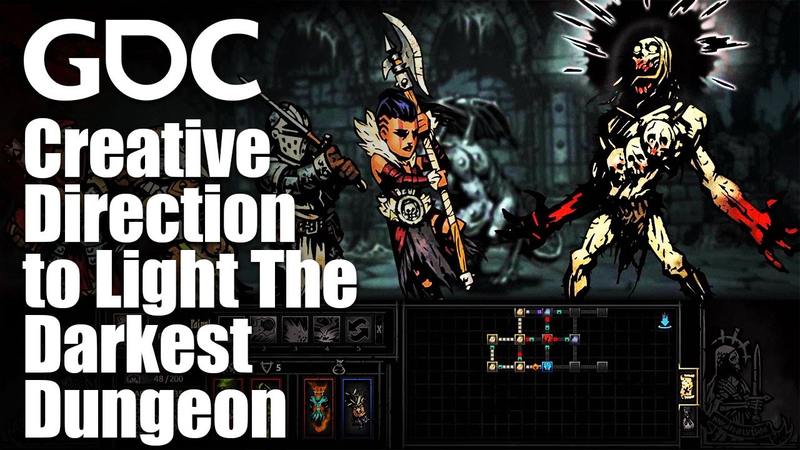
A Torch in the Dark: Using Creative Direction to Light The Darkest Dungeon
Maintaining a rigid, externalized creative vision serves as the primary defense against scope creep and development drift for independent studios.
- A clearly articulated, externalized creative vision acts as a decision-making razor, allowing developers to filter features and resolve conflicts during the uncertainty of production.
- Red Hook Studios defined the core of Darkest Dungeon as an uncompromising, Gothic, low-fantasy, Lovecraftian experience centered on making permanent decisions with imperfect information.
- The team rejected standard RPG tropes like isometric camera angles and exhaustive lore exposition to maintain a claustrophobic, uncertain atmosphere that forces players to experience the game's horror.
Games You Might Not Have Tried - ep 7 - Find New Games - Extra Credits
This analysis highlights a curated selection of video games that offer unique narrative, mechanical, or cultural value despite having flown under the radar of mainstream audiences.
- Games like The Talos Principle, This War of Mine, and Darkest Dungeon demonstrate that prioritizing thematic depth and innovative mechanics can create compelling experiences that transcend traditional high-budget polish.
- The Talos Principle utilizes puzzle-based gameplay to explore complex philosophical questions regarding the nature of human consciousness.
- This War of Mine offers a unique perspective on the genre by shifting the focus of survival simulation to the harrowing experiences of civilians in a war zone.