BioShock
Documents about BioShock
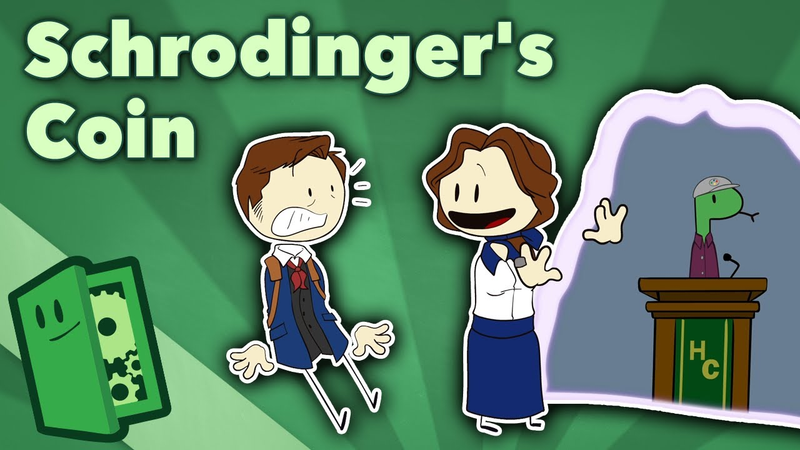
Schrodinger's Coin - Quantum Multiverse Theory in Bioshock Infinite - Extra Credits
BioShock Infinite utilizes the quantum multiverse theory to construct its narrative, grounding its complex plot in real-world scientific concepts while ultimately diverging from established physical laws.
- BioShock Infinite uses the quantum multiverse theory to frame the narrative, where pivotal binary choices like Booker DeWitt’s baptism create distinct, parallel realities.
- The game utilizes the concept of quantum superposition to depict Booker DeWitt and Comstock as the same individual existing in different states simultaneously.
- Elizabeth’s ability to traverse realities is grounded in her physical connection to two universes, placing her in a state of permanent quantum suspension.

The Trolley Problem - Designs With No Right Answer - Extra Credits
The trolley problem serves as a foundational ethical thought experiment that challenges individuals to weigh the value of human life when faced with limited, often tragic, choices.
- The trolley problem, formalized by philosopher Philippa Foot in 1967, serves as a foundational ethical framework for evaluating the trade-offs between inaction and active intervention in life-or-death scenarios.
- Game designers utilize the trolley problem to move beyond binary morality systems, forcing players to confront their personal ethical codes through irreversible, high-stakes decisions.
- Titles such as Telltale’s The Walking Dead, Life is Strange, BioShock, and Fallout effectively implement this design to prioritize player self-reflection over objective correctness.
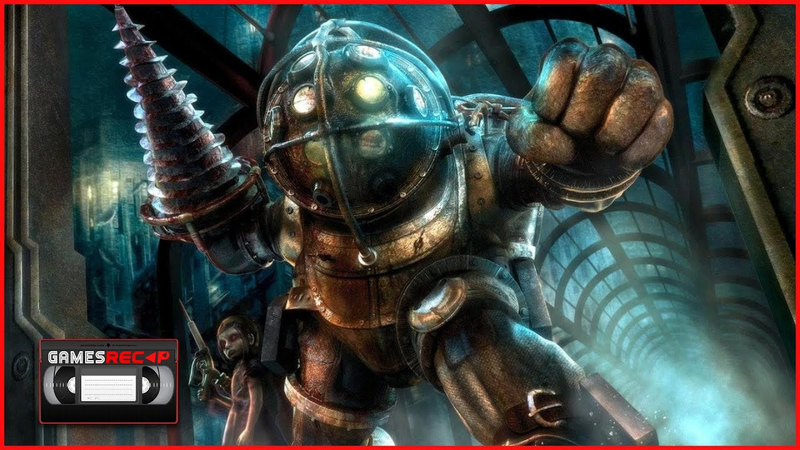
New Bioshock Game by Cloud Chamber | Games ReCAP
The announcement of a new entry in the Bioshock franchise marks a significant strategic move for 2K Games as they continue to leverage one of their most successful intellectual properties.
- 2K Games is developing a new BioShock title through Cloud Chamber, a newly established studio operating across dual locations in Novato, California, and Montreal.
- Industry analysis estimates a realistic development timeline for a high-quality, next-generation BioShock release to be eight to ten years, significantly longer than the five-year window typically associated with such projects.
- The project faces significant logistical risks due to the dual challenges of building a new studio from the ground up while managing a complex, multi-site co-development structure.
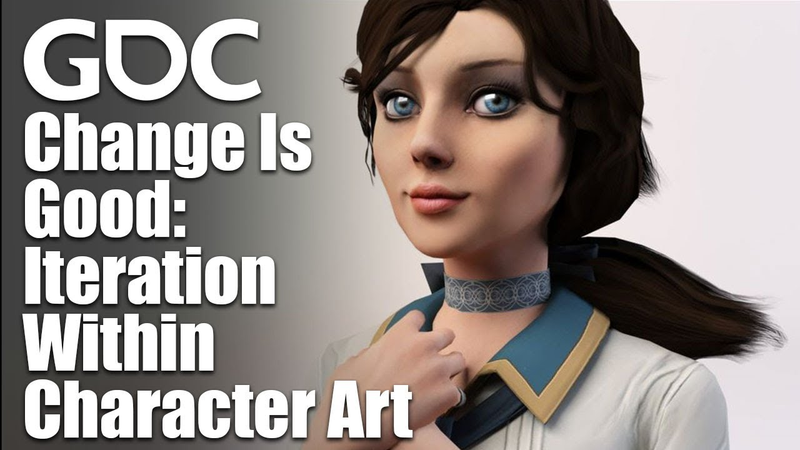
Change Is Good: The Importance of Iteration Within a Character Art Pipeline
The development of BioShock Infinite serves as a primary case study for the necessity of iterative design in character art pipelines.
- Transitioning from bespoke, labor-intensive asset creation to a standardized, modular system—utilizing shared topology, rigs, and UV layouts—is essential for reducing technical overhead and enabling rapid iteration.
- Implementing an override system using proxy boxes allows for efficient asset swapping and tiered customization, which effectively mitigates memory limitations while streamlining combat design.
- The development of BioShock Infinite demonstrates that character art must evolve alongside narrative shifts, as seen in the transformation of Elizabeth from a generic companion to a complex protagonist requiring custom shaders and unique rigging.
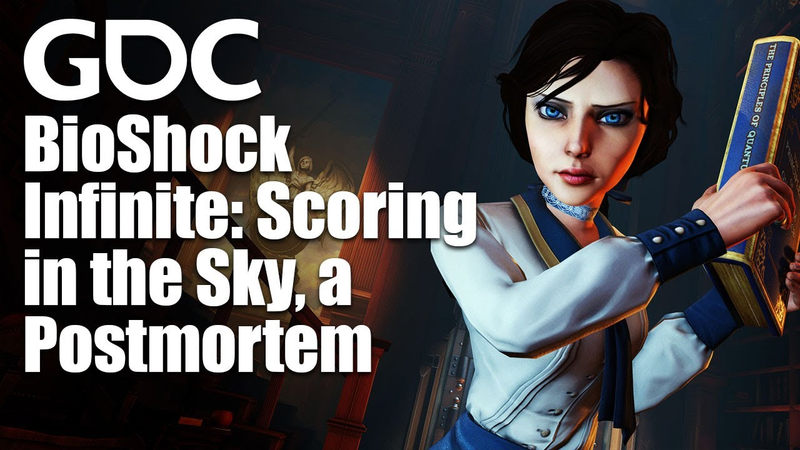
BioShock Infinite: Scoring in the Sky, a Postmortem
The musical direction for BioShock Infinite represents a deliberate departure from the grand, large-scale orchestral scores characteristic of the series' predecessors.
- The score moved away from traditional large-scale orchestral arrangements in favor of a minimalist ten-piece string ensemble to emphasize emotional intimacy and character-driven narrative.
- The composition utilized aleatoric writing and unquantized performances to create organic, visceral textures that reflect the game's 1912 setting and its underlying dystopian themes.
- A recurring open-fifth motif was implemented as a foundational anchor to symbolically represent the core narrative themes of infinity and time.
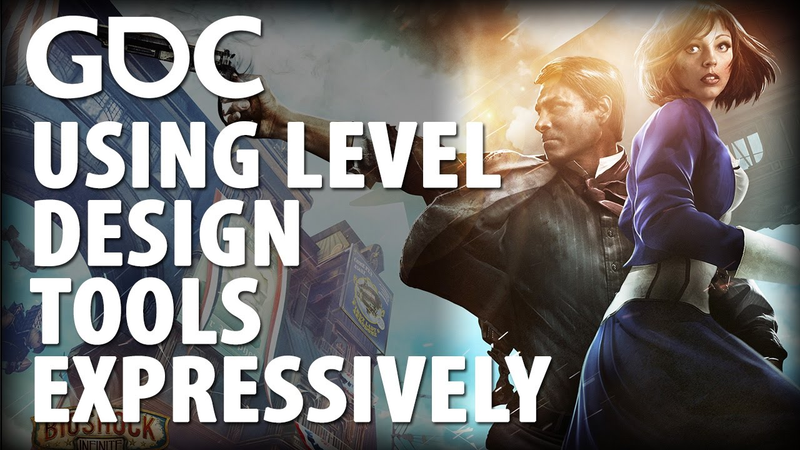
Using Level Design Tools Expressively
Level design in narrative-driven, first-person games relies heavily on the expressive use of fundamental scripting tools to create immersive, human-like interactions.
- Level designers can create immersive, human-like character behavior by repurposing standard scripting tools like triggers, delays, and counters rather than building complex, over-engineered systems.
- Simulating naturalistic character behavior is achieved by using delays to mimic human cognitive pauses, effectively bridging the gap between rigid machine logic and organic interaction.
- Implementing hysteresis—triggering events based on thresholds rather than binary switches—prevents mechanical dithering and technical bugs during erratic player movement or AI spawning.
Take-Two Interactive Form 10-Q: Q2 FY2017
Take-Two Interactive’s financial performance for the second quarter of fiscal year 2017 reflects a strategic pivot toward digital distribution and recurrent consumer spending.
- Take-Two's 1.00% Convertible Notes became eligible for holder conversion as of October 1, 2016, after the company's common stock price exceeded 130% of the conversion price for at least 20 of the 30 trading days ending September 30, 2016.
- Selling and marketing expenses rose by $25.3 million for the three months ended September 30, 2016, and by $50.9 million for the six months ended September 30, 2016, driven primarily by advertising spend for titles including Mafia III, BioShock: The Collection, XCOM 2, and NBA 2K17.
- The company is preparing for upcoming accounting changes, specifically FASB ASU 2016-09 regarding stock compensation (effective April 1, 2017) and ASU 2016-02 regarding lease accounting (effective April 1, 2019).
Mechanics and Tone - How Does Gameplay Relate to Story? - Extra Credits
The synthesis of gameplay mechanics and narrative is a fundamental pillar of effective game design.
- Gameplay mechanics must be developed as a foundational element of the narrative rather than an afterthought to ensure cohesive, immersive player experiences.
- Disjointed mechanics and narrative cause player disengagement, as users begin to perceive the story as an interruption to the gameplay loop.
- Effective mechanical design functions like literary style or artistic color palettes, grounding the player in the game’s emotional stakes and intended tone.

Games You Might Not Have Tried: Cyberpunk - Find New Games - Extra Credits
The primary purpose of this analysis is to curate a list of underplayed or overlooked video games within the cyberpunk genre.
- The Shadowrun series, spanning the SNES, Genesis, and modern Shadowrun Returns, is a cornerstone of the genre, with the latter specifically noted for its community-driven modding toolkit.
- System Shock 2 is identified as a seminal title and the spiritual predecessor to the BioShock franchise.
- Snatcher is highlighted for its strong narrative parallels to the film Blade Runner, while Gemini Rue is recommended for its noir-inspired, point-and-click gameplay.
In Service to the Brand - Why Bioshock Infinite Failed - Extra Credits
The central thesis of this analysis is that BioShock Infinite suffers from narrative and mechanical dissonance caused by the forced inclusion of legacy elements from its predecessors.
- BioShock Infinite suffers from narrative and mechanical dissonance because developers prioritized brand consistency over world-appropriate design.
- The inclusion of 'Vigors' fails because they lack the logical integration into Columbia’s social fabric that Plasmids had in the original BioShock.
- The pervasive looting mechanic, while natural in the decaying ruins of Rapture, feels incongruous and out of place within the functional society of Columbia.
Take-Two Interactive Annual Report: FY2013
Take-Two Interactive’s fiscal year 2013 annual report outlines a strategic focus on developing high-quality, internally owned intellectual property through its Rockstar Games and 2K labels.
- Take-Two is actively diversifying its revenue streams by investing in mobile, tablet, and social network platforms to reduce reliance on traditional retail software sales.
- Revenue is recognized only upon the transfer of title and risk of loss, with digital download revenue recognized at the time the content is made available to the consumer.
- The company completed the sale of its 'Jack of All Games' distribution business to SYNNEX Corporation for a final net purchase price of $35.8 million, with the unit's financial results classified as discontinued operations.

Word Choice - How to Handle Exposition in Games - Extra Credits
Effective game writing requires balancing limited dialogue space with the need for deep characterization and narrative impact.
- Prioritize character-driven dialogue over backstory to maximize limited exposition space, using unique voices and quirks to define characters even during functional instructions.
- Embed personality directly into the tone and phrasing of speech to create memorable figures, as evidenced by the distinct characterization of GLaDOS in Portal.
- Use repetition of key phrases, such as Fallout’s "war never changes," to highlight thematic significance and anchor the player’s understanding.