
Alice: Madness Returns
GameBy Spicy Horse Games · Released Jun 14, 2011
Return to Wonderland and experience an all new nightmare as Alice fights to regain her sanity as she fights for the truth behind her past. Can Alice save Wonderland - and herself - from the madness that consumes them both?
Connections
Each row is a game or company named alongside Alice: Madness Returns, each column a document, oldest first. A mark means that document names it. Select a row to see those documents.
About the game
- Released
- Jun 14, 2011
- Developer
- Spicy Horse Games
- Publisher
- Electronic Arts
- Genres
- Platform, Puzzle, Hack and slash/Beat 'em up, Adventure
- Platforms
- PlayStation 3, PC (Microsoft Windows), Xbox 360
- Links
- Official site, Wikipedia
Game data from IGDB.com
Documents about Alice: Madness Returns
I Interviewed 50 Famous Game Devs, And They All Do These 5 Things...
Successful independent game development is defined by five core traits identified through an analysis of 60 interviews with industry professionals.
- Successful developers prioritize intrinsic motivation by building games they personally want to play rather than chasing market trends or viral potential.
- Treating development as an investment requires managing project scope and starting with smaller, manageable releases to ensure financial sustainability before scaling.
- High-performing developers maintain a disciplined, relentless work ethic to push through the inevitable burnout and stagnation phases of long development cycles.
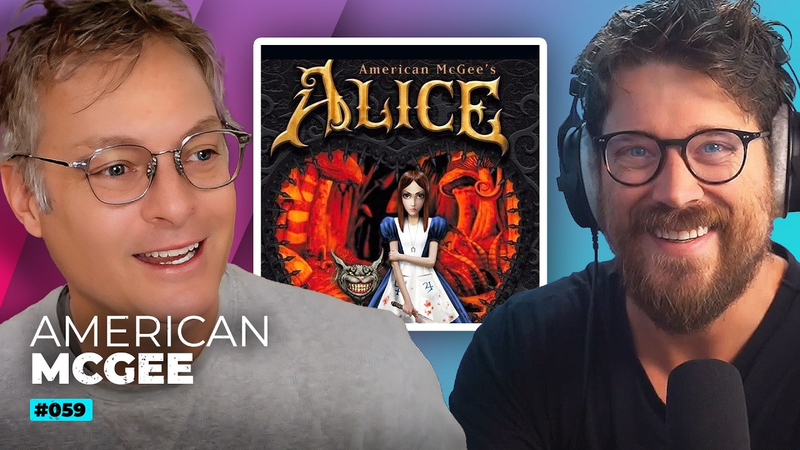
Want To Make Games? Here's 1 Hour Of Brutal Honesty From A Game Dev Legend (American McGee)
The production of high-end interactive media requires a delicate balance between artistic vision and rigid financial constraints.
- Large-scale game production, such as 'Alice: Madness Returns,' often relies on a core team of fewer than 10 stellar programmers to handle complex technical challenges like hair physics, while the remaining staff focuses on integration and cleanup.
- Production of 'Alice: Madness Returns' involved a total team of approximately 300 people, consisting of 100 internal studio staff and 200 external contractors dedicated to art asset production.
- Publishers may structure development deals to keep spending off their financial books by delaying the booking of costs until the moment a game is delivered and a bond is repaid, effectively making the development process invisible to shareholders during production.



A Contemporary Take on Victorian Lunacy: Representations of the Asylum in the Neo-Victorian Video Game Alice: Madness Returns
Alice: Madness Returns serves as a critical exploration of the intersection between neo-Victorian aesthetics and the historical realities of nineteenth-century psychiatric institutions.
- Alice: Madness Returns critiques nineteenth-century psychiatric institutions by framing the asylum as a site of systemic abuse and patriarchal control rather than medical healing.
- The game depicts archaic procedures like bloodletting and trepanning as tools of humiliation used by Dr. Heironymous Q. Wilson and his staff to exert power over the female body.
- Gameplay mechanics and cut-scenes intentionally restrict player agency to mirror the protagonist’s psychological fragmentation and foster empathy for her institutional confinement.
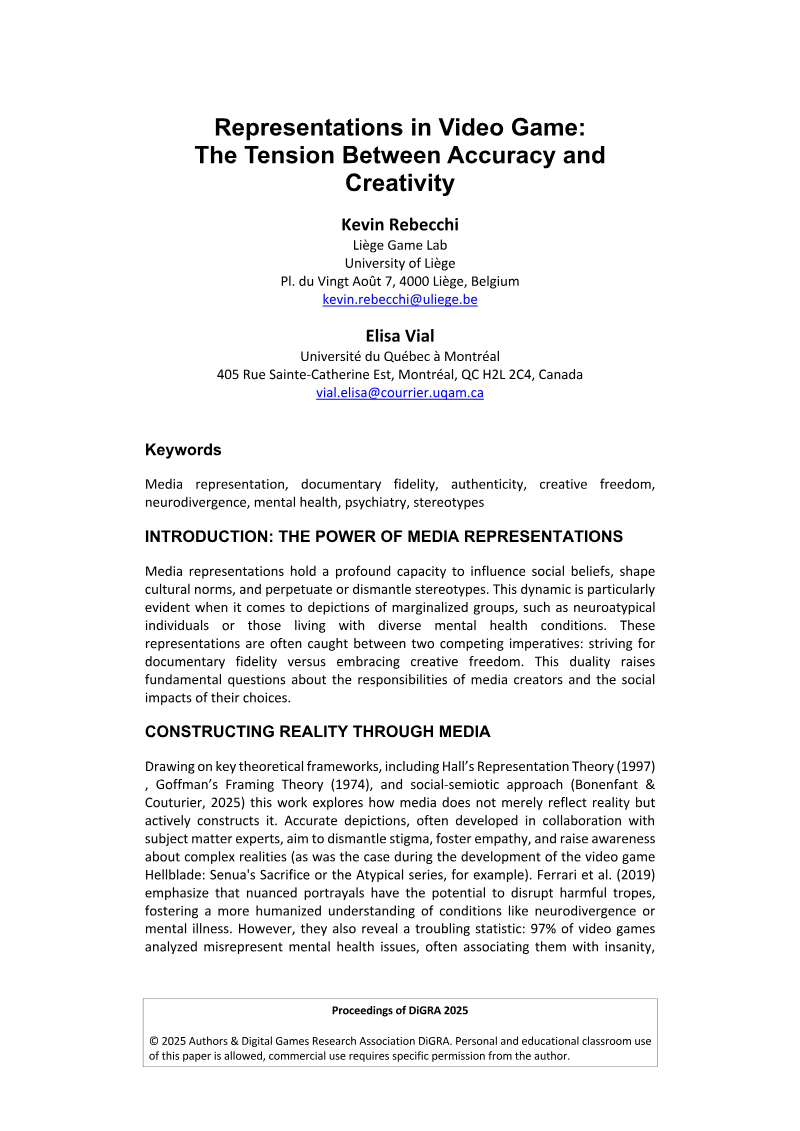
Representations in Video Games: The Tension Between Accuracy and Creativity
This document explores the inherent tension between documentary fidelity and creative freedom in media representations, particularly concerning marginalized groups like neuroatypical individuals and those with mental health conditions.
- A key empirical reference cited by the paper, Ferrari et al. (2019), reports that 97% of analyzed video games misrepresent mental health issues by associating them with insanity, danger, and violence.
- The authors argue that media representations actively construct social reality, so creators bear responsibility for the effects of stigmatizing portrayals of neurodivergence and psychiatric conditions.
- The paper contends that overly rigid demands for realism, which it calls the 'tyranny of realism' (Shaw), can constrain expressive and metaphorical storytelling in games.
Companies behind it

As the documents state it.