Transcript
Hello everybody. Welcome to the Game Discoverer Co show. I am your co-host Chris Plant. I am joined as always by the brilliant Simon Carless. If you are listening for the first time, this is a show where we talk about the games industry and really specifically game discovery. How do people discover, sell, find games in a time when there are so many of them? You're going to learn about that and you're going to learn about so many more things today. As always, we're going to start with three news stories, dig into a big one, and talk about what just came out, what's coming out next. It's going to be great, but first, I need to welcome my co-host Simon. How are you doing?
I'm good. It's it's still the summer. We're we're wallowing in in oodles of new games and 1.0 releases and all kinds of stuff. So, there's yeah, there's always stuff. This is why I like running Game Discoverer Co. There's always stuff to talk about. You're you're never there's never an idle moment, right?
There is truly so much to talk about, which we should just like hop right into it with some of these news stories because one of them I I don't know if I want to see a a personal interest in, but I'm always fascinated when we can talk about Roblox and especially how well it is doing in relation to how well it is protecting the children who are using it, which seems to be very very difficult for it. We have some new information about the performance of of its financials. Do you want to give like a top level of what's going on over there?
Yeah, I mean I mean, to be honest, this is interesting because Roblox's revenue is still going up, right? So, it's not actually like like the game is still successful. I think it's profitable. I've had various arguments with people because of how Roblox recognizes revenue. It often shows as not being profitable, but actually that's just because it's very conservative in recognizing when Robux are spent. So,
but I think if you look at Roblox's free cash flow, which Yeah, Roblox is profitable and growing. So, that's great. But, it's its share price is not doing so good recently. And in its recent results, which were last week, which is why we're talking about this, its daily active users did actually fall 7% quarter on quarter to 123 million. 123 million daily active is an absolutely giant number, but I believe it was as close as almost 150 mil at one point. So, you know, so as a result, there's been some share downgrades. It's its its price is going down. And I think a lot of this is related to it is getting quite a lot of stricter on child safety and identifying children in its system. Partly, I think for for government reasons, but also partly because it recognizes that's an issue and it's also trying to expand quite a lot into more, let's say, adult gaming because I think it feels like that you know, the future is being truly an
all-ages platform.
Yeah, this is where I I struggled with my like this is how the business works hat and have my like parent hat or game journalist hat in that it seems like the incentives of the market and the incentives of the audience are in conflict with one another. Or like me as a parent, I would love for Roblox to be a better place for me to have my 8-year-old be on the internet. There's a lot that I really like about it. And at the same time, when they make those changes, it seems like the market's reaction is please don't put those barriers up. Those barriers prevent us from making maximum money by exploiting literal children. And like I don't know how they balance that.
Well, I mean, they unfortunately shareholders but the shareholders right now obviously don't you know that I mean, you know, there's no ethical consumption under capitalism or what have you. So So I
think yeah. So So I think from a shareholder point of view they're kind of like, "Well, why aren't you making more like more money?" But I do think from a from a Roblox point of view, I think what they understand is um you know, they have been in danger of getting legislated on as opposed to getting out ahead of it. And I think for better or worse, if you're a big tech company with big reach, you need to get out ahead of uh government organizations, whether they be national or local, who might want to legislate you. So I think what they've been doing uh is good. Um I think uh you know, that they're doing stuff which is correct. Like they're saying, "We can't take people's word for it that they're really 27 years old. So we need to do stuff like, you know, do do a little facial recognition and and stuff like that." It's a little creepy, but if it's correctly anonymized, I suspect that is the correct way to work out how old someone who's actually playing your game is. And so I think, you know, I think I think they're being somewhat responsible on that front. But but they also did have, I will say, there was a real craze last summer with
like, you know, Grow a Garden and um you know, a bunch of the other uh you know, what was the other Roblox games? I will still a brain rot was also huge. And so a bunch of people just jumped on. And I think to some extent it is the adult that you know, the some of the restrictions. But I think people are just, you know, those games uh now a little little less new. And so I think some of the down is just people who got on the absolute craze for that uh uh have wavered a little bit. But you know, I mean, I think it's an interesting space.
Do [snorts] you Do you think that this is a equalizing to the norm for Roblox? Like obviously every tech company's ambitions is to grow infinitely and just get bigger and bigger and bigger. But when I hear that it's still growing, but the expectations around it are shifting. I don't know. I guess like where is Roblox heading two or three years from now? Is it just Is it Is it on tech company growth or is it becoming, you know, just another key player in the video game space?
I mean, it's interesting because one thing I will say is a lot of Roblox's install base, we mustn't forget, is mobile. And we don't actually don't cover We don't cover mobile much Game Discover Co, but it is I think 80% mobile more or less. So, a lot of this growth is happening on the mobile side. And I think what they're what Roblox is really hoping is, you know, they believe there's all kinds of other genres that are popping on PC and console right now that can be disrupted in Roblox. And there's been some indication of this like I may have mentioned this past like there's been some tower defense games that have been big on Roblox now and that's traditionally been not a Roblox like Roblox's genre, if you go back far enough, was you'd log on to a sandboxy thing and you mess around. And that was really it. But, you know, you what we have seen some indications that there are some other genres that can become popular. And Roblox is now spending quite a lot of time and and some money trying to encourage, let's say, more mature genres because they really want to say like, you know, a lot of their users are a little bit older. Some
people have been playing Roblox since 2011 are in their 20s now. And I think so So, I think yeah, I think Roblox's prospects interesting. I think it's complicated cuz everything is so busy out there, but there is some possibility they could start doing better in more adult genres because they are just a platform, so there's no reason they couldn't try and do that. I just think they have some barriers because of what people have historically thought of as thought of for Roblox, so that's what they have to overcome.
Yeah, I mean, it it it it certainly seems like the rest of the industry is aware of that, too. We're going to talk about a quote from Shigeru Miyamoto towards the end of the show that I think is relevant to everything that we're saying, but there's one last thing on the Roblox story before we move forward that I want to hit on, which is this idea of them pursuing adult gamers. Like, it isn't, you know, a day that ends in Y without me hearing about how Roblox would like to be bringing in a larger adult audience. Is is it any different now than it was
the first time I heard that years ago?
It is in the sense that many Roblox users are aged up and some of them have sticked with the stuck with the platform. So, I think that is true. I do not think we've seen a breakout game on Roblox so far where your buddies who are in their 30s are like, "Oh, I've got to hop on Roblox and play this." And I think that's
Yeah.
probably the hope. But, you know, but I the other thing is I will say, obviously, as their users age up, they do have more money. Like, 9-year-olds do not have that much money. 19-year-olds probably have more more disposable income than 9-year-olds. So, I think there is a story here where Roblox is just fine. The the question just is how many how many billions of dollars are they worth on the open market? You know, and and they need to be way more than just fine to have a sky-high share price.
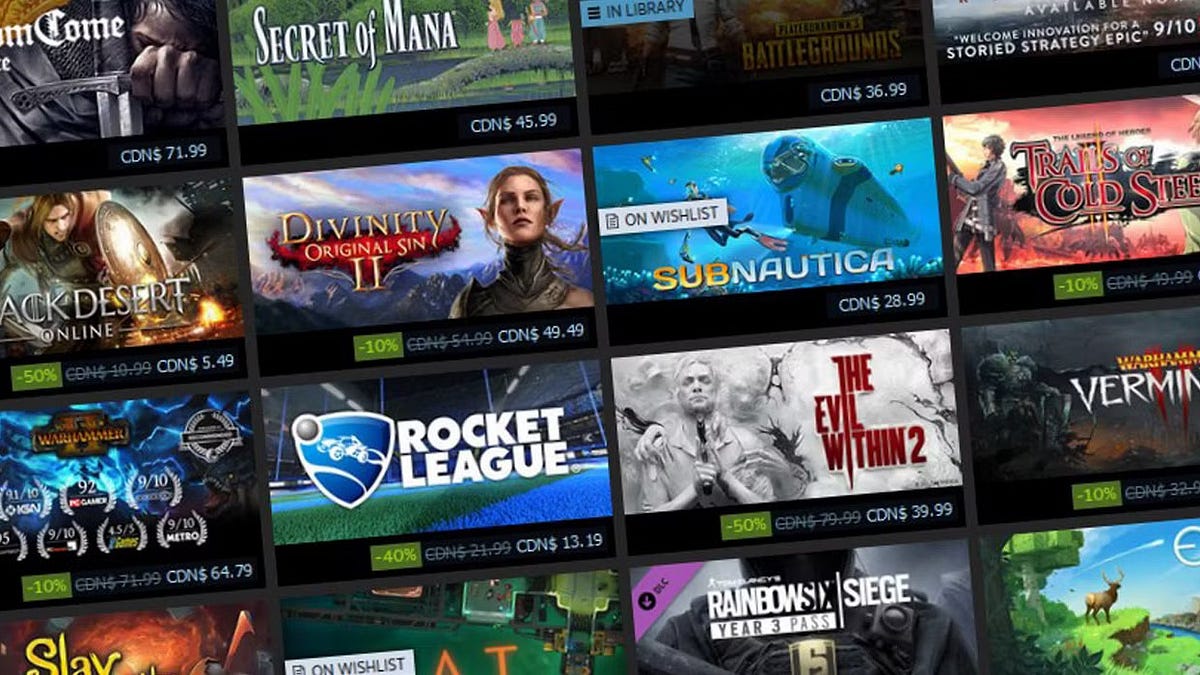
Yeah. Well, let's shift from the billions to the millions. We want to talk about the Steam 1.0
watch. I think this kind of came up a bit at the end of last week's episode. This question of what about the Steam 1.0 releases? What about these big releases that are technically already out there? And there have been a few that have done really well. Do you want to talk a little bit about those?
Yeah, and it's something that it's it's quite difficult to track in some ways Steam 1.0 because the game is already released. So, you will see some people's charts include 1.0 releases, but a lot of people's don't. So, we're trying to keep a better handle on this. Like, when we have new games of the week as we discussed last week, we don't think Fields of Mistria is a new game of the week cuz it's been available to buy, but it did just 1.0 and it's done it's done really nicely. It got to 27,000 CCU, which is an all-time high. So, that probably means, I don't know, that's a probably like a couple of 150,000, 200,000 people a day are playing it right now. And then there were some other ones we spotted cuz I went and had a little look at recent launches and Scrap Mechanic just hit 38,000 CCU,
which is its highest for 6 years and that that was in what early access for 10 years, which is kind of crazy. And it hit 3 million Yeah, 3 million sales. And then Water Bots Simulator, which was made by by YouTubers a company actually hit 1.0 and hit 13K CCU and there's this game called Sefuria, which is an action roguelike, hit 30K CCU on its 1.0 and I didn't completely notice it on its early access. So, I think this is all really interesting and I think what we're going to try and do at Game Discover Co is we do have for our pro users, we have an early access graduates like area of the page where you can see did games outperform their early access sales and revenue or not. But actually, it turns out a lot of the time a significant percentage of your 1.0 concurrent users are people who bought it at some point during early access coming back to see what it's like. So, I think something we're going to try and do is also track CCU for for for new 1.0s cuz it's not always you don't always make, you know, our revenue our revenue numbers are you make like 40% of your revenue of the
first month of early access at 1.0, but what you do do is have a lot of people coming back who haven't tried it for months or years.
Yeah, I I wonder if you ever sense of whether or not someone like me is the norm or like the oddity because I think of a game like Fields of Mistria, right? And that is a game that I got the second it hit early access years ago. Really enjoyed it. Enjoyed it so much I said, "I'm not going to play this again until it's at 1.0 cuz I want that full experience. And yet, I don't know. I'm kind of wondering if that's like a old dude or just an old person sort of thing because you say Scrap Mechanic has been in early access for 10 years, like why does it even bother coming out of it if people are enjoying it? So, like What is the the median relationship with early access at this point?
I mean, I do think early access, and I've said this a couple of times, is better a state of mind at this point. I
think many years ago early access was far closer to what I think you're talking about, which is you'd buy a little bit, you'd say, "Oh, this is clearly unfinished." And you sort of come back to it. I think I think Baldur's Gate 3 is a good example of that. Like the game
Yeah.
was not just not complete until 1.0. But I think what's happened is early access has got far more finished pseudo-finished game-like. And so, I do think that most people nowadays expect to play a pretty finished game during early access. And the 1.0 will often be almost like a cherry on top or like, "Oh, there's a big new system." But actually, there's been another five new systems. So, so yeah. So, I think but yeah. But I I it I think people have a range of responses to this. So, I do not think that your response is out of the ordinary. I just think that more people are are playing early access as if they were 1.0s because if you're too early in early access nowadays, you'll probably slip to mostly positive reviews, and then people will be a little meh about picking you up. And then
Yeah.
that's really rough.
Yeah. I mean, why should somebody not do early access then even if what Let's imagine a fictional scenario here, which is I have created a game. It really is basically 1.0. Should I put it out in early access because maybe it gets a little bit more forgiveness in those early weeks, and then I get a bonus bump with 1.0? Like is there a strategy? I guess to like taking advantage of these two beats?
Well, the problem is if you've already released most of the content and the 1.0 is just like huh, it's in 1.0 now, then no one's going to care. You're not going to get any additional pickup. So, I I actually think that I see some people that I trust moving away from early access a little bit because I I think that that they think in today's crowded market and unless you have a real clear like like for example, adding co-op at 1.0. But if you're like we don't have time to ship co-op, it's a great game, but we'll ship it in like a
year. Then that would be a perfect early access setup, but I think if your 1.0 is it's just another 30% discount. We already did seven of them. But by the way, it's 1.0. Then you're not really going to you're not really going to move the needle. So, so I think I think a lot of it is yeah, like what is your what is your feature map and is any of it actually exciting?
Yeah, yeah, yeah. No, I that is that is very helpful. And honestly, what I would prefer as a user experience, too. Um for the last story before we get to like the the big meat of the episode. Shigeru Miyamoto spoke about the industry. How refreshing. This feels like less common these days like a real meaty idea about what is going on in the world versus maybe even you know, 10-15 years ago where I felt like we could expect Miyamoto and specifically Iwata-san before he passed away to talk at events like GDC about what's going on in a big scope of things.
This conversation or at least this snippet is about the Switch's life cycle and that he said, "I was happy that the Switch lasted for 8 to 9 years. I think that customers are no longer just looking for specs. I think the ideal is that if you buy the software, you can play it on the device you have at home." Trends like what is what what what is he really trying to say here?
Yeah, and and one thing I'd note is I think this was done for a big anniversary for for the Japanese magazine Famitsu. So, I feel like it was actually not uh they want Miyamoto to Miyamoto's coming out to declare something that was like, oh, Miyamoto like Famitsu has an anniversary. Of course, I'll sit down with them. But, it was interesting to a point because we don't get so much idle not idle chatter. We don't get so much free-form chatter from Miyamoto I don't think cuz he got more senior. He just has to appear in the Q&A for like the the financial results and get asked weird things by minor shareholders. So, it was it was
nice to see this. So, yeah, so I I like this because I think you know, there is a record I mean, honestly, Nintendo has always been the kind of uh frames per second doesn't matter. It's about innovation in hardware has sort of been their MO for a long time. But, I think to be honest, they've even moved beyond the innovation in hardware matters because the Switch 2 and the Switch, you may notice, uh not a lot of innovation in hardware between those those things. I think, you know, the the real innovation here is it's a it's it's it's a portable platform you can also plug into a TV, which I think was an amazing thing to do. But, yeah, I mean, when he's sort of saying this, I think he is thinking about, you know, like like Switch 2 and and being a a mildly souped-up Switch and and sort of and he is agreeing at this point, you know, you run into this we were just talking about how well uh the uh Call of Duty Remaster uh Call of Duty Black Ops 2 was done on PlayStation. And that's a great example, right? It's not that much more spectacular, but there's a ton of people that have PlayStation 3s, which is not
compatible with PS4 or 5, and they were like, oh, I just you know, I just want to play this play this game again. I'm not I'm not looking like the horsepower doesn't matter. So, so yeah, so I think that's my main takeaway. I think it's an understanding even within Nintendo that the need for hardware innovation above everything else is sort of mellowed and people are just like I want to play a game on a machine that I've got.
Yeah. What I found really interesting about this interview is I get the sense that he at least and presumably Nintendo at large does not see themselves as competing with video game consoles anymore. The framing of this interview is clearly about mobile and smartphones. And the innovation that he frames for the the switch two, which is the same as the switch one is it has controllers. We are offering you a smartphone experience a mobile experience with very responsive controls and very adult games. And I said earlier when we were talking about Roblox and
this idea of creating games for adults, this feels in conversation with that. I I don't know why I was caught off guard by this because it speaking of Iwata in GDC talks, many many years ago he gave one about the threat of the free-to-play, of the low-cost mobile games. And this really feels like they very much believe that that is the war that they're fighting.
Yeah, it's weird. Nintendo's in an odd spot right now because I I have noticed to your point, um you know, they're talking a lot about expanding and obviously all the movie stuff they've been doing with Illumination and and they have and they have the Zelda live-action coming out as well. So I think they really feel like it's weird that a very small percentage of the world can interact with their experiences because they have their own hardware, but they also don't want to release it on everybody else's game hardware. So I think they I think they're looking for things to do and they have obviously had some some mobile successes, but a lot of it is I think I
think they feel like they're just an IP that should be absolutely everywhere. So they're sort of struggling with that while also recognizing that you know, like people in general don't play Nintendo games a ton. I think they've had a couple of success. I think the Fire Emblem game has done quite well on mobile. But um yeah, yeah. So it's so I actually see a lot of it as outside of games and that's where they've got most interest. And they keep talking about this kind of they're bringing the Nintendo account to everybody. So everyone's going to have a Nintendo account for stuff and they made that and they made that Apple that Apple music clone that's only for Nintendo Nintendo music which I find hilarious. It's like, "Oh, we're not going to go on Spotify. We're just going to have our own app for it." So I think they have their own kind of slightly um tilting at windmill adjacent stuff here. But their IPs are amazing. Their IPs are amazing that they're going to do well. I think what if they do run into a 90s Super Mario Brothers movie style roadblock though, it'll be interesting to see whether they they they they go back into their cocoon a little bit. Like let's say everyone hates the live-action Zelda movie. Like
I want I wonder what they're going to do.
The the thing that was surprising to me I guess about this this whole framing, this interview, this Nintendo switch lasted for eight or nine years. I thought the money saving there would be on well the hardware got cheaper and designing for it, you know, was also low cost. And there was more emphasis on that that latter part and specifically that you only have to design for one piece of hardware. Which again is the I would assume that is comparing yourself to an Activision that needs to design for multi-platforms. But it seemed like Miyamoto was also pointing at smartphones being a problem there too. That if you are designing for mobile games, you have to continue to serve that audience across wildly different platforms. And he outright says it's basically a version of, you know, work smarter, not harder. Like we all wish we didn't have to work at all. And by only designing for one
system we're able to keep those costs and that work basically as low as possible.
I I think Nintendo is a little bit defensive nowadays of the size of their development teams and how they develop games because very clearly a lot of other people have gone to, you know, massively dispersed development and they tend to be in-house and with like these, uh, you know, weird third-party pseudo outsourcing companies that sometimes they co-own. And and they've done it that way with fairly small teams for like the last 30 or 40 years and they're not really changing that. So, I think Nintendo gets a little that sometimes and then they're kind of like, "Well, how can we how can we in in internally or explain that?" It is true that that, you know, you don't need a big team cuz you're not porting to every single thing and making sure it runs on a billion Android device. But, I also think it's Nintendo's I think it's Nintendo's slight quirkiness in how they set up their dev teams, which I'm I'm probably quite enamored with, but I can see some other people like shareholders being like, "Well, you know, why aren't you
leveraging your efficiencies or whatever?"
[laughter]
It's very funny because you're right. Again, the from the shareholders' perspective, I guess I can understand it from the seeing other companies survive and struggle. It seems like what they're doing in keeping things relatively small, uh, makes a lot of sense. Anyway, things change all the time, which brings us to the big story of the week. You have been in the video games industry for 30 years and I want to talk about that. I want to find out what you've learned. You wrote about this in the newsletter a bit. You divided your period, which I don't know if this is as, uh, kind to yourself as you could have been, but into basically dinosaur, uh, epochs.
[laughter]
Which really ages, uh, both of us. You have the forming period, the norming period, and the performing period. I want to go through each of those
Yeah.
uh, a little bit here. So, taking back to the beginning, what is the forming period? And also, what is the young Simon Carless in the
video game industry.
Yeah, I mean it's interesting like um I I I went to university for history, not video games, although this was, you know, 30 years ago and when there were weren't really many video game degrees. But at at the time I was quite active actually making music on computers. I wasn't really designing games, but I was making music on my Amiga and was, you know, fairly well known in a very uh low in a very small set of people kind of for for music. So, in the end I applied for a few things and actually almost, you know, I went back into um you know, actual like journalism later, but I almost took a job at Future Publishing who you know, have been the one of the dominant kind of publishers of computer magazines for the for the past 30 years as a CD-ROM editor for one of their magazines, which would have been more on the journalist side, but I ended up taking a job as designer for a company that had in the UK that had made flight sims that
was getting into making earlier console games and just like less less simmy games. And so, I was lucky enough to have a graduate game design job, which are not very weren't really that common then and aren't really that common now. But yeah, I think I learned a lot there because coming into that market, you know, there was so little. I know I mentioned the newsletter, I know the Doom shareware stuff was around, but most people were just shipping retail copies of games onto physical shelves. And when you ship the game, you didn't really hear from anyone you didn't even know anyone who bought the game. It was kind of crazy.
Yeah. That's wild to think of well I was going to say that's so different than now, but I don't know if that's actually so different from now. You know a lot of analytics, but you can just as well release a game and never know your audience or the audience can be both really big to you and so small to the rest of the world. But we'll we'll get to all that. Can you describe to me the forming period? What do you mean when
you give it that name?
Yeah, I was sort of I was goofing on a on a few things here. Like, I was going through yeah, the eras of of of of dinosaurs. And it was when I believe the Triassic, which is when I said this, was really when a lot of the dinosaurs we know today were were up and running, but just sort of forming. But, my my point was there was less diversity. There were less dinosaurs. There were less There was There was less flora and fauna. So, that that's sort of the main issue the main difference in what I would say the '90s and '00s. I mentioned PlayStation 1 only had 1,500 Western games over its entire life. I I said in the I said in the newsletter that I worked on two of them. I actually worked on three of them. But, but the third one was too small. It's a game called It's a game called Xenocracy. There was like a Wing Commander-style game that was only released in Europe on PlayStation. And I did do a little bit of work on that as well. But, my point is like, I can legitimately say I worked on one in 500 of all Western-released PlayStation games. And none of them are particularly
well-known, but nonetheless, that's quite a high percentage. Think of you know, release Think of it nowadays where there's regularly on on Steam four or 500 games a week, you know, like it's it was just I think that's the main difference with the forming. There was just less diversity of games, less diversity of flora and fauna out there.
I think the norming period is what many people now would see as sort of the golden age of modern gaming. Uh AAA studios are experimenting. There are these big franchises that are coming into their own. And I I I think this is where we would plot the in the first indie game boom. And by that I mean boom boom. Like, indie games obviously existed before um they could be downloaded on your Xbox. But, how does the norming period come to be? How do we get out of the forming and enter this like this widespread cultural acknowledgement and availability?
I mean, it was mainly to do with distribution. It was also to do with as I note like in my article I have sort of three things that I think changed and those were access to tools, direct access to audience, and market competition. But what I was really noting is access to tools was starting to happen in that era, but honestly access to tools particularly engines didn't really massively take off till the 2010s, not affordable ones. And so I think you were seeing in the 2000s you were seeing Xbox Live Arcade super big super big deal. Xbox Live Arcade started in 2004 and then Steam's first third-party games, just a handful, were 2005. And so that that's really the era when you were seeing people realizing I can just make a game and go direct to market and only have to deal with one platform holder. I don't have to deal with retail. I don't have to deal with any distribution or publisher. And that's when things started to get I think exciting. The Independent Games Festival had existed since 1999. I I know someone who was a finalist in the in in the first in the first one in in in '99. And
there are games out there that were interesting then, but really it wasn't until you know games like Gish like Spelunky like Minecraft actually was Minecraft was in IGF after it was somewhat popular, but not
Yeah.
but before it was insanely popular and that was I think 2011. So So So that's certainly yeah that that was the era that I think many people would call a bit of a golden age and I think people didn't fully understand at the time. It felt experimental. It didn't feel like it was a golden age for at least for discovery, but it certainly was in retrospect.
Yes, this is where I will do the very [clears throat] uncouth thing and plug Post Games which people should go listen to the very first episode of which is a history of that first IGF. A very different time. I will also shamefully point out the beginning of this period is when we worked together for the first time. You had a real job. I was a sniffling child trying to learn
how to write. But can you tell folks a little bit about what you were doing during the norming period?
Yeah, so I mean I mean I started I I stopped working in the games industry as a developer in about 2002 and then I started working at gamasutra.com and at gamedeveloper.com in 2004. But really because I was overexcited and very into games, I started getting my fingers into a whole bunch of pies there and quickly became quite involved in game developers conference and the Independent Games Festival. I think I I was chairperson for some of the kind of early early ages of the interesting stuff. And then also
Yeah.
in addition to Gamasutra, we were sort of spinning up because I was hyperactive, we were spinning up a whole bunch of other kind of sites and we ran a site called gamesetwatch.com which was a very early blog. I think it launched before Kotaku actually. So it was it was it was it was pretty early for blogs and I had a whole bunch of guest guest columnists on there including including yourself and a a whole bunch of other people and that was
sort of an attempt I guess to capture the zeitgeist in more of a B2C way. But it didn't really have much of a commercial point I don't think. It was it was it was just me sort of letting off some steam. But yeah, it was fun, right?
It was great. It was a place where I not myself, Lea Alexander I think was Chris Dahlen? There was some some some much talent there.
There was some interesting people certainly certainly Brandon Boyer was doing was was doing stuff there who went on to run IGF. There were yeah yeah there were all kinds of interesting people. I was just getting people to do columns for 100 or 200 bucks and just be like might hey go wild. And yeah it was it was a it was a real it was a real fun time, especially because this is pre sort of, uh, the visual takeover of the internet by by and so this was a time when text was more cutting edge. So, that was kind of it was kind of fun to be involved in that, but
the brainy gamer era. Let's go to the final, uh, epoch, the dinosaur period of
video games, the one that you think we're currently in, the performing period. What is What is this?
Yeah, so so I call this performing and I also called it the Cretaceous period and I sort of noted at the end of the Cretaceous period, uh, there was a 10 km wide, uh, meteor that hit hit the
[laughter]
it hit I think it hit Mexico, actually. Uh, but yeah, I so I wasn't claiming that was going to happen, but I I was noting, you know, I think what's so exciting about this era is like everything is everything is sky high. Access to tools, sky high. You have so much access to great tools. Direct access to audience, um, you know, sky you have amazing access to the audience nowadays. You can directly connect with almost anyone. Market competition also sky high, so that's the sort of negative there. And really, um, you know, like most of the barriers most of the barriers have disappeared. I'm I'm aware that there's platforms and some people will complain that the platform is the barrier to them doing well. Uh, I don't really agree with that. I think I think
at this point, um, there's certainly some discovery issues with platforms, but I think I think most of your barriers are going to be around how do you get people find out of your about your game outside of the platform. And, yeah, yeah, I mean there's some issues with that due to the amount of stuff that's out there, but the amount of games you see coming out of nowhere and doing really well nowadays, uh, that's that's kind of awesome. So, uh, you know, so so I I I think I think it's an exciting era, but it's also a pretty complicated era, especially for people who like me and and you who've been been around in the industry for a while because, um, you know, I think Uh, unless you have a a real active audience base, if you were a king of the past, um, especially if you worked like work-for-hire or with publishers, you may not be a king anymore. You know, the the kings are the people, I think, who can successfully attract and retain a lot of attention on the modern internet. And that is not easy.
Yeah. I I I've been I've seen this in
the media side, too, when you have basically a history of things built on scale. And then you shift to whatever this is, it requires a rebuild. It It does feel a bit like the meteor are hitting and a new thing being born in some ways. [clears throat] And for that reason, I'm curious for you, you put all this together, did you come away with it with the better sense of where we're heading or is it all still a bit of a mystery or is the the giant rock from the sky coming down on us?
Well, I what I say to the news that and I will stand by this is there is no there is no rock from the sky. There's just more first-person shop simulators. So, I think
[laughter]
So, so I think people have to get Yeah, have to get okay with the fact that really I think the main thing is people are kind of like, "Well, obviously, VCs have stopped funding. That means there's going to be a big gap in the market in 18 months' time. I'm going to target that." I'm like, "No, no. It doesn't work like that." Like,
I'm not even sure that money has has made a massive difference to most games being successful over the past 5 years. So, I think you just have to be okay with the fact that yeah, I don't think there's going to I don't think there's going to be a a gap in the market. I just think there's going to be various sizes of game. You have to pick the right game for yourself. Uh, get it funded or fund it yourself. Try it. See if people care about it. And if they don't care, then go then go make another one pretty quickly. And I think that's really that that that that's really the key. So, yeah, I would say I would say no meteor, just a gradually sort of sliding trombone of sort of like
[laughter]
of of of ubiquitousness. Yeah.
I I I feel like it's Yeah, there's new apex predators and we need to learn to live in balance with with these things that might just bite us in half. Um well, I think that's a happy place to end these 30 years of conversation. I'm excited for the next 30 years that you have ahead of you.
Yes.
Um but let's shrink the timeline down to
the the very much the present. Let's talk about last week. Let's talk about this week. What happened last week in the world of video game discovery?
Yeah, I can I can I can blast through this. There was some cool stuff that debuted. I tend to look on Steam last week although a couple of these games came out on console as well. But last week's big folks were well, Big Walk, which is we talked about and we were like, how is that going to do? And I was like, yeah, good. And it did really good. I think they just announced they sold they sold a million units already. Yeah, it it topped out at 43,000 sorry, 46,000 CCU on Steam and people have really liked I think a a more sophisticated take on friend slot that was that was created I think or started being created before friend slot was really a thing. So, I think their idea of co-op puzzle and linear has worked out really well for them. That's awesome.
Having gone through that game, I am imagining that the folks at Panic folks at studio are feeling some relief
because it is a game that is very much meant to be played through one time. Doesn't seem to have replay and you do need to get people involved and having a large mass of people up front seems crucial for that game's success. So, I am happy to see it and I'm also happy because I hope to see more games like it and I I think I was feeling a little bit of like, I I know what to expect from this. So,
Yeah, I I think it's a it's an exciting time for co-op only stuff, I think. And and I think this is going to I think we're going to see more of it. Finally, it's been kind of slow coming. Given how how popular It Takes Two was, as we sort of discussed. Like I don't understand I it's just very alien to a lot of people who fund games, I think. But I I think I think we're going to see more. And then the other stuff just to whip through another four. Marvel Tokon, which is the Marvel fighting game. It did indeed get poor reviews on Steam because of some of its tech issues, but a lot of people played it anyway. It's um you know, I think they're working on that. Um this this
[laughter]
Let me be very very quick on that. Have you seen people trying to come up with their own solutions for this?
Uh no, I haven't.
It's creating a conspiracy theory culture. People are I I Yes, the reviews are negative. People want to play the game so bad that they are coming up with like folklore of well, if you turn on Epic Games Store, it'll make it communicate with Unreal Engine 5 faster. And that'll fix your issues. And they Some people claim it's the gold the silver bullet. And some people are completely lost over it. And there's there's a number of these. I've Usually I in my head when when a thing is broken, people just get mad. I have not quite seen something quite like this where people are um It's becoming part of the lore almost of the video game. Very strange phenomenon.
Well well, yeah, I think people are like well, there must be a button. There must be a button you can press here that speeds everything up. And and I will say that that that have been in the past some clever stuff you can do with shaders and like any files and stuff that work, but I think yeah. We we may have gone too far here.
[laughter]
Yeah, and and the other stuff here I want to talk about that there's there's this game the chill electronics repair game, which I think we talked about last week that did indeed do very well. It's It's It's gone out to about 20,000 CCU, like actually very strong. Iron Nest also I'm hoping to get those folks to do a newsletter soon. The the heavy target simulator game. Again, we thought it would do well. It went out to 17,000 CCU. Uh the only one that did like decently but like it had some issues with with Beast of Reincarnation, which is uh you know, the the game from developers of Pokémon. I think in the end it you know, I think the publishers did a pretty good job on it. It's just not a It's not an amazing game currently. So, so I think a lot of people wanted to try it and and and I think it went did did go out to about uh 15,000 CCU, but I see currently as of like the 2nd, it's already down to about 3,000. So, I think people are sort of trying it but hoping for more in the future, maybe.
Yeah, the word I hear from critics around that game is that it is the uh
Xbox 360 type of game that 10 years from now everybody will tell you is actually a masterpiece, but people just didn't understand its I guess simplicity or ideas at the time. Um we'll see. It does seem like it is kind of a quintessential six to seven out of 10 game with all of the baggage that comes with that. Uh how how about this upcoming week?
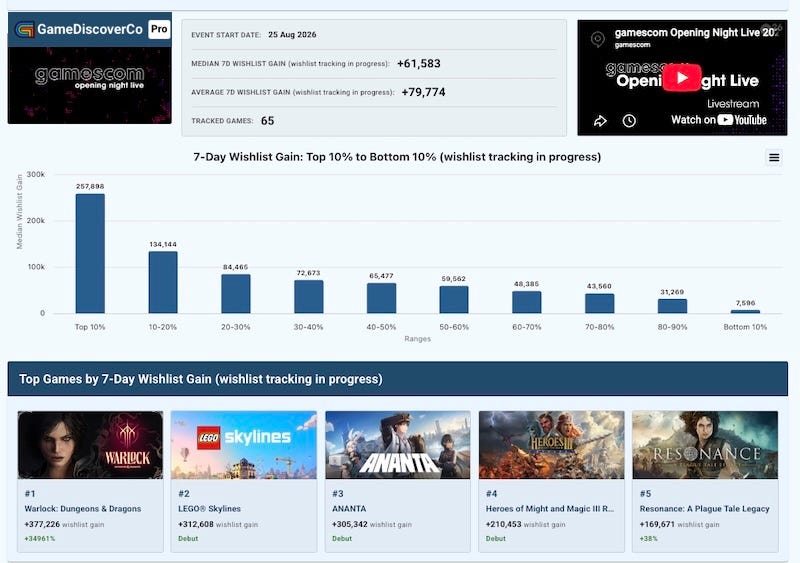
Yeah, so so we got a few things here. I think we've got we've got Low Budget Repairs, which is a classic job sim that have a buttload of wish lists. Uh we have Hell Let Loose Hell Let Loose Vietnam, which is kind of interesting because it the Hell Let Loose franchise has been pretty popular kind of shooter and they're taking it to Vietnam, which I think is actually actually an interesting idea that has almost 900,000 wish lists. And so, I could see that doing well. Uh game called Pax Autocratica. I think it just came out. It's a kind of an FPS colony sim game and then there's Ashfield High: Rock the School, which I just want to point out, which is one of the biggest Bully uh clone fast followers in the world.
And people are very excited by that because Bully the Rockstar game
Yeah.
people really loved. I'm not convinced Ashfield High is any Well, I I don't really I'm I'm not convinced it's amazing, but but people really want a I want a Bully style game again. So, yeah.
That's cool. I I thing with the uh the Vietnam game, I just really feels like there is a nostalgia for this Xbox 360 era, and I'm contradicting myself because Booster Reincarnation doesn't seem to have clicked, but the the number of times I see like I miss Call of Duty, you know, that was the game that I saw my older sibling play when I was a kid of like how can I get that feeling again, Bully being very much in that that that zone. I can't wait for uh the Manhunt and Kane & Lynch uh you know, loving odes to be made. I I I I say that, and then as it came out of my mouth, I was like, "You know what? Feels right. I actually can't wait for those things to come out."
Yeah, I I I thought I think it could absolutely happen. Like like Manhunt-style game in today's
hover-friendly society, as long as you don't get banned, people are going to love it.
Yeah, damn. Rockstar, they need to they need to get a a new division that can make games that aren't Grand Theft Auto [laughter] and Red Dead Redemption. Um well, that's about it. Unless there's there any other things coming out this week that people want
I think I think those are the big ones. Also, there was that game Agent 64, which I think you plugged in a previous week. So so so so we will look back and see how the very GoldenEye, another nostalgia play, hilariously, will will do. Yeah. Yeah.
Yes, I I think I can officially just openly say, "Holy moly, that game is something else." For people who loved GoldenEye and people who are realistic and know that it's not very fun to go back and play these days. Agent 64 is is a pretty incredible accomplishment. I I really recommend people check it out. But, wrapping up, this is where I get to ask you a question. And there was a little nugget that you just kind of threw out in your 30 years in the
industry uh post that I want to go back to. I need more information about, which is you said that you went to a Notch mansion party at GDC one year.
Yes.
Without breaking any life-threatening NDAs, without attracting a mob that will break your bones, what the hell happened What What Tell me everything.
sure sure. I I I mean it was nothing, you know, this was like early 2010s before you know, things went a little sideways with Mr. Notch. But he was known for doing extravagant parties at GDC. Now, he he he rented out the Bill Graham Civic Auditorium, I think twice for a party. And that is like one of the biggest venues in San Francisco. And it's partly because some of his best buddies are actually very good party organizers. So basically, him and his buds were hanging out and they would say, "Ah, do me something cool." So I think one of the GDC Bill Graham parties had like Diplo and Skrillex playing. And this is just a private party. So but but but the last I think the last
one he did And this is only I never went to any of his LA parties. I'm I'm not that cool. The ones in his M&M mansion. But [laughter] but but this one was actually uh in a an old um I think it was like an ex-ex-boarding school or orphanage somewhere in San Francisco. Like one of the one of the real big kind of like classic old San Francisco houses. And so it it did have And he invited mainly a bunch of indies. This was not like you know, like like random high rollers. It actually was indies, which was cool. And so yeah, some of the stuff they had They had a They set up a cut like And each room was a customized experience where they set it up from scratch. So it was like an Irish pub with like a full Irish band with like a with like a fiddle and stuff. There was a tea tasting room where they brought in like professional kind of tea tasters. There was a board game room. There was also a basement which had like a full club set up and they had a ball pit. Uh and yeah, it was like it was kind of silly, but also in in in terms of going to a silly games
industry party that you will remember. I appreciate that that that he did that. And he did it honestly like mainly for Indies and mainly because he wanted to. So I I I guess that's cool. Right?
I will say it might be the most gamer version of The Great Gatsby party I've ever heard and I sincerely wish I had been there for it. I one day we will have to do a bonus episode that is just us ranking the 10 most extravagant video game parties that we've gone to because I have a feeling between the two of us it would be a lot.
Oh and I I will say one other thing which was kind of cute but also a little bit Gatsby-esque. There was a VIP area. It was tiny and I think it was only for Notch and it was so that he didn't get stressed with people bothering him during the party.
[laughter]
Honestly, the most relatable thing you've said so far. That [laughter] that sounds divine.
Um well, I love it. Thank you so much for making the time. I always love that we get a chance to chat about this stuff at the beginning of each week. It's like a fresh way to get things going. Hey, if you like the show, please keep listening. Please subscribe. Please share it with a friend. And that is it for this week's episode of The Game Discover co-show. I am your co-host Chris Plant and Simon, can you send us off?
Yeah, we'll see you all next time. Have a great week.
Auto-generated captions from YouTube — names and numbers may be misheard.
Key insights
6 takeaways · ~2 min read- 01Roblox reported a 7% sequential decline in daily active users (DAUs) to 123 million in the second quarter, leading to share price downgrades amid stricter child safety measures and shifting user engagement.
- 02Steam 1.0 releases are demonstrating strong performance, with titles like Scrap Mechanic reaching 38,000 concurrent users (CCU) and Fields of Mistria hitting an all-time high of 27,000 CCU upon leaving Early Access.
- 03Shigeru Miyamoto suggests that console hardware specifications are becoming less relevant to consumers, emphasizing that Nintendo's strategy focuses on software accessibility and hardware longevity rather than iterative performance gains.
- 04Early Access has evolved into a model where players expect a nearly finished product, making the official 1.0 launch more of a final polish or feature addition rather than a transition from an incomplete state.
- 05The current video game market is characterized by high accessibility to development tools and direct audience reach, which has eliminated traditional distribution barriers but significantly increased market competition.
- 06Niche simulation and genre-specific titles continue to find success on Steam, with recent releases like Waterpark Simulator and Sephiria achieving 13,000 and 30,000 CCU respectively.
Ask AI about this video
Cite this video
Citation
Generating citation…







![Cover of Financial Results Briefing Session of Fiscal Year Ended December 31, 2025 [17,284KB]](https://files.gameindustrylibrary.com/thumbnails/20160/page-1.png)




Comments