VideoPocketGamer.biz
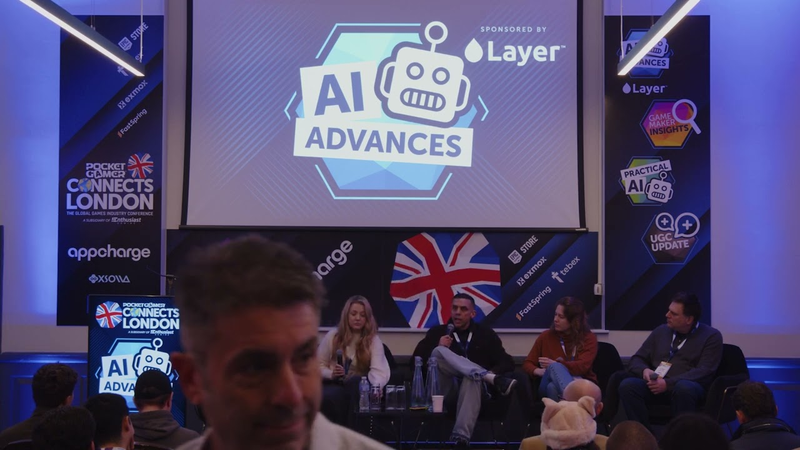
Panel: The AI Paradox: Creative Resistance vs. Industrial Revolution.
20 Aug 202631 min video
Transcript
For the start of today's content program, we have a thought-provoking panel. The AI Paradox, creative resistance versus the industrial revolution. We are honored to welcome an exceptional group of industry leaders to the stage. Wan Fung Yang from BBX Ventures as our moderator. Devan Nambiar from Metal 163. Kartik Bakshi from Aream and Co. Ari Manninen from Play Ventures. Jonathan Huang from Bitkraft Ventures. Drew Higby from Amazon Web Services. Let's give them a give them a big round of applause.
Uh good afternoon, everybody. Um so, today, uh thank you very much for coming over. And thanks for the organizer of Pocket Gamer uh to provide
such opportunity for us to gather together to discuss about the AI and games. And we are very honored to, you know, have the distinguished panelists coming from all of the world. Some are from Helsinki, some from London, and some come over from from Singapore. And so, uh let's welcome them, okay? Give them a big applause. Thank you. Okay. Um so, how about this? The first action is that uh let's make like uh a short introduction of ourselves. Um starting from me, I'm Wan Fung, and I've been in the game industry for like over 22 years. And I was bringing initially bringing the Chinese game to the global market. And then, switch my career from the game, you know, game business to the investment business right now. Okay. Drew, please.
Yeah, I'm Drew Higby. Uh I was at Blizzard Entertainment for 12 years, where I helped lead product across a bunch of e-sports uh events and titles. Then I was in mobile games and about 5 years ago I came over to Amazon, part of
their games division, and then a few months ago we formed a new division inside Amazon Web Services for video game services and I'm part of that organization working on AI.
Hi. I'm Devin. I'm the COO of Mattel 163, formerly a joint venture between Mattel and NetEase, and now fully owned internal game studio of Mattel. Prior to being COO here, I was with EA for about 9 and 1/2 years running APAC R&D. And prior to that, I was with Kabam both in the US and in China. So, yeah.
Hello everyone. Pleasure to be here. My name is Karthik. I'm one of the co-founders and partners at Aream. Aream is video gaming focused investment bank. We've been very active having advised on 80 plus deals in in the space. I'm based in London and been doing this for over 20 years.
Hey everybody. Greetings from cold Helsinki, which is less cold in in the summer, but still colder than Shanghai. My name is Harri. I am the founding partner of Play Ventures. Been in the game industry for more than 20 years. Former founder myself, now investor since 2018 when we founded Play Ventures. We manage about half a billion of assets. And we invest globally in early stage gaming, consumer, and related tech companies including AI. To date we've invested in more than 100 startups globally and very happy to be here and talk about AI opportunities.
Hi everyone. My name is Jonathan. I'm a partner at Big Craft Ventures. We are one of the larger gaming interactive entertainment funds out there. So, we always work alongside Harri at Play Ventures a lot, very similar mandate. Um I cover Asia-Pacific investments in what we call the future of joy. Uh not the right place to talk about that
thesis, but happy to share more uh offline. Happy to be here.
Thank you very much for the, you know, short and quick introduction. Um so now let's move on to the first topic, okay? So I I think that everybody's talking about is about AI and games. And people hold different kind of opinions about the whether it's uh you know, whether it's bringing definitely is bringing a lot of new excitement to the game industry, but also some people hold the opinion that probably is overhyped. And so for this topic, and I think I hope that every uh you know, panel panelist can give us some idea of what's your thought about this. So starting from John.
Okay.
Um I have an analogy for how I think about this is that if you look at the way that games are now flooding the market and content will continue to flood the market, it's not so different to use the parallels that food used to be scarce and now it has become infinitely easy to produce food. So has this produced better food or has this produced more food? So more food has
come out, but is it necessarily better food? No. So I think the limitating the limiting factor is that you cannot scale craftsmanship. There's always only about 140, 150 Michelin restaurants in the world over the last 10, 15 years. That's not going to change. And all that AI has done has put a bigger premium uh on people that have greater curation and greater craftsmanship.
Okay.
Yeah, I would agree with John, but at the same time I would say that uh game development is changing and has fundamentally changed with with the emergence of of generative AI technologies. And I think across our whole portfolio of of companies, uh it's very real that each and every one of them are utilizing AI in in their various ways, whether it's from uh, making development quicker and more efficient to utilizing sort of generative art in their games, utilizing
it in marketing assets and user acquisition. Uh, and I would say that, you know, if there's no over hype in in in that part of things. Where I think it still remains to be seen is like can AI and the emergence of these technologies truly create new play patterns, new types of games, new distribution channels, which I think are still very much the same distribution channels as we've seen for the last five plus years at least, maybe 10 years in in in mobile particularly. So, but if if the question is like is it all hype, then I would say no, it is very real and I think if you're working in the game industry, you have to understand the technologies and the potential applications of it.
Thank you, Harry. Hardik, from your perspective from m n
Yeah, yeah, I I think we actually need uh more hype. Uh
[laughter]
Because AI in other sectors versus gaming, I feel like the utility is quite high in gaming. So, actually there
should be a lot more hype around it. I think there's not as much. Um So, I I and I think I think we've kind of moved beyond the point of AI, is it changing something? It is. So, um now I think one thing that is still not clear is that, you know, does that mean that the economics for the game developer will be a lot better or is that value going to accrue to other parts of the value chain? And I think that's it's still unanswered. Historically, you know, making content cheaper doesn't necessarily mean that the value is accrued to just because you had engines didn't mean developers became more profitable. It opened up. Uh, and I think that question still remains. I also feel like, you know, just it's it's in the early stages of adoption, but, you know, whether it's asset production and so on, it's the utility is pretty clear. And as there's maybe more
innovation and proven economics around it, I I think that will also trigger more interest, more activity driven by AI and the impact. But of course, core is still the same. You need to make great games, as John was saying. But, you know, this is an enabling layer, and I think it can have a big impact.
Yeah, absolutely. And, you know, from from the operator perspective, I think for me now, like, you know, running a game studio, it is definitely a real thing. And I think, you know, Harry's answer was was very spot-on in terms of um, you know, there are different degrees of utilization of AI tools and AI in game studios right now, and it's happening, right? From things like UA creative and content generation, live content, Vibe coded certain modules of the game already, tools that are being used to explore, you know, the competitive landscape of
different designs of mini games and things like this that we can then adapt to our games. These things are all happening right now, and, you know, studios are utilizing them to various degrees. I think it's created a landscape where there are the haves and have-nots. There are the studios that are already they have fully adopted this, and these studios are one subset of the studio that I think are now competing against each other. The studios that have not fully adopted it, particularly on the free-to-play side, are going to be struggling to catch up, right? Because the efficiencies that are unlocked by a lot of these AI capabilities are real. In terms of the hype, I do think, you know, um and there was a uh gentleman who was giving a talk right before this in terms of creating an end-to-end experience for heavier gameplay, things like for example, if you wanted to create an open-world RPG or do true, you know, 3D asset creation and 3D rendering and actually create a cohesive, coherent experience, those things I think are
still a bit of hype right now or at least I haven't seen it um you know, actually waited yet, but um you know, that's that's where I think I we stand in the on the operation side.
Yeah. Yeah, I think I would have to agree with everyone up here. I think the other part is the force multiplier of we were all using shovels and now we all have heavy machinery. So, anyone who's in the industry or breaking into the industry, you have to understand that you have to learn how to use the heavy machinery. You can't use a shovel and expect to keep up in terms of production or in terms of ability. And that's totally okay because it also enables people who may maybe they weren't able to use a shovel before, but they're able to operate heavy machinery. We've talked about some, you know, Michelin star restaurants. There's only so many people with so many great ideas of how to innovate and create great food or great games. Well, now we just gave all this machinery to everybody and so I'm really excited personally to see what comes out of very creative people's space that maybe didn't have the technical acumen before and AI allows that technical side
to come out and they're able to produce amazing games for us.
Thank you, everybody. I mean that people have different opinions on this, definitely, and whether you hold opinion of hype or not hype, AI is inevitable in our daily lives and also in the gaming industry. Um so, let's see in the next the two to three years and what's happening, right? Okay, so now let's move on to the next question. Um so, why does AI adoption look differently between the AAA games and free-to-play games? Cuz you know, know from the medias and we see that some of the media is saying that, "Hey, the the you know, the triple A studios in the west sometimes that they are have concerns about the AI and also players in the west they are very concerned about the AI generated games." While what we see here in China almost every free-to-play gaming studios they are adopting AI in their in their efficiency of making games. Um so, why people from different places have, you know, different kind of this kind of the adoption between triple A studios as well as the free-to-play studios? So,
anyone wants to share on this perspective?
Now, I'll go first. Um I think historically the mobile audiences particularly in casual gaming have been sort of I would say less opinionated by what what type of content. I mean, and it's it's less IP driven in a lot of ways. It's more casual gaming is definitely more of a past time. Very a very engaging one for sure. Um I also think that historically given the the nature of of PC and console audiences and and how quick they are to react to things like this, I think a lot of studios are downplaying maybe smartly so on on what is the level of of AI usage. But, I don't think you should look at it from that way even if you're a player. I think you should look at it to your point Drew is like the best studios will understand that these are the modern tools that we need to be using to unlock the full creativity to unlock the full
uh player experiences whether or not you're on console or mobile or PC. And I think the smartest studios understand that and the smartest people in the studios also understand that these are tools to unlock and enable your creativity instead of seeing only threatening signs. I know the the initial way will probably, you know, result in more efficiencies and and and and we are already seeing layoffs, but I also think that a lot of the layoffs are not purely due to AI, but just just over over um you know, resourcing some of these some of these studios. So, I I think we'll continue to see this tension between like how much are companies sort of coming out with hey, we're using AI or or or openly talking about it and how the the player uh community is is is responding to that. But, I would say like in general, I feel like mobile audiences are are more uh welcoming because they're all all of them are always looking for more content and and and and better
experience and more deeper experiences and and and these tools really allow uh studios to to provide that.
Yeah, I I want to uh build off of that a little bit because it's a great point on the audience and the community side is that mobile audiences are content starved, whereas these console audiences have historically been more reactionary. And I think from the studio standpoint, there's also a difference in terms of how they they want to approach it. The the console and triple-A studios really care about preserving the craft and preserving the soul of the game and the core fun proposition, I think. Um mobile studios and free-to-play in particular uh live service, you're always on and you know, it's it's a war, right? Um if one studio starts adopting AI and getting a competitive advantage, um then other studios had better follow or they're going to be left in the dust, right? So, this is I think one reason um that it has been at least from the studio side more adopted in terms of UA and also in live content. Um you know,
the other thing is, you know, just uh I would say free-to-play industry overall is uh in a general generally speaking more utilitarian than than the console industry in general, both the audience and the uh and the studio side, so. Uh if there's any advantage that we can take from from using AI, we want to want to get that edge.
Go on.
I I think these are really great point. I I would I just add that I think structurally they are very different sort of entertainment formats because mobile is sort of like popcorn entertainment. I just eat it and I forget it. And people have grown up playing games that just change every week, every month with patches. And if you really do something that upsets the community, here's 20,000 gems and and everybody's happy. Um which is why to Horace's point, most of the people who are upset with the use of AI typically sit in the PC console camp. They care a lot about how characters look, that they are genuine, that they are crafted. Um and that I think is inherent tension, which is why you see the mobile studios pick it up
more because mobile's inherently optimized for retention, for your dopamine loops. And you can just feed them this AI uh experience right up front and they'll be okay with it, which is why we see that AI AI micro drama. You can't really do that with Witcher 3. Once it's out in the wild, it's out in the wild. And and then you just get like a huge blowback and then you lose a lot of fans of the IP. Uh and and that's just like very destructive. So I I think there is actually like a structural constraint for like why AAA picks up um AI slower or rather it doesn't present itself in the experience itself, but they all leverage AI in in the production of the art, the resources, and and the tooling, so on and so forth. But you see that experience present itself more when when it's a mobile studio game itself.
Yeah. Maybe maybe just find just an additional point is uh another way to think about it is, you know, is this the duration of the feedback loops. So AAA, you're working on a three, five-year development cycle. So retooling midway is never easy. There's a budget, you
know, you're kind of going with with the motion. Whereas uh you know, mobile free-to-play in general has been it's much much shorter feedback loop. So incorporating something, improving, uh making it more efficient, getting things out earlier has been the name of the game from the beginning. And now, you know, they have machinery now that they can utilize to do things quicker. So, I think that's why it's fundamentally different. And of course, you know, you look at the AAA versus indie, the adoption is higher at the indie level. And And over time, they have probably less to lose because it's you can create a better quality game as a solo developer. And as that sort of penetrates, you will likely see that the risks for the bigger studios will also come down. You have less to lose and more to gain. And And that's just the cycle of where they are on on risk reward spectrum of what's
needed.
Yeah, I 100% agree. I think it's almost entirely the risk reward spectrum. A lot of AAA game studios are stewards of IP for the last 15, 20, maybe even up to 30 years. They have a built-in fan base that expects a very crafted story, a very crafted art style, very precise game systems and mechanics. And they're looking forward to these games for 5, 10, 13 years when we're talking about some of the ones that have come out. And so, they they really expect a very very high quality product. And it's not to say that AI can't produce high quality product, but I think in the mobile game space especially, we're very used to uh, we're we're a lot more forgiving of we're expected to be fed on a certain type of content cycle. And some of the content could be 95%. And that's totally okay. When you're paying for a triple game triple A game experience, you're expecting 100% 100% of the time. In the mobile space, I think a lot of the time, we understand, "Oh, if they're giving me new content every 2 weeks, it's going to
be a 95%. There's going to be a mistake or two. There's going to be a little bit of roughness to the edges." And so, that ends Usually, the player base is very forgiving so long as there's a a provided for a catch-up. And I think that's why the risk reward is just very different. And it's great for us because we'll see a lot more adoption and utilization in the mobile game space that can move over to trip the triple-A gaming space just like we saw with a lot of other mechanisms and methodologies that we saw in mobile games in the mid mid 2010s that have made it to triple-A games in the 2020s because they did the experimentation there, refined it, and then it became part of the mainstream moving forward.
And also that in China, the most of the studios there want to uh they're actually adopting the policy that they will reimburse for using of the AI tokens uh for for making games. I think that is that's you know very popular in China right now. And also see that the recently there is a report that's saying that the games on the Steams in the last year, there were
only 20% of the games probably involved with AI. But now for this year is like over 30% of the games involved with AI. So I think that it's still like like it's kind of like inevitable, but we will see that how it go it goes, okay. Um okay, so now let's move on to the third question. And this is a good one. And uh what will AI-native game studio look like? For us, like for me that I will use like Codex to do to you know to detect my events on the calendar and uh doing some you know pre you know research for me uh every day. And to summarize that all of the you know the Zoom meetings after around the 1:00 a.m. o'clock and then give me the report. So I'm using it every day. How about the AI-native studio look like in your eyes?
I mean, I think there's going to be a spectrum there, right? I think an AI-native game studio is going to be a studio that utilizes the tools that AI bring us across, you know, whether it's meetings and tools and utilization on
that side or it's creative game reports from around the world and understanding and analyzing other games that came out, and you can set up AI to help you code every single day. You can set it up to do anything. So, it's like asking what is a studio that uses computers look like? Like, it's just everything. Uh an AI-native game studio is just going to be using the tools that are available from AI. I think all game studios are going to be, quote unquote, native AI within two or three years.
I think the company will disappear. Just the AI
[laughter]
Yeah, you know, it's funny. Like, I I know in in China right now, the government's actually funding uh entrepreneurs that'll do one-person companies, where it's one person driving the company, and you know, the rest of the company is is being built with AI agents. Uh I think we're a little bit far away from that in a gaming studio, just in terms of how a studio works. Uh but I can see like in the next maybe, you know, 5 years or so, a studio where I think there will be a lot of the senior functional leaders will still be
sort of indispensable, but a lot of the functions, things like, you know, engineering, art, design, uh QA, etc., there can be different agentics, uh agents that are, you know, being used to to do all these things at the working level. Um so, I think, you know, a purely AI-native studio would probably be a bit smaller on headcount, but would be more uh concentrated on talent density, and then we'd be using, you know, a sort of agentic solutions to sort of uh scale across different functions.
Uh I think the wildest version of this is is the single developer who doesn't even, to your point, even have a laptop. Uh is is talking to an orchestration agent or chatting on their phone and having, you know, thousands of sub-agents basically developing and and and and doing end-to-end publishing on on the product. Let's see if that ever happens. Um I think there's a there's another interesting AI-native track, where we're actually investors in a company that is in stealth, that is not
utilizing any sort of rendering at all. So, they're not even using a game engine, but but the outputs of their game are all generative generative media, generative video, generative audio, and things like this. So, I think that's another interesting thing to Can you go outside of the rendering pipeline completely and just have like you know, basically the the game is the prompt type of type of thinking. So, I think all of these I mean, I I I think we've we've scratched the surface on what an AI native studio is. I think many of the studios who are now very deeply utilizing these tools are still doing it in the confines of the old production methods and and and and the pipelines and and and in some ways. So, So, I'm I'm I'm very excited to see what the future brings there in terms of like totally new thinking and I I think actually the previous speaker was was talking about these things and I think it's very very interesting.
Um I think using AI is is like using electricity. It's going to be like
electricity native studio. Like everyone's going to be using it and then it's going to be some that's going to be so interesting because they leverage AI to unlock a new use case that we have never seen before. Just like we've seen in all the previous gaming cycles, whenever there's a new hardware format or new technology, someone invents a new game experience that can be built on that technology. So, what is that studio that harnesses AI to give people a net new experience that has was not possible before the age of AI. I think that's going to be really interesting. Uh and I think the most one of the most interesting examples I've seen recently is a studio that is actually building something that's able to capture human emotion and have that fed into the world model within that video game because none of the world models out there can capture human emotion. Anything that is in your mind and in your subconscious is is not captured on video, but only be captured in interactions. I think these are going to be really really interesting and I look nothing like the game studios that we've seen before.
Um so uh our last question, so we only got like 5 minutes and this is uh uh so like in your in your mindset, uh what kind of the AI native games will be look like? In your, you know, in future. Like are you able to, you know, like play games like down to this down down to like like dungeons, but it's like endless dungeons and every time you enter and the game play is different or you are talking to the NPCs, but NPCs are responding differently. So, what's your thought about the AI native games?
I think it can be, you know, a range of any of this, right? I'm excited about the infinite personalization. I also am I'm also concerned about it because I do think like shared experiences are very important for humans. That's why everybody is going to see the Odyssey right now and everybody has a has a has an opinion whether it's a good or a bad interpretation of of the Odyssey of of Homer's work or not, but it's a it's a shared experience that also shared in
time like a common time and and one of the concerns I have with infinite personalization is like okay, it's kind of the same game, but it's different for everybody. So, I think there's levels to that as well. Uh but I would like that that to me is exciting and and and and maybe the what John was talking about like having actual human emotion, especially in the higher definition games. I think that's going to be very interesting to see when we can graduate from sort of uh the uncanny valley to actually feeling like true human emotion in an interactive environment. So, I think these these are potentially exciting paths.
John?
I I I I I I um I'd say I I I think about it a different way in the sense that I worry about what will emerge because I feel like with media entertainment we are going down this slope where everything is about drip-feeding you dopamine and making you addicted and AI is very good at that. It's going to be maximally optimizing how to get you hooked and I hope there's something more than
that that comes out of like AI native games.
Artyk?
Yeah, you know I I think one important consideration is that, you know, when we talk about AI native games, if one key issue is, you know, it's going to boil down to the economics. You you can personalize things to the nth degree, but the question is does it really matter from an entertainment perspective for the user and are they willing to pay for that because the economics have to stack up. I think right now it's the the productivity discussion is an easy one and we we know that there's going to be a level of adoption because that's and then any innovation in gameplay, the level of personalization or emotions, what does it actually cost? I think that will depend also on maybe how the models evolve, how efficient people are with using the tokens to really incorporate into into games. I think at some point
that will be a more important factor than the pure innovative streak that you're going to find within the developer.
Yeah, I think you know, the the concern of of AI native gaming maybe taking away from the the need for people to gather and have a shared moment. I think that that that's fundamentally part of the human experience and that will always endure. I think, you know, as much as you know, there were there are maybe AI generated AI native personalization, historically there have been iterations of this, maybe not as as advanced as now, but procedural content generation has been around for a long time, right? I think there is a place for these types of evolved AI native experiences in PvE or narrative driven games where people want to have an a personalized and individualized experience. They want to experience a world immersively on their own. Um but that need to, you know, interact with others in PVP games, to congregate with others, and to share a
moment together, I think will always be part of uh the the human experience.
Yeah, as a very competitive gamer myself, I see that like an AI-native game really being pushing the boundaries of how fast we can create things, how well we can iterate on things, how much access we provide to people who have really great creative ideas to make great games for us. I mean, could I write a great novel? Maybe. But I know other people are much more creative than me and much more disciplined in that space. And so, they'll make the better novels. I would still want to experience them. I still want to share that moment with others and talk about that moment with others. So, I think for for AI-native games, it's going to be the same type of experience. And someone is going to create the next great genre in gaming that we don't even know about, and it's probably going to come about because they had this idea in their mind, and they're able to put pen to paper, or, you know, finger to mouse and keyboard in order to generate this for us. And I think that that's what we'll see come from from this space. But it's
always going to be human creativity powering the next great thing. And that's what's exciting about AI to me is it's just better tools to express human creativity and give us all really cool shared experiences.
Okay. I think that the gaming industry has always been, you know, transformed by the new technologies. And the previously that we have the XR, VR, and now we are moving to the AI era. So, I believe that AI would be a very important external force to shape the gaming industry. Okay. Uh today, thank you very much for coming over, and we hope to you have more conversations after this panel. Thank you.
Thank you.
Thank you.
Thank you.
Woo. Woo. [music] Woo. Woo.
Auto-generated captions from YouTube — names and numbers may be misheard.
Key insights
7 takeaways · ~3 min read- 01The adoption of AI in the gaming industry is accelerating, with the percentage of games involving AI technology rising from approximately 20% in 2025 to over 30% in 2026.
- 02Free-to-play mobile studios are adopting AI faster than AAA developers because mobile games are optimized for frequent content updates and retention loops, making them more tolerant of AI-generated assets.
- 03AAA studios face higher barriers to AI adoption due to long 3-to-5-year development cycles, rigid budgets, and the need to protect established IP by maintaining 100% quality consistency for their fan bases.
- 04AI is currently functioning primarily as an efficiency tool for marketing, user acquisition, and asset production rather than a replacement for core game design or distribution channels.
- 05The industry is bifurcating into 'haves' and 'have-nots,' where studios that fail to integrate AI-driven efficiencies into their production pipelines will struggle to remain competitive against early adopters.
- 06Future AI-native games may move beyond traditional rendering pipelines, potentially utilizing generative media and prompt-based logic to create entirely new, personalized play patterns.
- 07Despite the potential for infinite AI-driven personalization, human-led shared experiences and social interaction remain fundamental to the gaming industry and will likely endure alongside AI-generated content.
Ask AI about this video
Cite this video
Citation
Generating citation…

















Comments