1 free read left. Create a free account for unlimited reading + AI research.
Create free accountWhitepaper DiGRA
1 free read left. Create a free account for unlimited reading + AI research.
Create free accountWhitepaperDiGRA
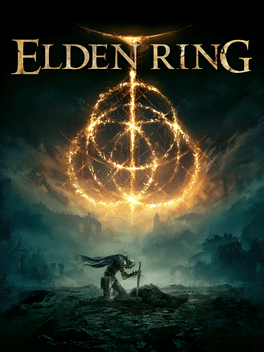
This paper offers a textual analysis of arboreal imagery in Elden Ring (FromSoft, 2021), arguing that the game's depiction of the Erdtree and its surrounding flora carries a complex, layered set of meanings. The author examines roots, ecosystems, meteorology, and item descriptions to show how the game represents propagation, rot, hierarchy, mutation, and mythology, despite not being a game primarily about trees or ecology. The central aim is to propose a interpretive paradigm for analysing ecologically complex games that do not centre ecology as their explicit subject.
The analytical framework draws on hauntology, following Derrida and Fisher, to read the arboreal landscape as haunted by The Shattering, the cataclysmic war among the demigods triggered by the breaking of the Elden Ring. Hauntology is understood here as that which is absent in actuality yet persists in virtuality, and as that which has not yet occurred but still exerts force in the present. This dual temporal momentum, in which the past persists in the present and loss shapes futurity, is presented as the lens through which the game's botanical world is interrogated.
The paper situates its argument within game studies scholarship on hauntology, including work on railway simulators, carceral violence in Majora's Mask, and nostalgia for lost technologies in ancient-civilisation narratives. It also engages broader literature on climate-change and ecogames, arboreal cultural imaginaries, forest folklore, and background plantscapes in games. The intended audience includes game scholars and designers interested in ecological representation, post-apocalyptic settings, and horticulture in games. As a single-case textual analysis, the study's claims rest on close reading rather than empirical sampling of players or a broader corpus of titles.
Each row is a game or company this document names, each column a document, oldest first. A mark means that document names it. Select a row to see those documents.

DiGRA · 2026

DiGRA · 2026



DiGRA · 2026



DiGRA · 2026



DiGRA · 2026



DiGRA · 2026



DiGRA · 2026



DiGRA · 2026



DiGRA · 2026

DiGRA · 2026



DiGRA · 2026



DiGRA · 2026
DiGRA · 2025