VideoThe Game Business
Unity is making a video game, and it’s out this week on Switch 2
3 Jun 202518 min video
Transcript
Konami's got so many great old IPs. Everyone knows about the big IPs and they're all being developed in the background. They're still active, but there's a lot of the older IPs and perhaps less well-known ones that they're such potent opportunities. Every time you get access to new hardware, there's a lot of secrecy around that. Unity is a massive company. Only a fraction of people knew about Switch 2. Hello and welcome to the Game Business Show with me, Christopher Dring. We're here in Windsor at Konami's European HQ to check out their new Nintendo Switch 2 game, Survival Kids. Now, we've not had a Survival Kids game in 17 years and even then in the West it was called Lost in Blue. Now, this Survival Kids is a Nintendo Switch 2 game, a launch game and an exclusive one at that from a third-party developer. Now, all of that stuff is interesting, but that's not the reason why we're here. No. The reason that we're here is cuz this game is being made by Unity. Yes,
that Unity, the game engine company. They formed a team led by a chap called Andrew Dennison who's made one of my favorite game, Sea of Thieves, to develop this title alongside Konami led by creative director Richard Jones. And I'm here to speak to both of them. Hello Richard. Hello Andrew. Welcome to the show. Survival Kids, where did this partnership come from? How did it start? You've got the mic. I've got the mic. So, Survival Kids, I mean, you probably know, Chris, that Survival Kids is an old game from the the late '90s on the Game Boy Color. Um, it's a game that we'd both played and both enjoyed and we were looking for a project to work together on. As much as the content of the game itself, I think for us it was thematically interesting, the idea of kids on a desert island. There's something really sort of kind of romantic and fun about that. Uh, you know, we all ran around the playground playing at being pirates or adventurers and that sort of thing. So, I think thematically it was uh it was a very exciting picture to paint. Um
and so, when we have the opportunity to work together, we it was something which we thought was ready for reinvention, and it was a really sort of interesting canvas to work with. Andrew, how did how did you come together then? How did this even start? Yeah, that that's a big question, Chris. Um the short answer is that Rich was Gamescom, I think, in uh 2022, speaking with a number of our representatives at Unity, and they shared that we had this ambition to build a full game for the first time. The background to that is that I'm part of Unity Studio Productions, and we've been helping for a long time Unity developers achieve their vision, right? Whether that's helping with performance optimization, whether it's helping port to another platform, or in some cases, move their game wholesale to Unity. And this has helped verify a number of aspects of Unity in production environments. So, the ambition was to was to say, "What's an What's an even bigger production we
could get involved with?" And the Of course, the answer to that is, "Well, you build a whole game for a partner." And that way, we're testing even more of the engine. You know, we're literally able to test every single aspect. Um and we wanted to do it in an environment where we were a similar size, we had the same time scales, we had the same restrictions, pressures of our customers. Um and the way to do that is to partner with a publisher. And so, that was our ambition, and then after speaking with Konami, a lot of things aligned, timeline, size of project, a multiplayer focus in particular was something we wanted. And yeah, that led us to to 2 years of fantastic fun developing it, and to where we are now, which is coming up to to launch. So, tell me about this team that you've built. Yeah. How does it operate? Where is it based? So, Unity Studio Productions are are big, and we're international, so um that allows us to take on a number of great engagement to customers. But we didn't have a single group of people
that could cover every game development discipline. So we picked a location, in this case it was where I was based in Stratford-upon-Avon in the UK, which is near a big center of game development. You know, you have Leamington Spa with all the studios there and a little bit further north could companies like Rare. So it's a great place to be based and it was already the the offices where Unity's a lot of Unity's console platform teams were operating out of. So all the Unity support for Xbox, PlayStation, and Nintendo Switch is done in Stratford-upon-Avon. So there was a nice harmony there of like if we base the game team in that location, we have the the platform teams on our doorstep, particularly for consoles. Yeah, and so I started building a small team and there was cross-discipline. So bringing in game game designers, uh artists, um audio, you know, we did all the music and and and sound effects for this game, you know, internally. And it was really to try and get yeah, get a full range of skills so that we
could legitimately go to a a partner like Konami and say we think we can do this and we have the right team to achieve that. It feels quite significant for Unity to do this. Is that how it feels internally? It's how it looks to me. Yeah, it does feel significant, but the the fun part of this has been because we're a launch title for Nintendo Switch 2, we couldn't quite be as open about it internally as maybe we wanted to. Unity's a big company. Yeah. And not everyone can be disclosed on every platform. So as much for the last year and a half, as much as I wanted to shout from the rooftops within Unity and and I and actually externally as well, I haven't been able to. In fact, the team hasn't been able to and kudos to them for, you know, maintaining the secrecy behind this cuz it's been challenging at times. But I think after the announce, after the the Switch 2 it announced and we showed Survival Kids for the first time, it's been great because we've been able to talk about it a lot more internally. We have a lot of people getting access to the project now across the engine team, so they can validate more of the work they're doing against a real
project. The source code's available to to everyone within Unity that has a reason to access it, which is really powerful for us. You know, we have a huge amount of test suites, we have a huge amount of projects that we we do try and validate with, but having an absolutely modern multiplayer Nintendo Switch 2 game as a test bed is really hopefully valuable now and will continue to be valuable for Unity in the future. Um so yeah, it was a big deal, but we had to be careful about who we could speak to about it. Yeah. So how does the partnership work then? How do you two work together? Talk us through that. Yeah, so it's actually really useful that we're in the same country. Right? So the fact that we're just in Stratford and uh Konami Europe are in Windsor firstly makes communication and and being together on site for play tests or for planning really useful. So I think that was one real strong point of the partnership. In terms of the game creatively, I mean Rich, do you want to talk about maybe how we went through the prototype phase and some of the early, you know, the early way we went about
developing it? Rewinding a little bit to how we met actually, I was looking for an external studio to work with and the idea behind that was I wanted to reinvent an old Konami IP. Now this wasn't necessarily Survival Kids at the time, but that was the basic idea and when I met with the Unity team and in particular Andy and his team, that was when it all started coming together and how we decided on Survival Kids itself. In the early stages, we had an idea of what we wanted this Survival Kids to be. We wanted it to be a social experience. We wanted it to be sort of cross-generational, you know, so we wanted parents to be able to play with children, brothers and sisters to play together, you know, friends and family. So, that was kind of the idea, we had a survival game that everyone could play and it could be very accessible. And that was even before we had decided on this being a a Switch 2 game. So, sort of in pre-production, Switch 2 or you know, the next Nintendo console as
we knew it as then was way on the horizon. We knew it was coming, but we didn't have any concrete details. So, we were just working on the game itself completely agnostic of platform. It was only as we got into probably up towards alpha stage, I guess, we started getting a bit more concrete information about, you know, about what we now know as Switch 2. And that was then how we made that decision. So, we knew the demographic we were aiming at and we had an idea that that would fit nicely with the Switch buyers. And we hoped that it would also sit nicely with, you know, whatever the new Nintendo console was, which luckily for us turned out to be Switch 2. And it was at that point that we sort of solidified this into being a Switch 2 launch title. We By that point we'd learned a window when Switch 2 was going to come out. That aligned with our development schedule at the time and it aligned with all, you know, a lot of the gameplay aspects as well. So, um that
was the point when we decided we had to really kind of double down and and try and make this a Switch 2 launch title. But, yeah, I mean, the the way we work together, it's always been very collaborative. I mean, to to give you an idea, Konami um the production team within Konami Europe, it's very small. It's only myself and one other person. But, we work very closely with uh with Andy and his team. I mean, there's barely a day goes by when we don't talk in some fashion. Um whether that's face-to-face or via, you know, whatever Teams or Zoom. Okay. So, you wanted to bring back an old Konami IP. Why? Because Konami's Konami's got so many great old IPs. Everyone knows about the the big IPs and they're all being developed in the background. They're still active. But there's a lot of the you know the older IPs and perhaps less well-known ones that they're such potent opportunities and I think also they mean you know they mean a lot to a certain genera They mean a lot to a certain generation
like me and Andy. Um I I I remember getting Stranded Kids in 1999 I think it was. Yeah yeah yeah. I I keep saying 98 but I think it might have been It was 98 and I think it might have been late 98. Anyway, a long time ago. I think it's 17 years since and even then it wasn't called Stranded Survival Kids. No, it was Lost in Blue by that point. Yeah. And it's interesting I I can see as someone who works on Sea of Thieves why you would make a a game that looks like this and plays like this but you were a fan then of the game back in the day. Yeah, absolutely. Yeah, I mean I yes I remember playing it even before I started work at Konami. I remember playing it. It's that idea of kids being on a desert island without parents, without a safety net. And I think in those days I mean the original Survival Kids, Stranded Kids in in Europe was actually quite dark. It took itself very seriously. You know you you know if you didn't eat or drink you were dead. But I think as we started making this game we realized we wanted an element of levity to it. We wanted it to be a game for
everyone. So I think the tone of it changed. Um and it's become you know much more joyful and much more like running around like one of the Lost Boys from Peter Pan or you know playing Swallows and Amazons, that kind of thing. No one's going to understand that reference. No, speak of Pan. They'll they'll get Okay, yeah. Swallows and Amazons, very UK-centric. And because of because you were developing for Switch too um and you're I guess you're getting Unity running on it and getting it up and running and all that kind of stuff. Was it important that you actually from a pure technical perspective that you used all the features. You've got game share, you've got um game chat and all that kind of stuff. Yeah, I mean I think it was regardless of the the extra features, like it was just really useful to as you cuz it's difficult bringing up a new platform. Like Unity is a huge product. It's complex. And so every time a new platform's introduced, you know, we need this broad set of tests, this broad way of validating. So for us technically just just building a game for the new platform is going to exercise so much of
of that of that new code base of that of that new platform we're offering. And then of course once you've got that stable and like okay, we can do this, then you start to explore okay, what's new? And that could be performance focused. It could be how you know, we've got access to a bigger CPU, bigger GPU, what can we do with that? How can we make sure frame rate is high as it can be? How can we make sure that we're ticking, you know, the the core boxes people would expect. And then again, you get that covered. And then you say, okay, what like what else is available? Um and that's where yeah, that's that's where it starts to get really fun. What was anything challenging or you know, in terms of getting the engine working and and getting it all up and running that you weren't expecting anything interesting? Yeah, the the the really fun one is every time you get access to new hardware, there's a lot of secrecy around that. Right? So you again, Unity is a massive company, only a fraction of people knew about Switch 2. And when Nintendo gets to a point where they're saying, "Hey, we we want to send you hardware." Which of course is ludicrously exciting as a developer. It's what you live for, you know, like new Nintendo hardware. But it's
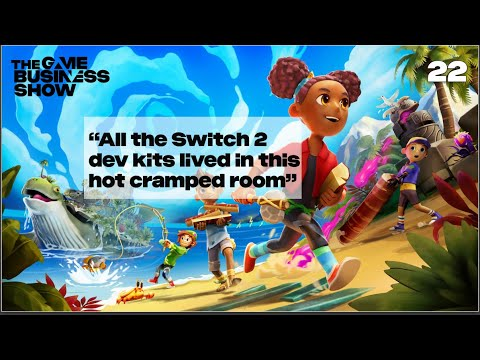
overwhelmed by the importance of protecting that. And so when we built Survival Kids, we had to strip out one of our meeting rooms, probably half the size of this room, and get rid of all the Zoom gear, get rid of all the cameras, fit it out to standard that Nintendo requires. And that's where all the Switch 2 dev kits lived in this hot, cramped room. And we're all there hovering over the keyboards. Uh and we wanted to take pictures and you you want to talk about it. You you obviously you absolutely can't. So, the physical aspect almost like rather than the technical and the software side is a real challenge. Wow. Are you looking to share your development experience with the rest of Unity's client base? Yeah. How's that work? That's I think one of our big priorities here. It's not only build a fantastic game for Konami and have fun doing it. It's also how can we share with every other Unity developer? And there's two ways we do that. One is the Nintendo Switch 2 version itself. So, that's the biggest thing to share is that any developer now that wants to sign up to be a Nintendo Switch 2
developer, they can do so with confidence that hey, Unity has already shipped a game on Nintendo Switch 2. So, that's one way of sharing. And I think throughout this year, we're going to start to see other things. So, we have our Unite conference coming up in Barcelona in November. We'll be there talking about Survival Kids. We'll be trying to share best practices, lessons. So, really the next 12 to 24 months is going to be us trying to push as much of what we've learned about building a game internally at Unity because Unity has never done this before. We're going to push that to the community and hope they might say, "We know that." Or you know, "We've been telling you that for years." But they'll hopefully they'll also say, "Hey, that's really interesting. I can use that in in my game." So, yeah, this is a this is hopefully a a long and fruitful sharing process with the with the Unity community. Unity might have already spoken about this, but is there plans to keep doing these sort of projects and and and keep developing more? There's nothing we got nothing to talk about right now. Mhm. But
but of course I you know, I I think it has really strong merit and and a real ultimately a huge benefit to Unity developers. This might be one for Richard, I don't know, but third-party games, they don't do as well on Nintendo platforms as third-party games do on other platforms. But we are starting to see an improvement there. But do you expect anything different from Switch 2? How are you feeling about it as a from a Konami point of view? From a Survival Kids point of view, and I touched on this a little while ago, is when we started to build the game and then we started seeing the features that Nintendo were revealing about the new system. Things like game chat and game share. It almost felt like It almost felt like these features had been custom made just for Survival Kids. So, we were super super happy to see that and it was just really exciting. And I think you know, we're really proud of managing to you know, what we've managed to do with Survival Kids and to get it out on launch day. Um and I think it's pretty unique for that.
You know, the use of game share and what that brings particularly to a a social game like Survival Kids. Um so, I mean I hope we've given it every opportunity to you know, to to to succeed on this platform. And I really hope people enjoy it and make them you know, get the most out of those features that we put into it. Yeah. Well, I'm I'm think I'm actually out of questions, but this is a very exciting I love I've been ages I've been in Konami. I mean, it's been a very long time. So, it's nice to see more Konami games come out generally. I'm very excited about that. And it's amazing to see Unity making its own video game. It feel It's This feels like I guess with the Switch 2 launch and Mario Kart and all the excitement around that it feels potentially drowned out a little bit that this thing. But from my point of view as a business journalist, it's super exciting. Yeah, thanks Chris. And it's something that so many of us at Unity have been working to for a long time. And you have to start moving pieces around years before to try to get to the situation where you can do it in a sustainable way and a way where we are operating in a in
a very similar manner to our customers, right? We have the same deadlines that they do. I'm I'm delighted that we've we've managed to achieve it. Yeah. And with the June 5th, right? We've delivered the first game. So, it's super cool. I think there will be a lot of noise around launch. Clearly, everyone's going to be super excited to to dig into all the games available. But, I think particularly from our perspective, we're going to have to talk about this game for a long time, right? Because there's a lot of lessons we can send to the community. There's a lot of events coming up where we can talk about it, white papers, that kind of thing. So, yeah, I hope that even if it's a bit noisy at launch, a lot of the message and a lot of the reason we're doing this can can carry through for the next 12 months. Yeah, well. Congratulations on getting the game out and and good luck with it. Thanks, Chris. Thank you. So, Survival of the Fittest fun. I'm enjoying it. Hopefully, it will do well when it launches on Nintendo Switch, too, on Thursday. That's it for today then sort of the Game Beat this show. Join us later in the week for our next episode. Until then, thank you for tuning in.
Auto-generated captions from YouTube — names and numbers may be misheard.






















Comments