1 free read left. Create a free account for unlimited reading + AI research.
Create free accountWhitepaper DiGRA
1 free read left. Create a free account for unlimited reading + AI research.
Create free accountWhitepaperDiGRA
Lawrence May's DiGRA 2025 paper argues that zombies in contemporary videogames are moving from embodied figures into distributed "undead ecologies". These ecologies are said to reflect the ecological crisis and the Anthropocene.
Lawrence May's paper, presented at DiGRA 2025, argues that zombies in contemporary videogames are shifting from embodied figures into distributed "undead ecologies" that reflect the ecological crisis and the material conditions of the Anthropocene. Building on ecocriticism and the "material turn" in game studies, the paper contends that the necrotisation of Earth, linked to late-stage capitalism, is intricately connected to this new form of ludic zombiism. Its central claim is that videogames, whose production relies on extractive mineral sourcing, exploitative labour and fossil energy, are unusually well placed to make players notice the entangled lives, deaths and temporalities of a damaged planet.
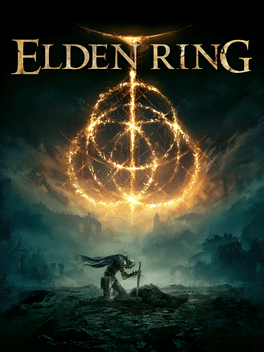
The analysis is a qualitative textual study rather than an empirical survey, and it rests on close readings of two games outside the conventional zombie canon: Timberborn (Mechanistry, 2021), a beaver colony-building game whose contradictory temporality exposes the undeath beneath ecological interdependence with exhausted resources, and Elden Ring (FromSoftware, 2022), a fantasy role-playing game whose status as a networked artefact draws attention to how technologised communication estranges people from their ecological relations. No quantitative data or sample sizes are reported.
The paper situates its argument within a lineage of zombie scholarship that treats the undead as allegories of humanity's repressed and destructive ills. It draws on earlier work framing zombies as critiques of neoliberalism and capitalism, as well as the "eco-zombie" and "greened" zombie concepts of Lauro and Oloff. Its distinctive move is to shift the figure from a bodily threat to a diffuse, ecological one, which the author links to Woodard's notion of the "darkly productive monster" in Earth's geology. The work concludes that undead ecologies can turn players' attention toward planetary catastrophe in unfamiliar and novel ways.
Each row is a game or company this document names, each column a document, oldest first. A mark means that document names it. Select a row to see those documents.

DiGRA · 2026

DiGRA · 2026



DiGRA · 2026



DiGRA · 2026



DiGRA · 2026



DiGRA · 2026



DiGRA · 2026



DiGRA · 2026



DiGRA · 2026

DiGRA · 2026



DiGRA · 2026



DiGRA · 2026
International Journal of Role-Playing · 2026