1 free read left. Create a free account for unlimited reading + AI research.
Create free accountWhitepaper DiGRA
1 free read left. Create a free account for unlimited reading + AI research.
Create free accountWhitepaperDiGRA
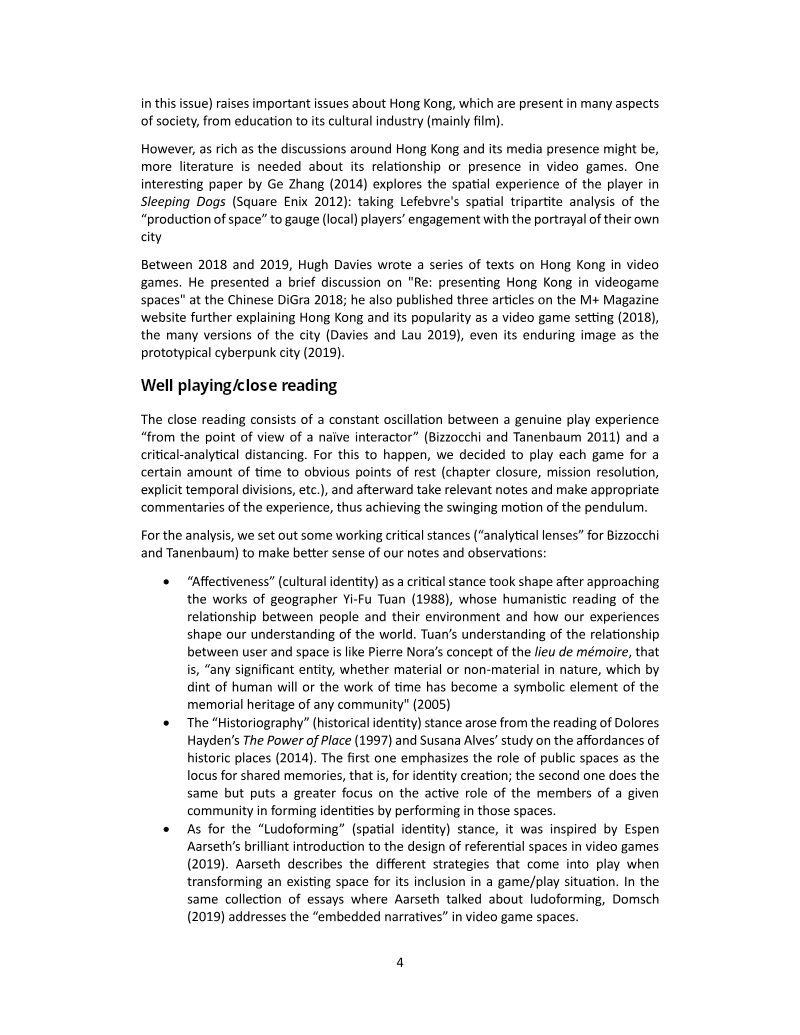
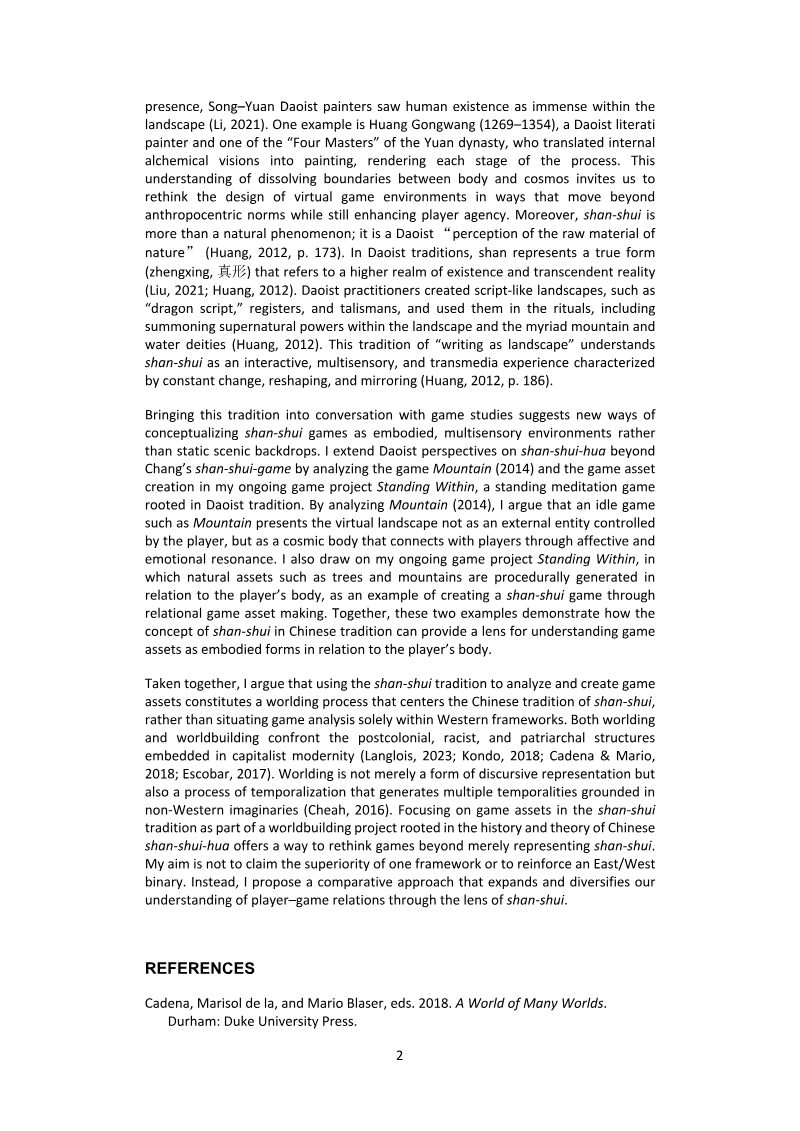
The study argues that video game cities can crystallize and transmit societal-historical consciousness. It introduces "ludoforming" as a basis for analysing urban experience in games.
This study examines how three Hong Kong-set video games, Sleeping Dogs, A Summer's End: Hong Kong 1986, and Oblige, embed cultural, historical, and spatial identity through a process the authors call "ludoforming," the translation of a real city into playable systems and affective detail. Drawing on a truncated close-reading method guided by affectiveness, historiography, and ludoforming, the authors argue that video game cities can crystallize and transmit societal-historical consciousness, positioning their work as an initial step toward a framework for analyzing urban experience in games. The sample was selected from Eddie Lau's catalog of Hong Kong-themed titles and games released between 2013 and 2023.
Across the analysis, the games construct local identity through affective elements such as food, language, signage, and domestic routine. Sleeping Dogs leans on triad terminology and street signage, though with noticeable inaccuracies, and draws foreign influences inward, while A Summer's End relies on insider cultural references and projects a Hongkongese identity outward with more ambivalence. Oblige grounds its sense of place in family life and domestic tension. The authors find that historiographic content is sparse overall. Sleeping Dogs offers almost none, while A Summer's End provides the most, chiefly through 1980s-era objects and the looming 1997 Handover. Sleeping Dogs compresses the city into four socioeconomically distinct districts, though recurring assets flatten its diversity, whereas A Summer's End achieves detailed, accurate spatial texture through public spaces, dining venues, and private interiors.
The authors conclude that these games achieve a convincing spatial identity more reliably than a historical one. Material details such as MTR lines, ferries, trams, storefronts, household furnishings, and school uniforms anchor these representations, which afford five player responses: "Understanding," "Commiserating," "Investigating," "Experiencing," and "Questioning." These responses are framed as a bridge between the social and cultural sciences in building collective memory of the city. The closing bibliographic and ludographic material situates the study within scholarship on the spatial turn and digital cityscapes, alongside related titles such as Yakuza and Metal Gear Solid 3.
DiGRA · 2026
DiGRA · 2024