1 free read left. Create a free account for unlimited reading + AI research.
Create free accountWhitepaper DiGRA
1 free read left. Create a free account for unlimited reading + AI research.
Create free accountWhitepaperDiGRA
Distilling the key insights…
Willumsen's paper addresses a persistent question in game studies: when a player-controlled avatar acts, is the action expressing the player's agency or the independent will of a fictional character? The work builds on Vella's account of the avatar-character boundary and proposes that the question can be analyzed through two separately measured dimensions, avatar control (the degree of player agency relative to a game's default) and character complexity (drawing on transmedia character identity and literary characterization theory). The central claim is that these dimensions are not zero-sum and must be assessed independently before being compared, allowing analysts to distinguish between "automated avatar actions," mechanical behaviors the game handles so players can focus on play, and "character autonomy," moments where a character's complexity is foregrounded while player control is deliberately reduced.
The framework is applied to a set of examples drawn from action and narrative-driven titles. Quick-time events in God of War III, in which Kratos's decapitation of an enemy is largely determined by the game, are read as extra-ludic moments that feel cutscene-like. Aloy's refusal to use ranged weapons in Horizon: Zero Dawn and Guybrush's autonomous fight in The Secret of Monkey Island are presented as further instances of character autonomy. By contrast, Agent 47's automatic cover-taking in Hitman: Absolution and Gordon Freeman's auto-lowering of his weapon in Half-Life 2 are classified as mechanics-focused rather than characterizing.
The author concludes that the avatar-control/character-complexity framework usefully separates these cases, though it cannot be quantified and borderline examples remain difficult to resolve. The analysis is qualitative and centers on a small, deliberately selected set of mainstream, single-player console and PC titles, with no broader empirical sampling. Its substantive contribution therefore lies in conceptual clarification of how restricted player control can serve characterization rather than mere mechanical convenience.
 Half-LifeGame · Valve · 1998 · 40 documents
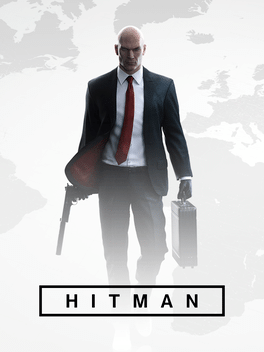 HitmanGame · IO Interactive · 2016 · 38 documents
 Half-Life 2Game · Valve · 2004 · 16 documents
 Hitman: AbsolutionGame · IO Interactive · 2012 · 6 documents
Each row is a game or company this document names, each column a document, oldest first. A mark means that document names it. Select a row to see those documents.
DiGRA · 2018
DiGRA · 2014