1 free read left. Create a free account for unlimited reading + AI research.
Create free accountWhitepaper DiGRA
1 free read left. Create a free account for unlimited reading + AI research.
Create free accountWhitepaperDiGRA
Philip Sharp argues that video game arcades emerged from the convergence of leisure practices, technological innovation, and cultural identity.
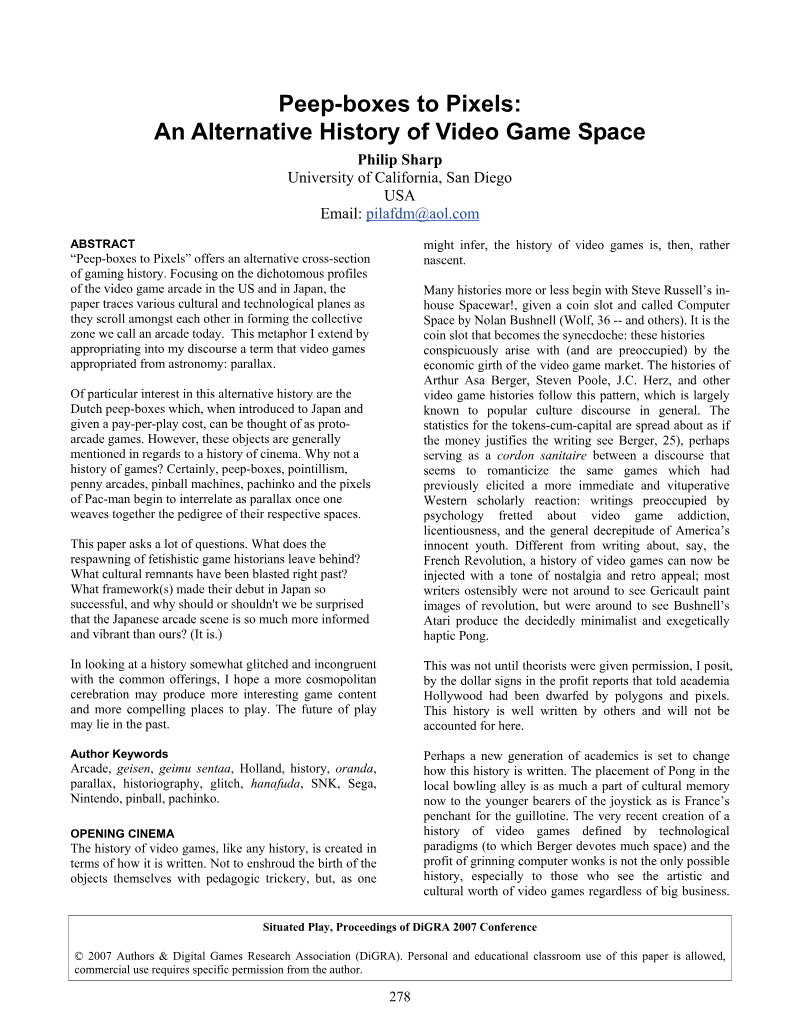
Philip Sharp's "Peep-Boxes to Pixels: An Alternative History of Video Game Space" argues that video game arcades emerged from the convergence of leisure practices, technological innovation, and cultural identity rather than from a single line of technical progress. Sharp locates the roots of the arcade in nineteenth-century optical toys such as Dutch peep-boxes and Japanese magic lanterns, along with pinball and pachinko, and contends that Japan absorbed Western mechanical and optical devices as commercially framed leisure spaces, a pattern he sees continuing into modern arcades. The work situates these developments within a broader story of how amusement spaces have repeatedly attracted moral panic, such as the pinball bans in American cities, a stigma that anticipates later reactions to video game arcades.
The account traces this lineage across the United States and Japan, emphasizing that Japanese leisure spaces were shaped in distinct ways by state regulation and industry. Sharp contrasts Japan's enduring arcade and pachinko culture with the American shift toward home gaming and family entertainment centers. His analysis is interpretive rather than quantitative, though it draws on industry revenue figures, including roughly $154 billion for 1992 and $6 billion for 2000, to frame the scale and volatility of the market over the period. The scope is thus historical and comparative, focused on the two national traditions most central to arcade culture.
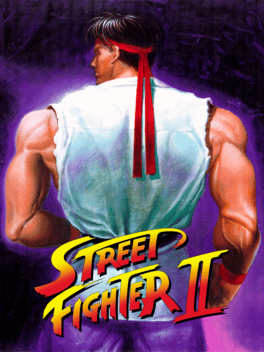
The study's final sections turn to how games themselves represent and embed cultural leisure spaces. Sharp examines SNK vs. Capcom: Card Fighters Clash, which converts the practice of collecting into a portable game that catalogues Japanese arcade culture, and Feng Mengbo's reworking of Street Fighter II through a Chinese character, which critiques national identity and the cultural power of leisure. He concludes that alternative histories of games should move beyond retro-fetishism toward a shift in perspective between object and subject, treating arcades as products of governmental control and cultural association rather than as nostalgic artifacts.
DiGRA · 2012
Sega Corporation · 2001