1 free read left. Create a free account for unlimited reading + AI research.
Create free account
Panel: Riding The Wave: Joining the 14 Million Esports Enthusiasts & 11 Million Esports Gamers
Key insights
6 takeaways- 01Growth is being driven by the rapid expansion of mobile gaming in emerging markets, specifically India and the Middle East.
- 02Institutional and government backing is providing the regulatory stability and infrastructure necessary to legitimize gaming as a career path.
- 03The esports industry is transitioning from a volatile niche into a mature sector, currently serving 14 million enthusiasts and 11 million gamers.
- 04The industry is mitigating risks associated with single-title reliance and unpredictable game lifecycles by prioritizing cross-platform accessibility over niche hardware like VR.
- 05To ensure long-term viability, stakeholders are shifting from short-term marketing tactics toward diversified revenue models like subscriptions and authentic brand partnerships.
- 06Over the next decade, the esports industry is expected to adopt professionalized commercial structures that mirror traditional sports to secure a permanent role in the global entertainment landscape.
Ask AI about this video
Transcript
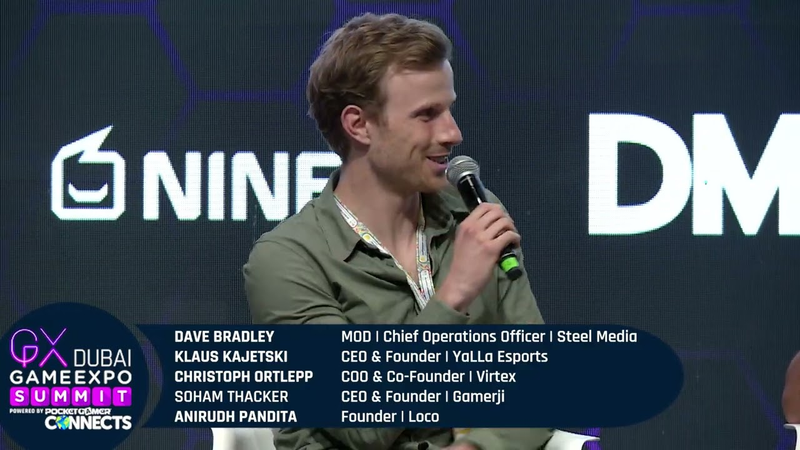
we've got a panel to um to round things off uh here at um here at the the Esports Innovation stage so um what I would suggest as well just so that you know everything's been recorded so you can watch it back everything that's here will be available in the um Video Vault for um for for the event so if you've missed what's taking place in the states next door because you're in here you will be able to watch that and vice versa so so we'll um we'll have the final panel of the day now I'm going to moderate this panel and um it's going to be about uh it's going to be about Esports obviously it's called riding the wave and it's about how to join the 14 million Esports enthusiasts in the Mena region and of course the uh the many 240 million experts enthusiasts before um worldwide so um we're gonna be
talking about some of the topics that we've uh already seen this afternoon and some new ones and basically wrapping things up so I'd like to welcome to the stage and I hope they're here in the room uh Annie rude from Loco Kristoff from vertex Klaus from yala and uh soam from gamergirl track sponsor so please come to the stage in a round of applause for my final panelists of the day please so then thank you riding the wave joining all these millions of Esports players and enthusiasts now we've had a um plenty of a actionable advice this afternoon we're gonna round off the day uh by looking at some of these topics and Diving a little bit into them and sharing your experience so before we do that I'm going to begin by asking you all to uh to briefly introduce yourself tell us about your business set the scene let us know who you are and what you do let's start here yeah so um my name is Klaus I'm the founder of yellow Esports I also did the first bundle and I'm doing the last one so I guess you really wanted me to stay the whole day
well here I am still so uh La Esports is um boutique marketing agency focusing on gaming we are kind of Middle East ogs we started in 2016. it was more of a team but now we are focusing um on on events and campaigns and just helping you know to pave the way for this gaming to to drive here because look it was much harder in 2016. I'm sure go for it hi I'm Christoph co-founder of vertex and we basically bring the stadium experience to fans at home and we do that by using 3D Technologies like Unreal Engine um but also XR and um yeah basically building virtual environments that are then uh hosted by tournament operators teams or even individual streamers they can host their communities there and basically deliver a more interactive Community moment as it's basically like
a large-scale multiplayer environment where everyone can hang out and enjoy the show and uh yeah that's that's the idea that's a great thing I love that we're going to come and we'll have some questions about that later on as well go for it oh uh you want to flip that up hi I'm soham founder of gamergy we are an Esports platform hosting tournaments for more than 7 million Gamers across India southeast Asia and Albina hosting for more than 24 titles that we conduct more than 1600 scrims on a daily basis ideally uh you know involving the Grassroots and and scouting the amateur talent and providing them with the platform and they can not only showcase their skills but also make a mark in the Esports industry and hopefully build careers going forward that's great thanks when we saw your video at the start of the uh the track this afternoon so we've seen the app as a in action thanks go for it hey guys this is anirud I'm the founder of loco loco is India's largest game streaming app uh we have
over 60 million users and I also grew up in the region so we're expanding to the Middle East as we speak we have our Beta app live now in Arabic which is in great response and uh yeah really excited about seeing the story of both these regions grow together great now we're going to talk about some of these things we're going to talk about the region we're going to talk about some specifics some of the challenges and the the opportunities but let's start with a really broad question and let's start again down this end uh with Klausen and move down but what are some of the the current trends in in gaming and Esports that everyone should be aware of in this room um not everyone here is an Esports expert so do you want to just set the scene like if you had to kind of put your finger on it could be which games are just obviously the biggest in the region or which Trends you see worldwide or things that people should be aware of draw our attention to something in the uh that we should be aware of a trend or something like that and we'll go down the panel that way um wow that's a very that's a really broad question um or or
um I would say Obviously the trend to be honest now is this whole kind of like okay is it web 2 is it web3 you know for me it's like just gaming and Esports right uh but um I would say that the CS2 that's definitely a trend that I'm hoping to you know pick up I mean we don't have a you know like a new version of Cs for a decade so maybe it's not yet there but definitely it will be a trend that you know the Esports scene should should watch out for yeah definitely that's very interesting and it's an interesting point about the the whole web three thing as well I I wasn't specifically going to dive into that maybe if there are questions at the end but there was a lot of at GDC this year there was a lot of actually good games that had web free components in them maybe for the for the first time um uh sorry they're Kristoff do you want to um yeah yeah I I think um what what we've seen a lot is just a big emphasis on sustainability of the ecosystem this year seems to be really
big topic and Trend um you know even Riot felt like they had to make an announcement and be like yeah we're really committed to this as the future of sports and you know we actually also own up to some of the mistakes we've made kind of inflating this entire ecosystem a bit too hard so it's kind of like uh I think a very healthy kind of situation but at the same time also very challenging for a lot of organizations so I think this is also just currently very top of mind and an important topic yeah interesting go for it while still the trend stays with Battle Royale games you know most of whether it be CES or fortnite or pubg mobile obviously and and with that Trend we especially in in in in developing nations we see a lot of Trends especially being towards Mobile gaming yeah right which is very different from what we witnessed at the us at the GDC or probably in in Europe but with that
obviously there are a lot of good AAA titles that are that are focusing on mobile gaming um though uh you know a lot of Esports athletes might might disagree that you know the still the the Esports or the the gaming holes in consoles or PCS but with The Cutting Edge of of mobile devices also that's that's a trend that is that is becoming very very popular especially in the developing nations where where PCS or consoles are not that affordable for the masses yeah that's a really good absolutely well I'm from Pocket Gamer so of course I believe in Mobile so but yeah go for it yeah I think there are few different cuts of this question that I take the first is what is the audience watching right that's what we see on our platform and if you look at the games uh that they're watching in the Middle East and they're watching um in India they're actually pretty similar you look at the Play Store data is the same so when you see pubg mobile you see free fire you see Clash of Clans these kind of games on mobile side on
the PC side obviously valorent is doing very well she has to who everyone's excited about so I think there's a lot of uniformity in the way Gamers having said that the entertainment itself in different countries is different so you know you cannot group Saudi Arabia and Egypt in the same way because they're different right which is very similar to what and swam and I have worked a lot together in India the same thing in India right different states speak different languages there's disparity in income levels so I think there is also need to recognize that and build for that versus a giant monolith coming in you know giving us one size so um so I think that that's something that's that's been really interesting and I think obviously from an economic point of view globally um as Christo mentioned also there is a need for resilience and there's a need to about sort of the p l of the whole thing um versus just focusing on L and uh and I think lastly I think we're very lucky that there's regulatory support uh for
uh for Esports and I think very forward-looking leadership has recognized that Esports is very similar to sports and much like there's been investment in you know Abu Dhabi investing in Manchester City or Qatar investing in PSG there's also a recognition that gaming has to be invested in and we're seeing obviously a 966 is a sponsor here so you know what uh the South F and savvy are doing so I think there's um that's really good and I think from an entrepreneurial perspective it's takes away a lot of the regulatory uncertainty that many other geographies have that's that's all great and we can come and Tackle all each of those those topics there to your first point absolutely I I saw the talk this morning by Jeff from I dream Sky he was talking about localization and he was saying how important it is to not just assume that means translating into Arabic in fact There are 16 distinct regions right that you know that probably need their own uh their own approach but let's stay with you for a second there if we if we can
you mentioned the regulatory support I'm gonna I've got a few questions I want to get to but I'm going to skip ahead to that how important is it that there's governments and institutions and bodies that are backing Esports I mean is that a thing that how essential is that and and what needs to be done I think it's huge right because what entrepreneurs need is we are already answering a bunch of different problems or solving a bunch of different problems right those are Tech related team related financing related now if you add in a regulatory you know oh hang there then it creates difficulty because you can't plan for the long run right how do you you know plan cash flows what kind of tech do you build what kind of compliance systems do you build when there's government support and they're willing to work with you and make it clear on what needs to be built and how they'll support you makes our job much easier and then we can actually focus on this the company building side versus constantly worrying about what the government is doing it also obviously the biggest balance sheet often any country is the government so them opening up the balance sheet then
trickles down through various Venture Capital funds and financing um rebates Etc and allows us to bring events to people allows us to Showcase what the power of Esports is I mean if you went to the blast event in Abu Dhabi last year fantastic right we have gamers8 coming up in Saudi Arabia soon fantastic right so um you know pubg mobile finals happened here in Dubai so it really provides a grand stage and look you know this region now is hosting Formula One hosting NBA games so there's no reason why Esports doesn't find the space in that calendar and again government support helps tremendously there perfect yeah I would actually briefly add that it fills this void left by others in terms of investment opportunity in terms of security stability and um for those that are forward-looking and really believe in it it's it's almost like crazy that um you know Capital investors are leaving it to the governments to pick
this up but on the other hand you know for the region for example it's a huge opportunity because it is the future of entertainment of sport and and it's basically making sure that it holds a major stake in it and at a bargain price I would say at the moment because everyone else in the world is like I don't know if Esports are so sustainable where the kpis and so it's a great moment in terms of value for money and to own a stake of the future here that's interesting so no absolutely and and with that it also generates a lot of awareness and conviction in the region right yeah right uh it's it's I'm we all remember the times where our parents used to tell us that you cannot you know spend time gaming it's it's a distraction from your your academics or your school and then obviously government taking initiatives and also regulatory bodies taking initiatives like like what we are witnessing today and also a lot of other events that Anil just spoke about not only builds that
conviction but also builds that confidence amongst the growing generation to choose gaming and Esports as a possible career option and I'd only mean by by just participating in Esports tournaments I also mean parallel gaming career options like developing games or probably becoming a programmer or an animation artist or a content creator that that entire ecosystem kind of comes together when there are government initiatives and especially regulatory bodies that that kind of handle that yeah absolutely I mean that's a really good point the symbolic value of bit of the support from the government can't be can't be overstated and and to your point absolutely right I I should tell my parents that they time I spent playing Doom was more important than the time I spent doing my French homework right that's it for what I need to do now uh can I says come to you I'd just like to stay with that point a little bit um about that there and talk a little bit about schools and education over in the other Hall it's the school's day today you probably saw all the kids outside there there one of the topics that's come up a couple of times here today is that
actually parents don't necessarily see the value of of gaming perhaps it's not even just as a Time waster but as a career you know um our last speaker jokes about that as well as well as the the government supporting um supporting the games in Esports industry do schools have a role in that as well and how do we kind of change the perception of uh of the games and Esports for the Next Generation um yeah schools definitely play a role a lot of schools have now started their you know Esports initiatives kind of like they go like we have a chess club and swimming club and an Esports club uh unfortunately though many Esports School initiatives is basically some pieces in a corner and you know it's just something that they put on the brochure there's a couple schools that actually do something active uh but to go back to the whole kind of like government and school and and like seal of approval for gaming to make it a career like like 100 like we started yalai Esports in 2016
and then there wasn't even a trade license for for any sort of gaming or Esports company like I tried to explain to the government what I'm trying to do with my business and I think I ended up registering like internet content provider company that was like the closest thing uh and and but now we have you know we have 10 full-time employees in our office in jlt young you know it's some of or actually most of their first job and and they now need to kind of explain to their parents like what do they do and now finally their parents actually kind of understand and are almost proud of like their kids working or well Sons I mean not kids anymore I call them kids sometimes but they are working in Esports and gaming and their parents understand what at least like ballpark what they're doing yeah I wanted to add look uh this is my second startup before this I started one of India's largest Digital entertainment companies and one day we hired we created a position called Meme Maker okay and nobody understood what it was
and today legitimately some of those guys are India's biggest influencers right and they're making tons of money no parent is complaining at that point but having said that and the same thing is true for gamers now and we've seen it in multiple geographies right we've seen it happen in America we've seen it happen in uh in China we've seen we're seeing it now in India the same thing here I think that awareness is building amongst parents and it's important to also address their concerns so whether it's around screen time whether it's around violence those things have to be addressed but you'll see a lot of different age groups are playing different games right so it shouldn't be all grouped also in the same way like spending time in Roblox is not similar to playing valo right like it's very different experience different age group different and you know a lot of kids are just hanging out they're actually don't even care what the game is in that much right as long as it's facilitates interaction and their friends are playing so I think from a awareness perspective platforms like ours have a big role to play to show those stories and so in India we've done a bunch of
um non-fiction shows to show that so there are things that we have shows like dream and stream which is to show the stories of some of you know people like you know our friends here who like you know when he started he's saying nobody even recognize the company right and this is not he's not alone lots of stories like this of people who you know now are truly Trailblazers and Pioneers and showing those stories is important um we show what the parents of those big players also doing right so when you show those stories is is when other parents can learn from that and I think there has to be enough investment both from platforms like ours and other Associated companies to show and share those stories interesting very interesting absolutely we're about halfway through so I'm going to change tack a little bit I want to talk about um if you like the kind of business of being a pro player um teams everywhere not specifically in the in the mean region can kind of face difficulties when they become professional and how they sustain that life as a professional gamer um
let's switch and talk about some of some of that and talk about the professional gaming environment what are some of the obstacles that teams face when they want to become professional Gamers we talk a little bit there about people getting careers in the games industry well so being a pro a Pro Gamer what are the pitfalls about um so so we started in 2016 as a Pro Gamer I had this aspiration of creating the ninjas in pajamas of the Middle East like that that was it right I'm from Finland and I was a you know Pro CS player but but that was like 1.6 there was no money so uh but now for example today unfortunately um basically we don't really have an active team as a competitive Esports team anymore it's purely because it kind of at least in the Middle East became a rich man's hobby like it's not sustainable and that was kind of what you know you already tapped on like it's um any that this that's not only a mean a problem I mean it's happening you know globally like teams are consolidating that there's mergers shutdowns like like
uh and riots are now taking steps so so we need and to be honest I think like the big big problem here it's because all the Esports content is out there for free like why does football work well that's because there is licensing deals and and the leagues make money and everybody gets a cut yeah I know local is you know I mean but but imagine you imagine you put a paywall on your platform then like would users accept that probably not but they should like I think we should start paying for Esports because then we can actually make this whole circus profitable for all of us you know so um I mean I'm sure somebody is always paying right so and I think that's where I think there's structural issues that have to be addressed I mean if I think teams by themselves cannot be sustainable in this environment if they don't have and creators right because the shelf life of players is not as long and that branding that is required to build a sustainable business you need to
get viewership and the teams that don't win don't get Prestige and the teams that don't make content don't make money right so you have this issue and I think one of the ways out like you're saying is to have a subscription tier of some sort where people do subscribe and that's something we are actually working on right now so that exactly the problem that he's saying gets addressed because you know finally putting it out on YouTube you can make no money right and you know YouTube doesn't care just moves on to the next content creator and you know that's a problem interesting yeah now um and also it's the life cycle of a game okay you know when you invest in teams right I mean like what Klaus just said you know he started with 1.6 now is anyone going to sponsor a 1.6 player today right that's the life cycle of the game and so when there are investments made in teams and especially athletes you know you got to make sure that uh you know that investment kind of carries
forward to the next big title that's going to come in right because the life cycle of a game is not very large when you talk about conventional sports like football has been there since centuries yeah right and and that's not the case with Esports you know it's it's not one particular game right there are there are so many games with all different set of audiences with different set of interests there are there are people who love strategy game there are people who love action games you know and then obviously when it comes to investing in athletes you know that life cycle of the game literally is a big risk that team owners take with when for example if that games you know stops having popularity and and a very good example of that is what happened recently in India when pubg mobile got banned we had you know so many teams who were sponsored so many content creators who used to have a living on pubg mobile and One Fine Day the government just comes up and says
today is the last day of pubg mobile like imagine you know what what what that does to the entire ecosystem oh yeah we don't need to imagine right we lived there we lived it you know we both literally lived it I mean at that point of time gamergy was a platform which literally pubg mobile was a bread and butter yeah right and then suddenly One Fine Day you are left with you know literally 10 of our audience playing because everyone else used to play pubg mobile and that's that's something that uh you know is a big risk factor also that a lot of teams kind of have to take into consideration yeah absolutely absolutely um that's fascinating about the pubg mobile uh uh going away can you imagine just waking up one day and suffering that soccer's been banned or something like that and the the effect on everything that's never going to happen right and that unfortunately and then that the other thing is that soccer is not owned by or football is not owned by one particular entity here you're talking about Publishers which have a
lot of different things that they need to take care of better will be political whether it be you know licensing whether it be content which is you know Mitch might be sensitive to a particular region a lot of different things that kind of might you know so the risk factor is very high when it comes to investing in just teams and athletes on on the other side what I would say is that for football for a moment it's allowed to be created takes 20 30 years because there has to be an older generation of infrastructure and then 20 years for this particular player to make it through Esports the newer newer Stars being born and I think in geographies like the Middle East and India where we are starved for role models from a branding perspective they become extremely valuable right um and I think you're seeing that now with the Esports stars in India who are doing really well in terms of but obviously not everyone's going to be that but that's the same thing for any um you know performing art or sport um you know what you said something there that I want to come back to you but I've just realized we haven't heard
from Christopher for Kristoff for a minute so I want to just very briefly just talk about VR and Esports because you do something that's a little bit different from other other folk here Jonah um just talk about what sort of opportunities you see in that space that um that we should know about yeah actually so this entire idea that we've been working on started out with the emergence of VR and other devices uh by now we are not super focused on Purely VR anymore because we obviously realize that the global audience is not on VR yet and not anytime soon so we're actually also more focused on the regular PC console and even browser version of of this experience similar you can imagine it similar to like Roblox or fortnite accessibility and in terms of events going on there but um yeah I mean um in terms of obviously audience experience it is a big opportunity because um it is basically a more immersive more interactive experience which should drive you know engagement willingness to pay in the future so that that's
obviously one of our hypotheses and um and the big tech companies are investing which also then leads to luckily now with apple also having announced their headset you just see that more and more Tech corporates are also now shifting r d budgets again in these directions it's going to be a long time until we see kind of the trickle-down effects of this but like uh for from our perspective for example five plus years from now we believe there will be healthier kind of investment ecosystems around XR again uh because the headsets are kind of maturing Apple's first generation won't be too exciting it's obviously more a developer headset but uh maybe five plus years from now it is interesting and then with all media and tech companies then having to think about this platform there will be a lot of investment opportunities and also opportunities for for everyone who's dealing with players users audiences to to build new use
cases there and yeah for us it's just a bit of a you know let's let's make sure we're we're still around when when that time comes good now that's that's great a big big believer in VR myself and Apple's announcement was definitely was definitely interesting I'm not going to pay three and a half grand for a headset but I but I'm interested but um uh let's go back there we've got it we're we're kind of the last five or six minutes and I will try and give some time for questions as well but I've got plenty still I want to ask this is a business conference after all so let's talk a little bit about um about that um Brands and advertisers have started to recognize the potential of Esports um uh and that's one Revenue stream for people in the business but many still haven't got involved there's been a couple of panels about it this afternoon uh I was interested to see what um I have from uh Pizza Hut was saying about what they've done that was great but um but how can we get other advertisers more involved than Esports is there things we should be doing to make them feel comfortable and confident investing in the industry well I mean that's obviously like our bread and butter as
yeah la Esports we we are a marketing agency but we only do uh basically campaigns that is around gaming so the answer how do we get more people involved is education like like it's um I mean it's much better now again because as we've talked like when schools and governments and everybody is involved it's uh it's not that much like let's say convincing that you need to do to get the brands involved actually now it's almost like the brands want to do gaming but they have no idea what to do and usually they are trying to do the wrong things so now it's like my job to educate them like what to do and calm them a bit down maybe also manage expectations because many brands are kind of like well we'll just slap a logo on something gaming related and Gamers will love us and it's like okay like let's let's you know make this a bit more realistic so so um yeah it's a lot of education and then like as a creative agency we always try to figure out like a way to to really like we understand the gamers then we need to understand
their brand and try to like make something that is kind of cool for both ways you know and as authentic as possible and obviously since we're in the Middle East you know it's all about Arabic and the right language cultural differences so education if I would sum it in one word I would add that it's important for everyone involved to not just look at the dollar spent right now but all the dollars that could follow so um you know don't don't uh try to maximize the project that's there right now because it the return on invest that your partner or client gets May then be underwhelming for them if you overcharge so just think about the long-term play here and what the long-term goal is and that's just one recommendation I'd have because yeah I feel like sometimes people are a little bit too short-term oriented and don't think about the hundred dollars that could follow after the first one spent yeah that's good good advice so what do you think no I'm talking about the longer term effect I
mean most of the audience of of gaming or Esports and Millennials and gen Z's though they might not have the spending power today but tomorrow they are actually going to be the Spenders and for a brand to look at it from a long-term perspective they need to start investing in this audience today and bought better than gaming which directly hits that target audience which is going to be the tomorrow spending audiences right so that is something which which definitely will as as Klaus said once they are aware and educated about what what the longer term benefits of investing in in advertising and in in gaming or Esports is uh definitely is is is something that will yield better rois and better fruits than compared to Conventional mediums of marketing that they've been following since dog years now right makes sense yeah look this has happened in time immoral when TV came up it looked like the First shows looks like radio and then advertised was slow to watch mad when they put the TV guy at
the back of the room like what the hell is Television right um it happened when in my first company we had to explain to people what YouTube is right this is as basic as that and now today like you know everyone has that in their media plan right so advertising and advertisers are always reactive and they follow attention and I think it's very clear 2020 and the lockdown made it very clear to people what their kids are doing and and I completely agree with Laos like the number of advertisers who reached out to me saying hey what do we do about gaming because they have no idea right right and for them gaming is still my Mario right because that's what they played but they don't know what like their kids are playing spending time in Roblox or they're playing other games so I think they're just now I think getting the ROI right and just having certain success stories you're going to see lots of advertisers move over um across categories yeah absolutely we're we're kind of at the end um does anyone else have a question that they'd like to ask the panel while we got them here oh in the front row um
uh I just wanted to ask so to go back to the finances behind Esports um and considering all the stakeholders who do you think is actually responsible for the finances this can be to do with prize pools or tournaments Etc who do you think is essentially responsible like responsible for uh for this for the finances of Esports as a whole kind of uh okay okay okay yeah well um actually what we already touched on here uh was that you know nobody owns football but yet somebody owns the leagues um that's kind of what Riot is now doing they are kind of feeling a bit responsible for their league and maybe admitting some mistakes so if I would have to like name one entity that is
responsible I would say it is the publisher because at the end of the day like if there is a successful League of Legends Esports it is marketing and attention for Riot to then get more players in but um that's a very simplified answer to be honest I do think that it is kind of like a symbiotic ecosystem with the teams with the players and with everything but if I have to say one I would say it's a publisher yeah I would actually also agree because it starts always a product and we talked about the shelf life or the lifetime of games and you obviously have to see that commitment into the title and um the excitement on the publisher side and uh you know just has to be reinvested reinvested and then also into the in the Esports ecosystem that drives that engagement so they definitely it's it's their work their bread and butter right and to add to it I mean they are the largest benefactors of any tournament
right the the organizer might suffer losses the brands might not get the right set of eyeballs but a Publisher's game is regardless going to get popular by as many tournaments or events that are hosted for their title so yes the largest onus of the prize pool or ideally the expenses can be Publishers but with that obviously there has to be other avenues which fund that as well you can just put everything on the publisher saying in the end it's the organizer who wants to host the tournament yes for the Publishers you know own tournaments that's a different story altogether but when you talk about private tournaments or essentially even scrims or or daily tournaments like what we host you know that that cost has to be split between organizer the audience the brands and obviously also the Publishers so with still the largest owners being on the public sure but still it has to be split let me tell you having worked with some of the sporting authorities Publishers
are still 10x easier to deal with than any of the guys you mentioned so and it's taken them 100 years or so to figure out how to commercialize this stuff and so I think that same thing will happen you know what happened with the Premier League you saw what happened with the soup you know the Super League that they were trying to create right so I think there is some maturity that's required like Esports is not actually that old even though for us it looks like it's very old whereas these spots have been around for 200 years and go all the way down to the school level so a little bit of patience there I think in the next 10 years you will see sustainable models coming up thank you very much look there's a red light flashing at us here you've been very patient we've reached the end of the day here at uh game Expo so and what we'll do though is we could have talked Lots longer and I know there'll be people who'll regret missing this panel uh we'll put the recording on our website and I'll probably follow up and ask you accountable additional more questions and we'll put it all together in a feature online how about that for everyone so let's do that a round of applause from the panelists here today [Applause] thanks very much and thanks to gamergy for sponsoring the uh the track
Summary
The esports industry is undergoing a fundamental transition from a volatile, niche entertainment sector into a mature, sustainable pillar of the global digital economy. Driven by the rapid expansion of mobile gaming in regions like India and the Middle East, the sector is increasingly prioritizing fiscal responsibility and long-term commercial viability. This evolution is supported by a growing recognition of gaming as a legitimate career path, bolstered by institutional and government backing that provides the regulatory stability and infrastructure necessary for mainstream integration.
Despite this growth, the industry faces structural challenges, including a heavy reliance on single-title ecosystems and the inherent unpredictability of game lifecycles. To mitigate these risks, stakeholders are moving away from short-term marketing tactics toward diversified revenue models, such as subscriptions and authentic brand partnerships. By focusing on cross-platform accessibility rather than niche hardware like VR, organizations are maximizing their reach among Gen Z and Millennial demographics, who represent the primary long-term spending power in the digital space.
Ultimately, the responsibility for achieving financial stability rests with game publishers, who must foster a symbiotic ecosystem that balances the interests of players, organizers, and commercial partners. As the industry matures over the next decade, it is expected to adopt professionalized commercial structures that mirror traditional sports. By shifting focus toward sustainable growth and deeper audience engagement, esports is positioning itself to secure a permanent and lucrative role within the global entertainment landscape.