1 free read left. Create a free account for unlimited reading + AI research.
Create free accountArticle Jagiellonian University
1 free read left. Create a free account for unlimited reading + AI research.
Create free accountArticleJagiellonian University
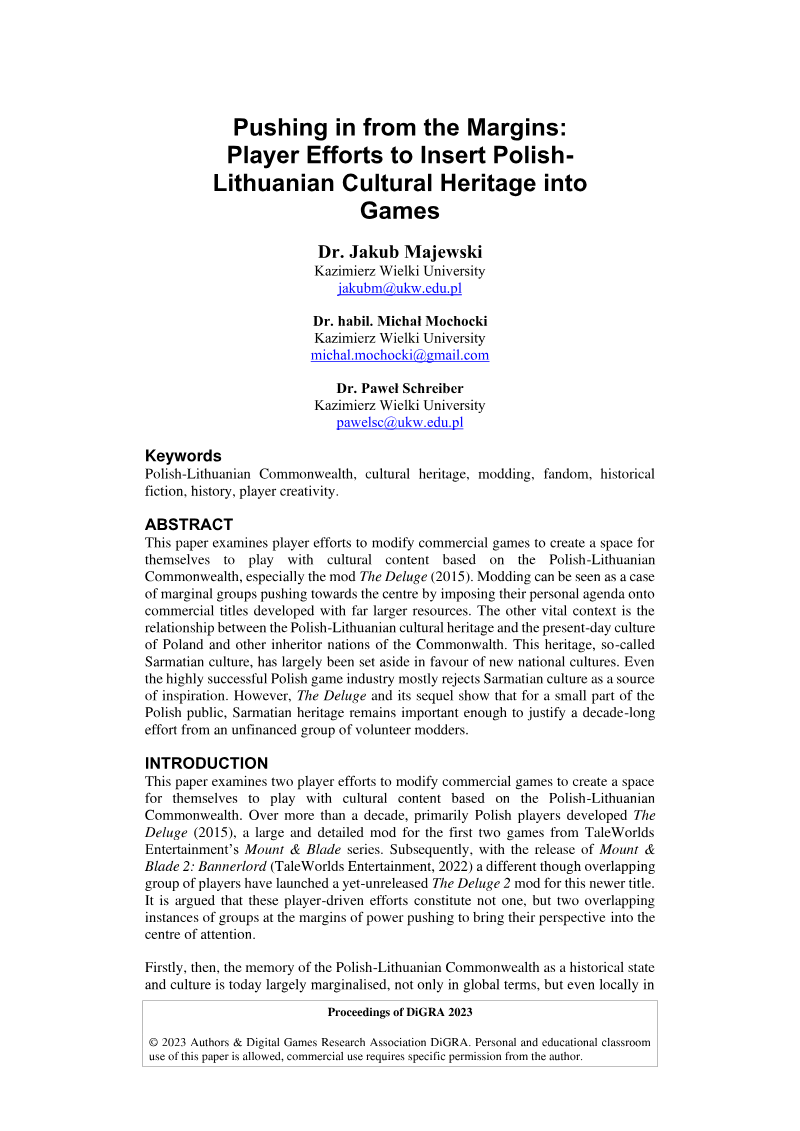
Werewolf: The Apocalypse is known for ecological and political themes. The visual novel adapts it to address contemporary tensions in Poland.
The document analyzes Werewolf: The Apocalypse – Heart of the Forest, a 2020 visual novel by Polish studio Different Tales, focusing on how it uses the Werewolf: The Apocalypse tabletop RPG framework to address contemporary Polish political and cultural tensions. The study employs postcolonial ecocriticism, playable cultural memory, and intertextual semiotics to examine the game's exploration of hybrid identities and its blurring of local and global, past and present, and fictional and authentic elements.
The game's narrative is set in Eastern Poland, a contact zone of Polish and Belarusian cultures, and integrates real-world events like the 2017 Polish political protests and the controversial legacy of the "Cursed Soldiers" (anti-communist guerrilla fighters). The protagonist, Maia Boroditch, a Polish-American woman, discovers her werewolf heritage and becomes involved in environmental protests against logging, which are framed as part of her ancestral duties. The game uses the werewolf lore to draw parallels between the environmental crisis and historical atrocities, such as those committed by the Cursed Soldiers, by linking them to in-game werewolf suprematism and reversing colonizer-colonized dynamics.
Heart of the Forest deviates from the original RPG's mechanics by replacing skill-based checks with resource management (Health, Willpower, Rage) and mental trait accumulation, with the player's final werewolf tribe and role determined at the end of the game. This design makes the game a prolonged character creation experience, emphasizing the fluidity and hybridity of identity. Maia's own identity is presented as unstable and hybrid, reflecting her Polish-American background, Jewish roots, and Belarusian surname, further complicated by her werewolf nature. The game directly combines game lore with contemporary politics to highlight how personal identities are shaped in a "contact zone" at the crossroads of Western and Eastern Europe, addressing the local dimensions of global climate catastrophe and questioning the limits of environmental activism.
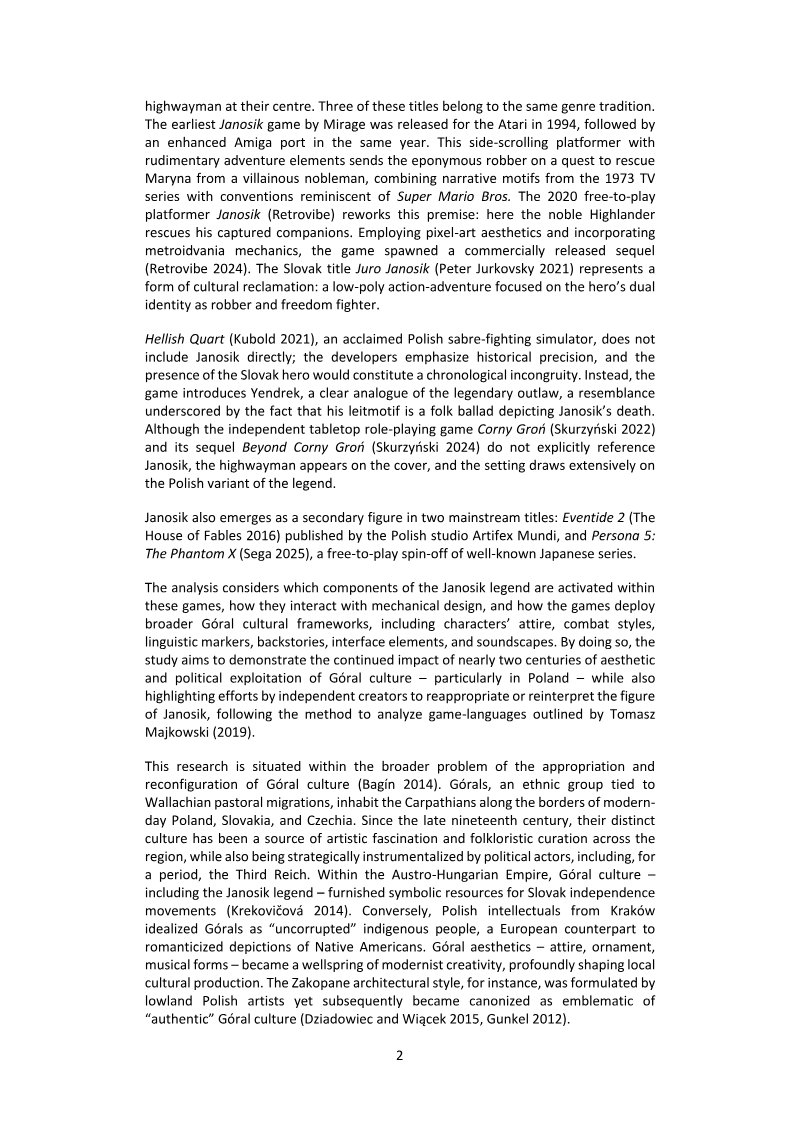
Each row is a game or company this document names, each column a document, oldest first. A mark means that document names it. Select a row to see those documents.
Jagiellonian University · 2026
Jagiellonian University · 2024
Jagiellonian University · 2023
DiGRA · 2024