1 free read left. Create a free account for unlimited reading + AI research.
Create free accountArticle American Journal of Play
1 free read left. Create a free account for unlimited reading + AI research.
Create free accountArticleAmerican Journal of Play
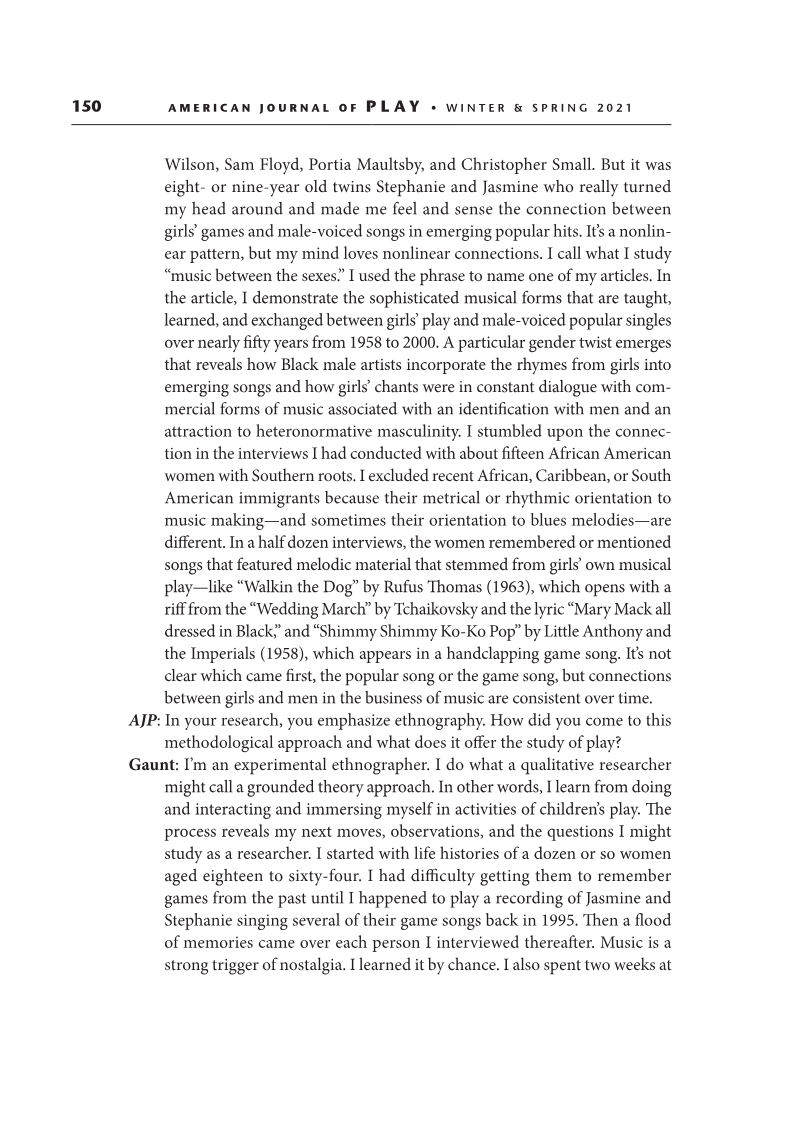
Ethnomusicologist Kyra D. Gaunt's book The Games Black Girls Play received the 2007 Alan Merriam Prize.
This interview with ethnomusicologist Kyra D. Gaunt, published in the American Journal of Play in its winter and spring 2021 issue, traces her scholarly path from childhood play to her current research on music and online safety. Gaunt, whose first book The Games Black Girls Play won the 2007 Alan Merriam Prize, describes how her own experiences as an only child, her observations of handclapping games and double Dutch, and her immersion in hip-hop and popular Black music shaped a method she calls experimental, autoethnographic ethnography. She argues that Black girls' game songs have long been in dialogue with commercial male-voiced popular music, a "music between the sexes," and that rhythmic and vocal traditions traveling from African and diasporic sources persist through what she terms kinetic orality.
Gaunt develops several conceptual frameworks across the conversation, including kinetic orality as embodied, word-of-mouth and word-of-body cultural learning; nostalgia as a force that filters memory and sustains community; and context collapse, which describes how private bedroom play uploaded to platforms like YouTube and TikTok can be redirected to audiences who sexualize or stigmatize Black girls. Her teaching practices, including call-and-response chants and learner-centered transcription exercises, apply these ideas in the classroom and are presented as a means of centering Black voices in the history of play.
Her current project examines more than one thousand bedroom twerking videos featuring Black girls uploaded to YouTube between 2006 and 2014, drawing on public health concepts such as weathering to argue that chronic exposure to misogynoir in online play can harm developing girls. Gaunt contends that platforms functioning as the largest unregulated playgrounds for tweens leave children without adequate protection, and she frames the forthcoming book PLAYED as an examination of music as a potential instrument of violence against Black girls.
Each row is a game or company this document names, each column a document, oldest first. A mark means that document names it. Select a row to see those documents.
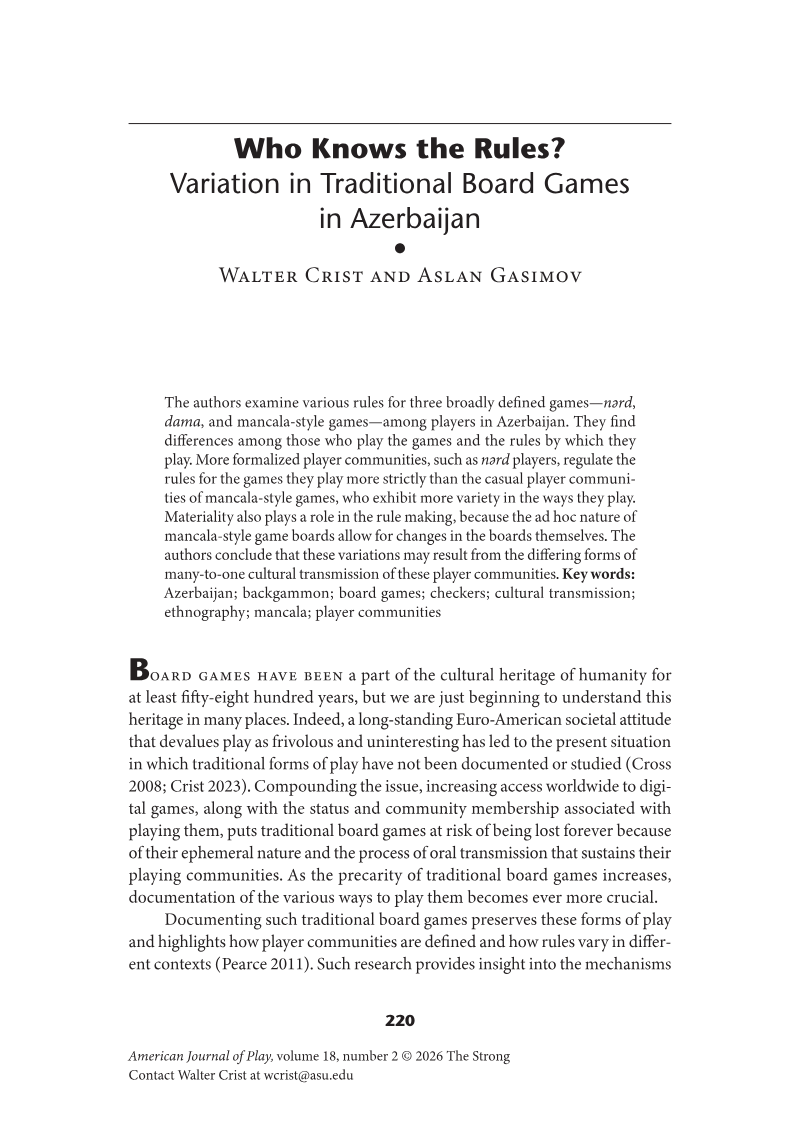
American Journal of Play · 2025
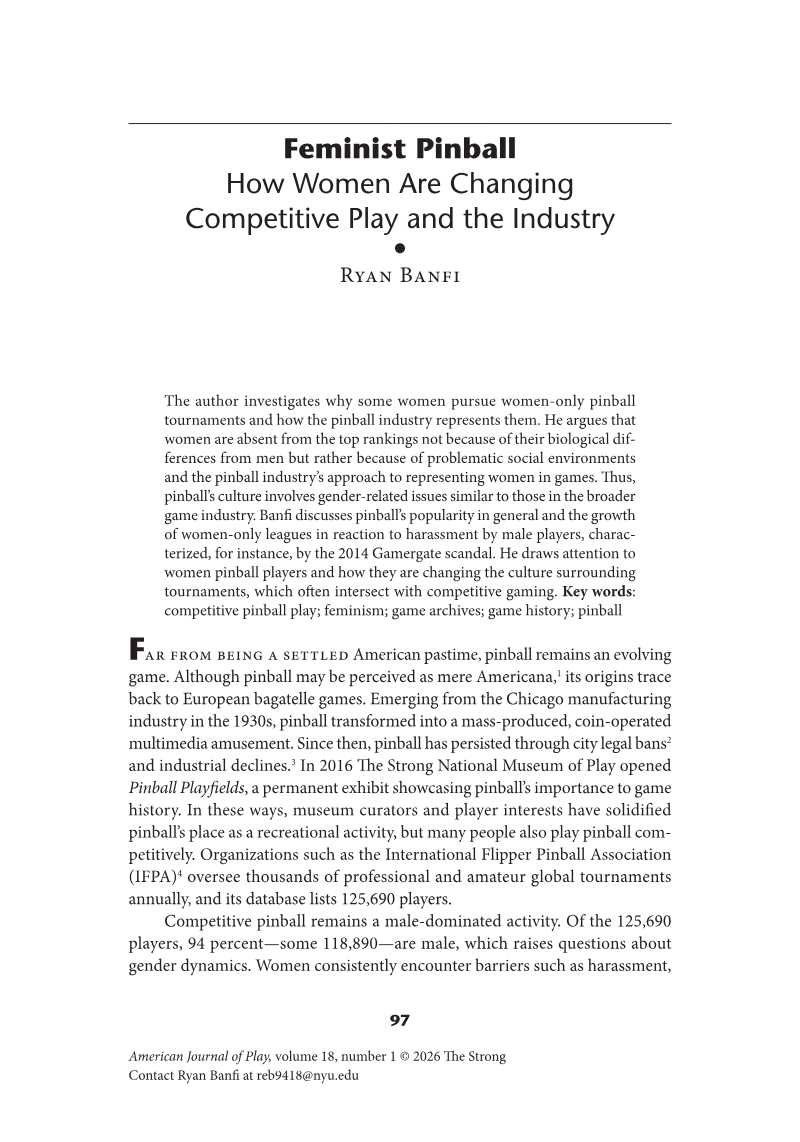
American Journal of Play · 2025
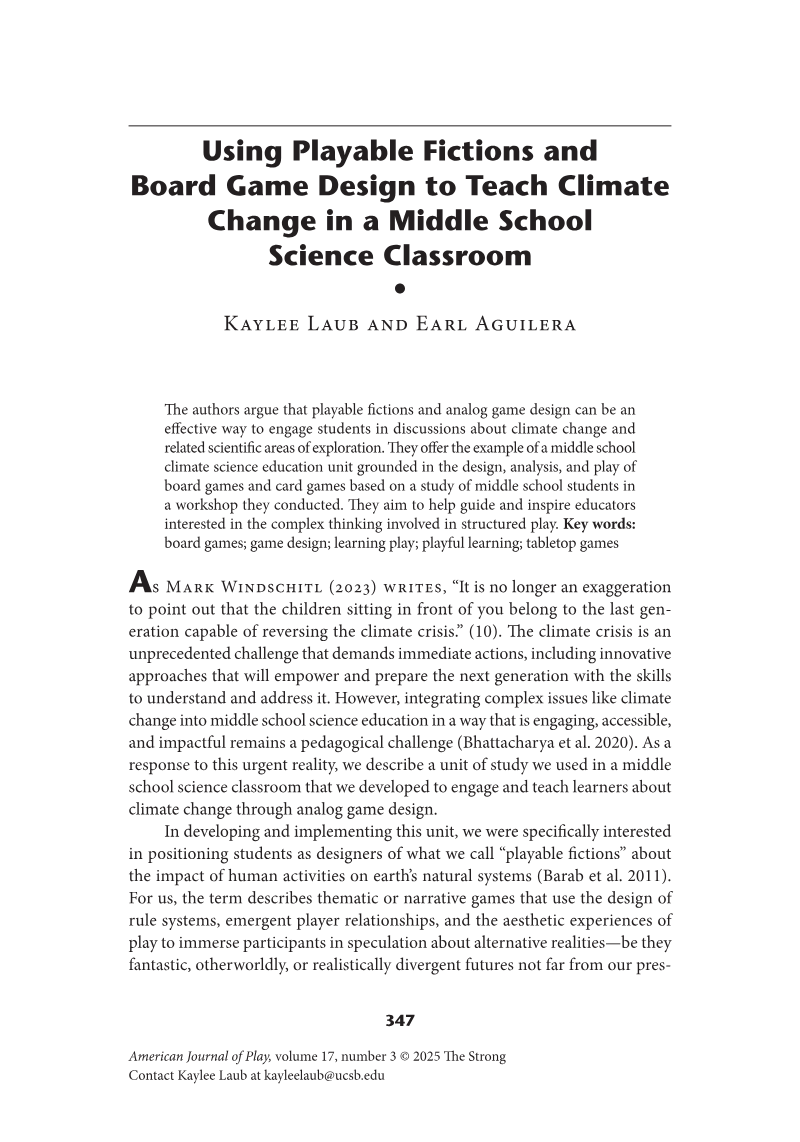
American Journal of Play · 2024
American Journal of Play · 2024
American Journal of Play · 2024
American Journal of Play · 2023
American Journal of Play · 2022
American Journal of Play · 2022
American Journal of Play · 2021
American Journal of Play · 2020
American Journal of Play · 2019
American Journal of Play · 2019
DiGRA · 2009