1 free read left. Create a free account for unlimited reading + AI research.
Create free accountReport DiGRA
1 free read left. Create a free account for unlimited reading + AI research.
Create free accountReportDiGRA
Prior quantitative work focused on demographics and playtime and rarely measured values as part of gamer identity.
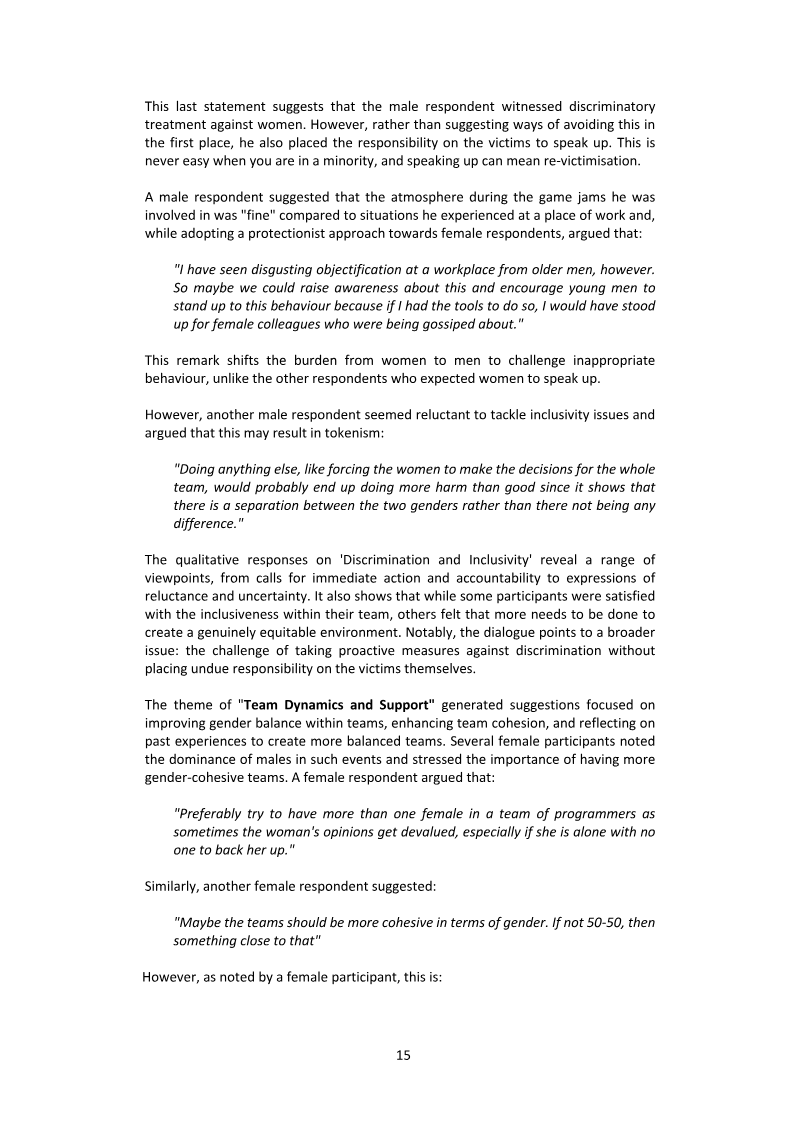
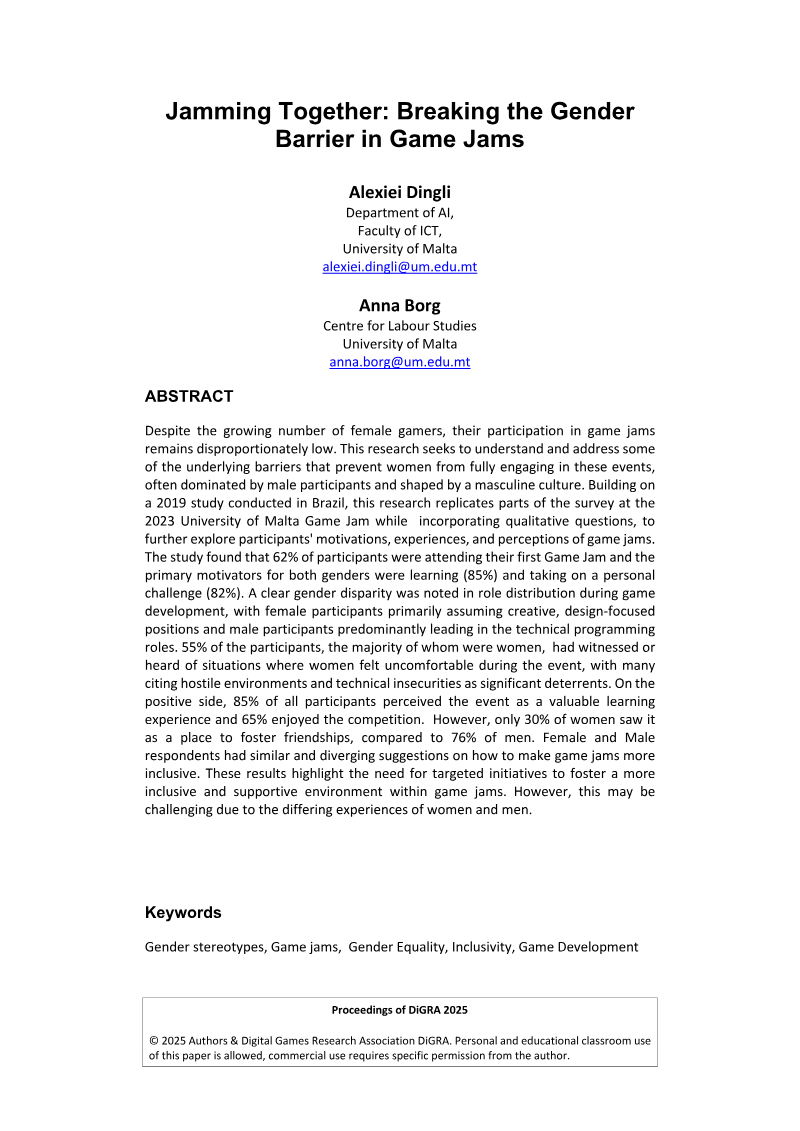
A 2023 US survey of 894 adult gamers and non-gamers, recruited through the Prolific panel, examines whether self-identified gamers differ from others in the values that underlie their play. The study responds to a gap in prior quantitative work, which has focused heavily on demographics and playtime while rarely measuring values as a component of gamer identity. Its central thesis is that gamer identity is diverse rather than homogeneous, and that values help explain who identifies as a gamer and why.
Using principal component analysis on measures of gameplay preference, motive, and orientation, the authors derive eight gaming value components, including Aggressive Exploration, Fierce Competition, and Solitary Escapism. Logistic regression shows that weekly computer and console playtime, Eudaimonic Engagement, and Immersive Escape are the strongest positive predictors of gamer self-identification, while age is negatively associated. Male gender is not a significant predictor, and voting behavior shows no meaningful relationship to identity. Self-identified gamers are also over-represented among respondents with sexual orientation, gender identity, and neurodivergent minority identities.
A k-means cluster analysis identifies five player types: Fierce Competitor, Aggressive Adventurer, Immersive Escapist, Purpose-Seeker, and Peaceful Fun-Seeker. All types except the last consist predominantly of self-identified gamers, and the subgroups differ meaningfully in gender, age, personal values, and attitudes toward cultural issues in games. Aggressive Adventurers display the most conservative cultural attitudes, while Immersive Escapists are the most progressive and include a higher share of female and non-binary players. The authors conclude that the study identifies at least four distinct gamer subtypes, and that values offer a useful lens for understanding the heterogeneity of gamer identity.

DiGRA · 2026

DiGRA · 2026



DiGRA · 2026



DiGRA · 2026



DiGRA · 2026



DiGRA · 2026



DiGRA · 2026



DiGRA · 2026

DiGRA · 2026



DiGRA · 2026



DiGRA · 2026

DiGRA · 2026
DiGRA · 2026