1 free read left. Create a free account for unlimited reading + AI research.
Create free accountArticle American Journal of Play
1 free read left. Create a free account for unlimited reading + AI research.
Create free accountArticleAmerican Journal of Play
The study examines nərd and its variants, dama, and mancala-style games such as qığ mərə, mərə and mereköçdü.
This study examines traditional board games in Azerbaijan, including nərd (a backgammon-family game with şeş-beş, gülbəhar, and döymə variants), dama (checkers), and mancala-style games such as qığ mərə, mərə, and mereköçdü. Its central argument is that these games are living, evolving practices transmitted orally and shaped by their material conditions, which challenges assumptions drawn from Euro-American and cultural transmission theories about how games change over time. The research draws on ethnographic literature review, interviews across several regions, and direct observation of play.
A key finding is that rule consistency varies sharply with the structure of the player community. Formalized games such as chess and nərd show relatively uniform rules, reinforced by organized governance, public play, and social pressure in venues such as teahouses (çayxana). Dama and the games of Nakhchivan display more regional variation because social enforcement is weaker. The most divergent rules appear in mancala-style games, which are typically played ad hoc with home-made or improvised equipment, such as dug holes and sheep droppings. Three informants of qığ mərə, for example, gave three distinct sets of rules, and the authors link this experimentation to the lack of manufactured sets and the informal transmission of play.
The authors also identify a pronounced vulnerability in mancala-style traditions. Because these games leave no permanent equipment and are tied to nomadic pastoral life, they are declining as younger generations leave that lifestyle, and they face competition from electronic games. The study is explicitly preliminary; the authors note that confirming their conclusions would require mathematical modeling and larger quantitative datasets. Even so, the study underscores that these games exist largely in players' memories, making prompt documentation of their rules a matter of urgency.
American Journal of Play · 2025
American Journal of Play · 2024
American Journal of Play · 2024
American Journal of Play · 2024
American Journal of Play · 2023
American Journal of Play · 2022
American Journal of Play · 2022
American Journal of Play · 2021
American Journal of Play · 2020
American Journal of Play · 2020
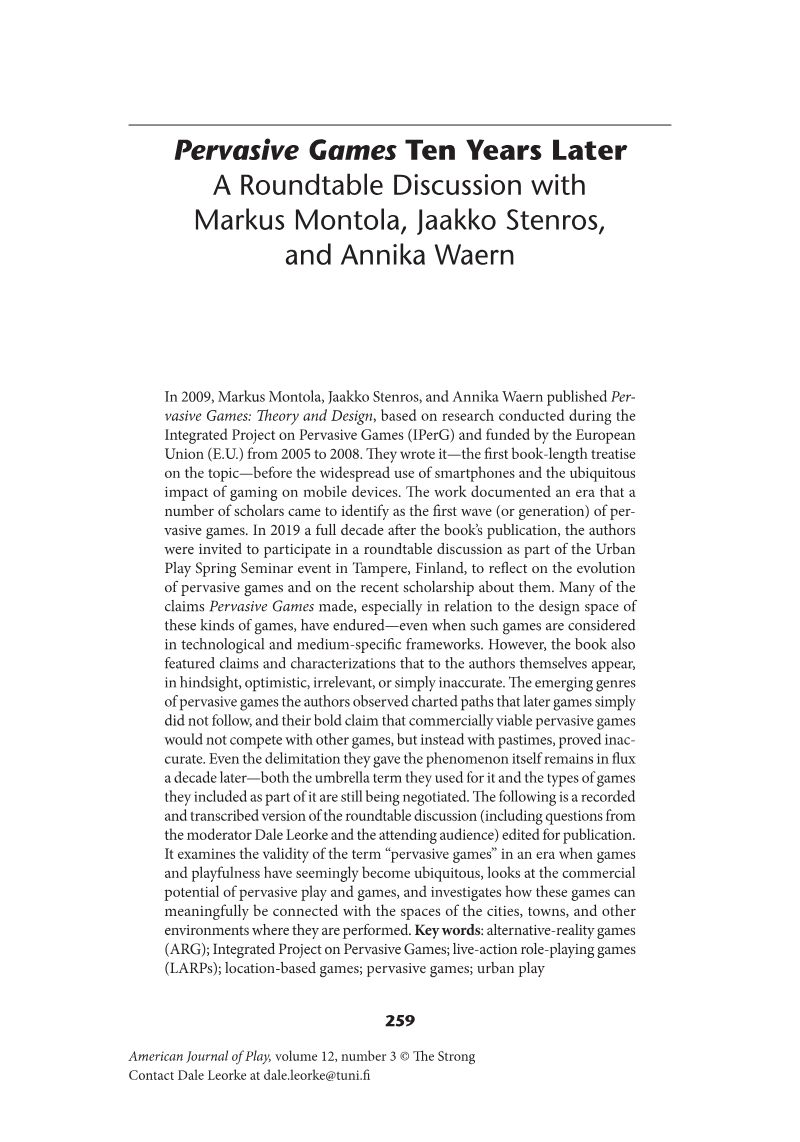
American Journal of Play · 2019
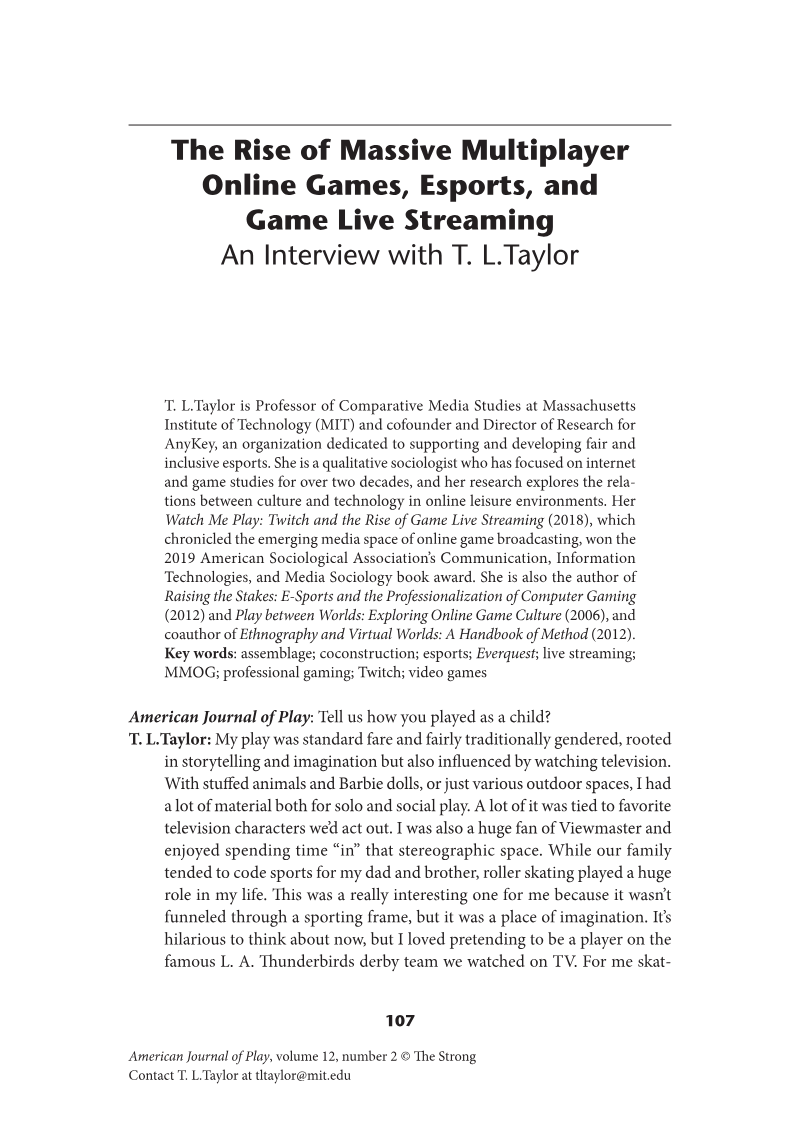
American Journal of Play · 2019
DiGRA · 2026