1 free read left. Create a free account for unlimited reading + AI research.
Create free accountArticle American Journal of Play
1 free read left. Create a free account for unlimited reading + AI research.
Create free accountArticleAmerican Journal of Play
Roughly 94 percent of the more than 125,000 listed IFPA pinball players are male.
Competitive pinball has long been shaped by a masculine culture, and this analysis argues that women's underrepresentation stems from hostile social environments and sexualized game design rather than any biological difference. Drawing on IFPA player data, the discussion notes that roughly 94 percent of the more than 125,000 listed players are male, and that a single woman, Helena Walter Higgins, held a place in the top one hundred world rankings until 2023, when three women reached that tier. The account situates these patterns within broader gaming and industry history, from 1950s pin-up imagery to the 1970s, when a large share of games from major manufacturers featured sexualized women.
The analysis traces how early marketing and community forums framed pinball as a masculine pursuit, alienating women and often reducing them to objects of the male gaze. It also recovers the contributions of Amelia "Millie" McCarthy, who organized women's tournaments beginning in 1976, years before the first modern official tournament, yet was largely omitted from historical accounts until recent archival and Hall of Fame recognition.
Gender-separated and inclusive leagues such as Belles & Chimes and Babes in Pinland are presented as central responses to persistent harassment and gatekeeping. Belles & Chimes is credited with substantially increasing women's participation in Arizona, reportedly reaching up to 30 percent of players at some Phoenix tournaments, though documented unsafe conditions at mainstream events remain a concern.
Growth in sanctioned competition, with over 10,000 IFPA events in 2023 compared with seven in 1991, has intensified scrutiny of designs such as Stern's Whoa Nellie! (2015) and the 2002 Playboy machine. The analysis argues that industry responses, including IFPA conduct rules, a manufacturer's removal of an offensive backglass, and more recent Stern titles that avoid explicit sexual imagery, indicate meaningful self-correction. The final assessment holds that women's leagues and the in-person, decentralized character of pinball offer stronger prospects than esports for confronting hypermasculinity and reshaping both game design and social play spaces.
Each row is a game or company this document names, each column a document, oldest first. A mark means that document names it. Select a row to see those documents.
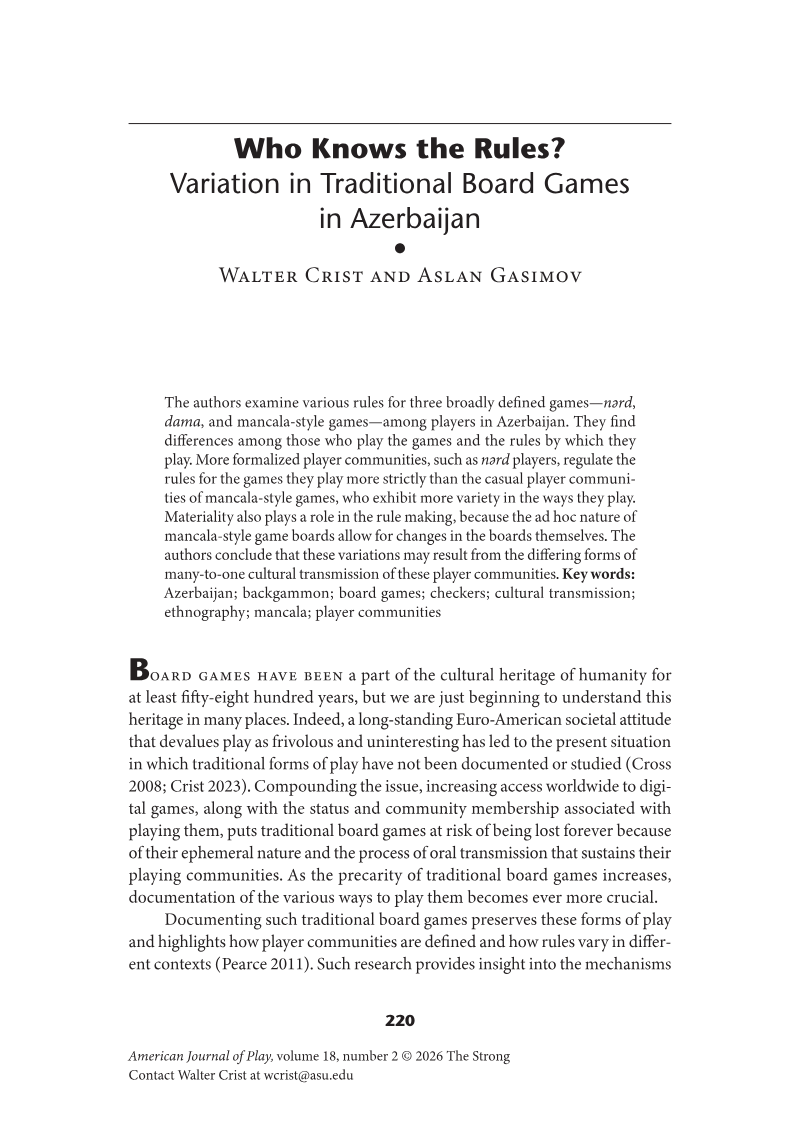
American Journal of Play · 2025
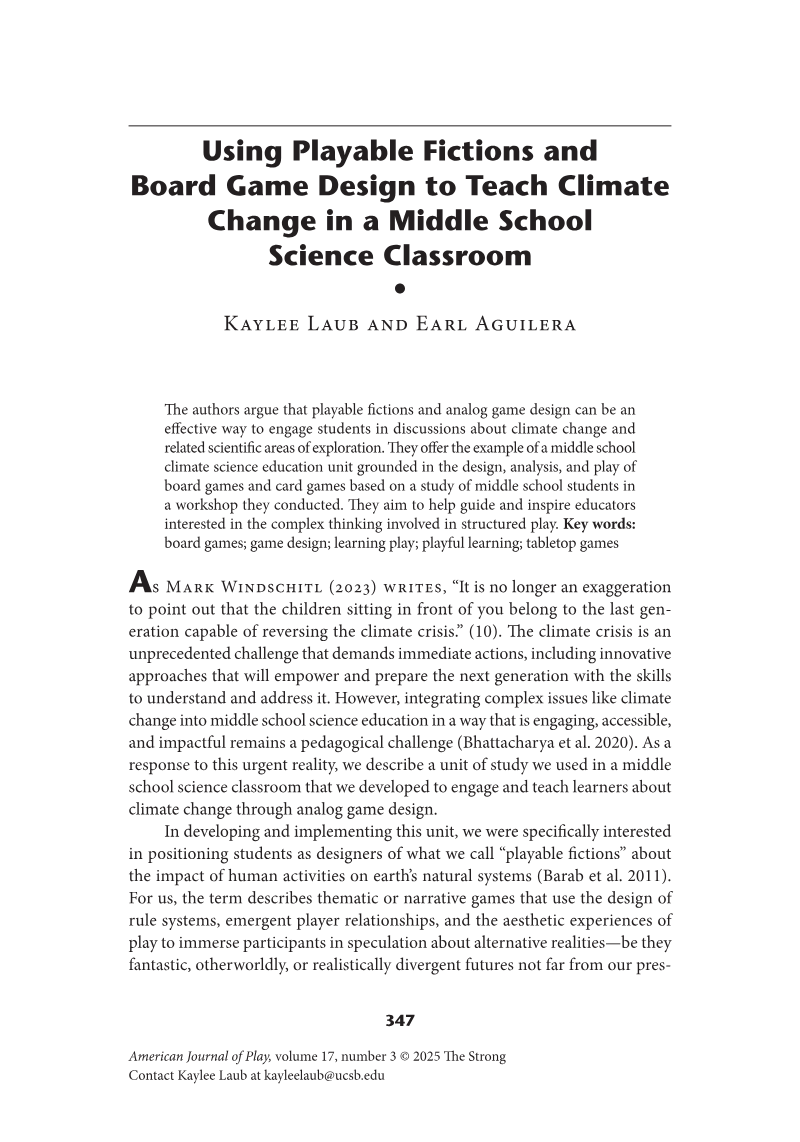
American Journal of Play · 2024
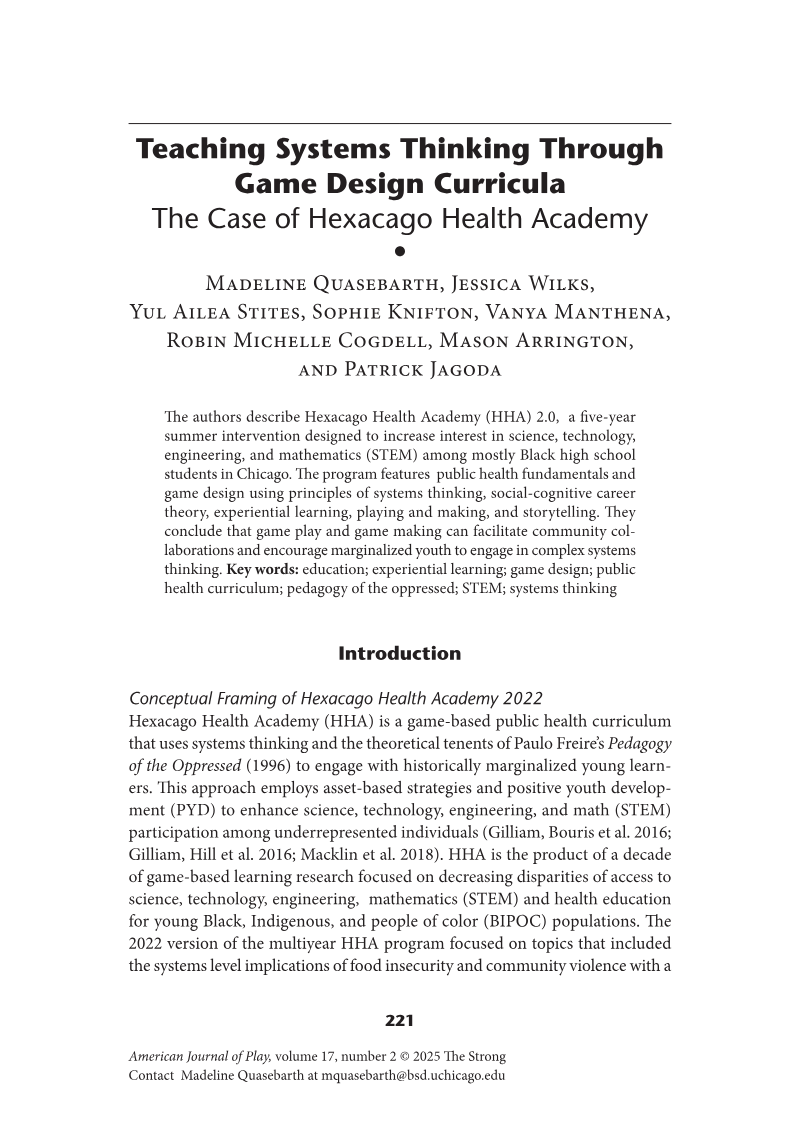
American Journal of Play · 2024
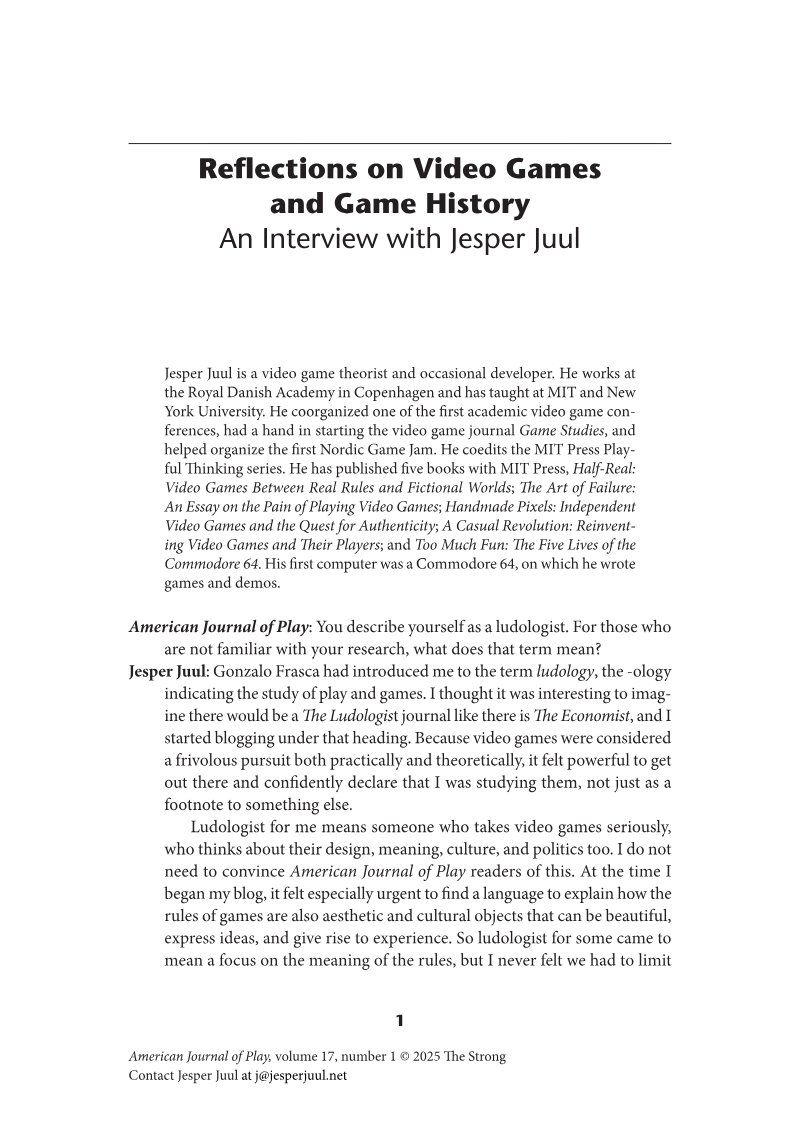
American Journal of Play · 2024
American Journal of Play · 2023
American Journal of Play · 2022
American Journal of Play · 2022
American Journal of Play · 2021
American Journal of Play · 2020
American Journal of Play · 2020
American Journal of Play · 2019
American Journal of Play · 2019
DiGRA · 2005