1 free read left. Create a free account for unlimited reading + AI research.
Create free accountArticle American Journal of Play
1 free read left. Create a free account for unlimited reading + AI research.
Create free accountArticleAmerican Journal of Play
A Climate Literacy and Energy Awareness Network survey found fewer than 3 percent of online climate materials met classroom standards.
This study examines how middle school students can learn climate science by designing their own analog board and card games, arguing that "playable fictions," narrative games that immerse players in speculative realities, make complex environmental topics more engaging and accessible. The authors ground this argument in a shortage of high-quality classroom climate resources, noting that a Climate Literacy and Energy Awareness Network survey found fewer than 3 percent of online climate materials met classroom standards. The work centers on eighth-grade science students, with a three-week workshop involving 149 students organized into 38 groups across five classes.
The instructional design combined game-inspired minilessons, such as trivia-style flip cards and social games like Two Truths and a Lie, with commercial board game analysis that taught students the core elements of game design: theme, goals, mechanics, components, and balance. Students moved through ideation, prototyping, and peer playtesting, which served as their main feedback mechanism. The authors frame this as an overarching "ethos of playfulness" rather than the isolated use of individual game features. Supporting activities included a digital water quality board game, a choose-your-own-adventure narrative on monarch butterfly migration, and an air quality action card, and the minilessons incorporated Indigenous traditional ecological knowledge, including perspectives on wildfires.
Student games addressed wildfires, air quality, and military environmental impacts, and survey responses from 137 participants indicated strong reception, with 94.2 percent finding the design process helpful for learning science and 92.1 percent enjoying their games. Qualitative coding suggested growing cause-and-effect and systems awareness, though the authors present these as illustrative rather than comprehensive findings. Framing the end-of-unit assessment as inquiry into students' conceptual understanding, they found game prototypes revealed systems thinking and knowledge gaps more effectively than recall-based tests, while cautioning that this approach should complement rather than replace objective measures. The authors also acknowledge challenges, including pressure to return to standardized testing, public controversy over climate science in a conservative rural district, and the need to center DEI issues. The paper concludes that game design positions students as content creators and modelers of complex systems, while offering qualitative observations rather than quantitative outcome data.
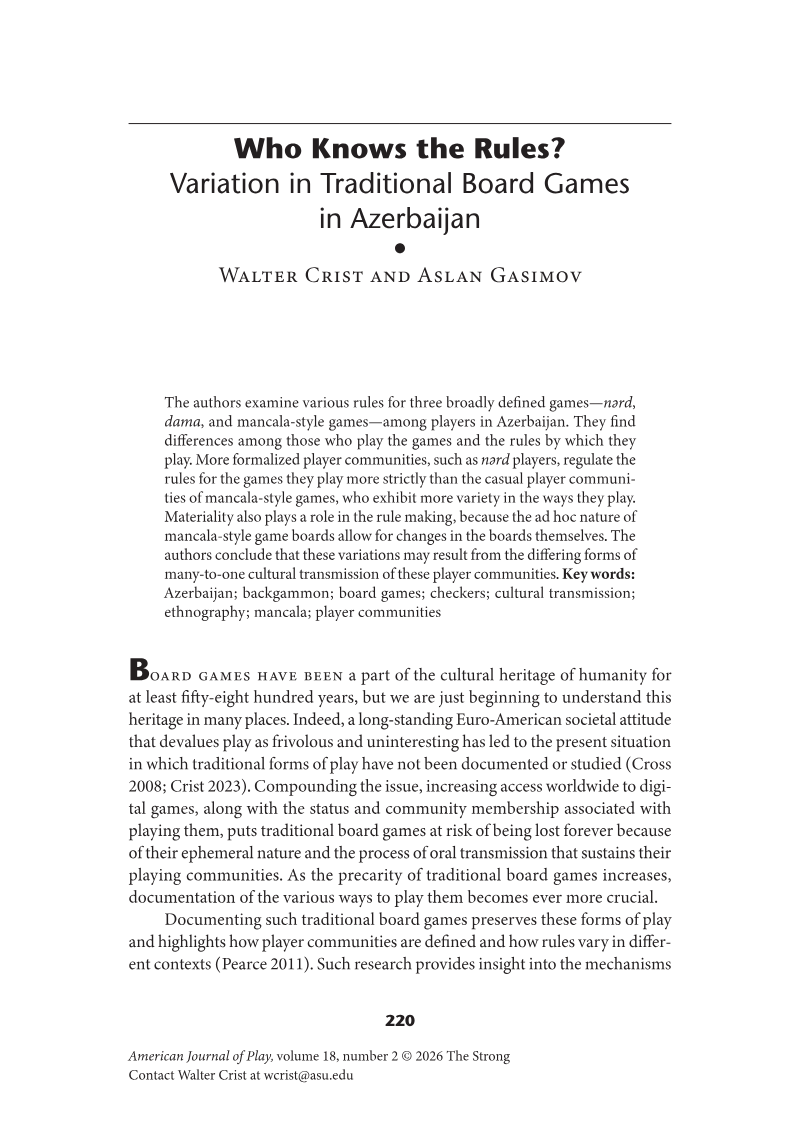
American Journal of Play · 2025
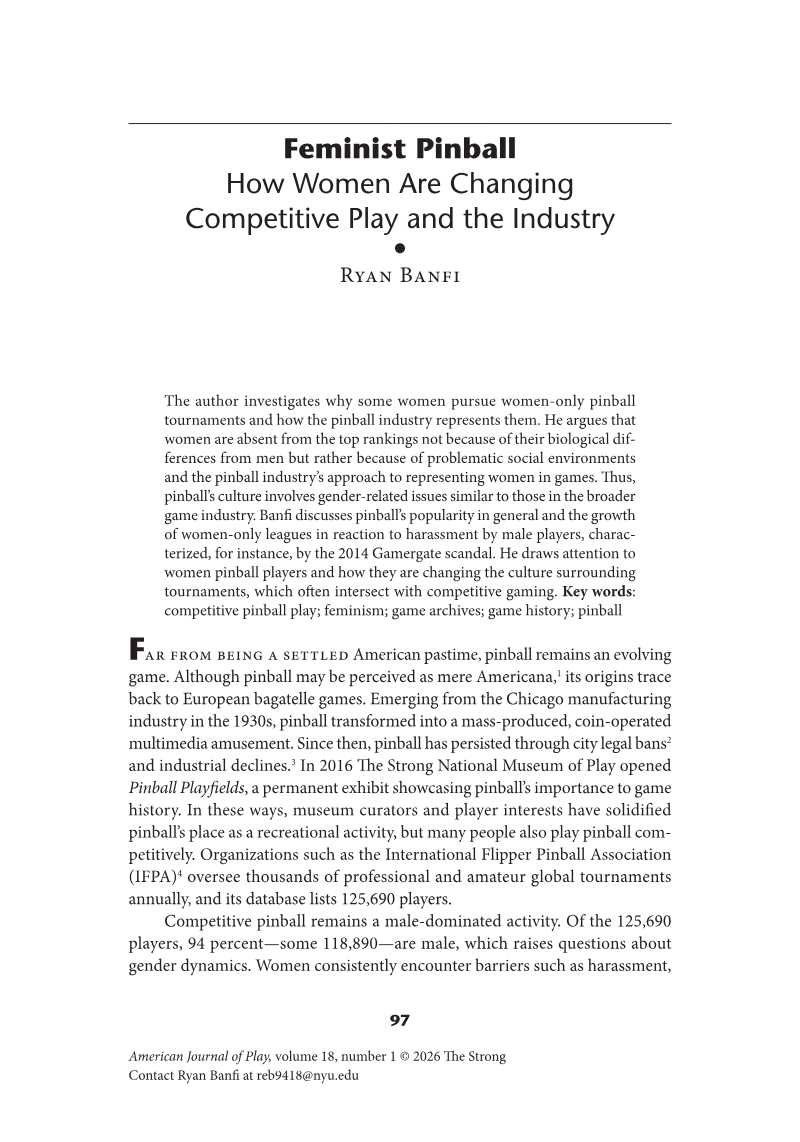
American Journal of Play · 2025
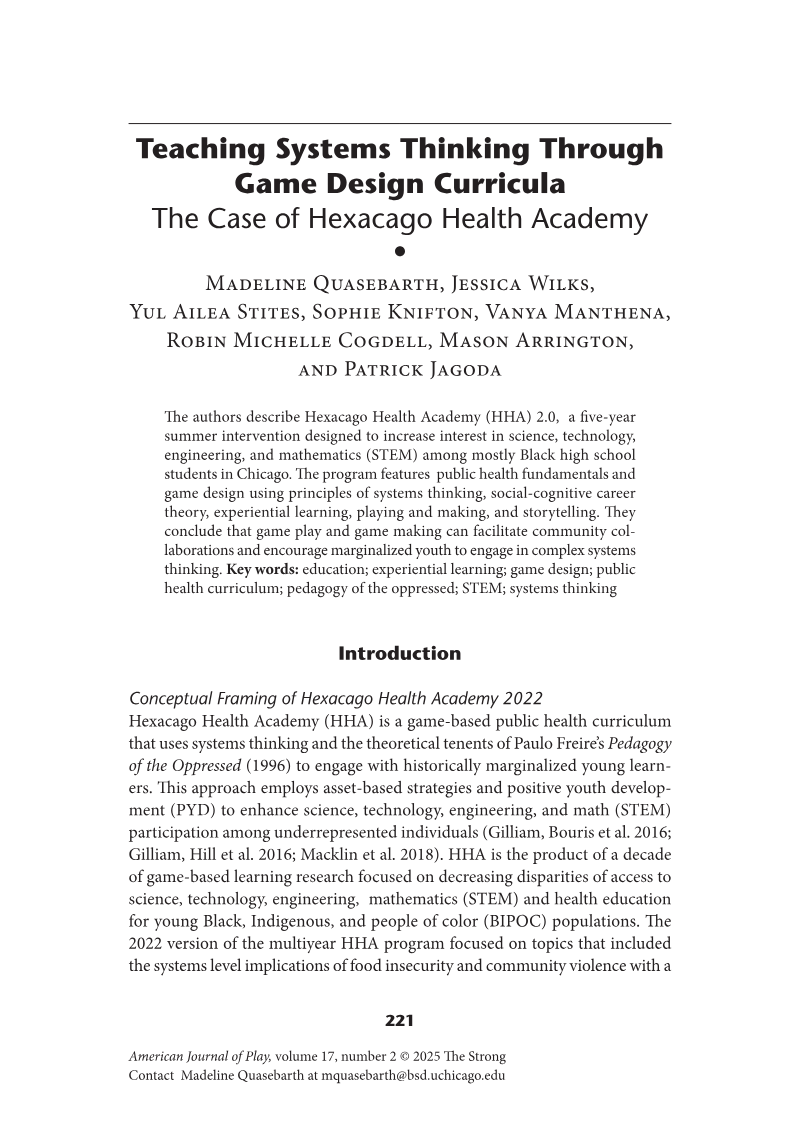
American Journal of Play · 2024
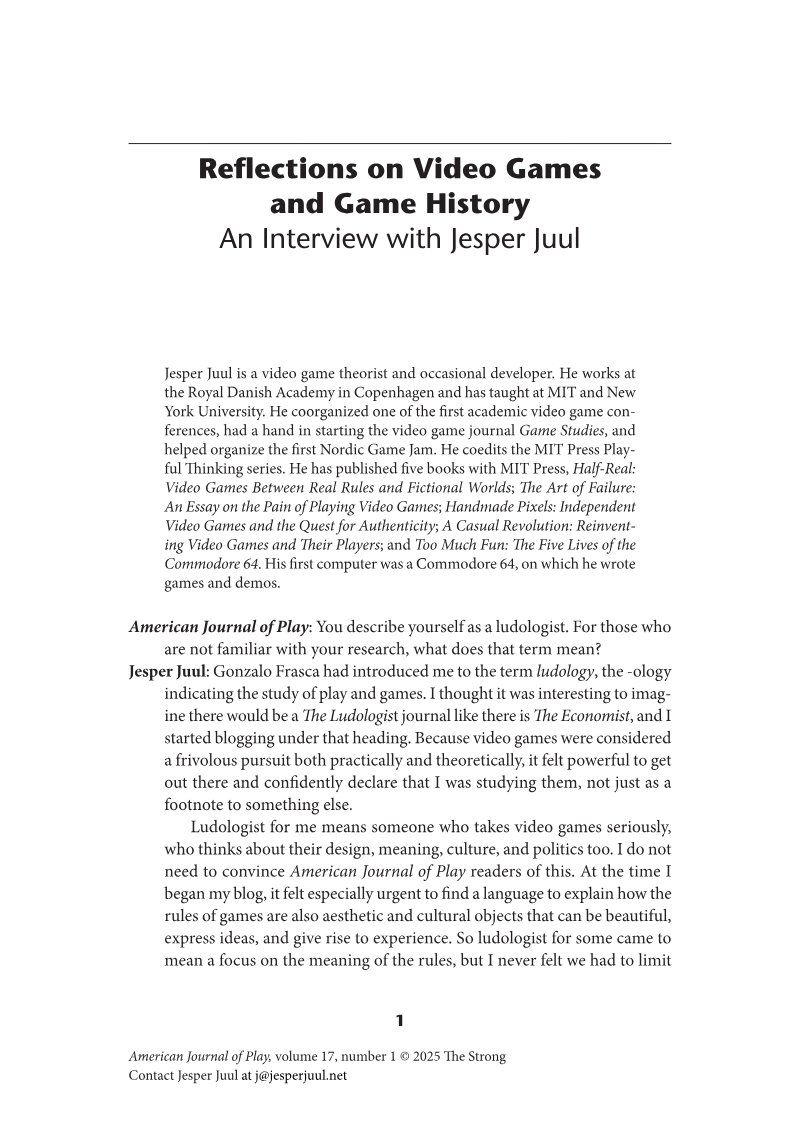
American Journal of Play · 2024
American Journal of Play · 2023
American Journal of Play · 2022
American Journal of Play · 2022
American Journal of Play · 2021
American Journal of Play · 2020
American Journal of Play · 2020
American Journal of Play · 2019
American Journal of Play · 2019



European Conference on Games Based Learning (ECGBL) · 2026
European Conference on Games Based Learning (ECGBL) · 2026



European Conference on Games Based Learning (ECGBL) · 2026