Loading the document
1 free read left. Create a free account for unlimited reading + AI research.
Create free account
Huawei takes us through the digital ecosystem and user data
Key insights
6 takeaways- 01AppGallery focuses on a curated content strategy to foster a trust-based user relationship, aiming to improve click-through rates and monetization compared to high-volume, saturated distribution channels.
- 02Huawei’s AppGallery ecosystem delivers a 26% lower cost-per-install (CPI) than the Android average and a 20% higher effective cost per mille (eCPM) for publishers.
- 03The platform utilizes AI-driven recommendations across an integrated hardware ecosystem—including smartphones, tablets, PCs, and wearables—to drive user engagement beyond simple in-store banner advertising.
- 04Huawei employs a privacy-first architecture for services like Petal Search and Petal Maps, utilizing privacy-by-design principles that align with GDPR requirements to prioritize user preferences over personal tracking.
- 05Developers are encouraged to move beyond simple game porting by creating unique, story-driven incentives and exclusive in-game items to foster viral engagement and long-term retention.
- 06The company differentiates its service model by providing localized, hands-on support teams that work directly in developer offices to assist with debugging and campaign optimization.
Ask AI about this video
Transcript
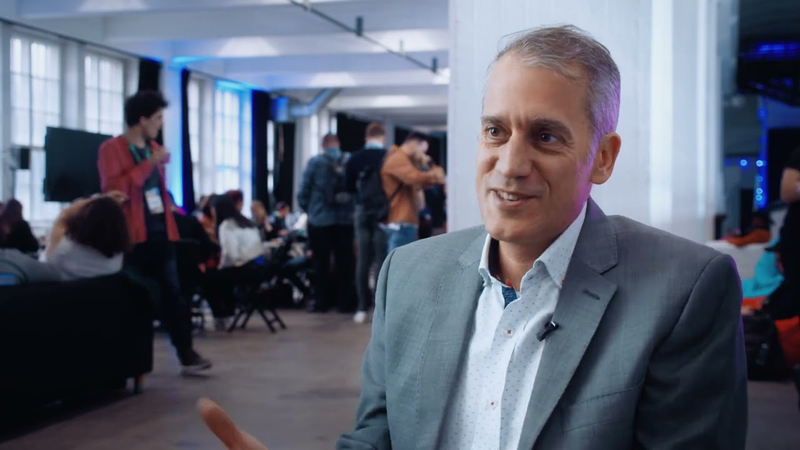
foreign we are delighted to be joined by Jaime from Huawei how are you doing today today is a great day we always like to come to Games events because we find this industry very Lively there's a lot of innovation out of passion and clearly among our favorite verticals that you can see in Innovation well it's been really nice to come back to events full stop after the last few years and I understand you've done a talk earlier is that right correct correct thing we made a talk based on a need that we see from many developers and it's the the struggle with the saturation of the mainstream distribution channels and many of them started to look at alternative app stores like app gallery and they would like to understand better how it works how to succeed in this store so we made a dedicated talk today yes it's interesting because when we talk to developers we hear one of the
big challenges is visibility is getting your apps noticed precisely because there are so many around and the App Store or saturated and you are you finding you're finding that from your side of the of the page as well the thing is you if you as a store are meant to have all the books of the world it is very difficult to find one specific book but if your positioning is different and you only want to have the quality books of the world then suddenly it's much easier to surface the one you're looking for so in that sense that could be a difference between Huawei and other stores we are not interested in having every content and every every clone game from others but more on those who provide value to the users who translate into engagement which means we are demanding into the content that comes into our gallery and our users appreciate it as such we create a trust connection with a user and our recommendations have a much higher click-through rate if you want to measure it with attribution marketing
and we grow a very healthy relation with the users that translates into a big engagement with the content of our store it can be very tricky especially when it comes to things like curation like choosing the right apps that you want to be pushing versus other ones I know that Google Play was seen as something of the Wild West when it first came out and any anyone could publish anything whereas Apple has always had that kind of Walled Garden very strict very curated approach is that something that you feel how do you feel Huawei tackles that differently from the other the other two so there is something fundamentally different between any other App Store from the major ones and the Huawei app gallery those stores they base mostly their recommendation on banners in the store because that is the inventory they have in the phone Google Play lives in the phones of others mostly Samsung xiaomi and so on Huawei doesn't have Google play but all others they do so it has to advertise the content inside that
environment inside the games and the App Store Huawei owns the full ecosystem so it means that our AI detects what is the best the optimal slots at the right time for the user to see the right ad maybe they are browsing with Huawei browser maybe they receive a push notification but it is different Windows optimized for the best conversion rate as such we for example as a consequence we have a CPI 26 lower than the Android average in our platform it means that developers don't need to spend so much to capture the user on our ecpm what Publishers get out of our games is 20 higher than the Android average which means that Publishers can monetize much better because of that engagement we create with the users so all in all to summarize we are creating not a store but an environment an ecosystem connected that provides among other things apps and games but we've
been living through unusual times you talk about like reducing the the cut that's taken and of course the pandemic you know changed a lot of things and affected everybody in many ways but specifically end users found themselves Maybe struggling and losing jobs less money available and now we've got this kind of global economy which seems to be a little bit teetering and times are kind of hard for a lot of people so have you noticed a change in the last few years of like the behavior of users or the behaviors of those who are trying to publish apps and what they're asking you for has that changed over the last few years so the behavioral years is changing in many different dimensions the first one is that the smartphone is no longer the king of the Christmas gifts smartphone market is stopping up and we know that very well because we sell phones which means that people keep their phones for longer and they start to focus on other windows smart watches are picking popularity the PC and the tablets are taking the reality since the pandemic due to the remote working picking up and and the
trend of as the remote classes Etc that is the beauty of having an ecosystem of services and devices interconnected app gallery recently launched in PCS in Windows pieces which means that you can play your favorite mobile games from a gallery into your Windows laptop but the developer doesn't need to make any extra effort the game runs on Android inside the Windows laptop we have done odfl so in that sense we're adapting to the new trends that the users are are requesting you can play music apps in our watches directly without bringing the phone with you so all that enables a better connection with the user that don't need to be depending on only one platform one screen there are changes that we see on that another change is that the multiplayer connectivity keeps growing so um people already before the worst the world communities and there were people playing online and having friends online that never met face to face I
think with the normalization of the video conferencing this has even multiplied temperature before so we see sometimes in games we see uh people falling in love when they play multiplayer games and then that translates into the real life I'm not the other way around so yes I think normalization of the digital environment is something um it's a weird I think people are a lot more familiar with it a lot more comfortable and a lot of their social life has moved into that territory which has changed the way that people treat I guess their data as well because yes previously it was a much more easy thing to to take and collect and I think people maybe didn't realize quite what they were putting online and also the value of what they were putting online yes and that value has become basically what the industry runs on these days and with gdpr coming in and changing the field a little bit how has that impacted you over at Huawei so the question is is very good for one reason we are
absolutely customer-centric which means that when we designed our ecosystem it was already privacy by design it means that that when gdpr came in we barely had to change anything and then we see other ecosystems having issues with that but we had zero issues with ddpr since the start because we did it to be already um respectful with privacy to give you an example we have our own search engine which is called petal search it is Incognito by default our own Maps service which is petal Maps it's Incognito navigation we don't want to track anyone we don't care where you live if you want you can store your location but it is not how we get the data we get data not based on your personal information but on your preferences so as a consequence would our ads are not spam they are trusted recommendations which makes the CPI or much better the click-through rate
really strong it's like a trusted friend that would say why don't you try this game you would listen to that rather than a Spam saying this game is good out of out of the blue in the middle of an article that you're reading because the problem for developers when that happens is that yes people might eventually download your game but probably many of them would never open it so CPI only gives you the first step of the funnel which is getting the game into the hands of the user but the activation of the game is what brings the magic and that is difficult to achieve in none integrated channels like ours so if you were kind of already I guess equipped to deal with that kind of change from the outset it hasn't had a huge impact what is the end of 2022 and then 2023 look like from Huawei what do you have to look forward to or what changes are you planning to implement in the future so what we're focusing on is on value proposition for the users for example as a developer if you have your game on
Google Play and just bring it to app gallery and ask us to promote it the first question we would ask is okay what is the story today if the story is well this game was here now it's here it's not a good story but if the game comes with something special there is a special character skin collection or there is some in-game coins for those who open the game suddenly you're going down the final of activation and for us it's much easier to convince the user to play your game if there's a story imagine you receive a notification saying great game play or 20 euros in-game gift for you today which one would you click faster so that's what we mean with story and it doesn't cost you any money because it's in the inverter currency but it's a story for the user with value makes it viral influencers or YouTubers or streamers they will talk to the community about it and suddenly you're creating a halo effect around something that barely cost you anything and that is I think what we are focusing
on the real value to the users and avoiding spanning with cologne stories that don't have any sense well you've already spoken today and it's given you a chance to I guess sort of interact directly with the global Community which is the whole point of these things after two years of Zoom conferences and all of the rest of it what do you feel are the differences or or benefits or things you notice when you come to real physical events the real-time interconnectivity the the non-verbal language is amazing so while during my speech there were some questions I could immediately see who was interested who was going to follow up after our speech and talk to us because you can perceive easier the how the trust grows if the people are near you than through a through a conference screen in that sense that is one of the reasons why Huawei decided to split our team into all the
European countries we have people on the ground in any major country not everyone in an ivory Tower in one headquarter because people need to meet they need to be face to face together the trust as an example when a developer has issues and they contact another major store usually they get sometimes a boat answer or a human answer some hours later from another continent we send physical people to the offices of the developer to debug sitting on the same table no matter where where you're based so that kind of premium treatment we have we heard from developers of the size of play roots for example they have never seen anything like that they said well maybe the traffic is not the volume of traffic is not the same as in Google Play for example as a matter of massive volume but the value of each user is very interesting and the effort to come to the platform is very low because of the support you receive the constant help
another example to illustrate many ad networks basically allow you to Bid and Win the exposure we are an ad Network and an agency we will Design the campaign with you we will say well your game works very well in this kind of markets this kind of days these audience try these tag words Let's do an A B testing and compare the results we plan the campaign with you for free so we want the game to succeed because then the user is happy developers happy we are happy that is the all-wing situation [Music] foreign
Summary
Huawei positions its AppGallery as a curated, high-engagement alternative to saturated mainstream distribution channels. By prioritizing quality content over sheer volume, the platform fosters a trust-based relationship with users, which results in higher click-through rates and improved monetization for developers. Unlike competitors that rely primarily on in-store banner advertising, Huawei leverages its integrated ecosystem—spanning smartphones, tablets, PCs, and wearables—to utilize AI-driven recommendations across multiple touchpoints. This holistic approach reportedly yields a cost-per-install (CPI) 26% lower than the Android average and a 20% higher effective cost per mille (eCPM) for publishers.
The company emphasizes a privacy-first architecture, noting that its services, such as Petal Search and Petal Maps, were designed with privacy-by-design principles that align with GDPR requirements. By focusing on user preferences rather than personal tracking, the platform aims to deliver relevant recommendations that function as trusted suggestions rather than intrusive spam. This strategy is intended to improve not just initial downloads, but long-term user activation and retention.
Looking toward future growth, the focus remains on providing tangible value to users through collaborative campaigns. Rather than simply porting games, developers are encouraged to create unique, story-driven incentives—such as exclusive in-game items—to drive viral engagement. Furthermore, Huawei differentiates its service model through a localized, hands-on support structure. By deploying teams directly to developers' offices to assist with debugging and campaign optimization, the company seeks to provide a premium, personalized experience that contrasts with the automated, remote support often found in larger, more generalized app stores.













Comments