1 free read left. Create a free account for unlimited reading + AI research.
Create free accountArticle Deconstructor of Fun
1 free read left. Create a free account for unlimited reading + AI research.
Create free accountArticleDeconstructor of Fun
They rely primarily on brand or scale, rather than the network effects that drive 70% of value in the broader tech sector.
Game companies lack the durable defensive moats that define firms like Amazon, and this 2020 analysis by Michail Katkoff examines why and what studios could do about it. Using the NFX venture firm's framework of four defensibilities (economies of scale, brand, embedding, and network effects), it argues that most game companies have strong competitive advantages but weak long-term defensibility. Former FAANG-like game names such as Zynga, Kabam, Machine Zone, and Supercell illustrate how quickly leaders can decline.
Applying the framework, the analysis finds scale offers limited protection because entry thresholds are low: AAA budgets of roughly $20M-$50M and mobile user acquisition budgets as small as $3M can compete, against Amazon's capital expenditures of over $11B annually. Audience data and cross-promotion are eroding as Facebook and Google targeting shifts toward broad approaches, and Fortnite's decline shows audience scale is not permanent. Brand is the most common defense, lowering marketing spend (Supercell perhaps at 10% or less of bookings versus 30%-40% for typical mobile companies, by the author's rough assumptions), yet Atari and Rovio show it is insufficient alone. Embedding appears mainly in engines and tooling, and network effects are rare, with Roblox, Epic and Unity's engines, and AppLovin's ad network as exceptions.
Surveying candidates for centuries-long survival, the author names only Tencent with confidence, given its diversified holdings. Nintendo and Activision/Blizzard rank above EA, Riot remains unproven, and public mobile players Zynga and Glu show inconsistent profitability. Supercell, though arguably the strongest mobile company outside China, is also in decline.
The recommendations center on three defensibilities: original IP that lowers marketing and production costs and travels across genres and platforms; organizational advantage, exemplified by Supercell's small, decentralized teams and a culture able to change; and scale in technology infrastructure, particularly live operations tooling as free-to-play makes continuous optimization essential. The author concludes that no Amazon of gaming exists yet, but durable game companies are achievable.
 GoogleCompany · United States · founded 1998 · 2,296 documents
 NintendoCompany · Japan · founded 1889 · 1,821 documents
 RobloxCompany · Game company · 1,175 documents
 Tencent HoldingsCompany · China · founded 2003 · 1,147 documents
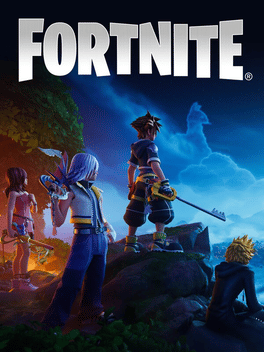 FortniteGame · Epic Games · 2020 · 1,131 documents
 Unity TechnologiesCompany · Technology · 1,124 documents
 ActivisionCompany · United States · founded 1979 · 784 documents
 SupercellCompany · Finland · founded 2010 · 677 documents
 AmazonCompany · Technology · 555 documents
 Riot GamesCompany · United States · founded 2006 · 531 documents
 AppLovinCompany · Technology · 462 documents
 ZyngaCompany · United States · founded 2007 · 401 documents
Each row is a game or company this document names, each column a document, oldest first. A mark means that document names it. Select a row to see those documents.
Deconstructor of Fun · 2026

Deconstructor of Fun · 2026
PocketGamer.biz · 2026