1 free read left. Create a free account for unlimited reading + AI research.
Create free account
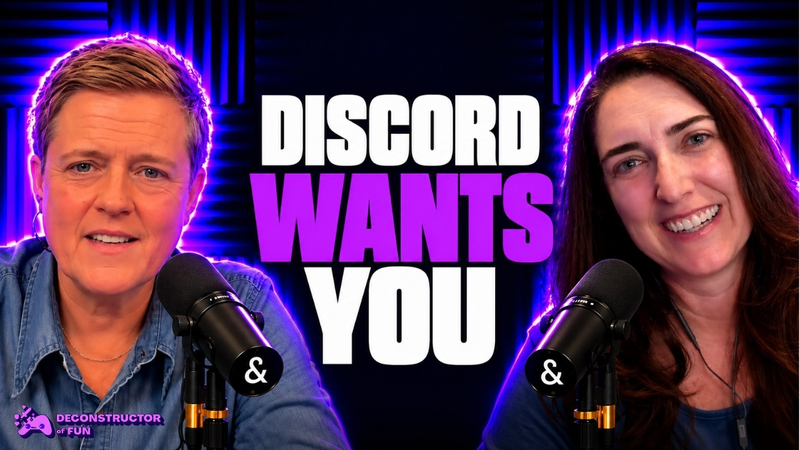
Why Friends Keep Players Longer Than Features Do I Jules Shumaker, CRO of Discord
Key insights
6 takeaways- 01Discord serves as a primary discovery channel for the gaming industry, with one-third of its 90 million daily active users finding new titles through their social circles.
- 02Integrating social SDKs increases day-28 player retention by 31% and adds an average of 1.5 play days per month for connected users.
- 03By leveraging user-shared gaming data, developers can balance new user acquisition with the long-term retention of existing communities.
- 04Social commerce initiatives, such as gift-focused purchasing models, are effective strategies for expanding game reach and monetization.
- 05The platform’s advertising model, including rewarded experiences, maintains high conversion rates across both free and paying user segments.
- 06Developers can utilize a self-serve ad manager to optimize return on ad spend and specifically target the re-engagement of lapsed players.
Ask AI about this video
Transcript
[music]
Hello everyone and welcome to Deconstructor Fun Deep Dive interview series. I am Jen Donahoe. Everyone knows Discord. 90% of Discord users play games and almost all of those play games with friends. In our conversation today we'll focus on how it can be used for growth and go beyond how you might specifically and normally think of the platform. So my guest today is Jules Shoemaker, Chief Business Officer at Discord. Jules leads Discord's global business team and their partnerships with game developers and advertisers. Before Discord she was a Chief Revenue Officer at Unity and before that she ran global advertising at Zynga where she helped pioneer rewarded ads in games. I know all the ad mon people are cheering you right now and I have to mention your role at EA. That was early game advertising where we first overlapped and shared a boss. So that's pretty fun. And she's also an advisor to the ESA and a former IAB
co-chair. If you know anything about ads that is the basically the government of ads. So Jules, please welcome to the show. I am so excited to have you.
me. I'm super thrilled to to be here and always good to catch up with you.
Yes, agree. I'm so excited. So we get to tell your story in the beginning which I'm really excited about because so many people, you know, look up to women who have accomplished so much and and you were definitely one of those. So you've been in the room for some of the biggest shifts in how games make money. Early digital ads at EA, rewarded ads at Zynga, also Unity. I don't know if were you there at the birth of Vector or at the transition? I don't remember the timing.
The transition.
So walk me through your your journey and how did you go through all of this to determine that Discord was the next place that you wanted to be?
These are great great fun question. How how fun to talk about myself, right?
[laughter]
As as I like to say, stop Stop. Um
[laughter] okay, so here's the deal. I I had a wonderful and unusual start to my career. I was a D1 full scholarship golf athlete and I had dreams of playing beyond that. And so after university, I started to play professional golf and I had to figure out how to make it work because it's it's hard to make it work financially. So I thought about, well, you know, the leading players have big agents and they get these big contracts. And so how is little Jules going to make this work? But I was agile and thought of a business model to sell shares in myself and have people recoup based on my earnings a certain dividend against the shares. I sold it as a Shoes Crew LLC. And I went out and played golf around the world. And by the time I was 27, I'd played golf in over 30 countries. I played on the Asian, European, US tours. I wasn't good enough to be top 20 in the world. I was good enough to be top 100 in the world. But if you knew anything
about golf, top 100 in the world doesn't make as much money as we all do in business. So I thought, ah, got to go do the same thing. So I pursued something I would know, which was sports, and I found my way to NBC Sports. And I helped them think about the business model in the new up and coming worldwide web. So in the late '90s, I ultimately found my way to FIFA World Cup.com and I was head of revenue there, which was really innovating business models to kind of marry what was happening in television and print into this new internet world. And that's where I met John Riccitiello at Electronic Arts because I was running FIFA. And he was so incensed that I made hundreds of millions in revenue on this not very gorgeous website. And he had this, you know, high pixel count video game, number one video game in the world, and not only did he not make ad revenue, he had to write checks to the
brands that were in the games.
Mhm.
So, that's how I started my career in video games because John hired me to help change the business model from one where we licensed brands to one where they paid us.
Got it.
And so, I went on that journey and helped, you know, build EA's ad business and licensing, evolving their licensing outcome to be more about co-marketing and promotion and driving user acquisition for the players. Ultimately, joined Zynga to help figure out business models in social and mobile and how you balance in-app purchase with advertising and thinking about the player at the center. And then, with Unity, you know, it was really about figuring out a business model on an engine that was largely unprofitable,
Mhm.
but was doing such good in the world. At the time I joined, we were probably 55% of the world's games were made with Unity. By the time I left, it was like 76% of every mobile game made with Unity. And
that led me to finding Discord because I I thought, you know, when I had the chance to meet Jason and Stan and think about this decade company who had put the user beautifully at the front, but had, you know, only driven revenue from users. And I got the opportunity to help grow business revenues here and think about everything from what does our social commerce outlook look? How do I help developers monetize? How can we grow game developers user base through advertising? So, that's why I accepted the challenge. It's a perfect blend of a platform that keeps the user at the front and center, but also knows about how to create value, and that's my responsibility to create value within the business economy of games.
Oh, I can see that. I can see how that all tracks. And I know that you were a professional golfer. I didn't know you sold shares of yourself. I missed that story. I wish I would have
had
didn't make much money.
Oh.
[laughter]
Well, you know, I'm sure the piece of paper is fun to put it on the wall.
The the the quarterly newsletter was a good time.
Oh, the quarterly newsletter. I I I could have used that to pay for college. I was a goalie at Washington University in St. Louis. So, you know, college soccer. So, I can relate, but I was, you know, in my day, like I was never good enough to go pro in women's soccer in the '90s, right? Like there were just you know, you could maybe I wasn't good enough to be on a World Cup team. So, I'm excited you got to live a little bit of the dream.
I lived a little bit of the dream, and then I think as you probably know, actually Forbes launched a a report on this not too long ago. Something like 65 to 70% of Fortune 500 C-staff women played sports.
I ironically just did a post on this on LinkedIn this week. Someone from my university found the very first picture of our women's soccer team, and
the story was these two women went into the office in 1989 and said, "Why don't we have a women's soccer team, and what can we do to make it happen?" They didn't just expect it to fall in their lap. They went and made it happen, and 3 years later I was on that team, and then a few years later we went to the NCAA playoffs. And I think what I learned from that story is you have to go out and get it. And so, I over-index on hiring people from team sports. And it's almost like too much, but if if you have a solo sport and then team sports, because you have to have the dedication to do that.
So, I I didn't know the Forbes stats. So, I'm going to I'm going go update my LinkedIn.
should probably get the actual stat, but it was pretty compelling. And I I printed it out and left it on my boss's desk.
[laughter]
Yeah, no, I did there's something about athletes and also some folks from the military as well. Okay, all right, back to Discord. Sorry. But I think it is important to talk about leadership journeys and what it takes to be a
leader and what it takes to go across all of the different companies cuz so many people ask me these questions all the time and it was great to hear like some of the things that that you employed in your journey.
Eiffel Tower, iconic. Tower of London, historic. The [music] two towers, simply epic. But none of them tell you anything about mobile app intelligence. Downloads, [music] revenue, active users, and my personal favorite, weekly cohort and retention. Get the real story, get [music] the real data, get Sensor Tower today.
Satori. It's the Japanese Zen Buddhist term for sudden enlightenment. That flash where everything clicks. We're told that Heroic Labs team had theirs when [music] they realized that most studios run live ops like a horoscope. Vague, kind of generic, same advice for everyone. So, they built Satori. Real-time experimentation, player-level personalization, events that actually respond to player behavior.
Say sayonara to your old live op stack
[music]
and konnichiwa to Satori from Heroic Labs.
Guessing where your users come from? That's so 2010. AppsFlyer is like having a cheat code [music] for mobile marketing. Pinpoint attribution, real-time insights, and analytics that actually make sense.
[music]
Stop flying blind and start flying smart. AppsFlyer, because your data is your best co-op partner.
[music]
Okay, so let's get to Discord. I know most people know about it. I mean, I I actually went in my Discord and looked up I've been a member since like June of 2017. So, I'm almost at 10 years myself being a nerdy gamer person. You know, what is Discord and how should developers think about the platform beyond what we just know it, which is hey, I go and chat with a bunch of my friends and play a game together. What is it that devs should know about where you are and where you're going?
Well, I think you start from the epicenter of this purpose-built platform that naturally aggregates gamers. That they are already here. And so, what we love seeing is developers and publishers who have a very specific Discord strategy. They're able to say and know, you know, 90 million DAU of which 70% play games with three or more friends every week. Think about that stat. So, what do we know about friends and playing? It's It's a viral way you discover. A third of Discord players say that they find their next game from their friend. We know they're already there playing with their friends at least one time a week. 70% of them one time a week with one or more friends. And the second factor of 30% of them
finding new games through their friendships means it's kind of like the new world water cooler in this world where we learn. So, I think about it as, you know, get in there, get your dedicated um Discord strategy, be a part of the community where players all already are, and then leverage their friendships, which is also yours. Like as a game developer, that's my user as well. Like we're not competing over that user. We both want them in your game and playing, you know, and connecting on Discord socially.
What is interesting about what you're saying is there is this organic nature to the platform that is there itself that, you know, and thank you for sharing some, you know, interesting data points. I think it's great I mean, we all know that I think it's the 90% of the audience are gamers is one of the stats I've heard about about the audience. I mean, I think we all know that it's there. What has been challenging in the past is how do we start to leverage that? How do we start
to unlock kind of the magic of the platform? And so, you know, in my 10 years as a member, I've actually seen the role of the platform evolve over time. So, how do you see it fitting into the broader gaming ecosystem as it's evolved from just kind of the beginning of hey, we're just chatting and now where does it get to as you're going forward in your own planning?
Discord feels very responsible that we are in the business of value creation in the game industry.
Mhm.
So, how how do we do that? We already talked about the player value, right? We are a mechanism for you to connect with friends and enjoy and learn about what game you're going to play next. So, that's the user value. The developer value is I can build my community on Discord. I can have robust communication with that very community. That's my epicenter fan.
Mhm.
And most people do that by claiming
their server, building a server. As a matter of fact, I think it's 30 plus percent of all non-launched games build a Discord server to start the virality of their community before they even go live.
Wow, third. Wow.
Right. So, that's kind of that from the platform up. Then if I think about more assertive player growth for game developers. We love it when we see game developers recognize that the player who's in the game and easily connecting in and out of Discord with their friends has higher retention value. So, we know in games how hard it is. You work so hard to find these players, pay for these players, get them into your game. And when developers use what we call social layer or an SDK for our social communication, which allows players to have invites and link directly into their Discord friends into their game
play, helps their Discord friends see what they're playing so they can join, those players have Let's see, what's the retention? 31% increase in D28 retention. 31%. Jen, I've been in the game industry a long time.
That's a lot.
For free, you can simply increase by adding social layer the retention of your existing user base.
This is what the SDK inclusion because I know that, you know, including an SDK, I can't tell you how many times I go across the hall to the engineering team and they're like, "Oh, why do you want me to do this?" I think the answer is 31% increase in retention for your D28.
I think you're right. The developer across the hall might be disappointed, but the CFO is going to be really happy because they know how much that marketing budget was. The other fact is I think we say 1.5 additional game days a month for linked
players as compared to non-linked players. So, now you're going into the realm of okay, we retain them at a higher rate and they played with us more, which I'm sure translates to bottom line. I mean, Jen, you know in a heart I'm a salesperson. And and I think again, in my career, I've never sold something that was this had this high of an ROI, and this product is free. So, the best in class are going along on this. You know, Marvel Rivals, Valorant, we've got Call of Duty going live, Battlefield. I mean, these smart game makers are recognizing that connecting the social tissue of Discord into their player base and allowing it to be seamless is increasing retention and driving increased engagement in their game. So, what's in it for Discord? Why would we do this thing that that we don't earn money from
and that costs us money? We have to support it, we have to educate developers, we have to help them integrate with our solution architects. And, you know, so the truth is the more time people play spend time playing, they also spend more time on Discord. So, it is it is truly mutual. Like, very rarely do you have the exact same goal as a partner. And we both do. I'm not trying to steal the user's time away from the game maker. I'm trying to have that player spend more time with that game maker because in turn, they also spend more time with us.
I like that mutually beneficial point. I hadn't really thought about that before because so I used to be at Riot, and when I saw that Riot did a deep integration with you, I was actually kind of shocked because when I was there, I was trying to get them to put an SDK of like Google Firebase, and they were like, "Ooh, I don't know, Jen. Google's kind of scary." I'm like, "It's Google, guys." And so, getting any third-party tech into Riot was such a hurdle. I
think I may have paved the way for you guys. That's okay. That's okay.
I think you did.
But, you know, that that speaks volumes that some of the biggest games in the world do decide to integrate that. So, Jules, you know, one of the things that, you know, again, we all think of of Discord in a certain way, I'm starting to see features from you that really show that you're invested in growing players. You're not just helping to develop communities and drive retention, you're looking at player growth even. So, talk to me about how you view this and how game developers should really think about talking to you differently than maybe they've done before.
Player growth is actually what we aspire to deliver for game developers. And a big part of that, we believe, is for developers and publishers to establish a Discord-specific strategy. So, thinking of from the ground up my community strategy. Do I have a server? If I already have one, how am I
claiming it? Because when you claim it, you know, better experiences for your users, things like your game profile pages, which is an organic discovery. So, think about starting from the community. If I don't have a server, probably should build one. Many great game publishers, including your former employer Riot, have community members on their communities and do beautiful work, but it's still a strategy. That's actually a strategy. It's not It's not the right one or the wrong one, it's just a good strategy. I think the second is the path for player growth. If I'm thinking about growth of lapsed players through advertising, and I'm thinking about new user growth through user acquisition. And with the expansion of our ad suite, more and more options for game developers to do that profitably. And the final way you grow your users, which is this part I'm going to actually tag on point around social SDK and the organic nature, I'd almost put commerce and social SDK in the same
place. Is that Okay, I've got this chance to have more of an in-Discord and in-game way to monetize. And monetize might simply be retaining them at a higher rate, improving the number of days they play, or actually converting the item through Discord social commerce, which makes you mo- you know, revenue as a game developer publisher. The way that we think about user growth, I would stack them kind of from the platform up, community through ads, through through social layer and commerce. And of course our CFO would probably call it a beautiful flywheel. Uh but but that's that's how we're attacking player growth.
Oh, got it. Yeah, you can't get out of a conversation without a flywheel in the world of gaming these days. And you know, the the social commerce, you know, the gifting idea I think is a really interesting and brilliant one for the platform. It does kind of borrow or steal from, you know, TikTok and some of
the other social media platforms. And what's interesting is you're starting to take little bits and pieces from different kinds of platforms and and like you said, kind of bringing it all together into a little Discord soup that's mixing up nicely. It's it it feels really fun to be able to do that.
it. I think we are and and we get to, you know, stay singularly, you know, focused on that user that loves games, loves playing games with their friends, spending time with their friends. And so yes, we can be inspired and take our little kernels from elsewhere to to build a a great platform.
Now, what about mobile? So a lot of our listeners, we have listeners across the entire game industry, but a lot are mobile. How does the SDK integration work for those kinds of games?
Mobile is a huge priority for our company. 56% of logins happen on mobile.
Wow.
Most people are cross-platform, so it's not mobile only. They're PC and and and mobile. So mobile is critical [snorts] for our success. Mobile's also critical for the success
of game developers in growing their user base. It's gotten harder and harder to do user acquisition in mobile profitably and we feel encouraged that we can play a meaningful part in that. What I will say on the SDK side is very early and since you helped me plant the seed at Riot years ago by trickling the Firebase SDK, I will I will encourage you to to bring us ideas. Right now what we're in what I I would call like the classic product thought leadership talking to great product leaders in mobile and understanding the behavior that would help them with the social layer. In PC, it's includes voice and and text. We know in mobile it will not include voice. Nobody wants to talk ironically.
[laughter]
And so I think that that's one thesis. The second is as you know I spent so much time at Zynga and still keep close with
our former colleague Jonathan Knight at New York Times. And what is really motivating as a product principle in mobile social layer is that single player games are actually can be quite social. You're always sending your score to your buddy. You're like, "Hey, your turn's next." You know, these types of things and so I think we have a real opportunity and we're going to be out in the market. There's any product folks on the call that are interested in meeting with our product leadership. I will note we have a really exciting new executive at the company, Nab El Rahman. He is a former colleague of mine from Unity. He is absolute world class, came in as head of all product for business products. So that's advertising, that's a social layer. Nab is really eager to talk to customers and see how we can continue to help game developers grow their business.
I love that you are doing that. I think
that more companies need to have I don't know, a player council or a product council or a community council where you bring people in and you just under if you want to NDA, I'm fine. You know, do whatever you need to do, but bring people in and have them give their opinion in a safe environment. I think that can do nothing but benefit both sides because people feel listened to and then you all get amazing ideas from the people who would actually utilize them. So, I'm sure after this goes out, you'll get a bunch of people reaching out because it's a rare platform that, you know, we didn't quite go through this in detail, but a lot of people think that Discord is a social media platform where I, you know, I think you and others would say, "Actually, we're more of a communication platform." I call you a community platform. I think one of the biggest benefits that you bring to the game industry is that this allows for community to happen. Remember forums? Like I used to run games that had forums and it was like a mess and a
train wreck. And then when Discord came around, I was trying to move everybody to Discord because it allows for such a better delivery, you know, I you know, in my marketing role to like leverage community. And so from there, I actually wanted to talk a little bit about the other aspect that I think you're spending a lot of time on and I'm really interested in selfishly is is ads. You call them quests. So, we'll call them quests from here on out, but if you're listening, ads equals quests. Cuz your first monetization platform that you had for the company was Nitro and Nitro, I think is also in its 10th year. Maybe talk about like the evolution of Nitro and then how that then tipped into, "Okay, now we're going to look at another monetization system for the company which is quests." I'm going to first Thank you for helping define quests for the users. It was a early name for a business unit for a company that had said that we'll never do ads.
Yes.
Now, we do advertising. Quest is think of them as ad formats.
Mhm.
But there are other ad formats. There's hero takeovers, there's first impression views, there's going to be, you know, video-on-demand, these types of things. So, I'm allowing you to categorize us as an advertising business.
Great.
And then we're really excited about the performance of ad units like our Quest Play Quest and our video Quest and such. So, I can go on to that.
Great.
Thank you for teeing up the Nitro because it's maybe one of the more exciting things about starting an ad business. When you have a 10-year consumer revenue stream where those users are passionate about our platform, they're playing with their friends, they're boosting their servers, they're having, you know, richer experiences, more downloads. The thing that's so intriguing about how we approach ads as a user opt-in
Mhm.
and rewarding for the ad experience. It
was actually critical to our thesis that subscribers be able to enjoy ads.
Mhm.
So, while every other platform is gating their payers, which is the most valuable user, we're allowing our payers, if they choose, to participate in the ads. And Jen, I'm sure you won't be surprised, our payers participated in the ads at a higher rate than our non-payers. So, the beauty is the paying advertiser gets the very best user and has this engagement opportunity with them. So, we're super proud of that.
So, that is a nugget that any mobile game developer can take with them right now because there's so much data that says that players actually really enjoy rewarded ads. Because if I give you my time, you give me something of value and I opted into that experience. It was never intrusive and I said yes, I would like to engage in that. So, you have
proved out from your standpoint that existing payers, of which I am a payer in most of my games, if I had the opportunity to watch a rewarded video in some cases, I absolutely would do that. And you have found yes, yes. That is true.
Yeah.
So, thank you for for sharing that nugget. I'm going to go call up all my friends and be like, "Hey, add some My AA into into your games right now." Okay, sorry. I interrupted you. Number number two.
Okay, so the second thing that was interesting about bringing a subscriber user subscriber business into a B2B environment was how can we think about partnerships differently? And this won't surprise you cuz you did great ideas like this back in Unity and maybe a little less of a user subscription business, but in a user paid business. And we've thought about the partnership opportunities around enhancing Nitro perks. So, we drive huge value for our user
while we also make sure that the partner gets opportunities to grow. So, you saw, you know, our Xbox Game Pass deal.
Yep.
Where there's, you know, perks for using Nitro in the form of Game Pass benefits. You've seen us do this with various other services and I think you're going to see more and more of that from us because as businesses in the game ecosystem are leaning in to working with Discord at a broader level, kind of thinking, you know, yes, build my community, but now it's build my community and and so I think we're super excited about more and more of these user Nitro perks that are brought on behalf of our business partners. And the benefit to the business partner is they get access in a more of a one-to-one relationship with our our top users, but they also can
drive various outcomes including driving their own subscriptions and such. So, you're going to see Nitro perks continue to grow as a benefit to the user, but also for me as a a way to do deeper partnerships.
I did see Xbox I was going to ask you about that, actually. Thank you for bringing that up because I think that when you can add in it's almost like if you have an American Express card and you get all these other values by being a subscriber, you know, why can't you and, you know, others do that and give players more and more benefits? I'm sure it also helps you with retention for your own subscription
For our own subscription. You're giving me a really good shot to talk about the next business that I'm driving. The product org had a thesis that all these users are spending money on our items and on our subscription, you know, services of Nitro. And I wonder if we could bring value to game developers. So, we launched social commerce, which has delivered some
really interesting results. I don't know if you saw, but in our first partnership with Marvel Rivals, 41% of all purchases were gifts.
Gifts?
It's a social platform. People see it's your birthday. They know you play Marvel Rivals cuz you share it on the platform. Boom, they give you, you know, some in-game item or or currency in the game. And so, with that, what we're launching to some select publishers is what I call the zero take rate commerce, which is we take nothing, but you extend a discount to Nitro subscribers. And that's another way for game developers to participate in Discord and access our most valuable users that we think is, you know, super interesting to grow the platform.
So, social commerce, I imagine you need an SDK in the game to enable that.
Yes, I mean, we we largely from a
technical standpoint can send follow-up documentation cuz I'm sure your some of your listeners would be interested in it. But at the simplicity, the smoothest path is social SDK. If you have social SDK, there's no additional SDK, and then we, you know, we do some API-based call of the of your items in your shop, and yeah.
I'm talking to a num- a number of different creator platforms as well that connect with creators, and if you can just set up a quick API and deliver some of the in-game items as rewards, it becomes, like you're saying, really mu- mutually beneficial. So, that's interesting. So, social commerce, okay. When did Is that a newer launch?
We We announced it with Marvel Rivals in December. So, it's it's a very early, and we have three partners live, and I would consider that a slow roll. Social layer is our priority, and then the developers that want to be in that program, if they've in you know, if they've worked with us on social layer, then we go to the next step.
I mean, it feels like this is the identity layer of Discord.
You know, I love that. We hadn't referenced that ourselves, but you're absolutely right. I mean, if
we look in the mirror, we are judging ourselves on our high-frequency users and their satisfaction on the platform, and all users are important, and as you know, because you know the social mechanics, you know, maybe a non-payer brings in a payer, you know, all users are important, but the HFUs are usually the ones that you're most watching behaviors to make sure that you're delivering a great experience.
HFU for the listeners.
users.
Got it. Yes. No, I think even in in in gaming when you think of your you know, everyone's like, "Oh, the whales." Like whales can be high engagers, not just high spenders.
Right.
And the other thing I think I meant about identity is that Nitro allows you to customize your experience and your avatar and your homepage and really
create, you know, if you think back to like MySpace and Facebook in the old days, it's like, "How can you decorate your homepage?" Because that is your identity and that's how you show yourself. And I think Nitro allows you to do that. I need to go get a subscription cuz I have a like one color banner on my on my page that I've had for forever and I'm like, "All right, I need to I need to probably update this."
Up your game?
[laughter]
Yeah.
In sickness and in health, in soft launch and in live ops, through every meta shift and every platform policy change. That's the kind of loyalty VIBES builds between your game and your players. AI power targeting, a real meta layer, ROAS optimization that actually compounds. That's what makes VIBES the fastest growing loyalty platform in mobile games. Till churn do us apart. VIBES. V Y B S
.co
[music]
Using clunky payment systems in your game? That's like fighting a boss with a wooden sword. AppCharge gives you the power up you need. Seamless in-app purchases, global payments, and analytics that don't require a PhD. Monetize smarter, not harder. AppCharge, because your game deserves better loot.
This episode is sponsored by Moloco. More than 2 billion daily active users, over 2.8 million independent apps globally. That's the reach Moloco ads unlock for performance marketers who don't want to stop at the usual walled garden. It's all powered by Cara. Moloco's compound AI system continuously learning from billions of events and getting smarter [music] with every campaign. Hop over the walled garden. Check out moloco.com. [music] That's m o l o c o .com.
Let's shift to talk a little bit about ads. Um and so it sounds like it's more than just the quest feature. That's what I see a lot as a as a player and a consumer of it. Everything from the newest movies I'm really interested into to PC console games. Especially when I'm on my phone, I get served mobile games. A lot of Marvel Snap, a lot of even Golf Clash I've seen.
Oh, nice.
I think I am a proud 15 or 15,000 1,500 orb
player. You 1,500 orbs.
to give you some good stuff to spend those orbs on.
Oh, please because I need better decorations for my page.
[laughter]
So walk me through some of the different uh ad options that you have and how you have seen this kind of grow. I think this is obviously the core focus.
Think of it as concentric circles of focus. I mean, my epicenter is developer value. And so at that would be increasing retention
and engagement through social layer at the smallest but in the center. And then I would say growing your user base and re-engaging your lapsed players through advertising would be my my kind of bigger bigger area of view but often most successful when it's combined with with both. So the advertising business, you know, massively important as we talked about game industry struggling to grow new users profitably and more importantly re-engage lapsed users. So, I want to talk about that one first. It sounds ironic that I'm going to talk about lapsed players. But, the math we all know games are expensive to build, ship, they're even more expensive to market. And once you have that player, my goodness, hold on to them. And so, there is a part of Discord that some businesses haven't been exposed to, which is that users
choose to share what they're playing because they want their friends to be able to join them.
Mhm.
And the key behind that is we then know and can help that game maker bring back a lapsed player because that player has chosen to share with Discord that they play that game. So, just as for instance, last month we ran two shooter co-op games, campaigns, ad campaigns, and they were focused on lapsed players. The combined delivery was 40,000 lapsed players back into the game. 50% of whom had visited the game again within 1 week. All for, you know, basically incredibly low return on ad spend.
Mhm.
So, you know, because I would call it a a CPA, you know, cost per activation campaign, we were under $2 in activation when you think about the drill down. And
that's incredibly profitable to go from a CPM based buy that's targeted on lapsed players to convert at those levels. We're really proud of it. I think the second part of that, Jen, is we're not just proud of it, it's proving its worth because the advertisers are coming back quarter after quarter after quarter. And that's a unique value that many platforms can't offer is that reengagement of the lapsed player.
As a marketer, it's one of my biggest challenges because the data that I see on games is anytime you can bring back a lapsed player and you can reengage a player, they're typically above the median on almost all of the metrics, especially paying. And finding those people and convincing them, "Hey, here's something new, come back." is very, very difficult to do. So, it's interesting. I I I hope you can release some case studies on that. It's I know it's always hard to get partners to be able to do that.
[laughter]
But, I mean, case studies in that
a few. I think we have a few, but you
you inspire me to get them out there. Well, on the user growth side, you know, go find new users, we have some very big opportunities. We have what we call a hero takeover of the quest page. And that one is massively high visibility driving the users to activate the quest. This is when you go into the ad, you either play a few minutes of the game or you watch a video of the game and then enjoy your reward at the end of that as a user. And those ad products are also delivering retention, but they're finding new players. And so, I would say about half of the campaigns that existing games buy from us are for new user growth and about 50% of them are to reengage lapsed users.
Really? 50/50?
That's on existing games. Those aren't like game launches or new new feature releases.
Okay. Yeah, that that that makes total sense. Do you have a split of PC console
versus mobile? How is that product doing and and how do you think about the role of mobile within PC console?
Well, the mobile is going very well and many of the ads on mobile on Discord are actually promoting a cross-platform game. So, again, because of the tie ratio between mobile use and desktop usage, meaning majority of our users use both, we are absolutely using mobile as a way for them to engage in PC console app purchases as well. So, we want to drive new user growth for advertisers regardless of platform. Results of our mobile performances are quite high. Our reach is lower. We're new to offering ads on our mobile product, and that's going to require us to find ways to surface and give the users opportunities to do these rewarded ad units that's higher than they thought. We know that most of the game
discovery on our platform, 48 million users every day, find games through what we call player profiles, game profiles.
Okay.
So, a lot of the time on the mobile, that's when you're sitting back, you might be on the metro, you might just be consuming Discord in a way that's a little different, and that's where a lot of discoveries happening. So, we're finding ways, as you know, it's like, what did Leo Burnett used to say? Takes eight impressions to convert an unaided action by a user. And so, what we're excited about mobile is sometimes it's the thing that you're seeing, but you might not act on while you're on it, but then you see it again later, and you act on it.
Yeah, yeah, not last touch when you think about Do you Do you actually Do you integrate with MMP partners like AppsFlyer and Singular? Okay. Are they
We do. I think for sure right now AppsFlyer, Adjust, and and Singular. And
then on the PC side, I don't know if you're familiar with these guys, Jen, but they're they're really doing great work is GameSite.
GameSite. I was going to say, it must be GameSite.
Yes. They are doing great work for PC game makers and we're a part of a lot of those evaluations.
That's also super helpful. I think one of the challenges I typically have is attribution. We live in a world where the CFOs, you know, got really addicted to direct attribution that used to come through mobile and now we're back in a world of probabilistic and, you know, I can't quite tell you everything. Uh so, it's good that at least there's some data coming through when you think about this. Um one thing I saw that was interesting, again, as a player was like when I watched the Wolverine, which is, you know, Sony's game on on PlayStation, I was like, "Huh, I wonder what the call to action is?" And it actually took me to the Sony PlayStation to buy the game. So, that was pretty interesting to see
that you know, everyone was always like, "Well, what's, you know, how do you do that for a console game?" There was actually like a really interesting conversion on that.
So, it sounds like you're seeing success no matter what the platform is across across all three kind of major platforms.
Absolutely. And and next week we're launching video quest, which is shifting from what I would call like reserved ad buy, like our quest product, you know you're going to get that impression, you're paying for that impression. We're launching a performance-based video product where you'll be a part of the video flow and have an opportunity to convert the ad outcome, cost per install, etc. I started from the thesis of it's a purpose-built platform for gamers, built by gamers for gamers, that's benefiting game companies. And there isn't another ad platform in performance advertising that's built
like that. You and I talked about how they either gate the payers from you or you they're actually trying to compete for the time spent with the same player as you. So, we're really encouraged, as you know, anytime you launch something new, you need a lot of data points to increase and improve, and we're proud of the partners that are leaning into this early with us. And with that, I think we're going to end up in a business that we're, you know, deeply proud of and performing as a key part of the performance ad mix for game developers.
Awesome. We have covered a lot. Uh we've covered even a little organic, I think. The social SDK sounds like the organic side of growing your community. Then we went to Nitro, talking about how you can monetize your players, and then the different ad units. What did we miss?
Discord is taking advantage of our distribution advantage. When we think
about distribution in games, we think about the PlayStation or Xbox or Steam. But there is nothing more powerful than 90 million people every day playing games with their friends, learning about what to play next, seeing ads about games that are relevant to them to to act upon. When I think about, you know, game makers motivated about us, that they would say, [clears throat] "Oh yeah, Discord. They have a distribution advantage. I think I'd like to take a part in that."
[laughter]
That that it makes a ton of sense. If anyone is interested in wanting to get the SDK or reach out, what's the best place to send them? To the website?
To the website. They can, you know, activate on that. If it's If they need high touch, we'll put a solution architect to help them. Some developers ingest the SDK and go on and do it without our direct help, but that's a that's a big one.
Got it. Anything else on the horizon you're super excited about? I mean, it sounds like this the new video quest feature sounds amazing. Anything else?
We are also launching a self-serve product and as you know, when you're really into return on ad spend and running your own numbers, there's nothing better than to get into the ad manager. You're going to see us launching our ad manager, which is going to allow all shapes and sizes of developers to activate against Discord's ad platform and find those users and retain those users that you have worked so hard to get.
That's super exciting. All right. Jules, this was lovely. Thank you so much for coming on and talking through all of this. Good luck. We mean, we're cheering you on. We need you in the industry. So, I'm glad to see that you've got a lot of great opportunities for for the company going forward.
Thank you. Thanks, Jen. Have a good one.
Thank you, too.
You did it. You made it to the end of the episode. As a fan of the show, it
would help us out if you'd subscribe and leave us a review on the podcast service of your [music] choice. Those stars and likes, while a small action on your part, mean a lot to us and help to grow the show. More importantly,
[music]
are you a member of the Deconstructor of Fun Slack group? If you have 5 years or more of games industry experience, [music] go to deconstructoroffun.com/slack and apply to join. Join the games industry's best professional community [music] filled with peers always willing to lend a hand. Or subscribe to our newsletter to get all the latest insights [music] from the Deconstructor of Fun content creators. Thanks for listening.
Summary
Discord functions as a critical growth engine for the gaming industry by transforming social connectivity into a primary driver of player retention and discovery. With 90 million daily active users, the platform acts as a digital hub where one-third of players discover new titles through their social circles. By positioning itself as a community-first ecosystem, the platform enables developers to build momentum for unreleased titles and maintain long-term engagement through seamless social integration.
The integration of social SDKs yields measurable improvements in player behavior, specifically driving a 31% increase in day-28 retention and adding an average of 1.5 play days per month for connected users. This engagement is further amplified by a flywheel strategy that combines community building with performance-based advertising and social commerce. Notably, the platform’s advertising model—which includes rewarded experiences—achieves high conversion rates across both free and paying user segments, as even subscribers demonstrate a strong propensity to engage with promotional content.
Strategic initiatives in social commerce, such as gift-focused purchasing models, have proven effective at expanding reach and monetization. To scale these benefits, the introduction of a self-serve ad manager provides developers of all sizes with the tools to optimize return on ad spend and re-engage lapsed players. By leveraging user-shared gaming data, these advertising efforts successfully balance new user acquisition with the sustained retention of existing communities, solidifying the platform's role as an essential infrastructure for modern game distribution and player lifecycle management.



Comments