1 free read left. Create a free account for unlimited reading + AI research.
Create free account
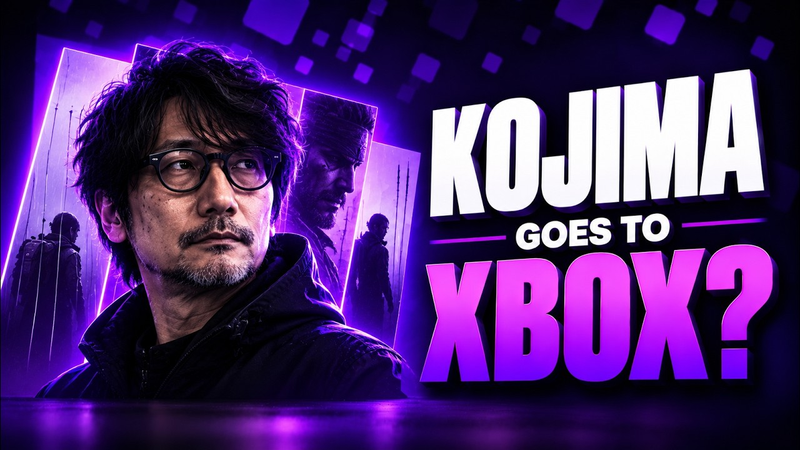
Kojima’s Physint: Sony’s Loss or Xbox’s Mistake?
Key insights
6 takeaways- 01Sony terminated funding for Hideo Kojima’s 'Physint' project during pre-production due to concerns over budget inflation and missed development milestones.
- 02The shift of 'Physint' from Sony to Xbox highlights a broader industry trend where publishers are prioritizing clear, mass-market appeal over the high-risk, high-cost creative projects of auteur developers.
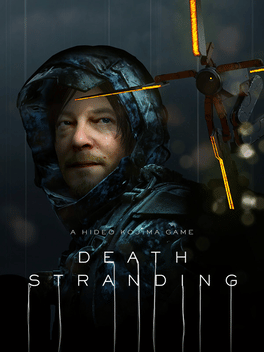
- 03Sony’s decision was driven by the commercial performance of Kojima’s recent titles, specifically 'Death Stranding,' which failed to meet high-revenue expectations with first-year sales of under 3 million units.
- 04Xbox acquired 'Physint,' including its film and television rights, as part of a strategic pivot to expand gaming intellectual property into broader transmedia entertainment franchises.
- 05The industry is experiencing a growing conflict between creative ambition and fiscal discipline, as publishers increasingly apply rigid financial scrutiny to high-cost projects to avoid open-ended budgets.
- 06Critics of the transmedia strategy question whether a franchise with a core gaming audience of 2 to 3 million players can achieve the mass-market penetration required for successful film and television adaptation.
Ask AI about this video
Transcript
[music]
Could you actually Adam, you want to do the intro to this? Go for it.
Yeah, so um there was an interview on IGN from Kojima since the switch from Sony to Xbox. Talked a little bit about how Sony abruptly ended the Physint funding on a June Zoom call with no detailed reason given to Kojima. And he says that the news really put their production in serious risk cuz they had staffed, you know, for two projects. If you remember OD, which is this like Jordan Peele not quite a game experimental thing. And then Physint, which is this espionage, let's call it like return to Metal Gear but with a new IP. So they feared layoffs and even studio collapsing. And I think Schreier previously had claimed that Sony's decision was driven by missed milestones, budget and platform concerns, and Death Stranding's commercial performance. So I
dug into this a little bit. Like Death Stranding, while I think was, you know, a critical and indie darling, I don't think it was ever really a commercial success, one or two. Both of them, you know, less than 3 million in terms of year one. So I'd bet that Sony had to keep budgets tight on this one. And if and when they look like they were asking for too big of a budget, Sony just wasn't in the financial position to just keep going. And I think this was for Physint, which is supposedly like going back to Kojima's roots as like espionage with Bill Skars- Skarsgård as the leading face. And this was still really early, so it was pre-pro. So I'm guessing Sony looked at the projected budget versus sales expectations and said no. And then Xbox saw the opportunity, got sold on the IP, and felt it was worth it. Overall, I'm skeptical on like if you can't make it work on units, if you can't make it work as a game, that a Kojima IP does not all of a
sudden add a ton of aura and a ton of value. But I do applaud Kojima like as a creative leader and glad he gets to I get to keep playing his games.
When I heard the story, I just you know, think of demand planners, right? Remember the demand planners and we either really love them if they like our game.
I I have been a demand planner in my life. That's why I call them sales people.
I imagine that's why you pulled the article, too, cuz you I mean that's exactly what I thought about was you know, we love demand planners when they love our game and we hate them if they give us a bad review. And I think finally somebody pulled the demand planner into a meeting and said, all right, like let's look at the size of the audience, let's look at past sales, let's look at the scale of the development cost and like let's do some math and said, "Ooh, actually, like we know that you are a nostalgic, amazing creative director, but we just can't like the math doesn't math on this." So, why would Xbox take it? The only reason that I see Adam, I actually agree with
you that I'm not sure the IP is going to save it, but I think that's what Xbox is thinking. So, Kojima kept ownership and sold Visint to Microsoft as a franchise with film and TV rights attached. So, Xbox is valuing more than just the game. Their demand planners are thinking, "Wow, we can do more as an entertainment, you know, franchise." So, when I went back and looked at like Sharma's quotes, Xbox and Sharma have been talking about this strategy since June-July. And so, she says, quote, "I'd love to see us be the number one gaming and entertainment company." And that was in the Bloomberg article in June. And then her strategy memo in July says, "The four priorities include content, grow great games into global franchises, connection, extend the worlds that fans love." And so, Sharma wrote that Xbox will push its biggest franchises across film, television, consumer products, sponsorship, live experiences, and form new partnerships globally, including China. So, this is
from a Verge article, and I know that Chris is is dying to on this. I am explaining what I think is the reason why. I agree that I don't know if this is what I would have placed that bet on, but first, Mishka, what do you think?
Yeah, I mean, the rational here that you guys are explaining is very solid because this is what corporations do. They rationalize, they act rationally, and you know, make sense. But, then I I try to, as always, take the other contrarian approach here, and just counter for the sake of argument. And [clears throat] I've also been on this Rick Rubin's The Creative Act book, so I took some of the elements of creative work and try to put them together.
is this your opinion, or is this Rubin's opinion?
This is me using his his his book has like 74 78 tenants, but I'm taking some of these elements of like creative work and seeing if it makes case because I I read the I didn't read. I was listening to the
book.
to an opinion.
Yeah, [laughter] so
I was listening to I'm blaming Rick, but I'm
I'm not blaming Rick. I'm I'm He has a really interesting like this book, this The Creative Act book, is very interesting on creative work. I'm not sure yet what I feel about it because I haven't listened through it thoroughly, but it is the type of book that makes you think differently about creative process. And so, I'm using this thing that is influencing me this week and this weekend to analyze this. And let me just go for it. So, this
Sure.
Fyzint? Is it called Fyzint? The game?
Fyzint.
Fyzint? Whatever. That's a difficult name.
Just call it like Metal Gear Solid 2. There you go.
[laughter]
Yeah, like like where are the Chinese to name a game or Turks? Like, you know, smash puzzle hit or something like that. Anyway, so Fyzint, it was in a very early production and then Sony ran what corporations do, a demand test, a P&L test. And there's a risk when you're doing that because you're judging an idea too early and when you do that, it can kill the idea before becomes what it
could be and that way the risk turns into a reality. So that's one of the tenants and that's true. I've seen this in so many times in studios.
Is this your opinion or is it the
This is me. This is me. This is me taking a thing because I've seen this so many times in studios.
I would just say like we cover the news all the time around triple-A games and costing too much. There's a part of this which is right now in where we are in the industry, we have to do this.
Yes.
I'm getting there.
Right? Because I I've been on both sides as a creative and as a demand planner, right? And there has to be fiscal responsibility totally in a project because these things go real off the rails later on.
I'm there with it.
All right, Ricky, when let's hear
That is very rational. So, the second part is like you mentioned multiple times, Death Stranding was a niche game. And then it kind of leads to like when you start describing this game, you'll be like this is a niche game. And so you get into this conversation of projected budgets versus sales expectations, which is very rational conversation, as you said. And that's exactly, according to
Rick, clearly stating here, it's a process that produces forgettable work. Work made to hit a target market tends to come out diluted. And then I'm thinking about this from my perspective seeing this multiple times is that you can see so many hit games that audience responds to conviction instead of calculation. We see it on Steam all the time and on triple-A as well, games that are that are made by creative team that had the conviction in what they're making, like Metal Gear Solid. And Death Stranding is another great example. They found their durable audience through that and became, you know, hits that we remember for decades. So, there's that. But again, going back to the finance part, I'm not saying that Sony or any other publisher should be just open checkbook. You're a you know, generational creative. You can do whatever and then miracle emerges at the end because that that's you know, that's how you build the Rocket Boy or a typical type of company. Constraints as we know, we've worked in all the studios. They help. They really help because they they set the creative fuel.
They set the boundaries of what you do. So the the question that that I was confused when I was reading this interview is instead of shutting down the project, why didn't they ask Kojima to like a ship a smaller version? Because what was happening is as you mentioned the transmedia play everything, he was kind of like pumping up the game to increase the budget. That's the way I read it. And if they would have just decreased the expectation say just ship the game and don't worry about, you know, conquering the Chinese market. That was the one point. And then final one is like again, the only fail state is is shipping and he has actually an experience with this. I believe that Kojima he worked with Konami in 2015 and that ended because of budgets and schedules. So I don't know what to think. I don't know too many too many details.
This what the hurts
Are you talking about? Like what is going on right now?
It's so easy to kill. You say this guy was late. He can't stick into a budget.
Just kill it. But then again, I've seen so many games that have been left and right and didn't hit the budget but became big hits.
This isn't 2015, dude. This is 2026. You cannot make bets on things that don't make sense. But he had two shots on goal with this and he failed, right? These games were disasters of epic proportions, right? They didn't find an audience. They found a niche and they found the IGN love and they found like these nerdy gamers love but they were not commercial successes, right? And so I think Sony in good faith can went after this game because they thought it was a sequel to Metal Gear Solid, right? Which is smart, right? But then 2 years in, they're in pre-pro and he's already over budget and then he's asking for more money and they're like, "This we are out. We are out of this Let's pull the plug and move the on." Actually, out of all the moves that Sharma has made, this one makes no sense to me, right? This is a good way a PR win, but this is not a
good bet long-term, right? Because the chance of it being successful are zero to none almost at this point. And I don't understand why everyone's holding water for Kojima, dude. He's already failed, right? He's failed twice. So, it's like if Microsoft is signing up this thing for movie and TV rights, dude, they are all out of their collective minds, all right? That is the stupid. That is just dumb, okay? That's not going to work, all right?
Why do they pick cuz I told you why.
I told you why. It's transmedia.
Yes, they want to spread out.
They think that that is that is like McKenzie Matthew Ball that doesn't make any god damn sense, okay? Like because there there there's there's just no way a game that sells 2 million units is going to be a transmedia success, okay? 3 million units, right?
agree with this. So, I think that I'm just telling you why and their strategy is transmedia. Can we take a franchise and go and go bigger? That works if the IP has the ability to extend beyond 1 or
2 million units. I think the challenge is in the IP that he is potentially building, it doesn't have the mass appeal that you would need a transmedia IP and franchise to have. I think sadly, what it sounds like is you know, we all move on in the world of what kind of IP that we are interested in what we want and what can go and have mass appeal. I just don't think that this is it. So, I'm not sure the strategy that they have is bad. I think what they picked isn't the right alignment.
So, he goes budget and starts talking transmedia to get picked up by Microsoft because essentially he was a mess.
But ultimately but ultimately I'm sure it went from like, "Hey, we think this thing can sell, let's call it 2-3 million units year one." Then he says, "Hey, we're over budget." Demand planning says like there's no way we can believe 6 million, 7 million units, right? And especially given what we're seeing right now in the in premium games on PC console, like you stretch up to 6, 7, 8 million units, like that's not a
bet publishers want to make anymore. Keep in mind I'm talking about year one units, I'm not talking about like lifetime cuz that's a different
And that's when you sell transmedia play.
No.
I don't think he
Let's stop with the transmedia.
But Microsoft picked him up, that's what I'm trying to understand. Like like
He's a cult personality. Kojima's an amazing designer and like I I think it'll be a fun game, but it won't like I would probably side with Sony here. They probably did their math and they looked it out and said like this thing isn't going to sell as many units as it the
budget.
He's asking. And Xbox is trying to save money.
If they were doing another Death Stranding, then you could basically forecast 3 million units and that requires a certain budget. But when you say you're going to do the next Metal Gear Solid, that could be an 8 to 10 easy, you know, like that game could do that kind of numbers, right? And so I'm sure that's what Sony signed up for, right? But when they saw what they were doing, they're like, "This is [laughter] not the next Metal Gear Solid and this is not an 8 to 10, this is a 2 to 3 and we're not funding this shit." You know. So Microsoft picked it up because
they're talking about transmedia or some kind of la-la-la, fa-la-la like Kojima, right? And this is what they do, right? It doesn't make sense, right? Because this is Kojima now.
So basically what Jen was saying, I'm just trying to understand this from Microsoft's position then. It's like they fired so many people and they have this bad press and they're like, "You know what? Let's pick up Kojima and that that's going to
No, that's not what I'm saying. I'm saying that is their stated strategy of where they the vision of where they want to go is to have IP that can extend because they're stating they want to be a games and entertainment brand. And somebody said that they thought this was an IP that would allow them to achieve that goal. I don't know who evaluated that. We are saying Adam and I are like, well, I'm not sure that we agree that this has that potential. This is their future vision of how they're going about it. I'm not saying it's right, but this is why they picked it.
They spent the last like year cutting all the niche franchises and niche studios, and now they're doing a deal
for a niche product and a niche studio. You know, like that's what that's what doesn't make sense in terms of the strategy.
But they they just dropped Arcane.
Double Fine.
Right?
Yeah.
These are very similar. So it just feels like a little bit of talking out of both sides of their mouth,
Right?
Because as
Okay.
moving to the Microsoft restructure now, right? Like this is the tough part. They're going through major financial constraints. They have to figure out how to restructure their studios while this Kojima deal was being done.
[music] [music]
Summary
The recent transition of Hideo Kojima’s project, Physint, from Sony to Xbox highlights a growing tension between creative ambition and the fiscal realities of modern game development. Sony reportedly terminated its funding for the project during the pre-production phase, citing concerns over budget inflation, missed milestones, and the historical commercial performance of Kojima’s recent titles. While Death Stranding achieved critical acclaim, its sales—averaging under 3 million units in its first year—failed to meet the high-revenue expectations required to justify the massive budgets associated with contemporary triple-A development.
The core conflict centers on the disconnect between creative vision and demand planning. Sony’s decision to pull funding reflects a broader industry trend where publishers are increasingly scrutinizing the math behind high-cost projects. Critics of this approach argue that rigid financial constraints and early-stage P&L testing can stifle innovation, potentially killing projects before they reach their full potential. However, proponents of fiscal discipline maintain that in the current economic climate, publishers cannot sustain open-ended budgets for projects that lack clear mass-market appeal.
Xbox’s decision to pick up the project, including its film and television rights, appears to be driven by a strategic pivot toward transmedia expansion. Despite having recently shuttered several niche studios, Microsoft is pursuing a vision of growing gaming intellectual property into global entertainment franchises. This strategy aims to extend the reach of game worlds into film, television, and consumer products. Skeptics, however, question the viability of this bet, noting that a franchise with a limited core audience of 2 to 3 million players may struggle to achieve the broad cultural penetration necessary to succeed as a multi-platform entertainment property. Ultimately, the move underscores the ongoing debate over whether high-profile creative talent can overcome the inherent risks of niche-market performance through diversified media strategies.











Comments