Key insights
7 slides
The Goal
Century Games aimed to extend the lifespan and value of Frozen City.
The mobile title Frozen City transitioned from an initial aggressive user acquisition phase to a sustainable operational lifecycle. The core strategy focused on maximizing player lifetime value.
Strategic Shift
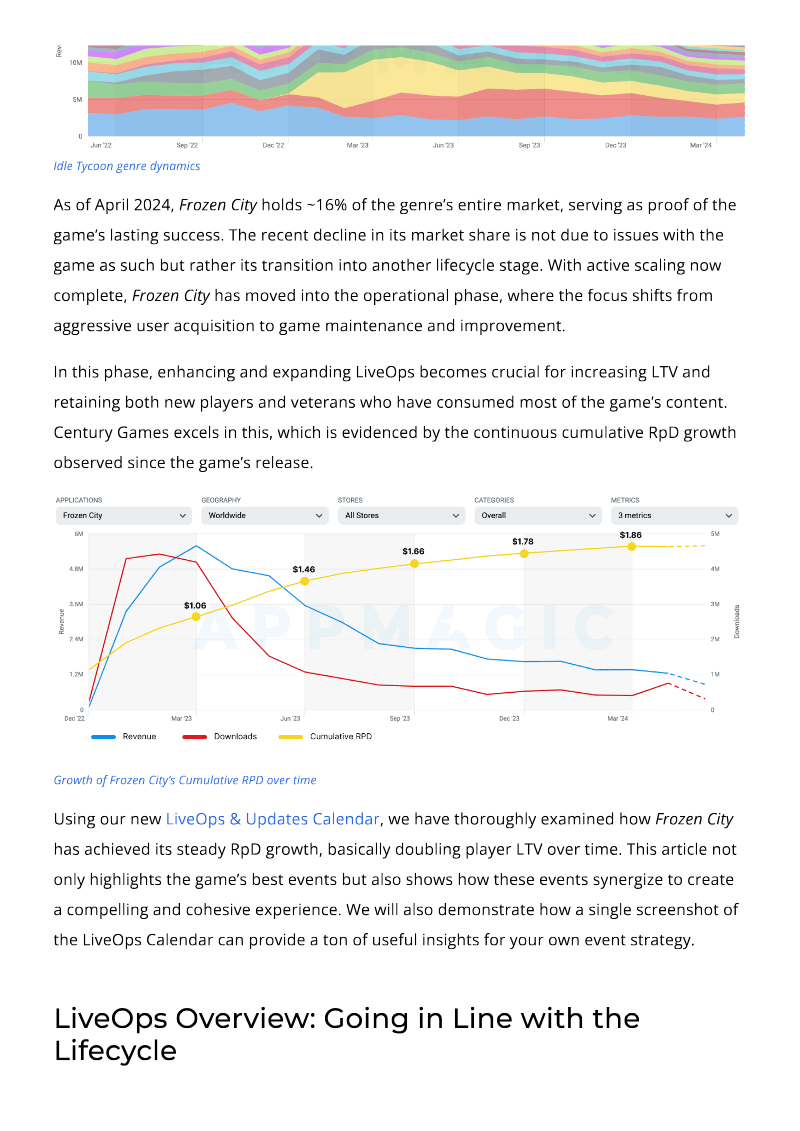
A sophisticated LiveOps matrix doubled Frozen City's player lifetime value.
Century Games successfully doubled the lifetime value (LTV) of Frozen City players.
Engagement Strategy
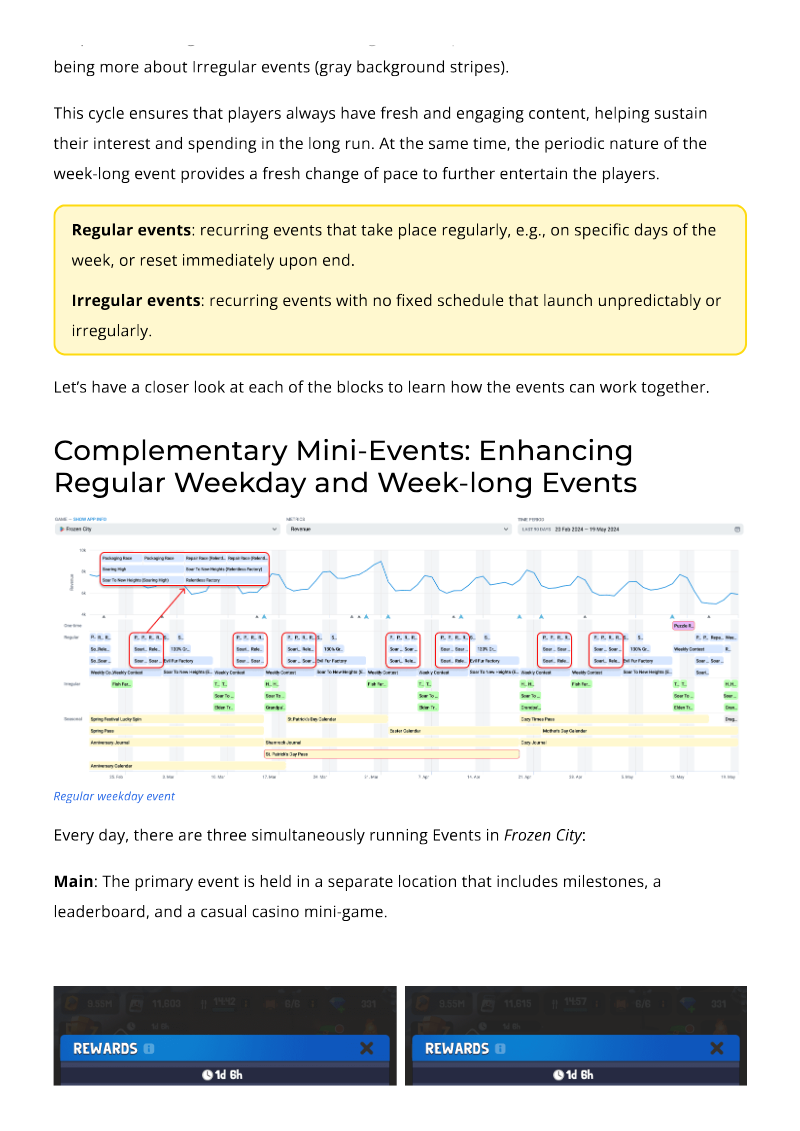
A high-frequency event matrix combats player progression fatigue.
The developer uses a multi-layered event matrix with regular, weekend, and seasonal rotations. This strategy is designed to combat player progression fatigue.
Core Framework
Frozen City integrates permanent collectible systems and a unified progression pass.
The game’s operational framework includes permanent collectible systems, gacha-based albums, and a unified progression pass. These elements create a cohesive, long-term engagement loop.
Consistent Activity
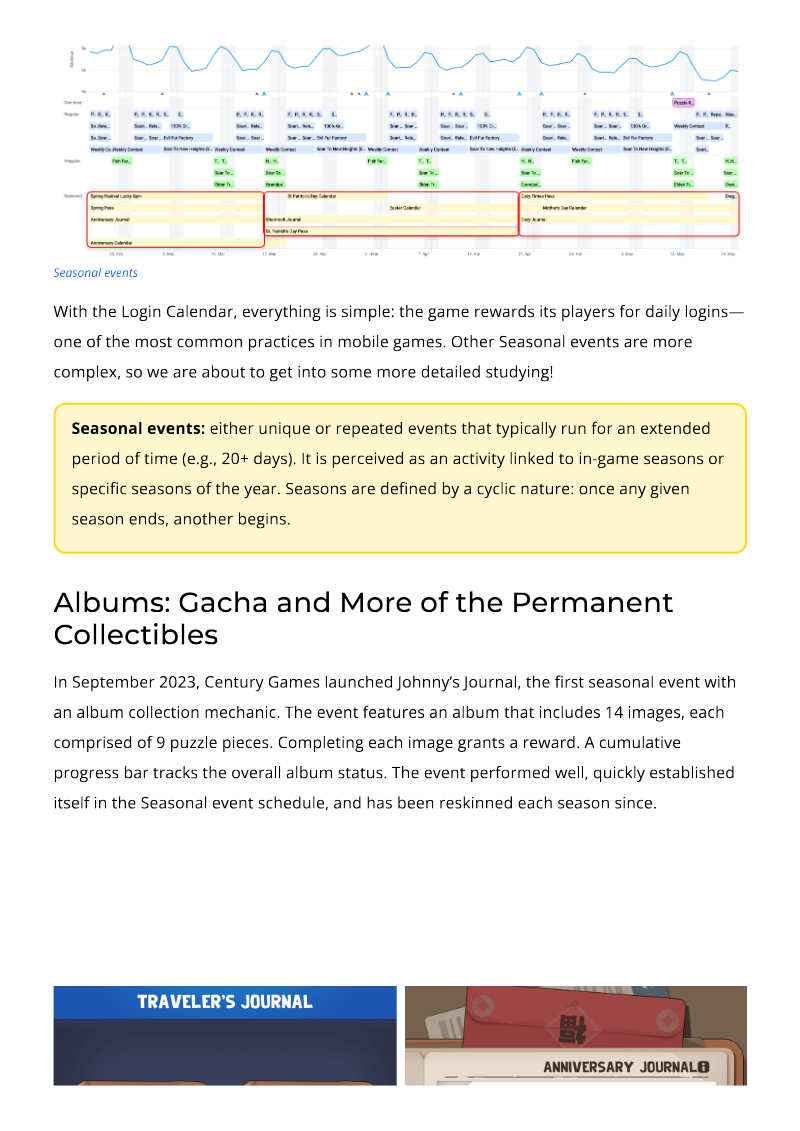
Predictable touchpoints maintain consistent player activity and monetization.
Login calendars and lucky spins are used as predictable touchpoints.
Reinforcing Actions
Event mechanics are reskinned and layered to reinforce in-game actions.
Event mechanics are frequently reskinned and layered with irregular activities. This ensures that various in-game actions consistently reinforce one another, sustaining veteran user participation.
Psychological Drivers
Psychological triggers drive long-term player retention.
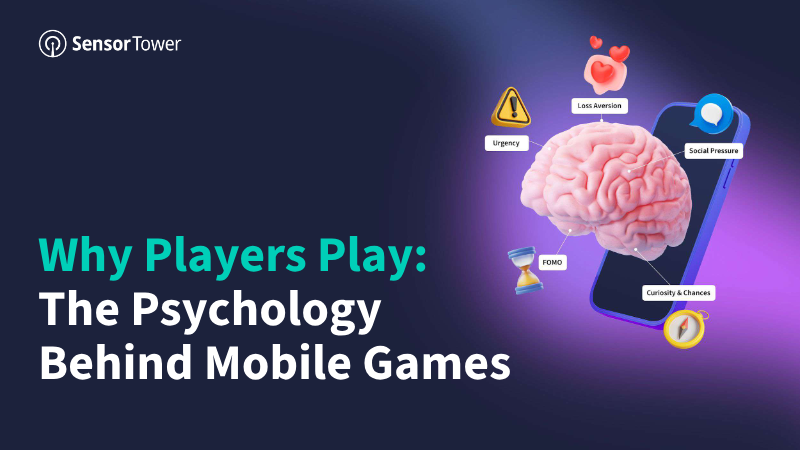
The strategy leverages psychological triggers such as competition, collection completion, and the fear of missing out (FOMO). These triggers are used to drive long-term retention.
1 / 7
Ask AI about this report