Key insights
7 slides
Market Shift
Idle games have moved from mobile to Steam for revenue growth.
While mobile idle game revenue growth stalled in 2023, the genre has successfully migrated to Steam.
Revenue Driver
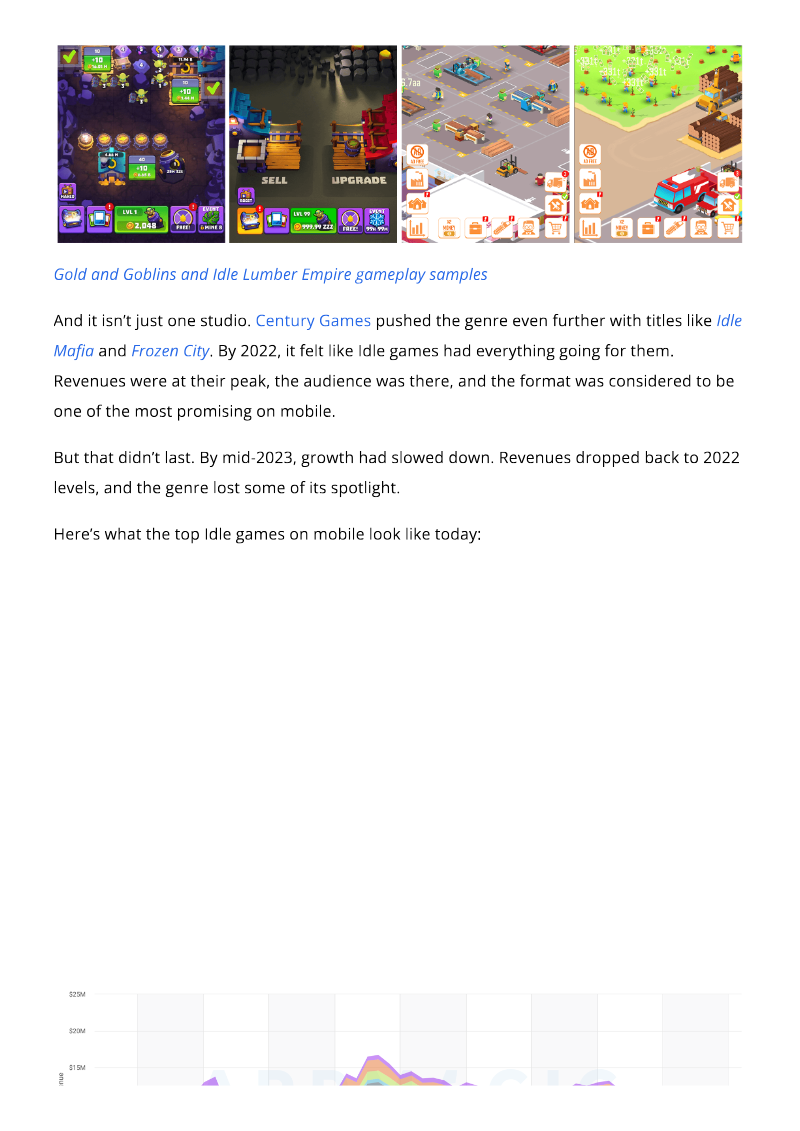
Idle games are a major revenue driver on Steam.
Titles like IdleOn have generated significant revenue, with one game reaching nearly $59 million in total.
Page 5 of the report$59 million
Total revenue for IdleOn.
- Generated in 2025
- $22 million
Player Behavior
Steam's 'Idle' category is defined by player behavior, not just genre purity.
Successful titles like Spirit City: Lofi Sessions and Cast n Chill earn millions by serving as background productivity companions.
Like a background app running while you work, these games offer passive engagement.
Page 6 of the report$5.3 million
Earnings for Spirit City: Lofi Sessions and Cast n Chill.
Design Pillar
Successful Steam Idle games feature 'background presence' as a core design pillar.
This allows them to compete for screen real estate alongside other active applications. The design prioritizes integration into a player's desktop workflow.
Monetization Variety
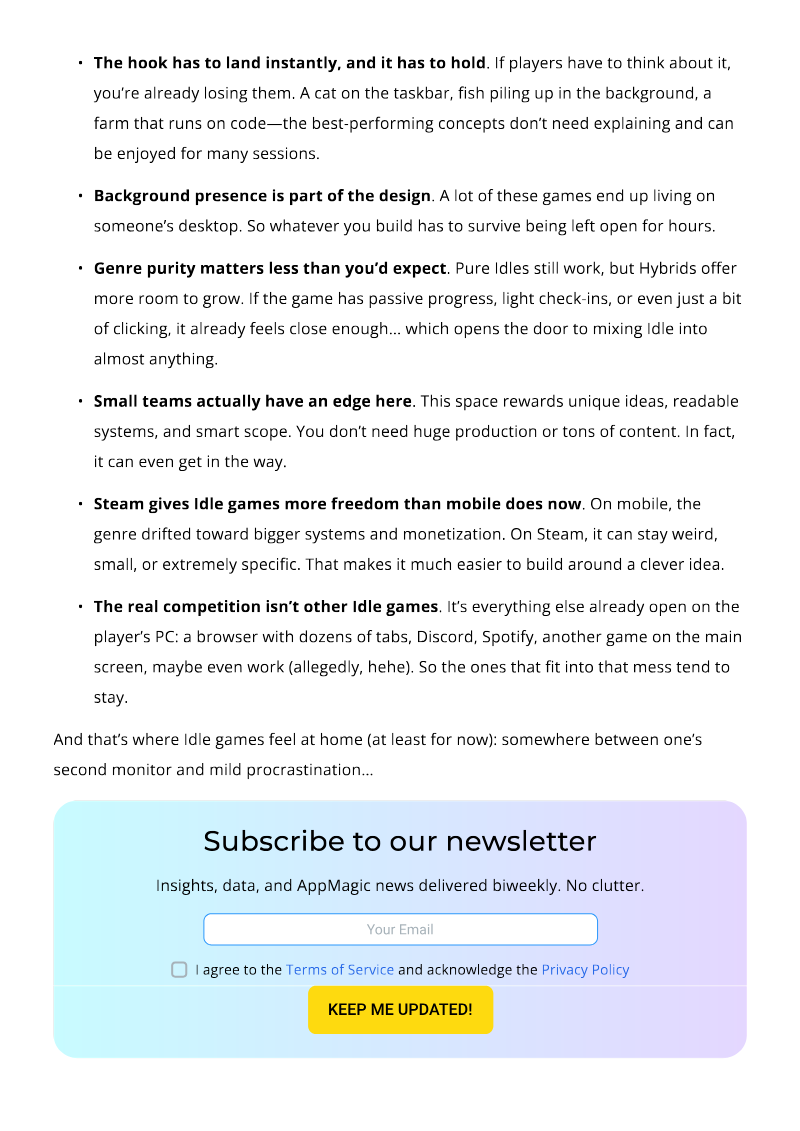
Monetization strategies on Steam vary significantly for idle games.
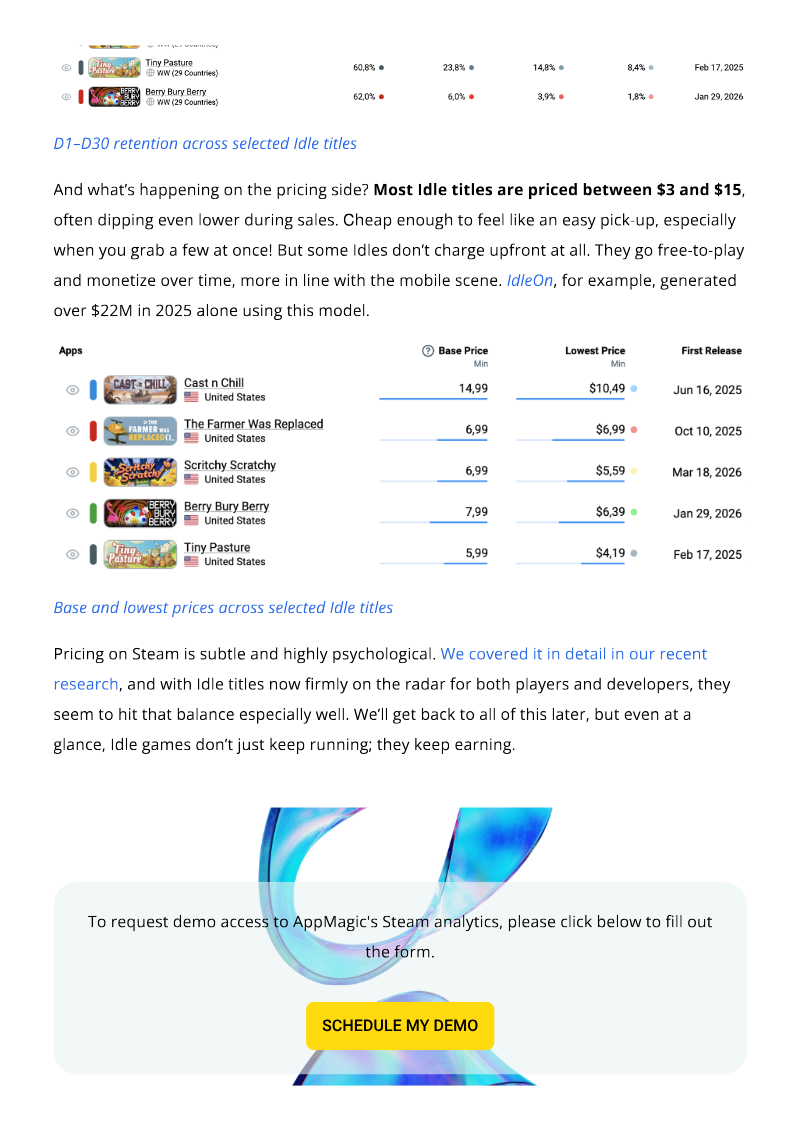
These strategies range from low-cost premium titles priced between $3 and $15 to free-to-play models. The latter leverage long-term progression and microtransactions.
Viral Potential
Steam's Idle market supports viral, low-interaction concepts.
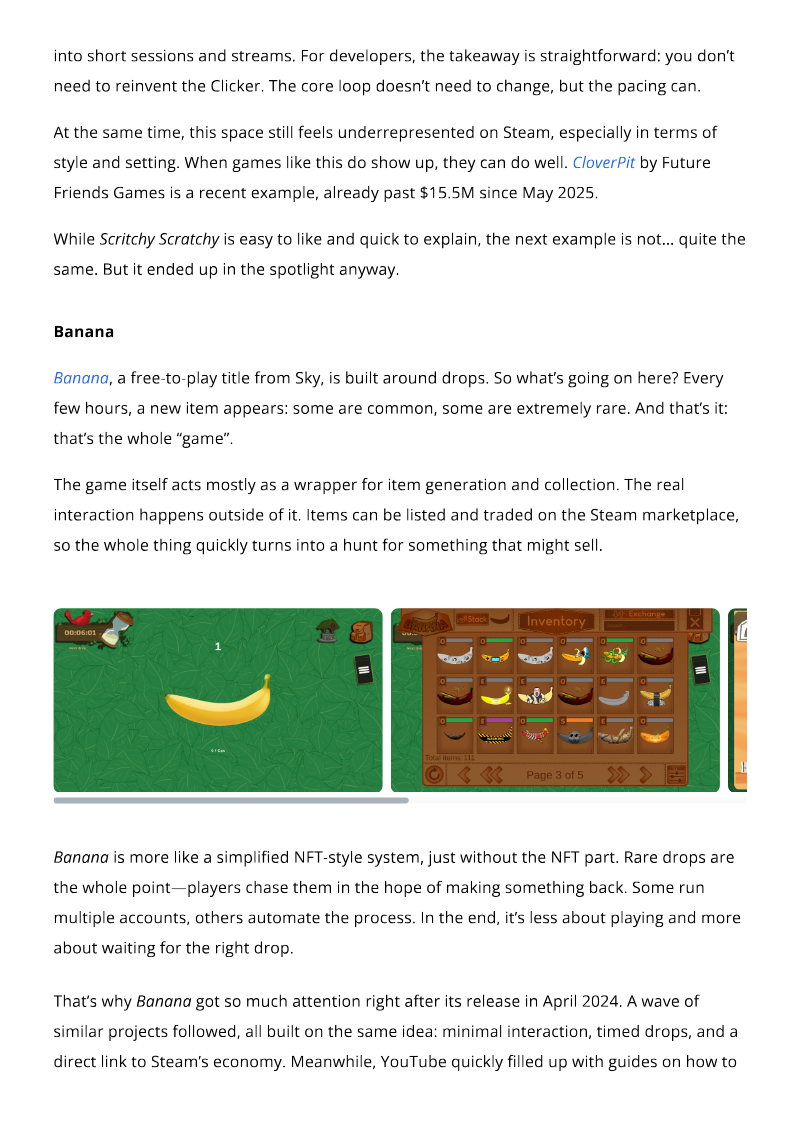
An example is the game Banana, which functions as a wrapper for Steam marketplace item drops.
Team Advantage
Small development teams hold a competitive advantage in the Idle space.
The genre rewards clever, readable systems and efficient scope over high-budget production values.
1 / 7
Ask AI about this report