ArticleAppMagic
Love and Deepspace: Pulling $1B User Spend on Gacha Events
19 May 202636 pages~52 min full read
Key insights
7 slides
Market Position
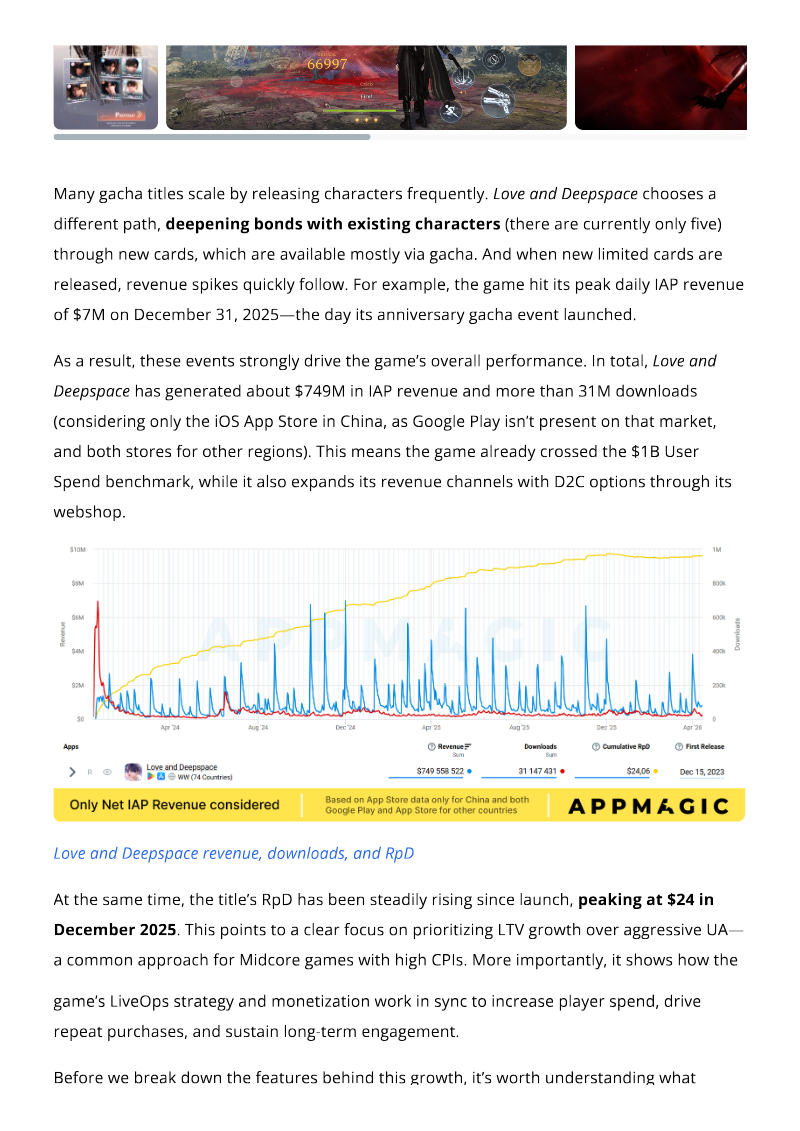
Love and Deepspace achieved a top-tier revenue ranking in China.
The game reached the #9 spot for IAP revenue in China by 2025. It outperformed Genshin Impact and narrowed the revenue gap with Honkai: Star Rail.
Monetization Approach
The game uses a transparent gacha system to encourage player spending.
The monetization strategy relies on a transparent gacha system with strict, displayed drop rates. It also includes carry-over pity mechanics, providing predictability for players.
Like a clear rulebook in a game, players know what to expect, making them more willing to participate.
Key Revenue Driver
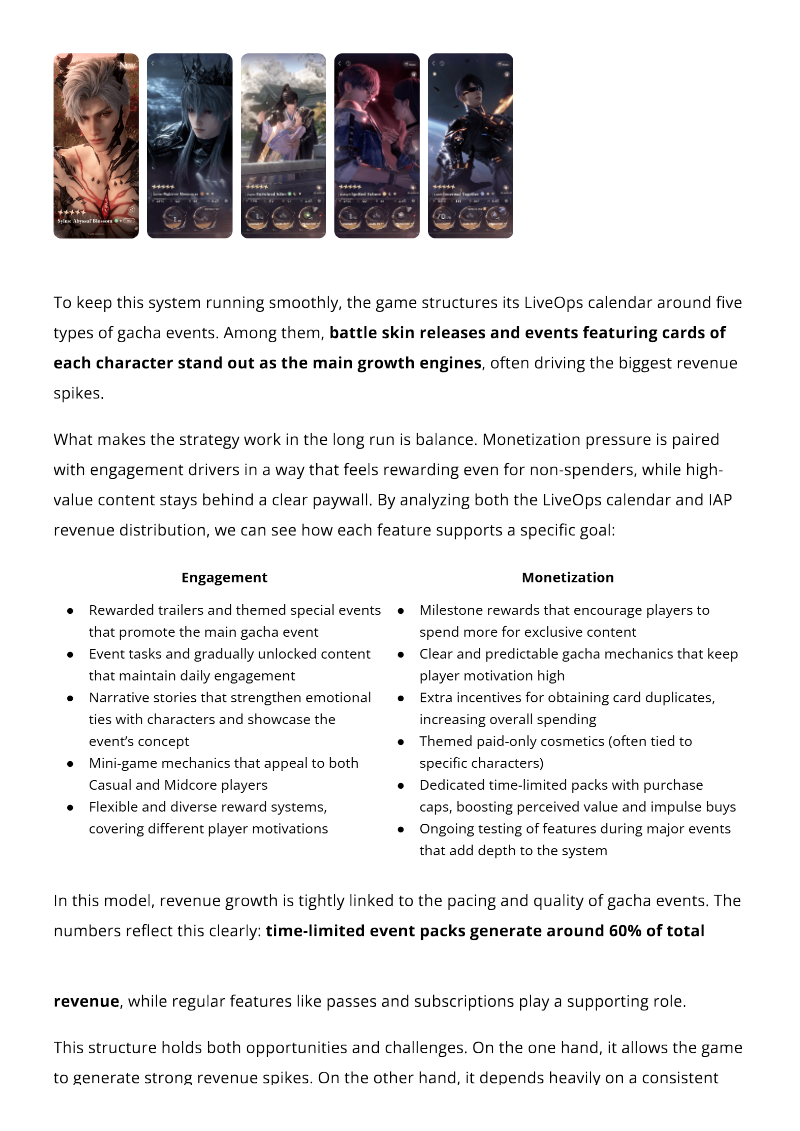
Battle skin releases are a primary revenue driver, generating significant spikes.
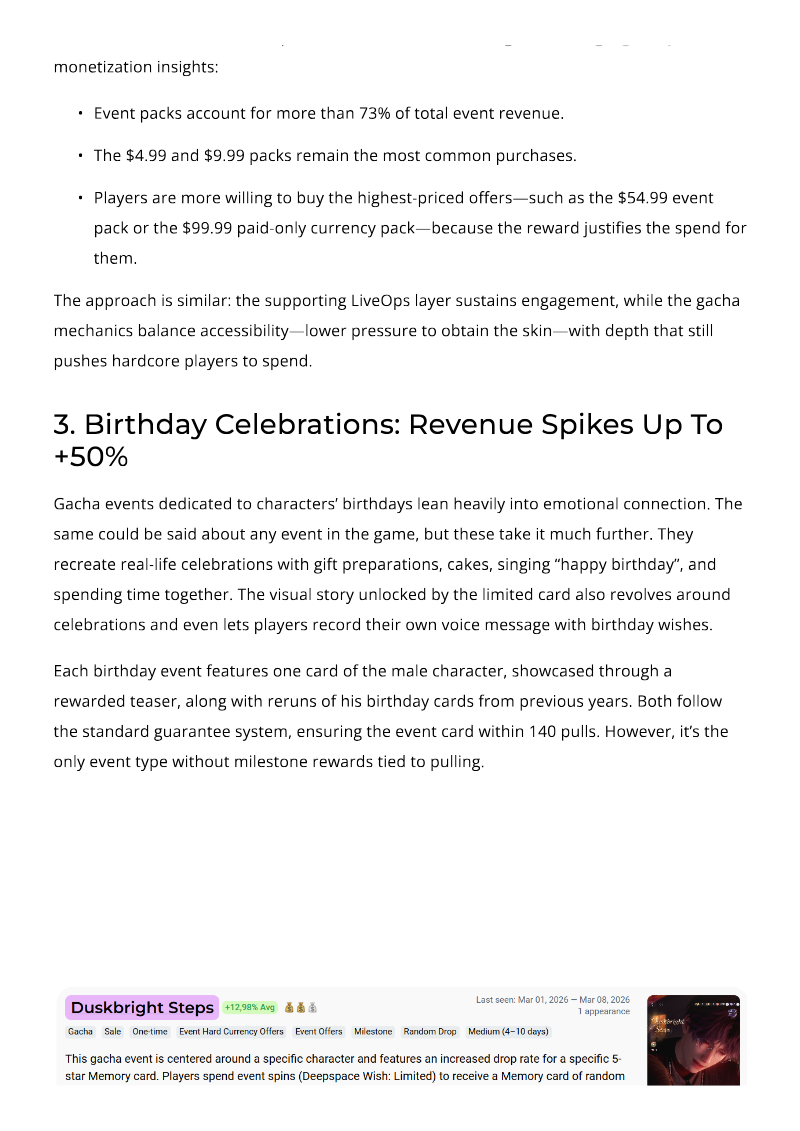
Limited skin events can generate revenue spikes of up to 130%. This is achieved by requiring players to collect paired character cards.
Event Monetization
Event packs and subscriptions contribute significantly to total revenue.
Event packs account for 48% of total revenue during major events. Yearly subscriptions contribute 14% of revenue and drive 10% of all purchases.
Pricing Strategy
The developer uses tiered pricing for event packs to optimize conversion.
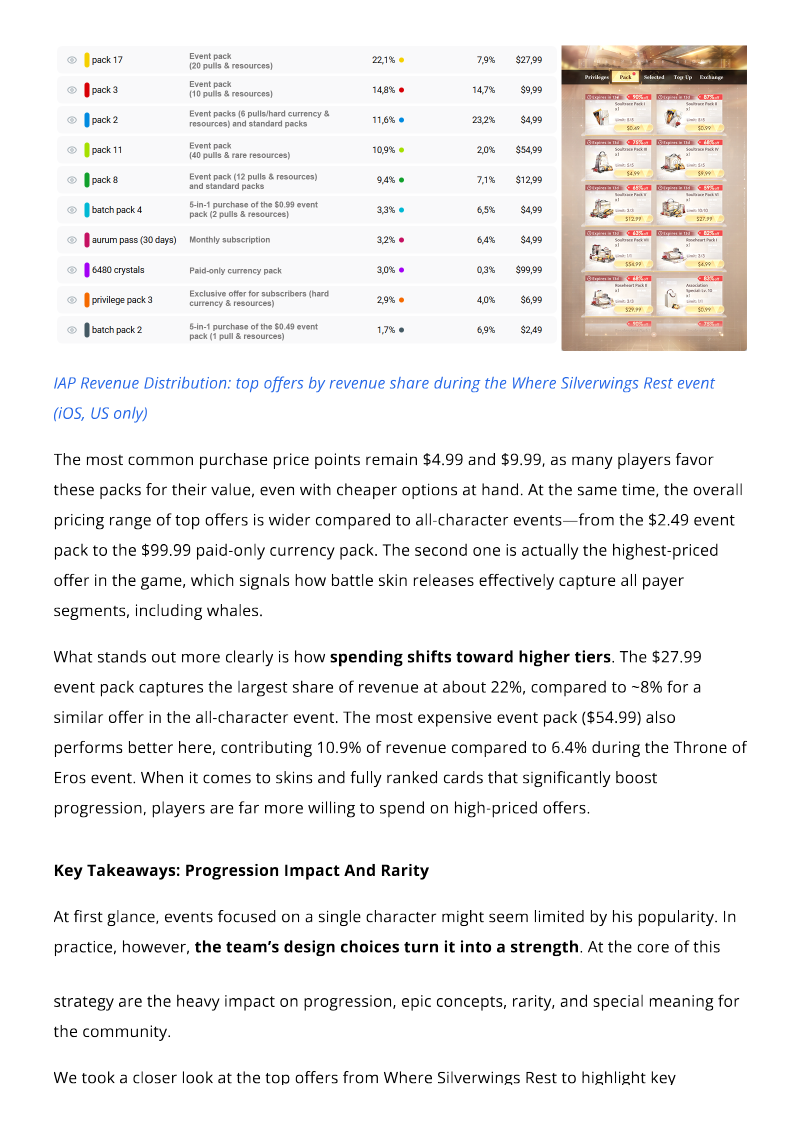
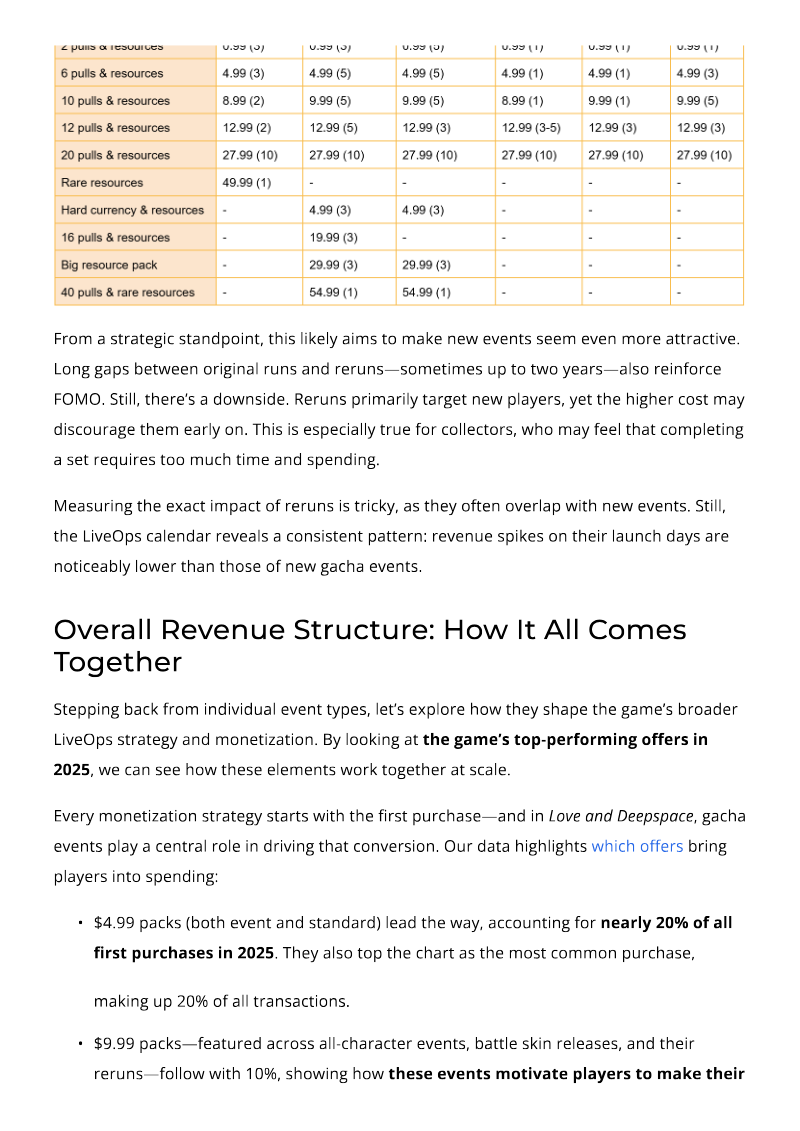
The developer employs a tiered pricing strategy for event packs, ranging from $0.29 to $54.99. This optimizes conversion across low, mid, and high-spending player segments.
LiveOps Balance
LiveOps balances aggressive monetization with non-monetized engagement features.
The strategy combines aggressive monetization in battle and gacha modes with non-monetized engagement features. These features include mini-games and story chapters, maintaining high daily active user (DAU) counts.
Event Reruns
Reruns of past events serve as a secondary revenue stream.
Reruns consistently show lower revenue spikes compared to new gacha event launches. They primarily target new player acquisition.
1 / 7
Ask AI about this report