1 free read left. Create a free account for unlimited reading + AI research.
Create free accountWhitepaper Japanese Association for Role-Playing Game Studies (JARPS)
1 free read left. Create a free account for unlimited reading + AI research.
Create free accountWhitepaperJapanese Association for Role-Playing Game Studies (JARPS)
Distilling the key insights…
Tabletop role-playing games function as complex, collaborative networks where the distinction between human participants and material objects dissolves into a shared, inseparable agency. By applying Actor-Network Theory to the study of these games, it becomes clear that elements such as dice, character sheets, rulebooks, and game master screens are not merely inert props but active participants that co-shape the gaming experience. These non-human actors exert significant influence over narrative development, ludic mechanics, and the establishment of social hierarchies within the gaming group.
The research, conducted through multi-sited ethnographic observation, emphasizes that the collaborative nature of role-playing relies on the mediation of physical materials. By employing a methodology that grants "voice" to these objects, analysts can better trace how material agency facilitates the creation of a shared imagined space. This approach challenges traditional, anthropocentric perspectives in game studies, which often overlook the essential role that physical artifacts play in sustaining the intricate, often messy networks required for gameplay to function.
Ultimately, the study advocates for a shift in how researchers conceptualize the tabletop environment, moving away from viewing games as purely social or psychological phenomena. Instead, the gaming experience should be understood as a dynamic process where the interaction between human players and their material environment creates a unified, functional network. Recognizing these inter-relational processes is vital for a comprehensive understanding of how tabletop role-playing games operate, as the material components are fundamental to the structural and creative integrity of the medium.
Japanese Association for Role-Playing Game Studies (JARPS) · 2025
Japanese Association for Role-Playing Game Studies (JARPS) · 2025
Japanese Association for Role-Playing Game Studies (JARPS) · 2024
Japanese Association for Role-Playing Game Studies (JARPS) · 2024
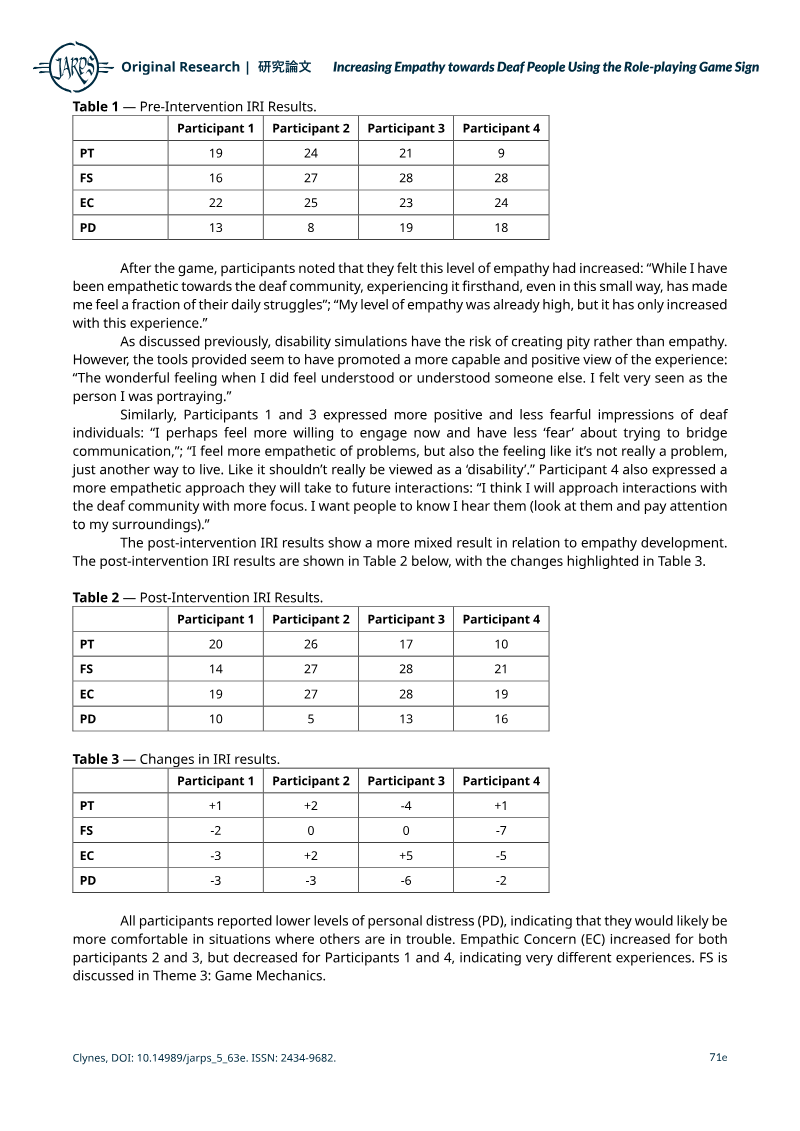
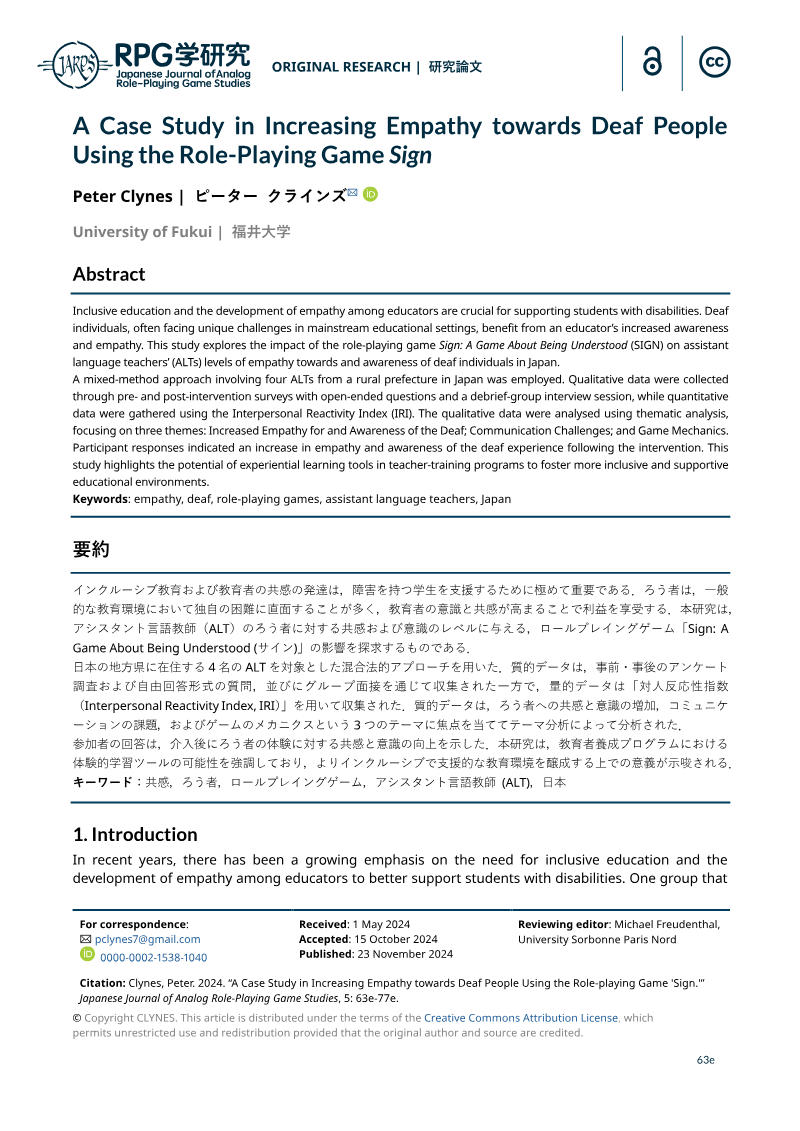
Japanese Association for Role-Playing Game Studies (JARPS) · 2024
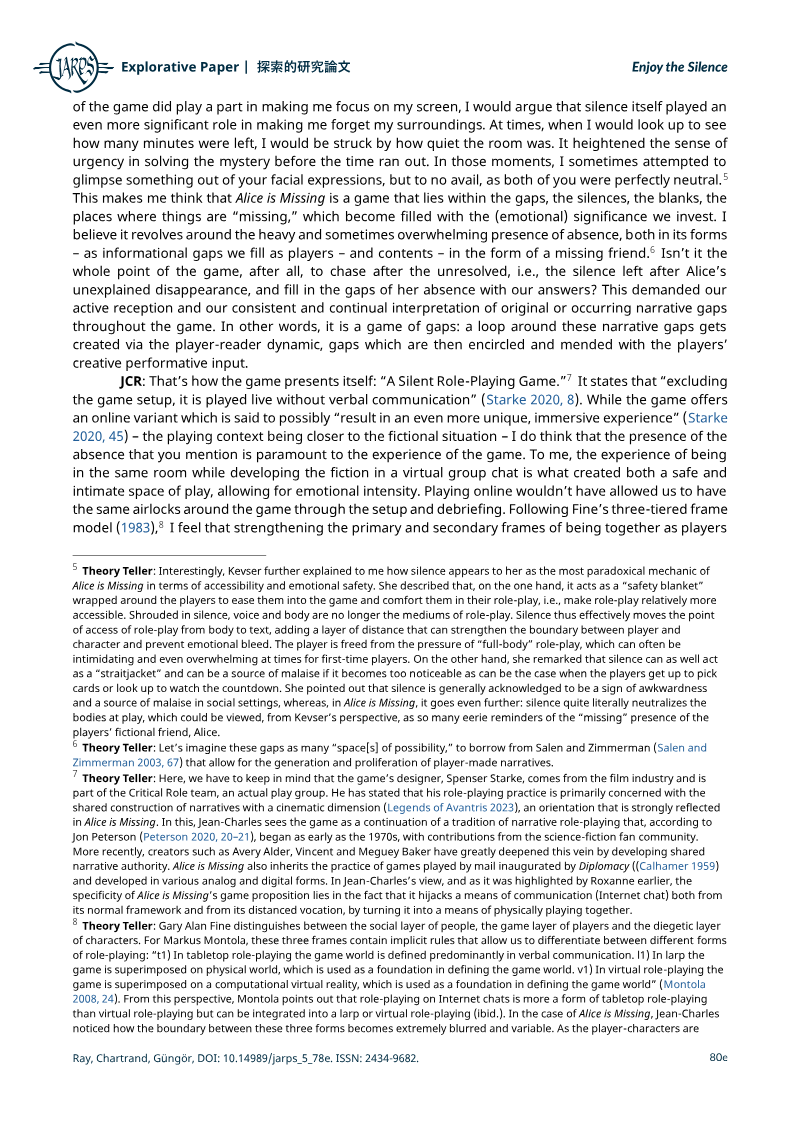
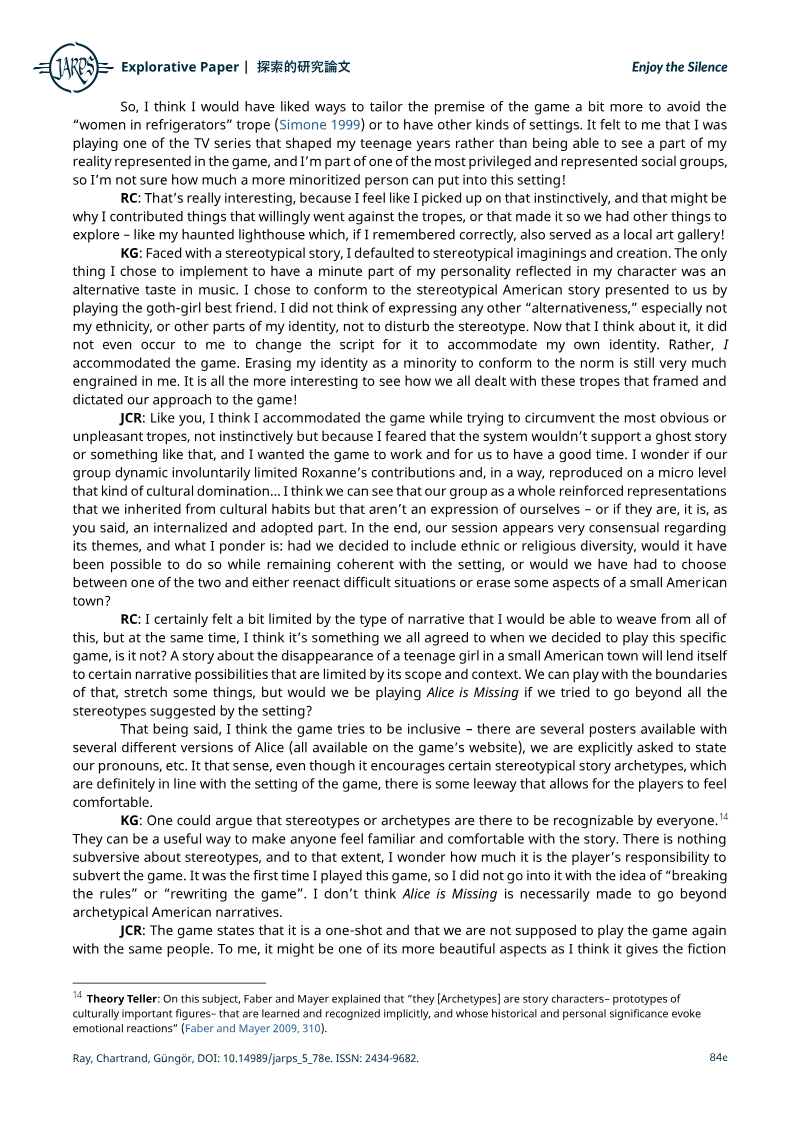
Japanese Association for Role-Playing Game Studies (JARPS) · 2024
Japanese Association for Role-Playing Game Studies (JARPS) · 2024
Japanese Association for Role-Playing Game Studies (JARPS) · 2024
Japanese Association for Role-Playing Game Studies (JARPS) · 2024
Japanese Association for Role-Playing Game Studies (JARPS) · 2024
Japanese Association for Role-Playing Game Studies (JARPS) · 2024
Japanese Association for Role-Playing Game Studies (JARPS) · 2023
International Journal of Role-Playing · 2026