1 free read left. Create a free account for unlimited reading + AI research.
Create free accountArticle Japanese Association for Role-Playing Game Studies (JARPS)
1 free read left. Create a free account for unlimited reading + AI research.
Create free accountArticleJapanese Association for Role-Playing Game Studies (JARPS)
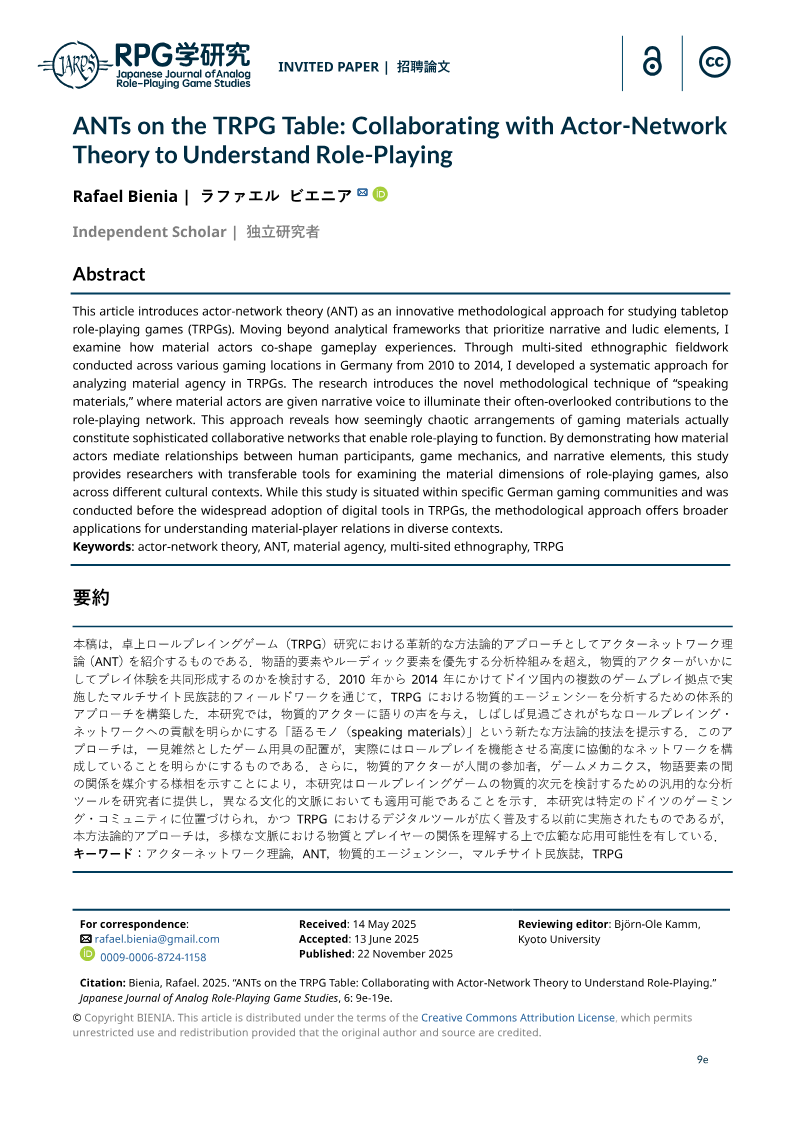
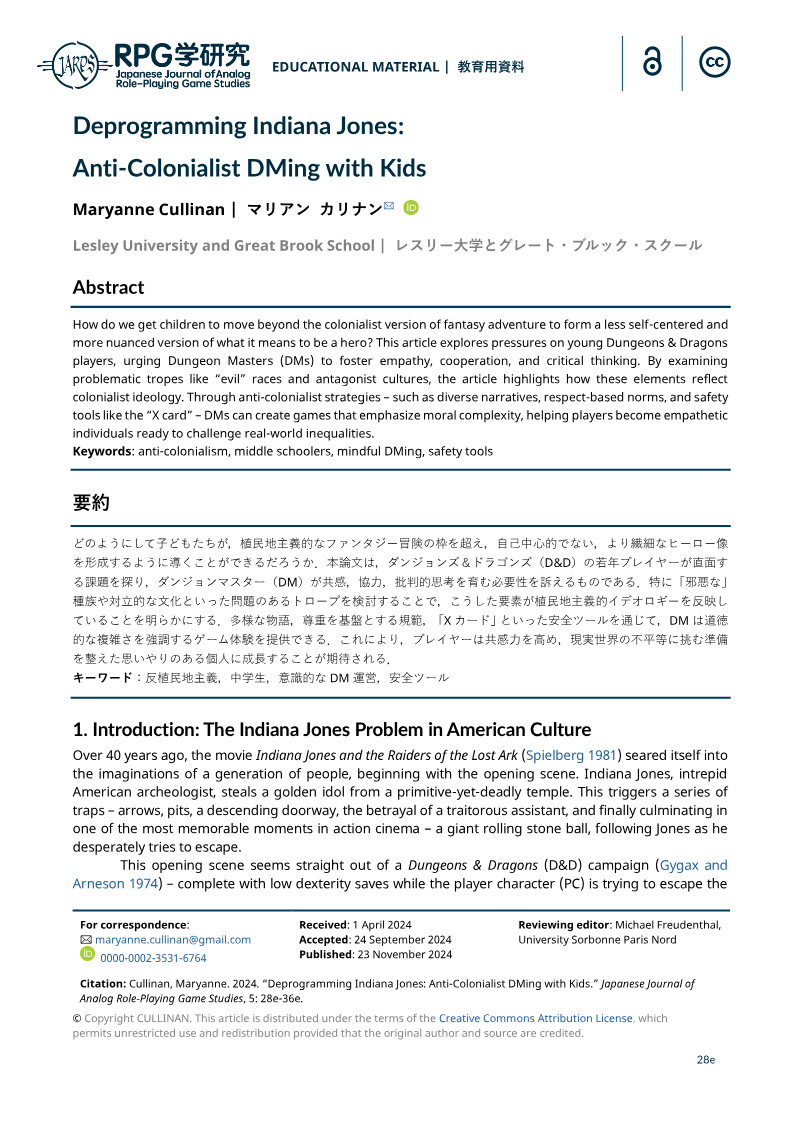
The article explores the intersection of calibration frameworks, disability, and accessibility within the context of tabletop role-playing games (TRPGs). Its primary thesis posits that safety tools and calibration mechanisms are essential for creating inclusive play environments, particularly for neurodivergent and disabled players. By applying crip theory—a framework that challenges normative assumptions about bodies and time—the analysis argues that these tools should be viewed as vital infrastructure for managing risk and fostering communalized gameplay rather than merely as restrictive measures.
The research highlights that calibration tools allow players to navigate complex or uncomfortable in-game themes through informed consent, effectively balancing personal comfort with creative engagement. A key finding is that these mechanisms are inherently compatible with the concept of crip time, which recontextualizes time as a flexible resource that benefits the collective gaming experience. By integrating these perspectives, the author suggests that safety tools can facilitate more robust worldbuilding and clearer interpersonal boundaries, ultimately widening access to the hobby for diverse populations, including those with autism, anxiety, and PTSD.
Published in 2024 within the Japanese Journal of Analog Role-Playing Game Studies, the work serves as a theoretical contribution to the field of game studies. It emphasizes that the adoption of these frameworks does not stifle play but rather enhances it by providing a structured, ethical foundation for ludic vulnerability. The analysis advocates for a shift in how the industry perceives safety tools, moving away from viewing them as limitations and toward recognizing them as essential components of equitable and accessible game design.
Japanese Association for Role-Playing Game Studies (JARPS) · 2025
Japanese Association for Role-Playing Game Studies (JARPS) · 2025
Japanese Association for Role-Playing Game Studies (JARPS) · 2025
Japanese Association for Role-Playing Game Studies (JARPS) · 2024
Japanese Association for Role-Playing Game Studies (JARPS) · 2024
Japanese Association for Role-Playing Game Studies (JARPS) · 2024
Japanese Association for Role-Playing Game Studies (JARPS) · 2024
Japanese Association for Role-Playing Game Studies (JARPS) · 2024
Japanese Association for Role-Playing Game Studies (JARPS) · 2024
Japanese Association for Role-Playing Game Studies (JARPS) · 2024
Japanese Association for Role-Playing Game Studies (JARPS) · 2024
Japanese Association for Role-Playing Game Studies (JARPS) · 2023
Japanese Association for Role-Playing Game Studies (JARPS) · 2022