Key insights
6 slides
Economic impact
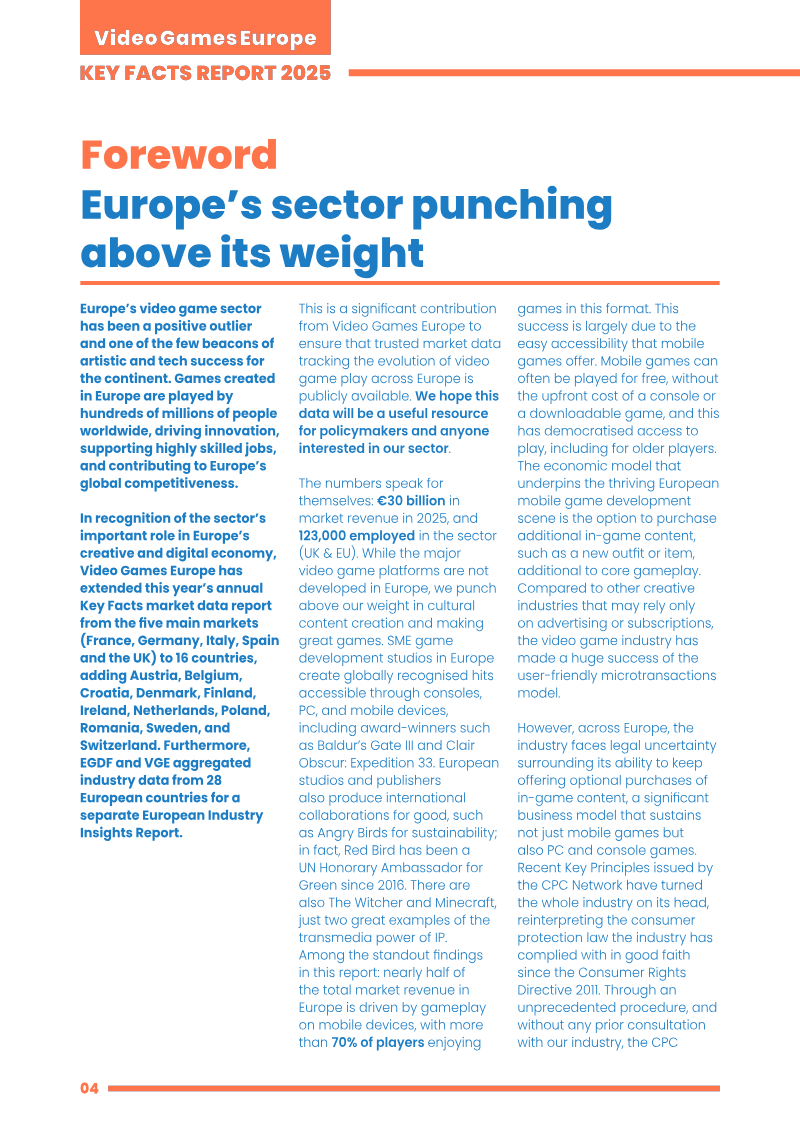
The European video game industry supports 123,000 jobs and generated €30 billion in mobile revenue in 2025.
The European video game industry is a primary economic engine.
Player base
The European video game sector reaches 199 million players across 16 nations.
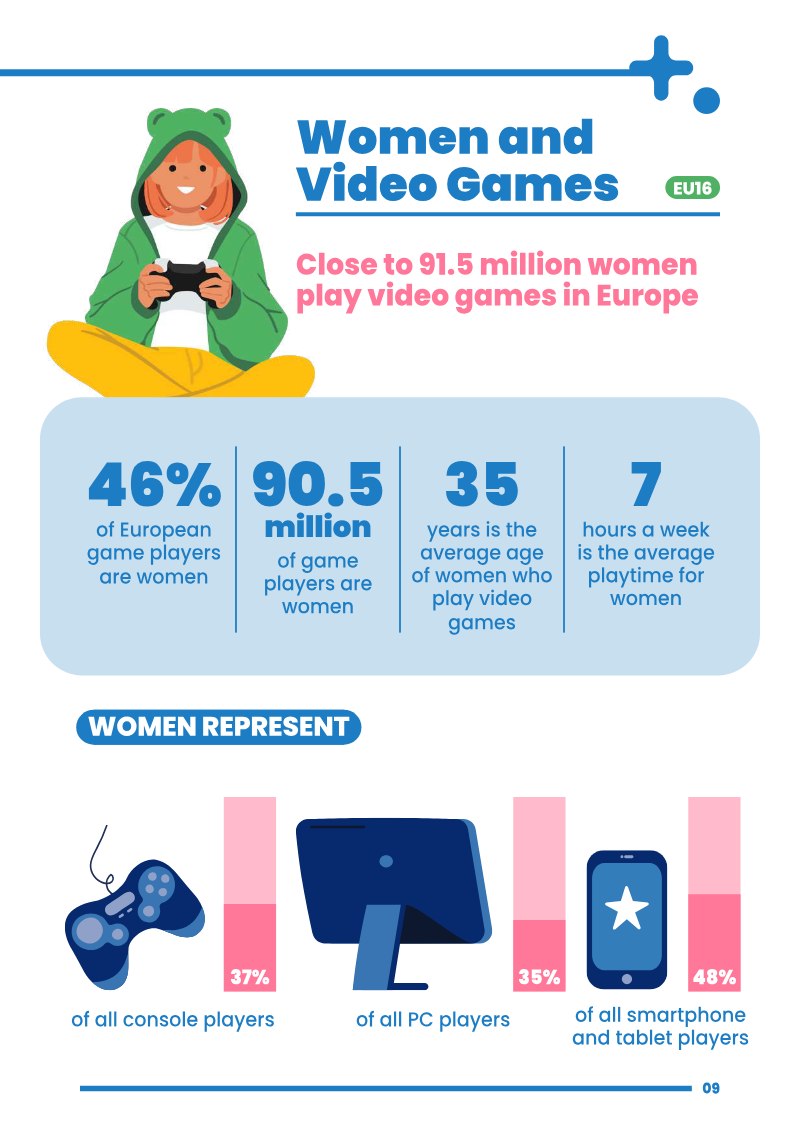
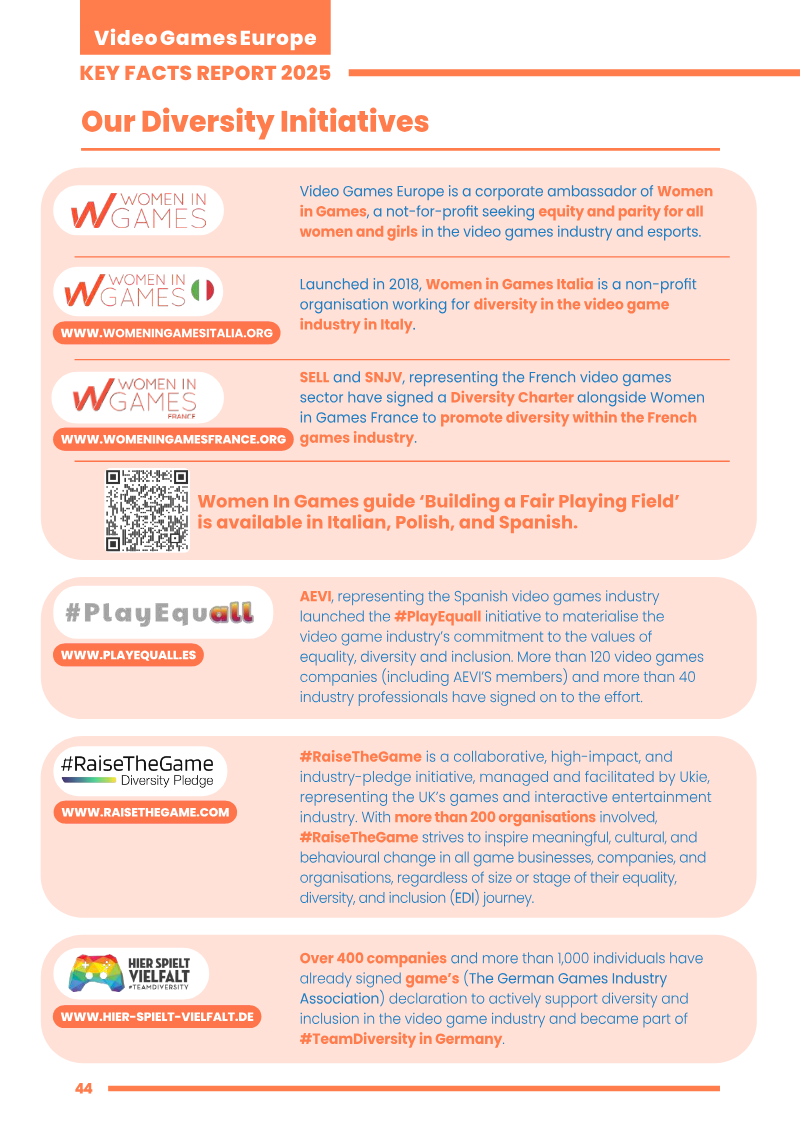
The sector engages a large and diverse player base. Women account for 46 percent of the total player base.
Upcoming changes
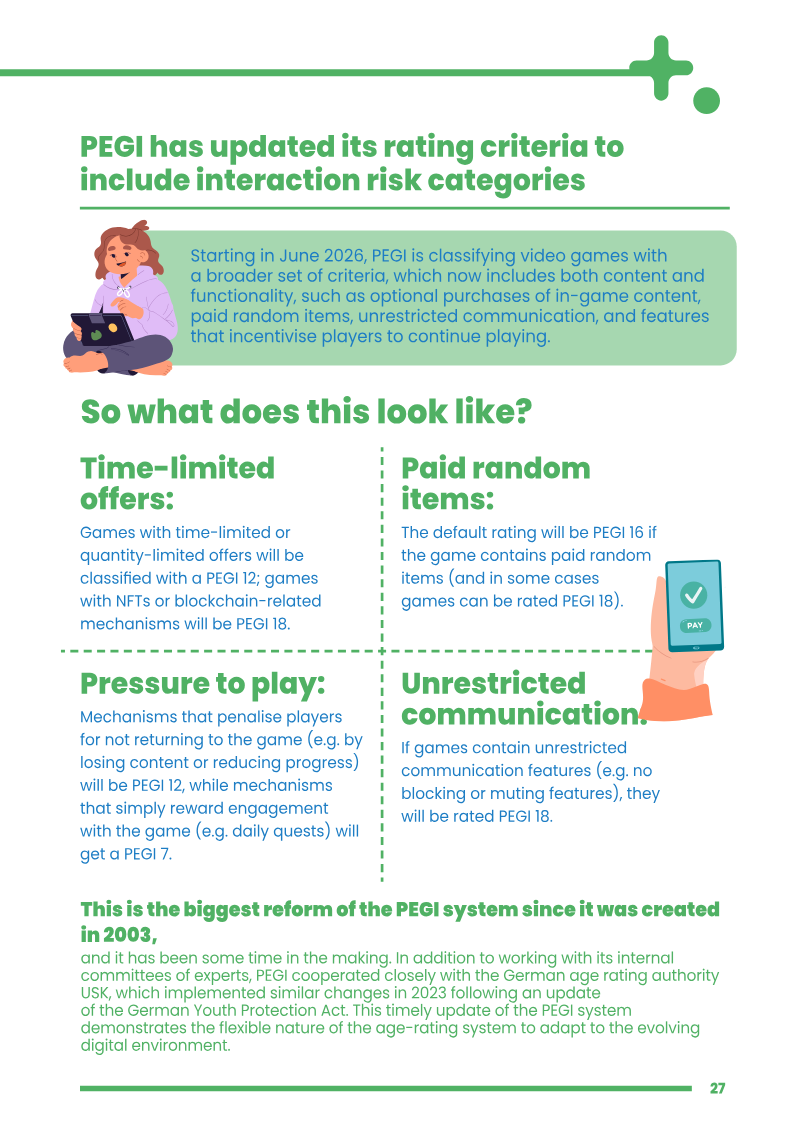
PEGI will implement reforms in 2026 to regulate paid random items, time-limited offers, and unrestricted communication.
These updates reflect a proactive approach to modernizing safety standards. Potential fines for non-compliance can reach €500,000.
Parental engagement
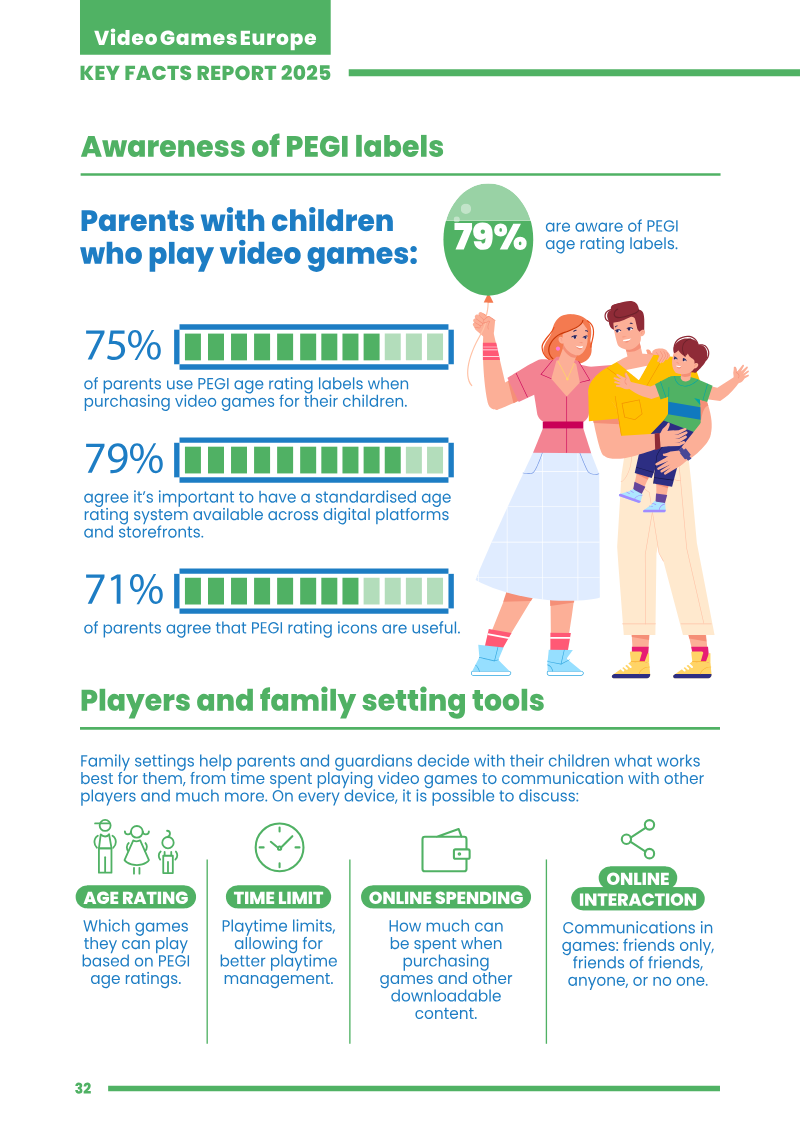
Parental engagement with the PEGI age-rating system is high.
79 percent of parents utilize the labels and associated family management tools.
Policy harmonization
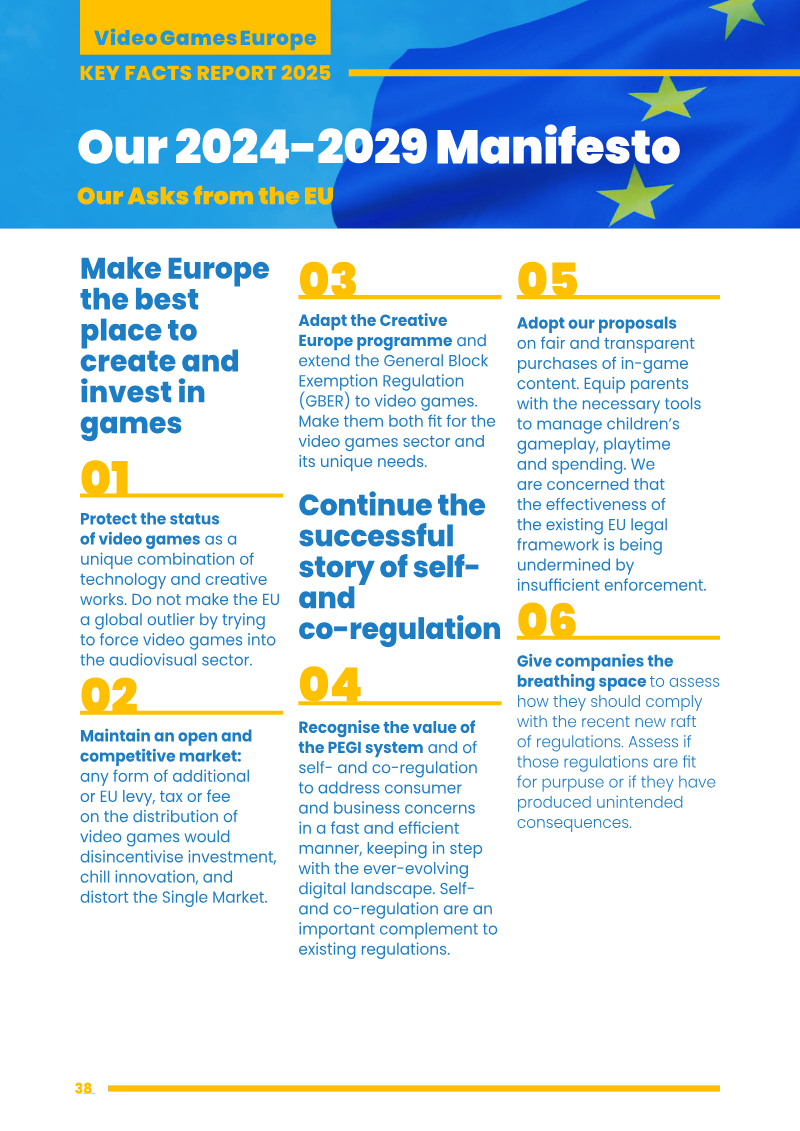
The industry is actively addressing regulatory challenges through coordination with national bodies.
The goal is to harmonize policies across European borders.
CSR efforts
Corporate social responsibility efforts include promoting STEAM education and environmental sustainability.
This is done via the Games in Schools project and UNICEF Game Changers Coalition. Environmental goals are pursued through the Playing for the Planet Alliance.
1 / 6
Ask AI about this report