ArticleVideo Games Europe
Suggested Amendments to the Digital Omnibus: Europe
12 Jun 20261 page~2 min full read
Key insights
5 slides
The submission
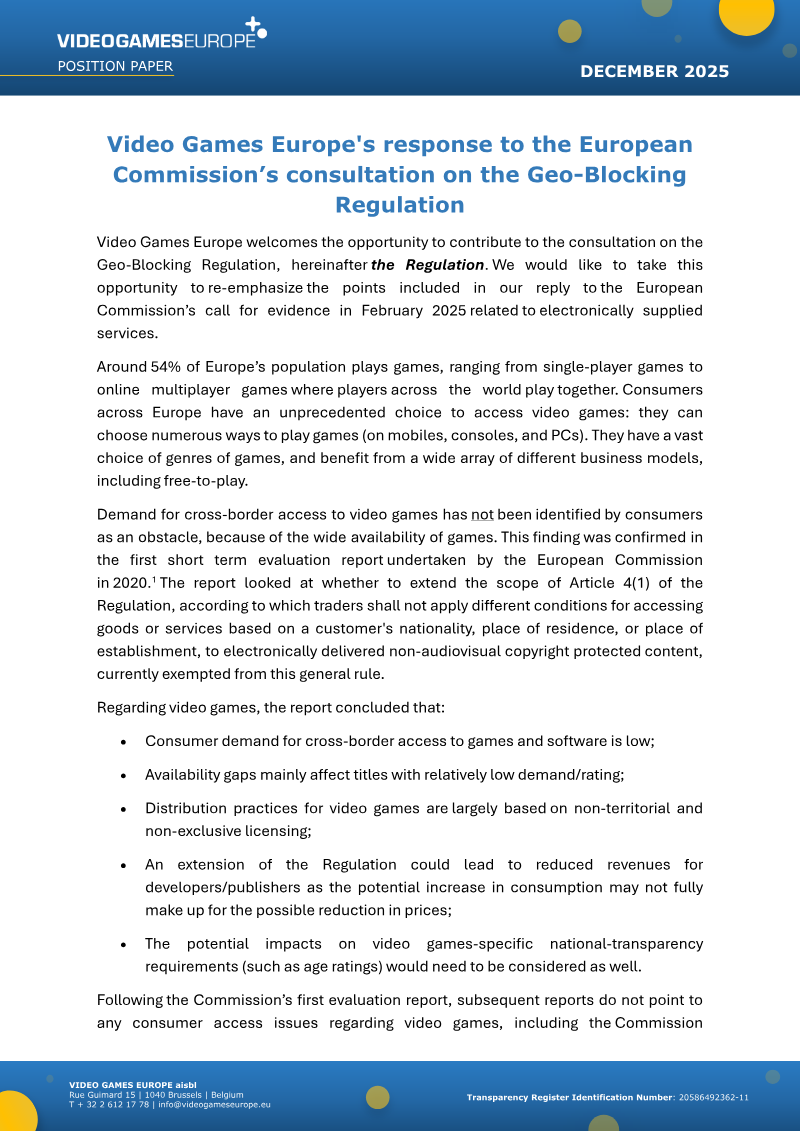
Video Games Europe formally submitted proposed amendments to the EU Digital Omnibus.
The amendments aim to clarify and refine regulatory requirements for the video game industry. They address the intersection of artificial intelligence development, data privacy, and administrative compliance.
Regulatory ambiguity
Developers face legal ambiguity in aligning data protection with technical realities.
The industry body aims to reduce legal ambiguity for developers and publishers. The recommendations seek to align legislative mandates with the technical realities of modern game development.
Key focus areas
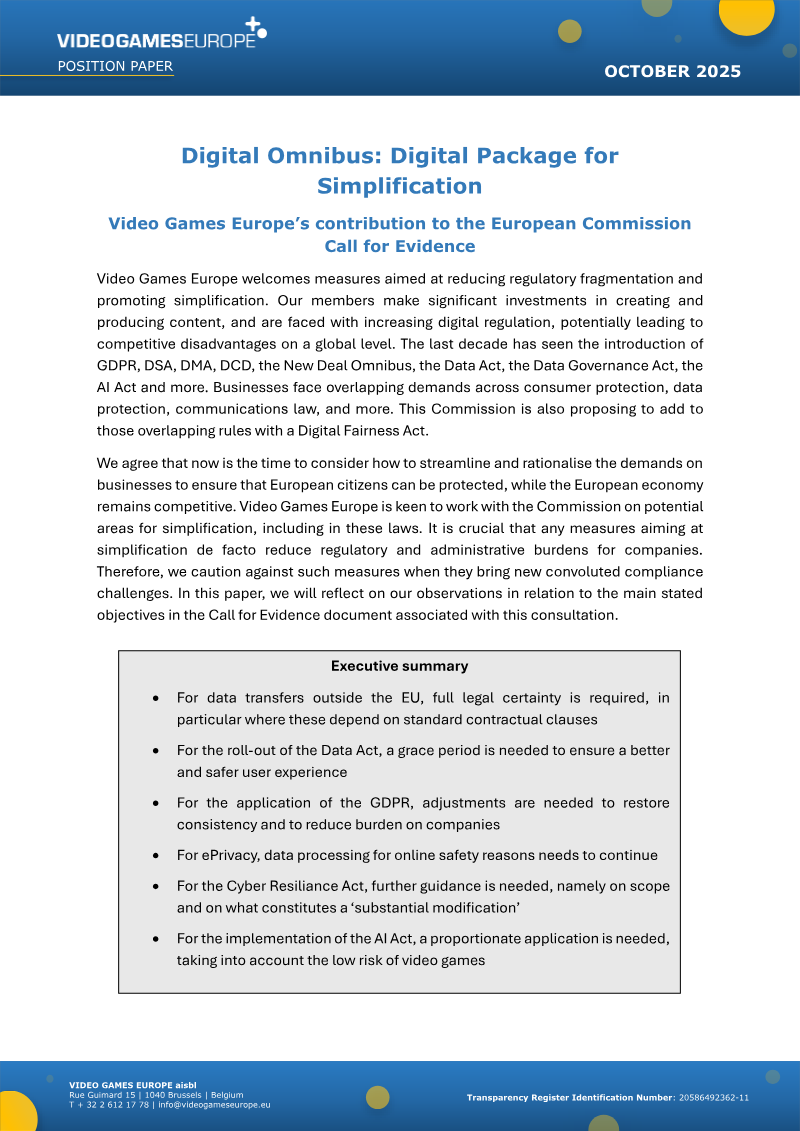
Proposed changes clarify GDPR parameters for scientific research and AI data handling.
The proposed changes seek to clarify GDPR parameters specifically regarding scientific research. They also address the handling of special categories of personal data within AI systems.
Specific articles
The submission targets Article 33 on data breaches and Article 88a on cookies.
It addresses Article 33 regarding data breach notification protocols and Article 88a concerning the integration of cookie regulations.
Operational feasibility
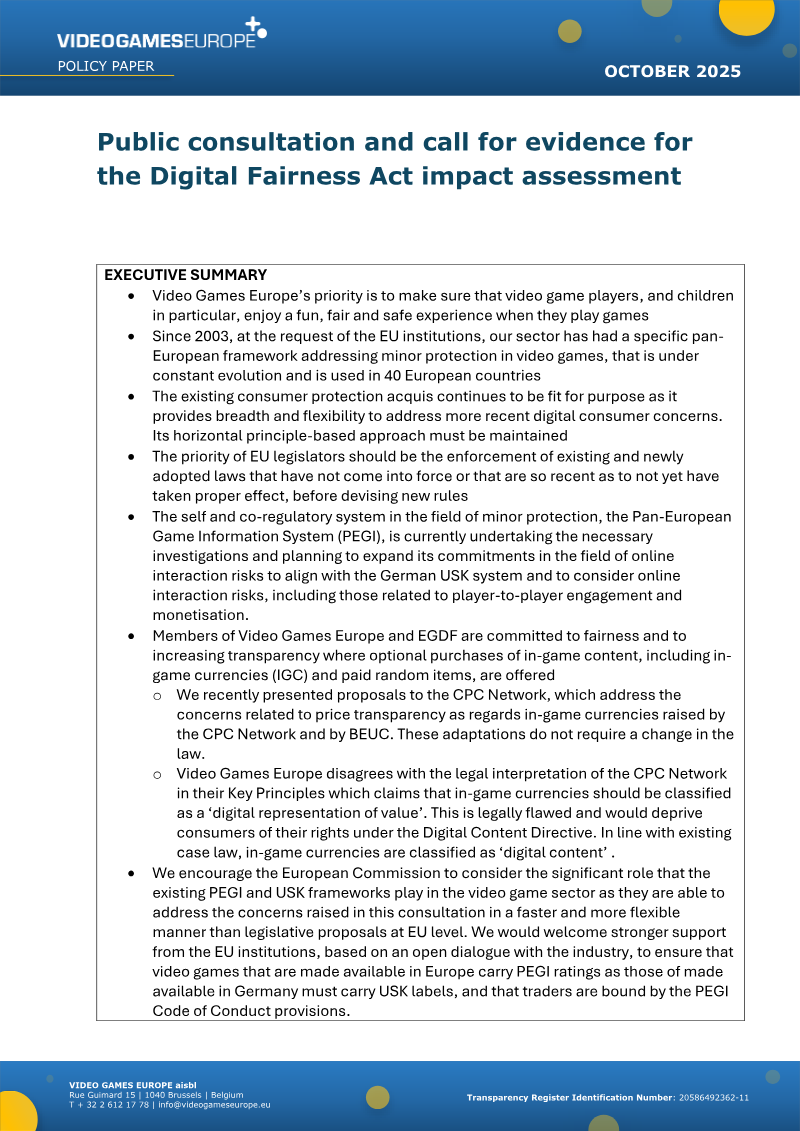
Amendments aim to ensure data management remains compliant and operationally feasible.
The recommendations aim to reduce legal ambiguity for game developers and publishers. They align data protection impact assessments and operational requirements with the technical realities of modern game development.
1 / 5
Ask AI about this report