LegalVideo Games Europe
Video Games Europe: Response on the General Block Exemption Regulation Revision
1 Oct 202516 pages~37 min full read
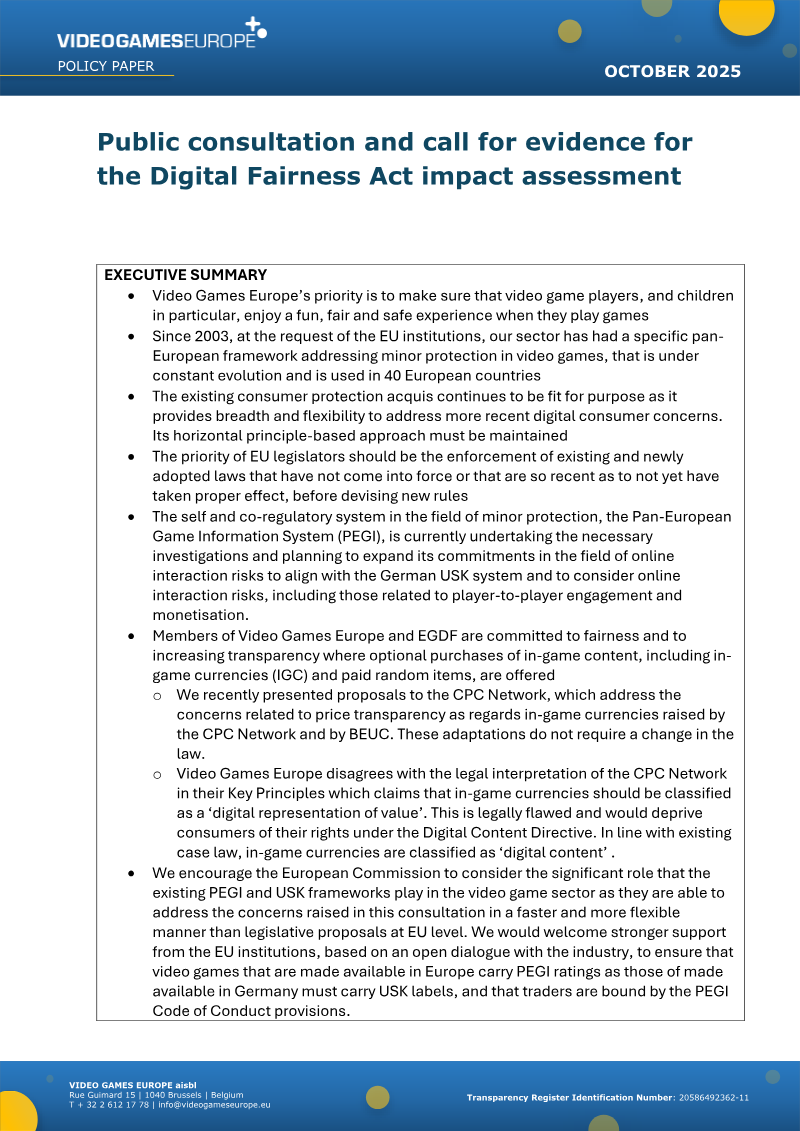
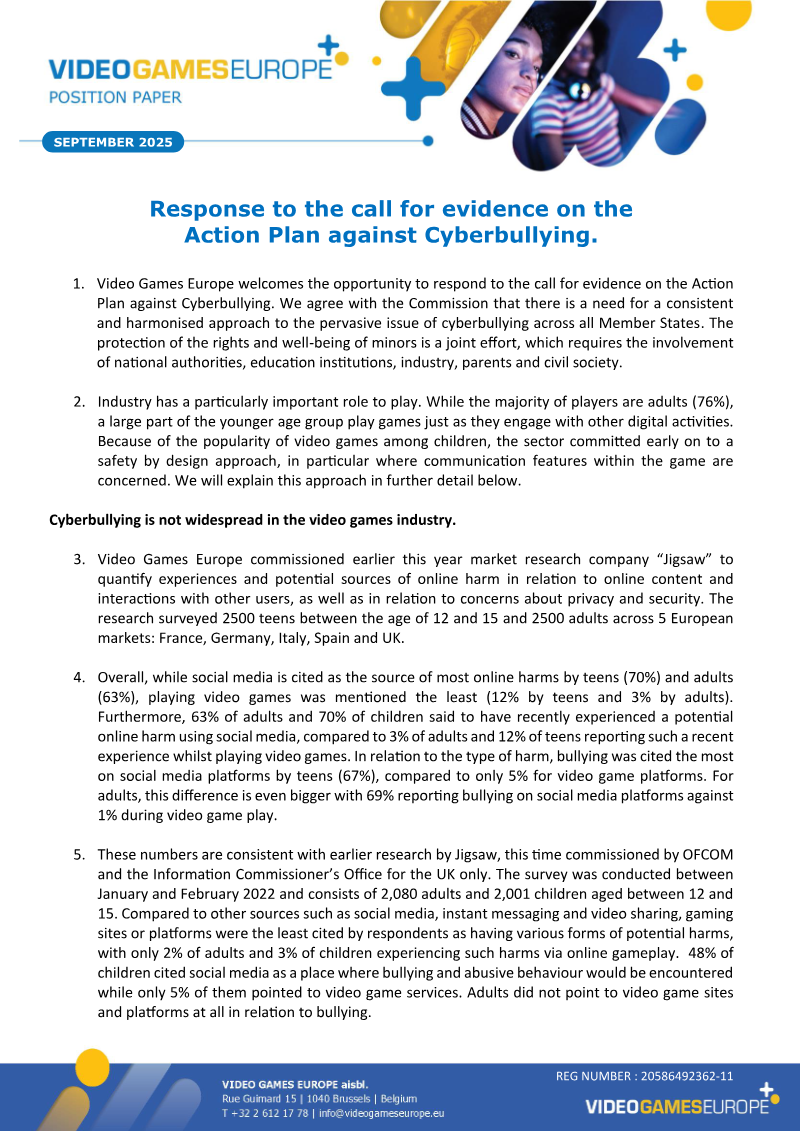
The European video‑games sector, generating €26.8 billion in revenue in 2024 and employing more than 116 000 people, is presented as a distinct hybrid of cultural and technological activity that warrants explicit inclusion in the General Block Exemption Regulation (GBER). By classifying video games as an “experimental development” field, the aim is to eliminate legal uncertainty, harmonise state‑aid rules across the Union and enable Member States to support the industry with greater certainty and efficiency.
Evidence from national programmes demonstrates that targeted aid already yields strong economic returns at modest fiscal cost. In France, a tax‑credit scheme raised the share of locally produced content from 63 % to 77 % and added €322 million of production value, while Germany’s support generated between €1.60 and €2.00 of additional project spending for each euro of aid and created 1 725 new jobs. These outcomes illustrate the sector’s capacity to stimulate investment, localisation and employment when supported by clear, predictable incentives.
The argument stresses that video games drive digital innovation, new business models and skills development, reaching 54 % of Europeans and contributing to broader research‑and‑development objectives. Aligning GBER provisions with existing Horizon Europe mechanisms and introducing a modernised “cultural test” would clarify eligibility for research, development and innovation (RDI) activities, fostering a more coherent policy environment.
Adopting a dedicated GBER category for video games would therefore support a rapidly growing industry, reinforce the EU’s cultural‑technological agenda and ensure that public funds are deployed effectively across all Member States.
Video Games Europe · 2026

Video Games Europe · 2026

Video Games Europe · 2026

Video Games Europe · 2026

Video Games Europe · 2026

Video Games Europe · 2026
Video Games Europe · 2025
Video Games Europe · 2025
Video Games Europe · 2025
Video Games Europe · 2025
Video Games Europe · 2025
Video Games Europe · 2025
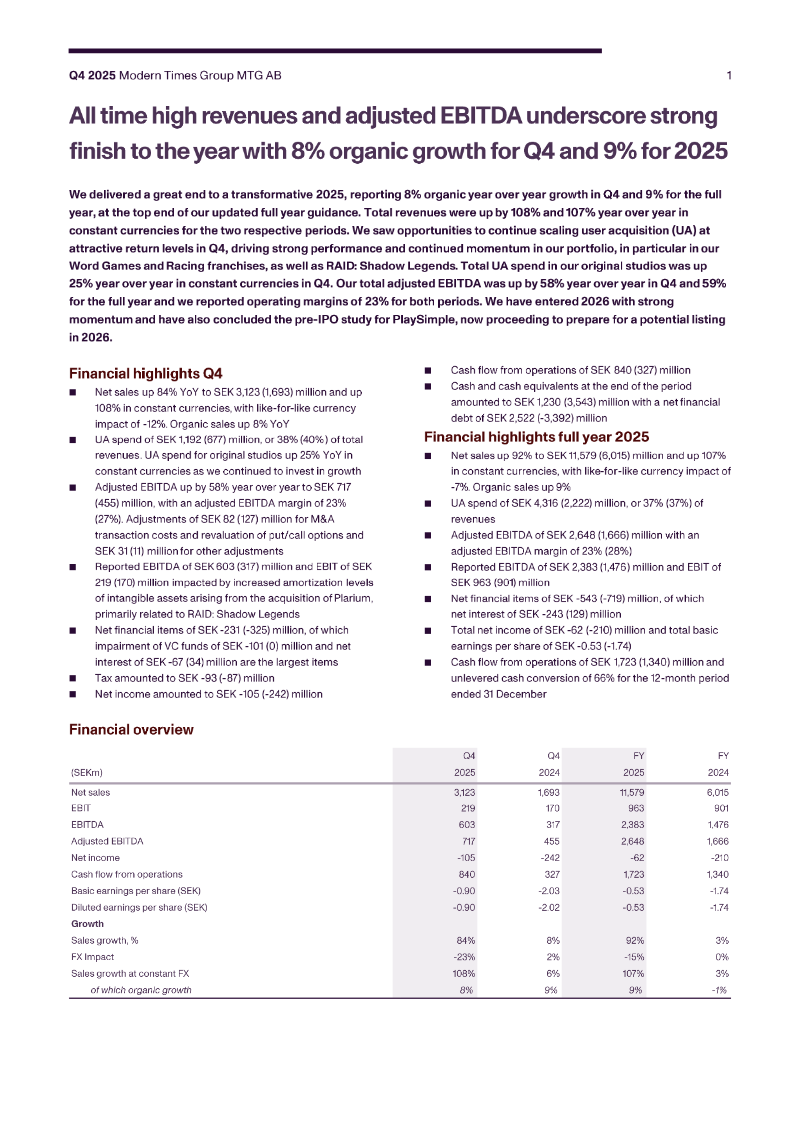
Modern Times Group · 2026
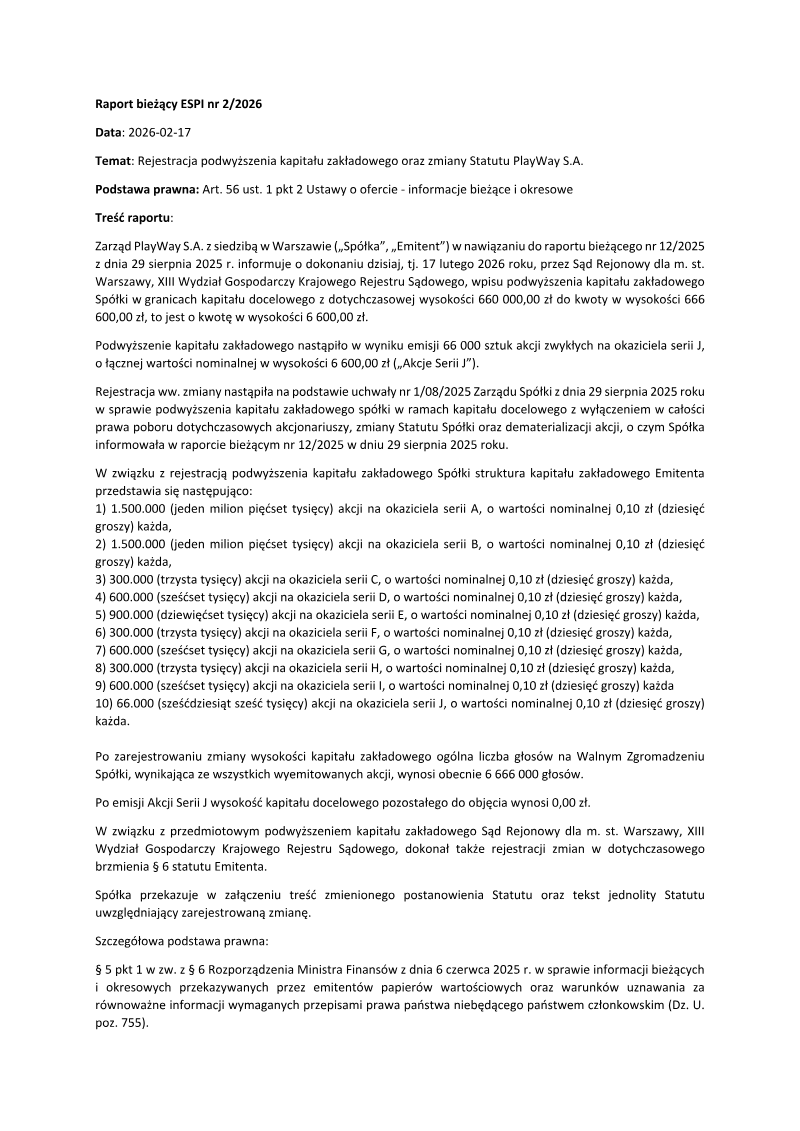
PlayWay · 2026
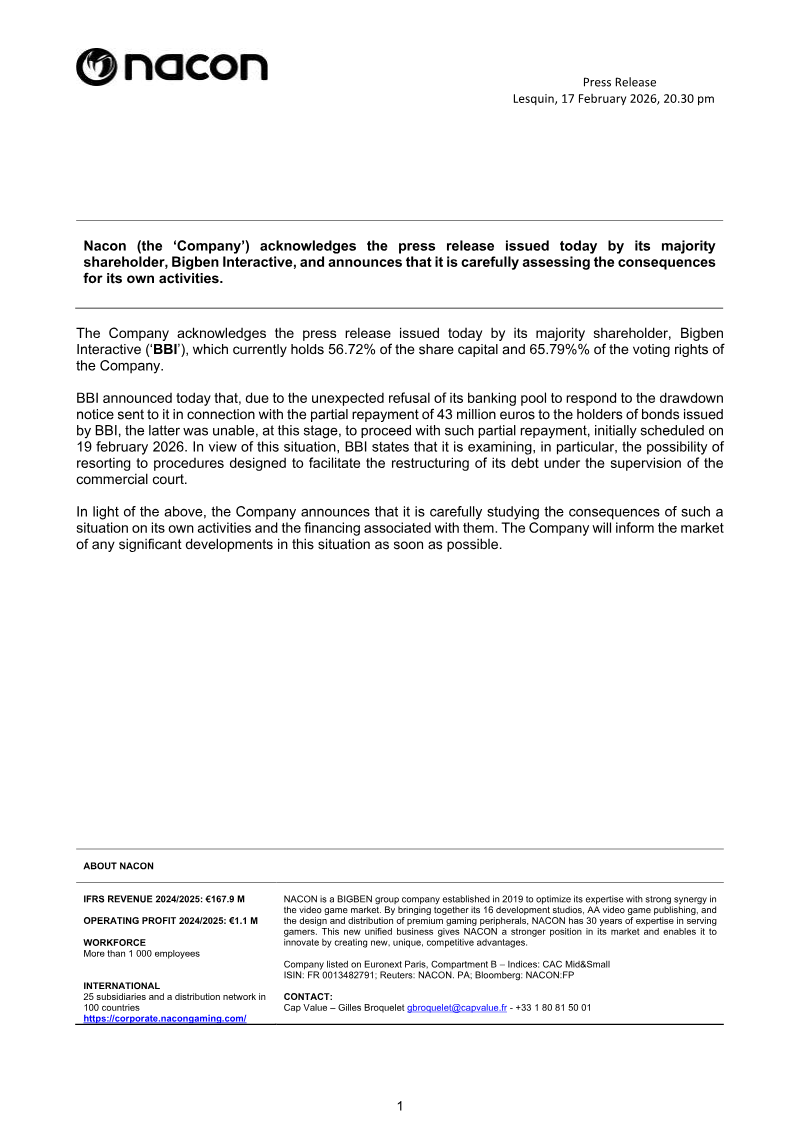
Nacon · 2026

Stillfront Group · 2026
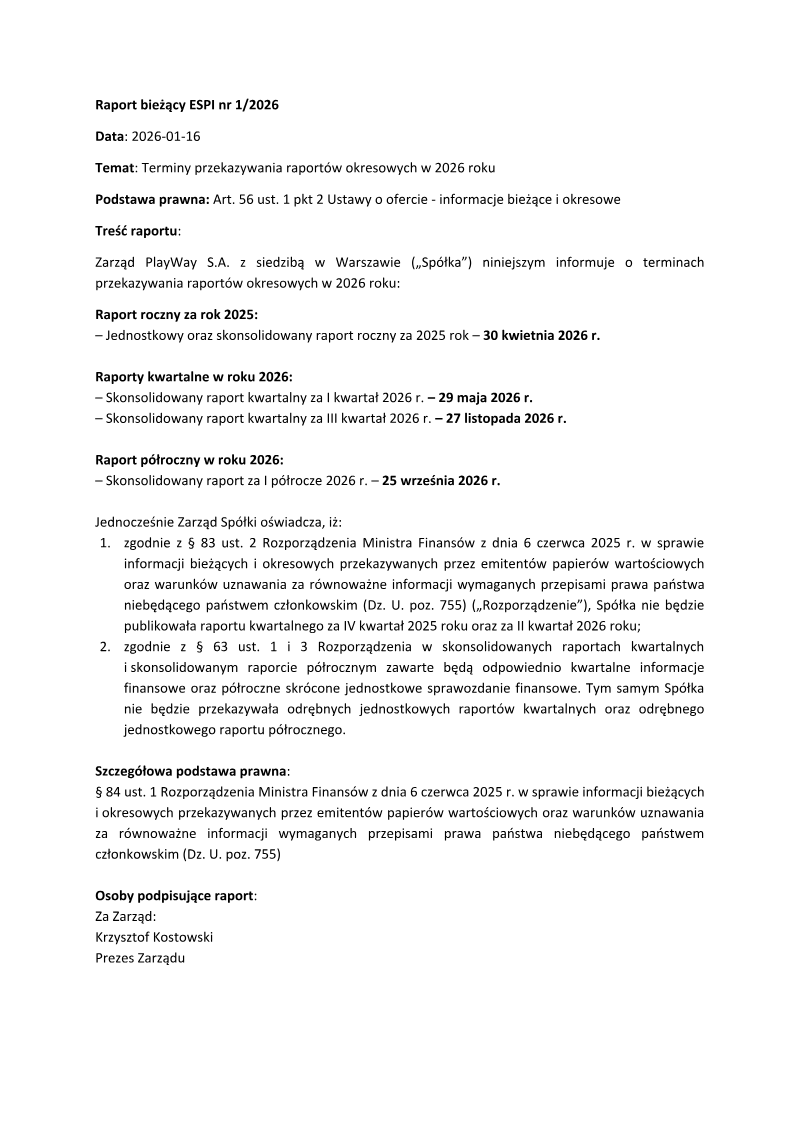
PlayWay · 2026
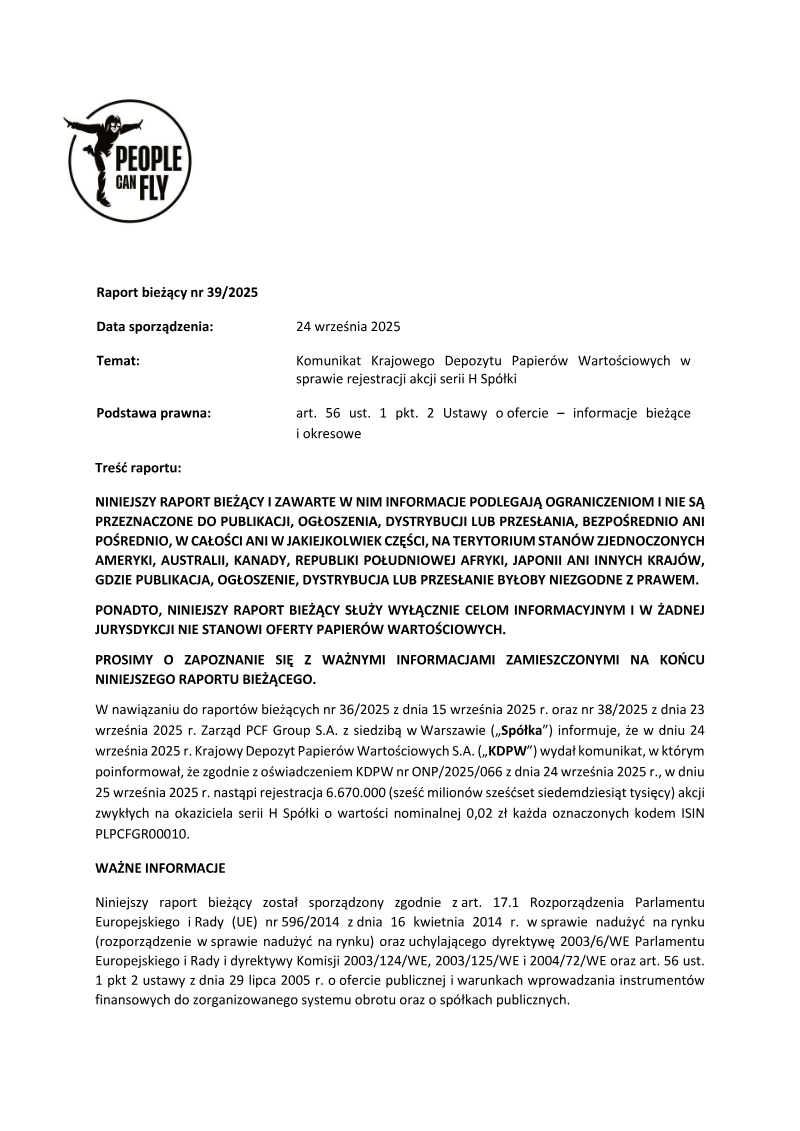
PCF Group · 2025
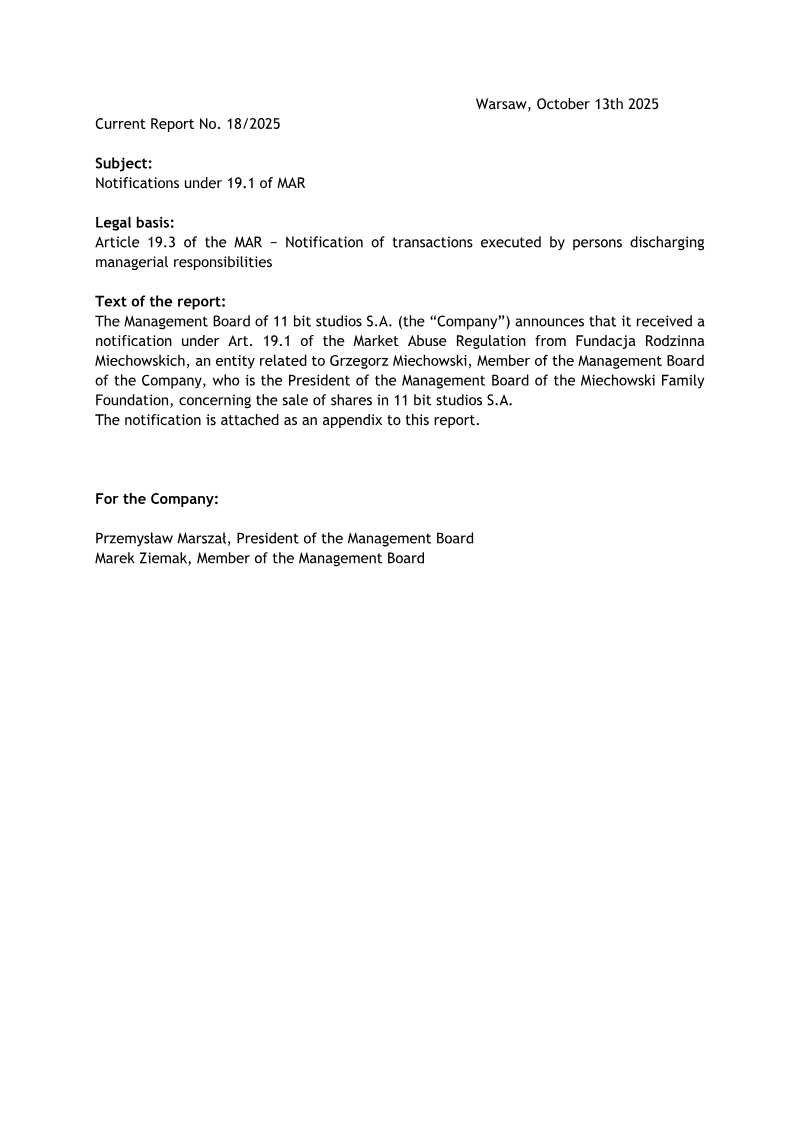
11 bit studios · 2025
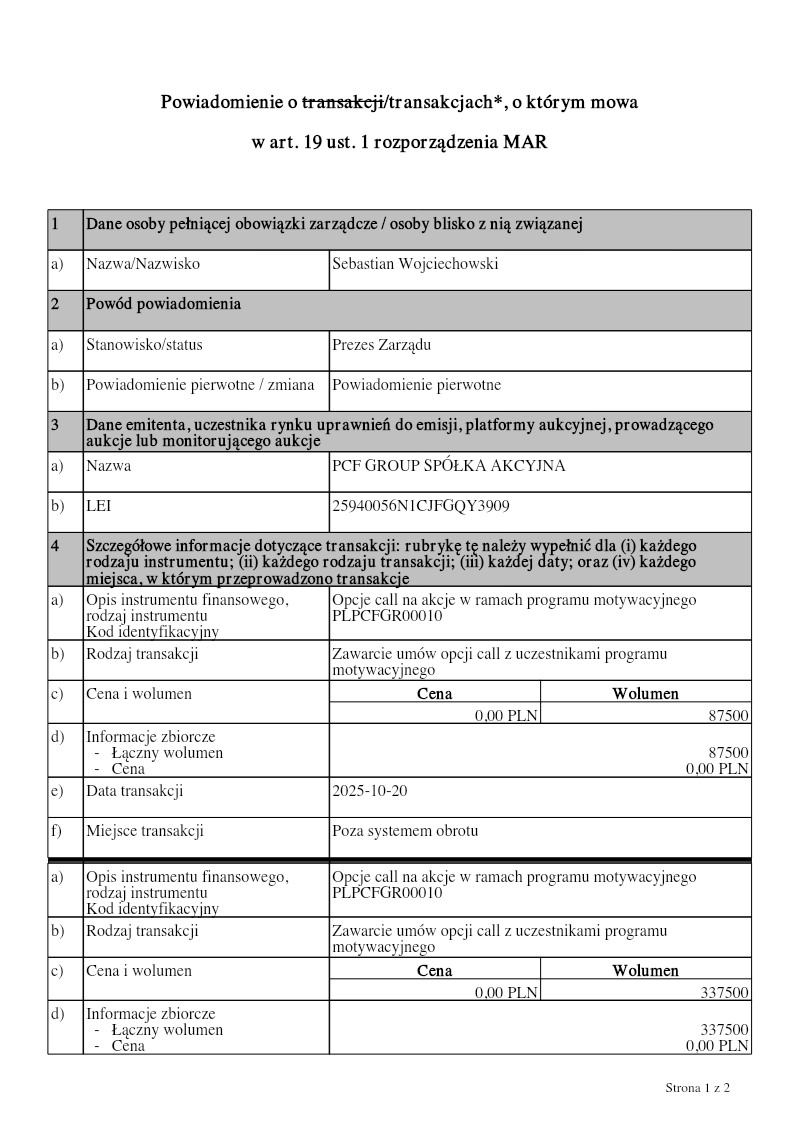
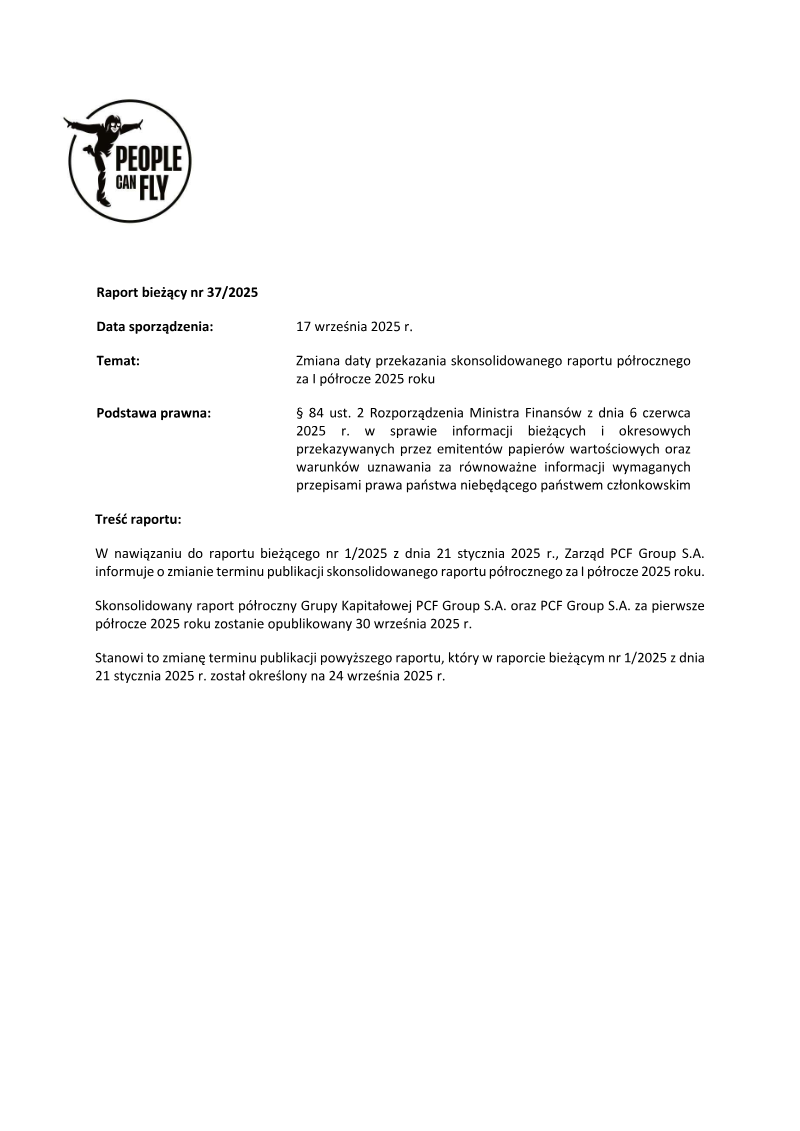
PCF Group · 2025
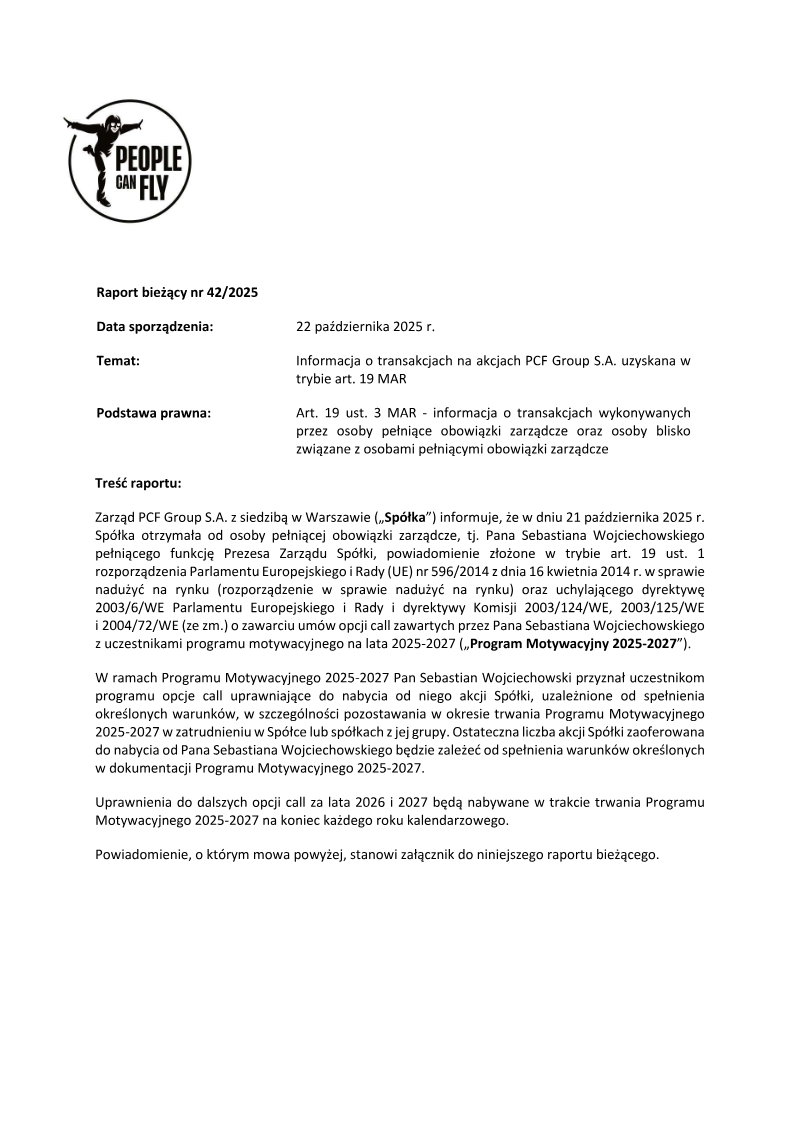
PCF Group · 2025
11 bit studios · 2025
PCF Group · 2025
PCF Group · 2025