1 free read left. Create a free account for unlimited reading + AI research.
Create free accountArticle DiGRA
1 free read left. Create a free account for unlimited reading + AI research.
Create free accountArticleDiGRA
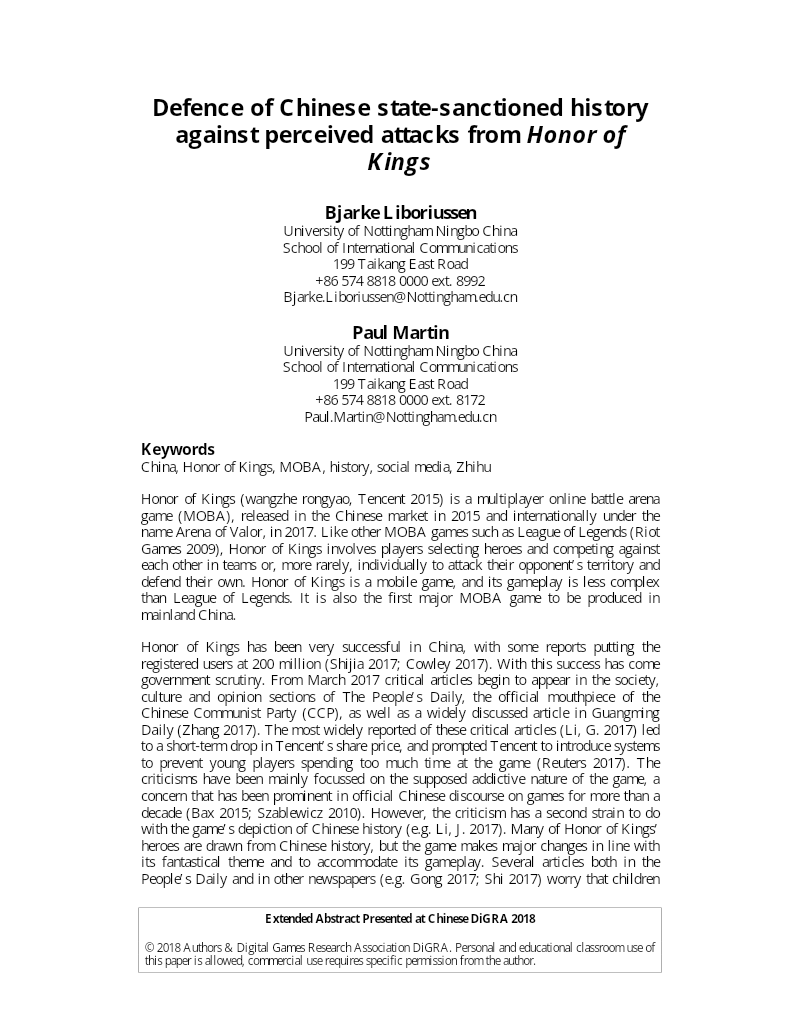
Tencent's 2015 mobile MOBA draws on Chinese history and mythology. Its registered user base is reported at around 200 million.
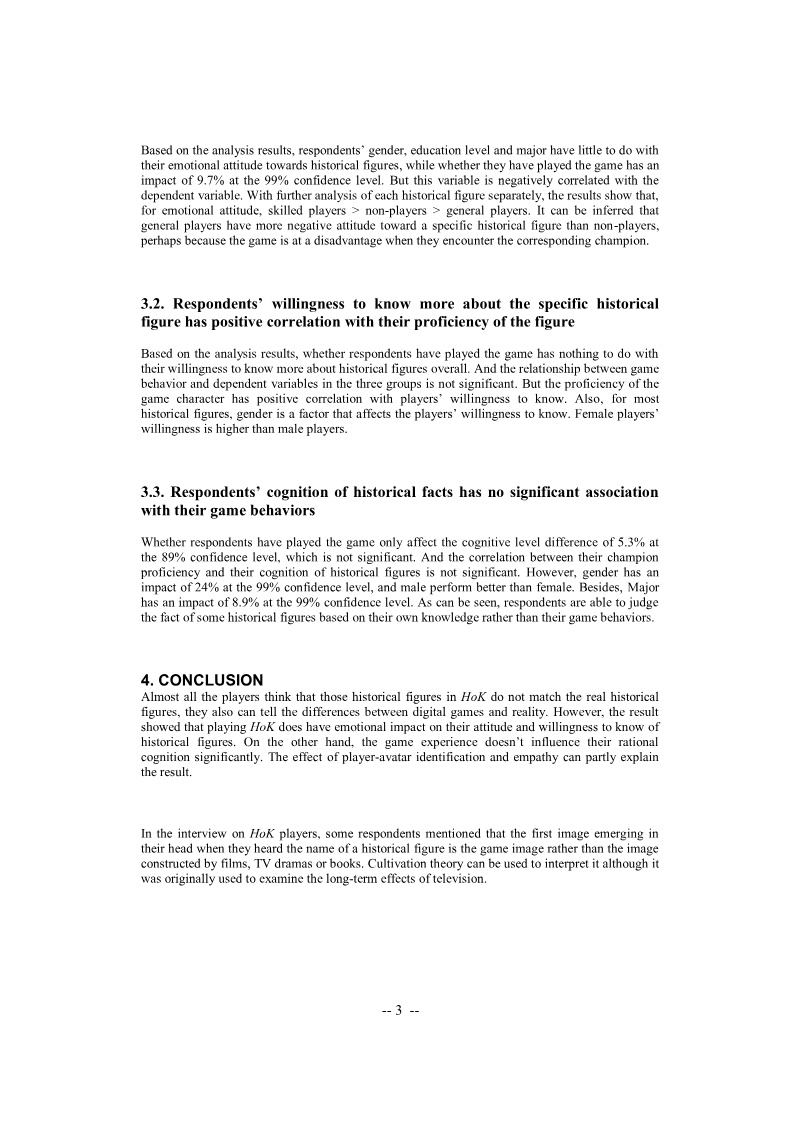
This extended abstract examines how Chinese state media and the Chinese public have responded to Honor of Kings, Tencent's 2015 mobile multiplayer online battle arena game that drew heroes from Chinese history and mythology and reportedly reached around 200 million registered users. Official criticism from outlets such as People's Daily and Guangming Daily from March 2017 onward centred on two strains: concern about the game's addictiveness, a long-running theme in Chinese official discourse on games, and worry that its fantastical reworking of historical figures would confuse young players about the real past. The authors frame this as part of a broader and evolving state strategy toward games, one that balances the propaganda potential of new media against its risks, and that increasingly relies on public-private partnerships with industry.
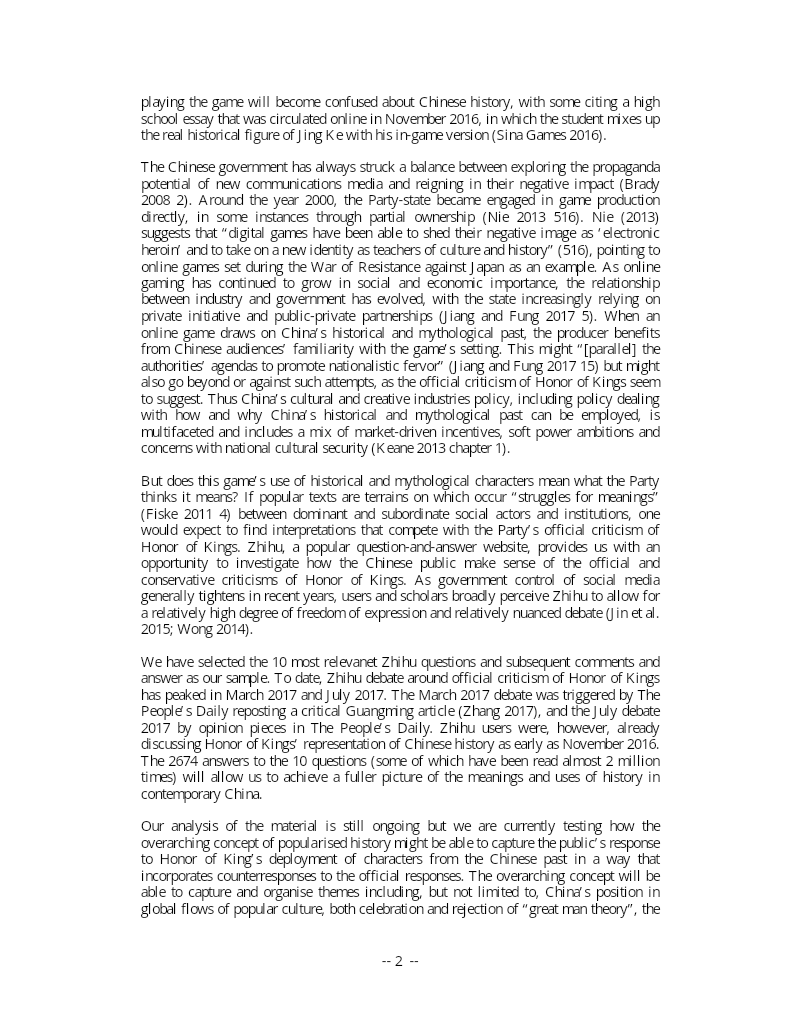
The study's central question is whether the game's use of historical characters means what the Party says it means. Drawing on cultural studies approaches that treat popular texts as sites of contested meaning, the authors propose to analyse public responses on Zhihu, a question-and-answer platform generally regarded as offering relatively open debate. The sample comprises ten of the most relevant Zhihu questions, with 2,674 answers across them, some read nearly two million times. The discussion peaks in March and July 2017 are linked to specific state publications, and early discussion dates back to November 2016.
The analysis is described as ongoing, so the paper does not yet report findings. Its provisional framework is the concept of popularised history, intended to organise themes such as China's place in global popular culture flows, both endorsement and rejection of "great man theory," calls for alternative histories, and the responsibilities of a commercial company that uses historical material. The paper's contribution lies in examining how audiences negotiate official interpretations of history within a commercially driven entertainment product.
DiGRA · 2026
Mobilegamer.biz · 2026