1 free read left. Create a free account for unlimited reading + AI research.
Create free accountWhitepaper DiGRA
1 free read left. Create a free account for unlimited reading + AI research.
Create free accountWhitepaperDiGRA
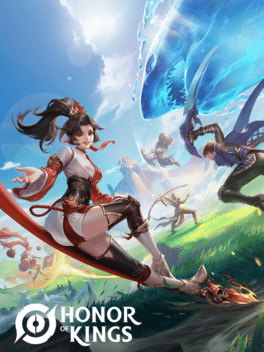
Honor of Kings is a popular Chinese mobile MOBA whose champions are largely drawn from historical figures. Public debate over its influence on historical cognition had lacked empirical grounding, which motivated this study.
This study examines whether playing Honor of Kings, a popular Chinese mobile MOBA game whose champions are largely drawn from historical figures, affects players' attitudes toward, willingness to learn about, and factual knowledge of those figures. Motivated by public debate over the game's influence on historical cognition, which had lacked empirical grounding, the authors focus on college students, reasoning that adults are better able than minors to separate game content from historical fact. Data come from a nonrandom survey combining online and offline questionnaires, yielding 907 valid responses, of which 34.4 percent were players. Respondents were grouped as non-players, general players, and skilled players according to their proficiency with a particular champion, and relationships were assessed using Spearman's rank correlation, supplemented by descriptive analysis, observations, and interviews.
The findings indicate that game play has a positive association with emotional attitudes toward historical figures and with willingness to learn more about them, with champion proficiency showing a particularly clear positive relationship with willingness to learn. Gender also influenced willingness, with female players expressing greater interest than male players. By contrast, game play showed no significant association with factual historical knowledge, and male respondents and certain majors performed better on knowledge measures. Most players recognized that the game's depiction differs substantially from historical reality, suggesting that rational discrimination between fiction and fact remained intact.
The authors interpret these results through player-avatar identification and empathy from game studies, which may explain heightened emotional engagement, and through cultivation theory from media studies, drawn on to account for interviewees who reported the game image as their first association with a historical name. Overall, the study frames the influence of the game as primarily affective rather than cognitive, though the authors note that the sampling was nonrandom and the work is an extended abstract.
Each row is a game or company this document names, each column a document, oldest first. A mark means that document names it. Select a row to see those documents.

DiGRA · 2026

DiGRA · 2026



DiGRA · 2026



DiGRA · 2026



DiGRA · 2026



DiGRA · 2026



DiGRA · 2026



DiGRA · 2026

DiGRA · 2026



DiGRA · 2026



DiGRA · 2026

DiGRA · 2026
DiGRA · 2026